New Zealand Investor Visa (Investor 2)
New Zealand · Oceania
Data updated Sep 3, 2026
Difficulty
Difficult
Overview
Investor 2 residency in New Zealand hinges on investing NZD 3 million, kept in acceptable New Zealand-based assets for 4 years, and this figure is the confirmed investment requirement. In practice, licensed advisers such as Destination NZI describe the Investor 2 threshold as NZD 3 million, sourced and transferred legally, unencumbered (no loans or liens), and invested in approved instruments like NZ equities, NZ bonds, or qualifying property developments. There’s no published minimum monthly income or savings requirement in the program rules, so portfolio size and the quality/source of funds matter more than your ongoing cashflow.
Physical presence is the real trade-off: program rules set the requirement at 146 days per year, which aligns with Immigration NZ’s rule that Investor 2 residents either spend 146 days in New Zealand in each of the last 3 years of the 4‑year investment period, or 438 days spread over those 4 years if you invest more heavily in growth assets. For someone splitting time between, say, New Zealand and the US or Canada, that means committing roughly 4–5 months per year in-country if you follow the standard rule, which can crowd out extended stays elsewhere.
On the residency path, program rules confirm this visa leads to permanent residence (PR) after 4 years, provided you maintain the acceptable investment and meet the 146‑day (or 438‑day total) presence requirement. New Zealand generally allows naturalisation after a period of residence following PR; you should plan on at least the 4‑year investment window as your baseline commitment. The initial resident visa is not renewable, but the core logic is: maintain the investment for 4 years, hit your day-count targets, and you transition from conditional to more secure status.
On friction, the published data give this a low Bureaucracy Score of 1/5, and there is no requirement for an apostille, FBI background check, medical exam, or interview in the program rules. The annoying parts are substantive rather than procedural: documenting the lawful source of NZD 3 million (or more) of assets, proving they are unencumbered, and lining up acceptable investments that satisfy Immigration NZ’s criteria. You can expect to produce detailed evidence like tax returns, business financials, property sale contracts, and bank records.
This structure makes the most sense if you already have at least NZD 3 million of clean, documentable assets, are comfortable allocating them into New Zealand investments for 4 years, and can realistically spend 146 days per year (or 438 days over 4 years) in-country. It is a poor fit if your net worth is closer to USD 500,000–1,000,000, your capital is tied up in leveraged real estate you cannot unencumber, or your lifestyle requires spending 8–9 months per year in another country.
Eligibility Requirements
Any nationality can apply for New Zealand’s Investor 2 resident pathway in principle, as the VISA FACTS flag nationality restrictions as “all”. In practice, applicants from sanctioned or heavily scrutinised jurisdictions — for example Iran, North Korea, Syria, and in some banking contexts Russia and Cuba — can run into serious friction with both New Zealand banks (for transferring NZD 3 million) and consular vetting, which can derail an otherwise eligible file. Before assembling a full evidence pack and moving large sums, confirm your specific eligibility and any security or sanctions-related constraints directly with Immigration New Zealand, which is the competent authority for this visa.
Min Age
18 yrs
Requirements Checklist
• Identity: passport; two passport-size photos; birth certificate; marriage certificate, if applicable; identity certificate, if requested.
• Financial: bank statements; proof of assets or funds; proof of source of funds; tax returns; payslips; business financial statements; business shareholding documents; dividend records; receipts for property sales; bank certificates; share trading profit records; gift documentation; probate or inheritance documents; business ownership documents; property valuations; share certificates.
• Health: medical certificate; chest x-ray report.
• Employment: evidence of recognized business experience; company incorporation certificates; job descriptions; performance reviews; strategic planning documents; professional references; certificates of service; employer reference letters.
• Background: police clearance certificate.
• Investment: evidence of acceptable investment; investment commitment letter; confirmation letter from a solicitor, chartered accountant, or investment broker; documents confirming funds have been transferred to and invested in New Zealand.
• Translation: certified English translations of any non-English documents.
• Other: evidence of English language ability.
Tax Information
Local tax picture for New Zealand investor residents
New Zealand’s default system for individuals is effectively worldwide taxation rather than a territorial or remittance-only model. Once you become a New Zealand tax resident, Inland Revenue looks at your global income: salary (including remote work for foreign clients), business profits, foreign pensions, foreign rental income, and most portfolio income. New Zealand offers a Transitional Resident Exemption that shelters most foreign-sourced income for up to 4 years for new tax residents, but you should assume standard resident rules apply to New Zealand-sourced income once you pass New Zealand’s tax residency thresholds. That means US, Canadian, or Australian ETF dividends and rental income from property abroad fall within New Zealand’s tax net once you’re a tax resident, even though the visa itself is granted on the basis of capital investment, not income.
Capital gains treatment in New Zealand is nuanced and not fully codified by a single capital gains tax statute. For FIRE-style investors, the key unknown is how gains on foreign index funds and ETFs in offshore brokerages are treated. New Zealand has no general capital gains tax, but New Zealand’s detailed rules about whether you are considered a trader or subject to foreign investment fund (FIF) rules go beyond what's covered here. You should obtain local advice on how capital gains on foreign ETFs will be treated before realising large positions after becoming resident.
Investor 2 residents are given a physical presence requirement of 146 days per year (or 438 days over 4 years), which is more than enough to trip New Zealand’s standard 183‑day test in many years if you actually follow the immigration rules. In practice, if you are spending 4–5 months per year in New Zealand on a continuing basis and have established a home there, you should plan for New Zealand tax residency and full local filing obligations.
There is no indication of any exemption for Investor 2 residents from local filing obligations. Expect to obtain an IRD number, report global income once tax resident, and meet Inland Revenue’s annual deadlines for individual returns. A US-New Zealand tax treaty exists, but US persons cannot rely on this summary to assume any particular treaty relief for dividends, interest, or pensions; they must check the current US–New Zealand tax treaty text directly, and non‑US nationals should confirm whether their own country has a treaty with New Zealand.
For US Citizens and Green Card Holders
US citizens and green card holders on the New Zealand Investor 2 track remain fully taxable by the IRS on worldwide income, even after they become New Zealand tax residents. Form 2555, the Foreign Earned Income Exclusion (FEIE), can shelter up to USD 132,900 of earned income as of 2026, but this only applies to active income: remote salary, self‑employment, or consulting. FEIE does nothing for dividends, interest, capital gains, rental income, pension distributions, or Social Security. Because Investor 2 residents are expected to spend at least 146 days per year in New Zealand, many will qualify for the Bona Fide Residence Test after establishing a clear primary home there; others who still split time heavily can rely on the Physical Presence Test (330 full days abroad in any 12‑month period, including days in New Zealand).
Form 1116, the Foreign Tax Credit (FTC), becomes central once you are taxed in both New Zealand and the US on the same income streams. FTC is only helpful to the extent New Zealand tax actually applies to that income and is at a rate high enough to offset US liability. If New Zealand ends up taxing your foreign dividends, rental income, or business profits at a rate comparable to US levels, properly claimed FTCs can reduce or eliminate double taxation; if some income is taxed at 0% in New Zealand (for example, items New Zealand treats as non‑taxable gains while the US treats them as capital gains), the FTC cannot help and US tax is fully payable.
FBAR (FinCEN 114) and FATCA (Form 8938) are unavoidable for high‑net‑worth Investor 2 applicants. If your combined non‑US financial accounts — New Zealand bank and brokerage accounts, plus any other foreign accounts, ever exceed USD 10,000 in aggregate at any point in the year, FBAR filing is mandatory, with non‑wilful penalties starting at USD 10,000 per violation (inflation-adjusted to approximately USD 16,700 as of 2026). FATCA Form 8938 has higher thresholds (e.g., USD 200,000 for many single expats), but Investor 2 applicants with NZD 3 million invested abroad almost always cross them. If opening a local bank or brokerage account becomes necessary to hold the NZD 3 million in acceptable investments, plan for both FBAR and FATCA reporting from year one.
The practical move is to engage two professionals early: a US CPA who specialises in expat taxation (FEIE, FTC, PFIC/FIF issues, FBAR, FATCA) and a New Zealand tax adviser familiar with Inland Revenue’s treatment of foreign funds and high‑net‑worth migrants. For an Investor 2‑level balance sheet, the USD 1,500–3,000 you spend in year one on coordinated cross‑border advice is small relative to the potential penalties and sub‑optimal elections you avoid.
Living in New Zealand
COL Index vs NYC
55.3
Monthly Cost (excl. rent)
$975
1BR Rent (City Center)
$1,114
Safety Index
51.8
Healthcare Index
68.4
Quality of Life Index
192.5
Time Zone
UTC+12:00
Capital
Wellington
Population
5.1M
Official Languages
English, Māori, New Zealand Sign Language
Avg Internet Speed
289 Mbps
Public Transit Quality
Good
With a budget covering rent and living costs, you'd need roughly $2,089/mo for a comfortable single-person lifestyle in New Zealand.See how far your money goes →
🏙️ Best Cities in New Zealand for Investors & FIRE Seekers
 ✦ 81.2
 ✦ 79.1
 ✦ 84
✦ 84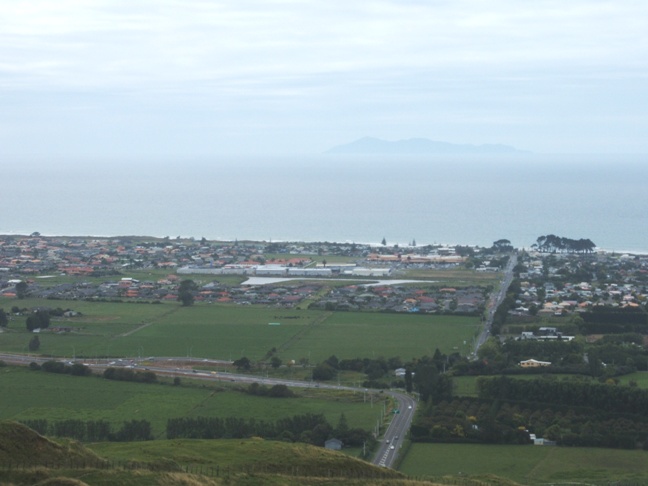 ✦ 78.1
 ✦ 78.9
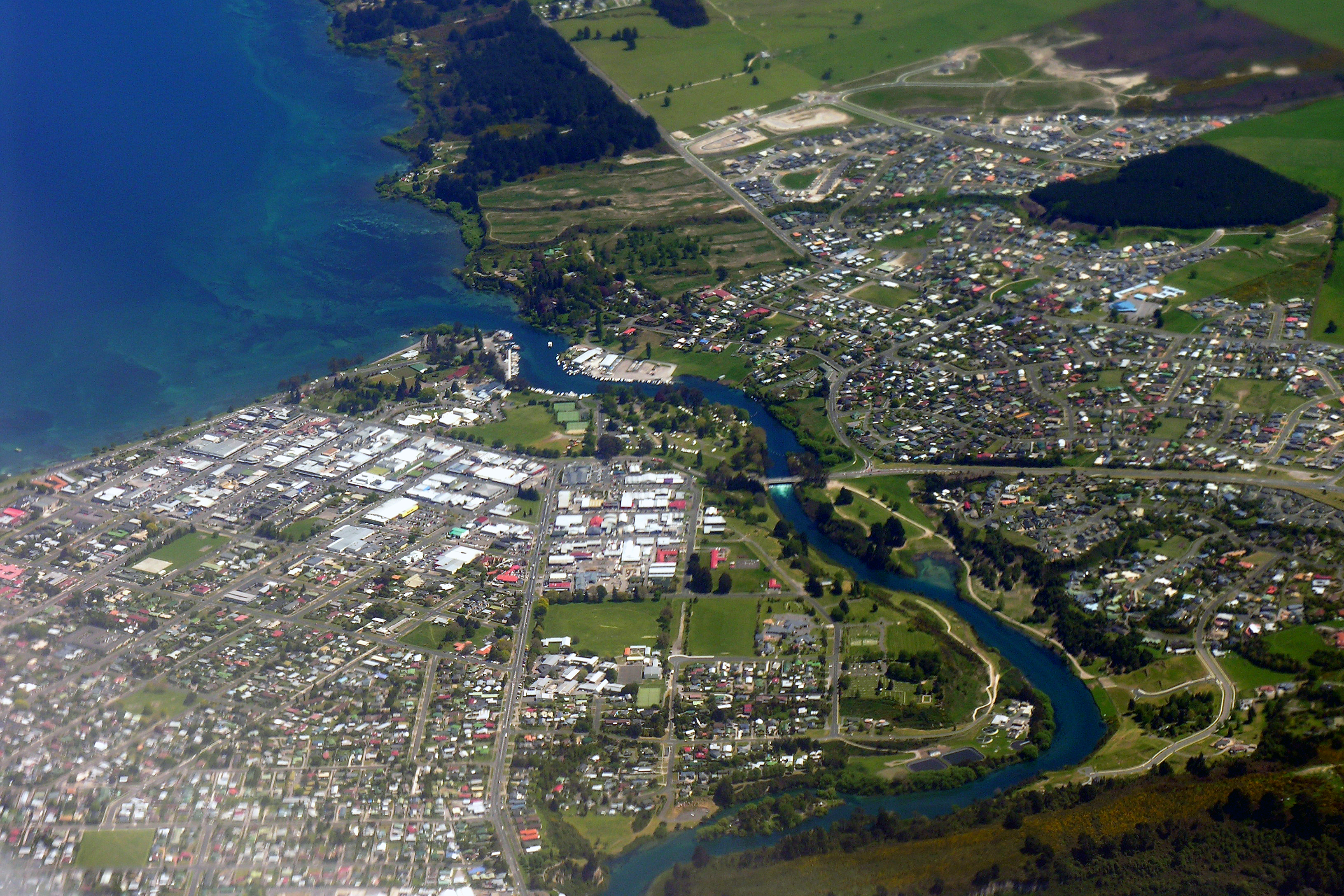 ✦ 76.5
Getting the income documentation story straight before applying
Most applicants think the hard part of an investor visa is the investment. It isn't. The hard part is proving, to a case officer who has seen every kind of fabricated wealth story, exactly where the money came from before it ever touches New Zealand. Immigration New Zealand's list of acceptable financial evidence, bank statements, tax returns, business shareholding documents, dividend records, property sale receipts, share certificates, gift documentation, probate paperwork, is long because they've been burned by short versions of it. If your $3,000,000 came from one clean liquidity event, a business sale or an inheritance with a probate document behind it, your file is comparatively simple. If it accumulated across a decade of consulting income, stock options, and a couple of property flips, you need to build the connective tissue yourself, before submission, not explain it after a query comes in.
The mistake people make is treating this like a bank's know-your-customer check, where a few months of clean statements will do. It's closer to a forensic reconstruction. Every large deposit needs a plausible, documented origin, and gaps get read as risk rather than oversight. If you've moved money between several accounts or currencies over the years, expect to spend real time before you apply assembling the chain, not scrambling to produce it after a case officer flags something. Applicants who wait until they're mid-application to go looking for a decade-old business sale agreement or dividend statement lose months they didn't need to lose.
There's also a difference between having the money and having proof the money is legitimately, verifiably yours to invest. A joint account with a spouse, funds still sitting in a business entity rather than personal name, or capital that's technically owed to other shareholders all create documentation problems that have nothing to do with whether you can actually afford this visa. Sort out whose name the money needs to be in, and get confirmation from a solicitor, chartered accountant, or investment broker on the investment side, well before you're staring at a submission deadline.
The housing and presence requirement people underestimate
There's no formal accommodation clause buried in this visa's requirements, no lease you need to attach to your application. What there is instead is a 146-day-per-year physical presence requirement, and that number does more to shape your actual life in New Zealand than any housing rule would. People read "no accommodation requirement" and assume that means minimal commitment. It means the opposite: instead of a box-ticking lease requirement, you're on the hook for truly living somewhere for roughly five months of every year, which means renting or buying real housing, not parking a suitcase in a serviced apartment for a token visit.
The applicants who get this wrong tend to be the ones treating the visa as a passive asset, something to hold like a second passport that never really needs their physical presence. That's not what 146 days a year supports. It's enough time that you need a functioning home base, schooling arrangements if you're bringing dependents, and some plan for how your income-generating work, if you're still earning remotely, survives the time difference and the travel. Because local work is permitted under this visa, some applicants use the presence window productively, but plenty treat it as dead time they're obligated to serve out, and that's a rough way to spend a fifth of every year for as long as the underlying conditions apply.
The sequencing error worth naming: people find housing after they've already committed the investment and started the clock, rather than scouting it in parallel with the application. Since the application process itself runs entirely online and doesn't require you to be physically present in New Zealand before approval, there's no reason to wait until after approval to start understanding rental markets, school placement timelines, or whether the region you're picturing can actually absorb a family for five months a year.
What happens after you land
The visa approval is not the finish line, and treating it that way is where people lose momentum. Once you're approved, the requirement that matters is showing up and fulfilling the conditions attached to the visa, chiefly that 146-day presence threshold, year over year. There's no local consulate step to clear first since the whole application runs through Immigration New Zealand's online portal from wherever you're living now, which is convenient, but it also means the first real friction you hit is often after you've already relocated some part of your life, not before.
What doesn't get talked about enough is the gap between having an approved visa and having a settled sense of what your life in New Zealand actually looks like day to day. You're allowed to work locally, which changes the calculus for a lot of applicants who assumed this was a purely passive residency, but working locally while also running a US-based freelance business or holding remote employment raises questions about tax residency, banking, and how you're spending your presence days that are worth thinking through before you land, not after your first tax year closes.
There isn't a maze of transitional permits to manage here in the way some other countries stack temporary permits before a real residence card. The structure is comparatively linear: apply, get approved, enter, meet the conditions. That simplicity is a genuine advantage of this program relative to countries where the permit-renewal bureaucracy becomes its own part-time job. The tradeoff is that because there's so little bureaucratic hand-holding along the way, the responsibility for tracking your own presence days, keeping your investment intact, and staying ahead of your own compliance sits entirely with you.
What permanent residence and citizenship actually require
Four years stands between the initial approval and permanent resident status, which sounds like a fixed countdown but functions more like a test of consistency. It isn't simply time passing, it's four years of actually meeting the presence condition, keeping the investment in place, and not giving Immigration New Zealand a reason to look twice at your file. People who treat the early years as the hard part and the later years as coasting tend to get surprised when a lapse in presence or an unexplained change in the investment structure resets their expectations.
The honest way to think about this stretch is that the paperwork bar was highest at the point of application, but the behavioral bar, actually living the conditions rather than paper-qualifying for them, is highest across the years that follow. It's a slower kind of scrutiny, but it's real, and it's the reason some applicants who sailed through the initial approval end up struggling later when their presence days get thin or their investment gets restructured without proper documentation.
Beyond permanent residence, there's a further stretch of continuous residence before citizenship becomes available, and it's long enough that most applicants going into this visa should think of citizenship as a possibility to revisit later rather than a plan to build around now. If citizenship is the actual goal, treat it as a multi-stage decision you'll reassess once permanent residence is secured, not a fixed date on the calendar you're counting down to from day one.
The judgment call against New Zealand's own newer investor route
New Zealand has moved, in recent years, toward a different investor visa structure that leans harder into active, growth-oriented investment rather than the more passive capital placement this older category represents. If you're choosing between this route and that newer one, the decision isn't really about which is cheaper or faster on paper, it's about what kind of investor you actually are. Someone who wants their capital working in more liquid, potentially higher-return vehicles and is comfortable with more investment risk tends to fit the newer structure better. Someone who wants a more defined, lower-friction path with capital placed in a way that's easier to document and explain fits this older category more naturally.
The mistake is picking based on headline investment size alone. A larger required investment paired with more flexible deployment options can end up being the better fit for someone with an existing portfolio they don't want to unwind and rebuild from scratch, while a comparatively lower threshold with more prescriptive investment categories can suit someone who wants Immigration New Zealand's expectations spelled out clearly rather than negotiated. Neither is obviously superior, and the honest answer for most applicants comes down to whether they'd rather manage investment risk or manage bureaucratic ambiguity, because this program mostly trades one for the other.
If your capital is already sitting in a straightforward, well-documented form, an inheritance, a business sale, a decade of cleanly reported income, this category rewards that simplicity. If your wealth is spread across more complex or illiquid holdings, the newer active-investment route might actually ask less of your documentation and more of your investment strategy, which for some applicants is the easier trade to make.
Work Permissions
Application Steps
- 1
📋 Research visa eligibility
1-2 weeks
- 2
📄 Gather identity documents
1 week
- 3
📄 Prepare financial evidence
2-4 weeks
- 4
📬 Submit online application
Same day
- 5
⏳ Await processing decision
not specified
- 6
🏛️ Arrive and meet presence requirement
Ongoing
Frequently Asked Questions
Click any question to expand the answer.
Ready to Apply?
Work with trusted visa specialists who handle the paperwork so you can focus on your move.
Get help with this visa →* We may earn a commission if you apply through our link
At a Glance
Last verified: May 13, 2026