Mauritius Retirement Permit
Mauritius · Africa
Data updated Sep 17, 2026
Min Monthly Income
$24,000
Application Fee
$1,000
Difficulty
Easy
Duration
60 months
Overview
Qualification for the Mauritius Retirement Permit comes down to a single ongoing commitment: transferring a minimum of USD 24,000 per month (as of 2026) from abroad into a Mauritian bank account, every month, for as long as you hold the permit. That's the actual obligation. The age threshold is 50, the permit runs for 5 years, and you cannot work or run a business under it. Everything else in the process - the documents, the medical exam, the bank account opening - is logistics. The real decision is whether you're prepared to route a meaningful slice of your foreign income through a Mauritian bank account indefinitely, because the permit lives or dies on that transfer record.
The people who do well here are retired or semi-retired, drawing pension income, investment distributions, or Social Security, with no plans to generate local income. They're not trying to optimize anything complicated. They want a stable, low-tax base with good weather and a reasonable cost of living, and they're comfortable with the idea of actually living there for a good part of the year. Who struggles: anyone whose income is irregular, project-based, or hard to document as "guaranteed foreign-sourced funds" - because the EDB wants to see predictable inflows, not a lumpy freelance history. Who's in the wrong category entirely: anyone under 50, anyone who wants to consult locally or run a side business, or anyone who thinks this permit can be held at arm's length while they spend most of their time elsewhere.
The thing most applicants don't fully work out before they apply is the tax residency question. Mauritius taxes individuals on foreign income that is remitted into the country, and if you're physically present for 183 days or more in a tax year, you're a Mauritian tax resident. For US citizens that creates a two-jurisdiction situation with no bilateral tax treaty to smooth it out - which means the foreign tax credit calculation matters, FEIE probably doesn't help you much if your income is pensions and dividends, and you need a US-side tax advisor who actually knows Mauritius before you land, not after.
What this permit unlocks is a 5-year residence in a country that is livable - small enough to feel manageable, connected enough to feel modern, and with a PR path that kicks in after five years if you've kept the transfers current. That's an unusually short runway to long-term status for a retirement-category permit anywhere in the world.
Eligibility Requirements
Min Income
$24,000
Min Savings
$11,921
Min Investment
$24,000
Application Fee
$1,000
Min Age
50 yrs
Duration
60 months
Physical Presence
180 days/yr
Pension / Social Security · Savings · Passive / Investment Income
Max 0% from local sources
Requirements Checklist
Valid passport with at least 6 months validity
Proof of sufficient income (bank statements, employment contract)
Health insurance covering the entire stay
Clean criminal background check
Completed application form with all required documents
Proof of accommodation in the country
Tax Information
Mauritius Taxes Residents on Worldwide Income - With a Remittance Wrinkle
Mauritius taxes residents on a worldwide basis, which means once you cross the residency threshold, your foreign income is in scope - not just what you earn locally. The residency trigger is 183 days in a tax year, or 270 days in aggregate across the current year and the two preceding years. Most retirees on this permit will clear the 183-day mark without trying.
Once you're tax-resident, Mauritius can tax your salary or freelance income, foreign dividends and interest remitted to Mauritius, rental income from Mauritian property, and any investment income received or brought into the country. Capital gains are largely outside the net - Mauritius doesn't impose a broad capital gains tax on individuals, and most gains on securities are effectively taxed at zero unless they get recharacterized as trading income. That's a meaningful structural benefit for anyone with a brokerage portfolio.
The income tax structure has moved away from a flat rate in recent years. The current system runs a 0% rate on chargeable income up to Rs 500,000, 10% on the next Rs 500,000, and 20% above Rs 1,000,000 (effective 1 July 2025), plus a 25% Solidarity Levy on leviable income above Rs 3 million. At recent exchange rates, the 0%, 10%, and 20% brackets cover most income below roughly USD 60,000-70,000 annually. Exact thresholds are reset each budget cycle, so check the Mauritius Revenue Authority tables for the year you actually move.
The remittance dimension matters more than it might first appear. Foreign-source income left abroad and not remitted to Mauritius may escape Mauritian tax entirely, but that treatment is fact-specific and the rules have been refined in recent years. How your income flows - whether it lands in a Mauritian account, gets wired in periodically, or stays offshore - affects your actual tax exposure in ways that aren't always intuitive.
Partial Exemptions Exist, but There's No Broad Expat Shelter
Mauritius doesn't operate a classic non-domiciled regime. There's no blanket low-tax status for foreign retirees the way some European countries structure it.
What does exist is a partial exemption of up to 80% on certain categories of foreign-source income - foreign dividends, interest, and royalties - when specific conditions are met, including underlying tax thresholds and substance requirements. If you qualify, the effective rate on foreign dividends can come out around 3% (20% of the dividend taxed at the standard 15% rate). That's a real benefit, but it's not automatic, it's not universal, and it's not specific to the Retirement Permit. The conditions need to be examined against your actual asset mix. This regime's rules have shifted in recent years, and anyone relying on this exemption needs current verification from a Mauritius tax advisor before making financial plans around it.
Sector-specific incentives and tax holidays exist under other permit frameworks - Occupation Permits aimed at investors or working professionals - but those don't apply here. For retirees, the relevant question is whether your particular income streams qualify for the partial exemption, and whether the remittance structure of your finances can be arranged to take advantage of it.
The US Layer - FEIE, FTC, and FBAR
The IRS doesn't stop taxing you because you retired to Mauritius. US citizens and green card holders file US returns regardless of where they live, and the Retirement Permit doesn't change that.
The Foreign Earned Income Exclusion is available if you have earned income - remote salary, freelance work, self-employment - and meet either the Physical Presence Test (330 full days outside the US in any 12-month period) or the Bona Fide Residence Test (a genuine tax home in Mauritius for an entire calendar year). The 2026 exclusion limit is $132,900. But FEIE only covers earned income. It does not touch US-source pensions, Social Security, IRA or 401(k) withdrawals, dividends, or capital gains. For most people on a Retirement Permit, whose income is predominantly passive, FEIE does little or nothing. Using it also limits your ability to claim foreign tax credits on the excluded income, which can create an unintended cost.
The Foreign Tax Credit is generally more useful in this scenario. Where Mauritius taxes income that the US also taxes - particularly investment income you've remitted to Mauritius - FTCs can offset your US liability dollar-for-dollar up to the US tax owed on that income. A US-Mauritius tax treaty has existed since 1989, though it provides limited treaty-based rate reductions or dual-residency tie-breakers for certain income types. Mismatches between how each country characterizes income can leave gaps that neither FEIE nor FTC fully covers.
Once you open a Mauritian bank account - which the Retirement Permit effectively requires - you're subject to FBAR rules. If your combined foreign account balances exceed $10,000 at any point during the year, FinCEN 114 is mandatory. The non-willful penalty for failing to file is $10,000 per violation, adjusted for inflation to approximately $16,700 as of 2026. That's not a distant risk; it's the default outcome of having the account the visa requires you to have, and not filing the form.
Getting Year One Right
The decisions that cause the most damage are almost always made in the first year, before anyone has hired an advisor.
The partial exemption on foreign-source income has eligibility conditions that need to be assessed before income starts flowing into Mauritius - not after. If the structure isn't right from the start, you may not be able to retroactively claim the benefit, and given that the regime's status is flagged as changed, assuming the rules you read about online are current is a real risk.
On the US side, the FEIE election method matters more than most people expect. Choosing between Bona Fide Residence and Physical Presence isn't just a paperwork question - the method you elect has implications for future years and for how the IRS treats your residency status. Revoking an FEIE election comes with restrictions. And FBAR non-filing for the account the permit requires you to open is the kind of thing that looks like an oversight until the penalty arrives.
A US expat CPA and a Mauritius tax advisor working together in year one typically costs somewhere in the range of $1,500-$3,000 combined. What that buys is correct elections made at the right time, FTC positioning that accounts for the treaty gap, proper FBAR filing, and a clear picture of how your specific income mix - pension, Social Security, brokerage, whatever it is - actually gets treated under both systems. The Retirement Permit can run for years and eventually leads toward permanent residency; the tax structure you establish at the beginning is the one you'll be working within for all of it.
Living in Mauritius
COL Index vs NYC
35.6
Monthly Cost (excl. rent)
$586
1BR Rent (City Center)
$460
Safety Index
62.4
Healthcare Index
60.1
Quality of Life Index
138.9
Time Zone
UTC+04:00
Capital
Port Louis
Population
1.3M
Official Languages
English, French, Mauritian Creole
Avg Internet Speed
96 Mbps
Public Transit Quality
Good
With a budget covering rent and living costs, you'd need roughly $1,046/mo for a comfortable single-person lifestyle in Mauritius.See how far your money goes →
🏙️ Best Cities in Mauritius for Retirees
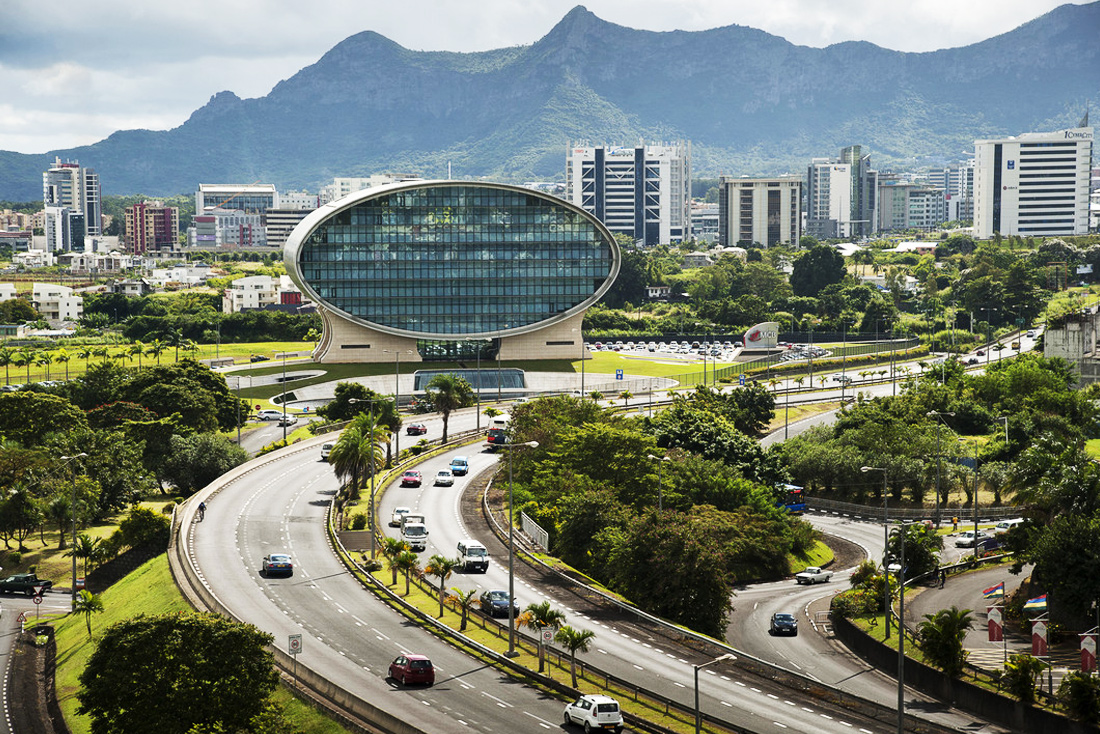 ✦ 80
✦ 80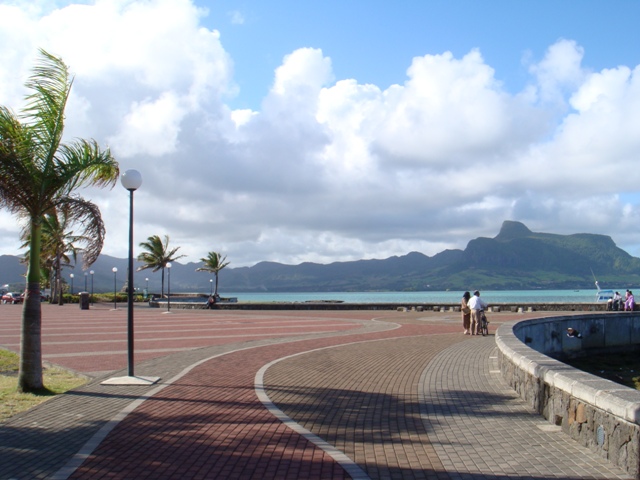 72
72Getting Your Income Documentation Story Straight
The EDB wants to see that your income is real, foreign-sourced, and predictable. What trips people up is not having insufficient income - most applicants at this stage have the funds - it's presenting it in a way that looks coherent on paper. A pension statement from a US provider is clean. A brokerage account showing monthly distributions is reasonably clean. A mix of rental income from three properties, some dividend reinvestment, and occasional consulting payments from two different countries is going to require more work to package.
The transfer requirement is also where the USD 1,500 versus USD 2,000 ambiguity matters in practice. Published guidance from different sources uses both figures, and the number your bank and the EDB actually apply may depend on when you apply and who you're dealing with. The safe approach is to prepare for USD 2,000 per month - both in your documentation and in your actual transfer plan - and treat USD 1,500 as a floor rather than a target. Going in with the minimum makes the process more fragile than it needs to be.
One thing that catches people off guard: the undertaking you sign at application commits you to making these transfers for the life of the permit. That's not a technicality. If your income situation changes significantly - you sell the asset generating the income, you restructure your portfolio, a pension provider changes payment arrangements - you need to understand how that affects your compliance posture. The permit is not revoked automatically, but your renewal depends on a clean transfer record, and the PR application after three years requires evidence of USD 54,000 transferred in total over those years.
The Housing Requirement and How People Get It Wrong
Mauritius has restrictions on where foreigners can buy property, and the retirement permit does not on its own give you the right to purchase any residential property you want. The permit is a residence permit, not a property ownership vehicle. Applicants sometimes arrive expecting that a 10-year permit means they can immediately buy a villa - and they can, in certain designated schemes like the Property Development Scheme or Smart City Scheme, but not on the open market, and not without separate approval.
For the application itself, proof of accommodation is required - but this is usually satisfied with a rental agreement or a letter from a hotel or short-term rental for your initial stay. You don't need to own property to get the permit. What you do need is a Mauritian address for the application and for receiving correspondence, and a bank account opened in Mauritius before the final permit is issued, which requires being physically present in the country.
The practical sequence most people use is: get Approval-In-Principle first, then travel to Mauritius on a tourist entry, open the bank account, make the initial transfer, do the medical exam, and sort out longer-term accommodation from inside the country rather than trying to commit to a lease before you've spent time in different areas. Renting for the first six to twelve months before deciding on a longer-term base - or a property purchase through one of the approved schemes - is the approach that tends to work out better.
What Actually Happens After You Land
The Approval-In-Principle is not the permit. It's permission to proceed, and there's a meaningful gap between receiving it and holding an actual residence permit card in your hand. After AIP, you travel to Mauritius, open a bank account (which takes time - Mauritian banks are thorough with due diligence on new foreign customers), make the required transfer, complete a medical examination with a local doctor, and then upload the post-AIP documents to the EDB platform. Only after that review is complete do you receive the permit itself.
Processing times from practitioners vary - a few weeks to a couple of months from complete submission is the range most cite - but that assumes your documents are in order and the EDB isn't backlogged. People who underestimate this gap sometimes find themselves in an awkward position: their tourist entry is ticking down, the bank account isn't open yet, and the medical appointment took longer to schedule than expected. None of these are insurmountable, but they compound if you haven't left yourself enough runway.
The bank account piece is worth treating as its own project. Mauritian banks - particularly the larger ones like MCB and SBM - will ask for source-of-funds documentation, proof of address, and sometimes additional compliance materials for foreign nationals. Arriving with a well-organized file - your AIP letter, your income documentation, your home-country bank statements - speeds this up considerably.
The Long-Term Path: PR and What It Actually Takes
The 20-year Permanent Residence Permit is available after three consecutive years on the retirement permit, provided you've transferred at least USD 54,000 in total over those three years. On paper that's clean arithmetic: USD 18,000 per year for three years. In practice, "consecutive" and "transferred" both matter. Gaps in your transfer record, periods spent outside Mauritius that raise questions about whether your residence was genuinely maintained, or a year where transfers fell short - any of these can complicate the PR application even if the total figure is technically there.
The 20-year PR is a long-duration residence status. It is not citizenship, and it doesn't automatically lead to one. Mauritian citizenship is a separate process, discretionary in significant ways, and the public guidance on it is thin enough that most immigration practitioners treat it as a long-term possibility rather than a planned outcome. If a Mauritian passport is your actual goal, you need specialist advice on that track before you commit to the retirement permit route, not five years in.
What the PR does give you is meaningful stability - a 20-year residence that doesn't require annual or biennial renewals, and a status that makes long-term financial and property planning considerably more straightforward.
The Occupation Permit vs. The Retirement Permit
If you're 50 or older but still earning active income - consulting, freelancing, running a remote business - the retirement permit is the wrong instrument. You'd be taking on the transfer obligation and the no-work restriction while your income profile actually fits the Occupation Permit (Self-Employed or Professional category) much better. The Occupation Permit allows you to work and run a business in Mauritius, has its own income and investment thresholds, and also leads to PR - just on a different timeline and with different conditions.
The retirement permit makes the most sense when your income genuinely doesn't require you to do anything in Mauritius to generate it. Pension, Social Security, investment distributions, rental income from property elsewhere - that's the profile this permit was designed for. If you're still building income rather than drawing it down, the OP route is worth a serious look even if the retirement permit seems simpler on the surface.
The obvious international comparison is Portugal's D7. It targets a similar profile - passive income earners and retirees - and the income thresholds are in a similar range. Portugal offers something Mauritius doesn't, which is an EU residency pathway and eventual citizenship on a five-year track. But Portugal comes with NHR regime changes that have made the tax picture less predictable than it was, higher living costs in most of the places people actually want to live, and a minimum-stay requirement that's enforced more strictly than Mauritius's relatively flexible physical presence expectations. For someone whose priority is a stable, low-friction base with a genuinely lower cost of living and no particular need for EU access, Mauritius holds up well against that comparison. For someone who wants the EU option kept open, Portugal is probably still the answer regardless of the added complexity.
Work Permissions
Application Steps
- 1
📋 Confirm income requirement
1 week
- 2
📄 Prepare documents
2-3 weeks
- 3
📬 Apply through EDB online platform
1-2 weeks
- 4
🏛️ Collect permit and open bank account
1-2 weeks
This visa requires proof of health insurance. Compare international plans before you apply.
Compare health insuranceWe may earn a commission at no cost to you.
Frequently Asked Questions
Click any question to expand the answer.
Ready to Apply?
Work with trusted visa specialists who handle the paperwork so you can focus on your move.
Get help with this visa →* We may earn a commission if you apply through our link
At a Glance
Last verified: July 15, 2026