Difficulty
Difficult
Overview
Getting the income documentation story straight
The core tension in this permit is structural, not bureaucratic: you're applying for status that explicitly forbids local work, which means every dollar of income you claim has to originate outside Kenya and stay that way for the life of the permit. Officers reviewing self-employment applications aren't just checking whether you earn enough. They're checking whether your business model is portable, whether it would keep functioning identically if you moved to a different country tomorrow. A US-based freelancer invoicing American or European clients through a US LLC or as a sole proprietor fits this cleanly. Someone who's picked up even a few local clients or started doing paid consulting for a Nairobi-based company complicates their own file, because that income falls outside what the permit allows and can undercut the entire premise of the application.
Pension income doesn't count toward this permit, which surprises a chunk of would-be applicants who assumed a self-employment or business permit was just Kenya's version of a retiree visa. It isn't. If your income is a pension, annuity, or social security payment with no active self-employment component behind it, this isn't your route, no matter how comfortably it would cover your cost of living. The permit is built around ongoing, demonstrable self-employment activity: invoices, client contracts, business registration documents, a pattern of deposits that reads as work income rather than passive income. Retirees sometimes try to route around this by registering a nominal consultancy or freelance business they don't actually operate, purely to generate qualifying paperwork. That kind of thin structure tends to show itself under scrutiny, and it's not a fight worth picking with an immigration officer who reviews these files for a living.
Sequence matters more than volume here. Build the documentation trail before you apply, not around the application. A freelancer who can show six months of consistent client invoices and bank deposits before ever submitting paperwork is in a materially different position than one who signs a single large contract the week before filing. The second pattern reads as staged, even when it's genuine, and staged-looking income is exactly what triggers requests for additional evidence or outright rejection.
Eligibility Requirements
Requirements Checklist
Tax Information
What Kenya Taxes and What It Doesn't
Kenya taxes residents on worldwide income, and there's no soft landing into that rule. Once you cross into tax residency, the Kenya Revenue Authority's claim on your return stops caring about geography: salary from a US employer, freelance invoices billed to American clients, foreign dividends, brokerage gains, and rental income from a property you still own back home all become fair game the same year your center of life shifts to Kenya. This isn't a light-touch territorial system where only local-source income counts. It's the wide net, and a lot of people moving on a business or self-employment basis assume otherwise until their first filing season.
The progressive scale that catches employment and business income runs in bands, and as of 2026 it starts at 10% on the first KES 24,000 of monthly income (roughly $186), rises to 25% on the next slice up to KES 32,333 (about $250), climbs to 30% up to KES 500,000 (around $3,876), then 32.5% up to KES 800,000 (about $6,200), with everything above that taxed at 35%. Most remote workers running a freelance or consulting operation through this permit land somewhere in the 30-35% range once converted income is annualized, which is a heavier bite than a lot of arrivals expect from a country often marketed as a low-cost base.
There is no preferential tax regime here for foreign remote workers or retirees, and nothing to register for in that sense. You pay the standard system: the progressive bands above on earned income, a flat 5% final withholding tax on dividends paid by a Kenyan resident company to a resident individual (15% for non-residents, itself final, and reducible only where a tax treaty applies, which the US and Kenya do not have), and a flat 15% capital gains tax on gains from land, buildings, or marketable securities, with the first KES 3 million of gain on a primary residence, about $23,000, exempt. Crypto and other digital asset transfers carry their own 3% levy on transaction value, an advance tax for residents rather than a final one. None of this bends in your favor for holding a self-employment permit. It's the same system Kenyan nationals live under, and that's the whole of it.
The US Return You Still Owe
None of the above touches your US filing obligation, because citizenship, not residency, is what the IRS taxes on. The Foreign Earned Income Exclusion lets you shelter up to $132,900 of earned income for tax year 2026, which covers remote salary and freelance revenue billed while physically in Kenya, but it does nothing for dividends, capital gains, rental income, pensions, or Social Security. Kenya's lack of a tax treaty actually simplifies one thing: the 330-day Physical Presence Test applies cleanly, with no bona fide residence ambiguity introduced by treaty tie-breaker rules, and either test works depending on how your first partial year lines up with the calendar. A housing exclusion of roughly $18,000 is also available on top of the earned income exclusion for those paying Nairobi rent, and it's routinely missed by people who file the FEIE and stop there.
The Foreign Tax Credit is the tool for everything the exclusion leaves exposed, and it matters more here than in a lot of countries because Kenya's own rates aren't low. At the lower end of the Kenyan bracket structure, the FEIE usually wins outright since Kenya's 10-30% bands sit below what the same income would face in the US. Higher up, once you're inside the 32.5-35% Kenyan brackets, the credit computed on Form 1116 starts pulling more weight, and for anyone drawing pension income, 401(k) or IRA distributions, or US Social Security while resident in Kenya, the credit is the only relief available at all, because no treaty exists to protect that income from Kenyan taxation in the first place. Kenya taxes foreign pensions, 401(k)/IRA distributions, and technically even Social Security as ordinary worldwide income up to 35%, with no totalization agreement to fall back on. Roth distributions sit in genuine gray territory locally: Kenya has no rule recognizing after-tax US treatment, so while many retirees take the position that qualified Roth withdrawals aren't taxable income there, nothing in Kenyan law confirms it either way.
The permit itself doesn't require a local bank account, but almost nobody runs a business or freelance income stream here without one, whether that's a commercial account at KCB or Equity or an M-Pesa-linked savings product. The moment combined balances across foreign accounts cross $10,000 at any point in the year, FinCEN Form 114 becomes mandatory, not discretionary, and the non-willful penalty for missing it sits around $16,700 for 2026, adjusting upward annually. People treat FBAR as an afterthought because the visa didn't ask for the account. The IRS didn't ask either, and files the penalty anyway.
The decisions that actually cost money in year one are narrow and specific: which FEIE test to elect given how your arrival date splits the calendar year, whether to run the housing exclusion alongside it, how to classify 401(k), IRA, or Roth distributions on a return where Kenya offers no treaty language to lean on, and whether the M-Pesa or bank account you inevitably open pushes you over the FBAR line before you've even noticed. None of these have a registration deadline the way a preferential tax regime would, so there's no calendar date forcing the issue, which is exactly why they get ignored until the return is already wrong. A first-year advisory engagement runs somewhere in the $1,500 to $3,000 range, and for anyone drawing both freelance income and a US pension while living in Nairobi or Mombasa, that's the year it earns its fee back in avoided penalties alone.
Living in Kenya
COL Index vs NYC
28.2
Monthly Cost (excl. rent)
$497
1BR Rent (City Center)
$259
Safety Index
44.0
Healthcare Index
62.0
Quality of Life Index
101.7
Time Zone
UTC+03:00
Capital
Nairobi
Population
53.8M
Official Languages
English, Swahili
Avg Internet Speed
45 Mbps
Public Transit Quality
Fair
With a budget covering rent and living costs, you'd need roughly $756/mo for a comfortable single-person lifestyle in Kenya.See how far your money goes →
🏙️ Best Cities in Kenya for Freelancers
 60
60 55
55 56
56 63
63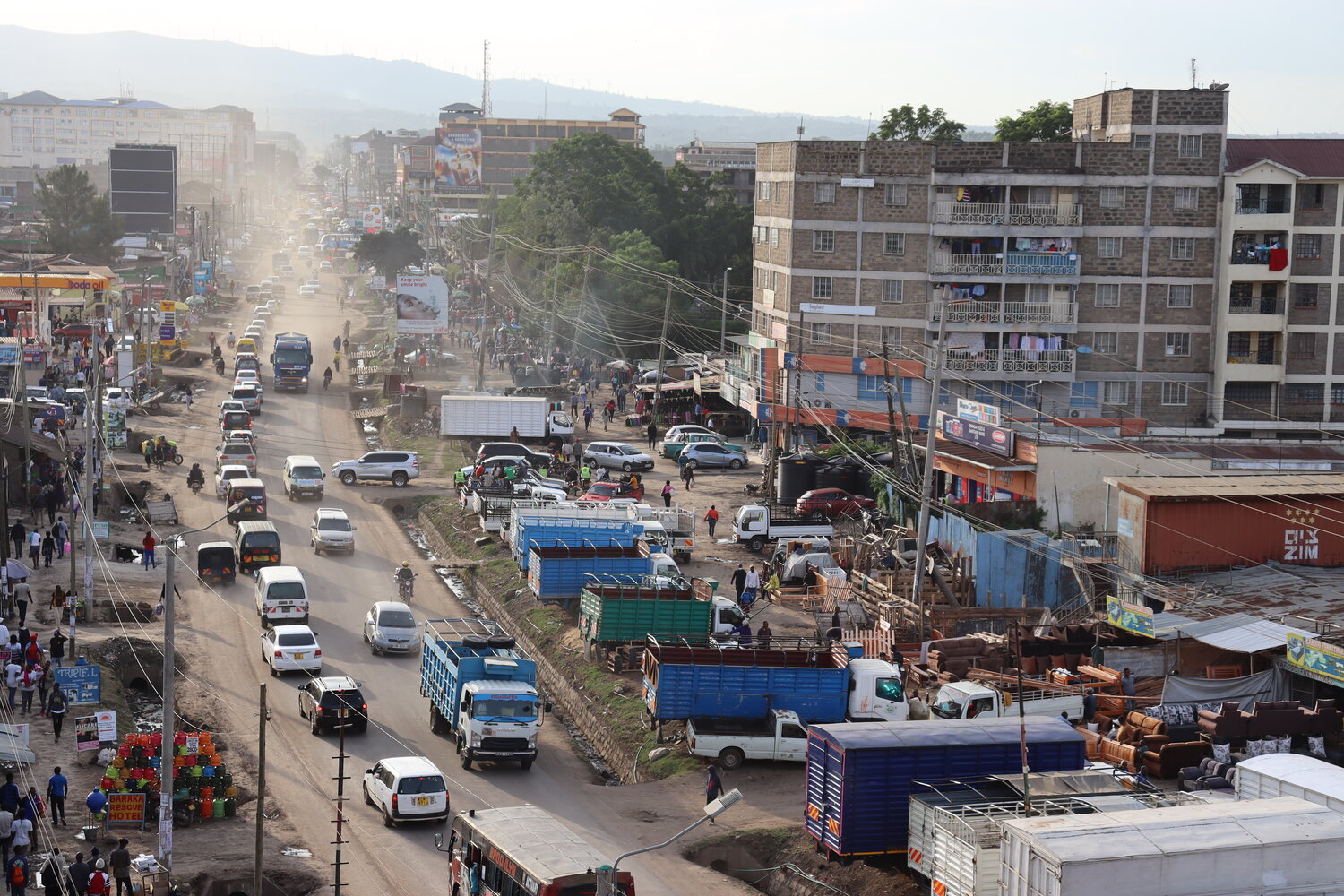 65
65The accommodation question and why it trips people up
Kenya doesn't ask for much in the way of formal bureaucracy on this permit, no interview, no medical exam, no apostilled documents, but the housing piece is where a surprising number of otherwise strong applications stall. The instinct for most remote workers moving abroad is to book a short-term rental or serviced apartment for the first few months, get settled, and sort out a longer lease once they know the neighborhood. That instinct works against you here. An address that reads as transient, month-to-month, easily abandoned, doesn't give an adjudicator confidence that you're actually establishing a base rather than passing through on an extended vacation with a work laptop.
The fix isn't complicated, it's just a matter of ordering things correctly. Lock down accommodation you can document with a proper lease or landlord letter before you're deep into the application, even if that means signing something longer than you'd ideally want on day one. A landlord willing to put a stamped, dated letter on paper confirming the arrangement is worth more to this file than a slightly cheaper Airbnb you can't formally document. People also underestimate how much a mismatch between stated address and actual billing address, utility accounts, or insurance correspondence can slow things down later. Keep the paper trail internally consistent from the start rather than patching it together when someone asks.
What happens after approval
Because this permit doesn't require a follow-on medical exam or in-person interview, the process from approval to actually holding the permit is lighter than in most countries with comparable freelancer routes. There's no local bank account requirement either, so you're not stuck opening a Kenyan account before you can complete anything administratively, which removes one common bottleneck people hit elsewhere. Health insurance coverage does need to be in place and needs to stay in place for the duration, and letting that lapse between renewals is one of the more avoidable ways people jeopardize a permit they otherwise qualify for cleanly.
The renewal itself deserves more planning than people give it. Because the permit is renewable rather than a one-time grant, treat the entire arrangement as a recurring administrative obligation rather than a box you check once. Set a calendar reminder well ahead of expiry, keep your income documentation current rather than archived from the original application, and don't let health insurance coverage gaps creep in during a renewal window. None of this is difficult. It's just easy to deprioritize once you're settled and the original application stress has faded.
The long-term path, or the absence of one
This is the part that changes people's plans once they actually sit down and think it through: this permit does not lead to permanent residency. It renews, and it renews indefinitely as far as the structure goes, but renewal is not accumulation toward settlement. If your mental model going in was "start on a freelancer permit, transition to PR after a few years, eventually consider citizenship," that model doesn't apply here. You're signing up for a recurring, renewable stay, full stop.
That's not automatically a dealbreaker. Plenty of people want exactly this: a light-touch, renewable base with low day-to-day bureaucracy, no interview cycle, no medical exam requirement, and freedom to keep working for clients elsewhere without entangling their tax or immigration status with a citizenship track they never wanted. But if permanent settlement is actually the goal, and you're only choosing Kenya because a business permit sounded like the fastest way in, it's worth being honest with yourself now rather than three renewal cycles from now. A permit with no PR mechanism means every year you stay, you're still, administratively, a guest.
Kenya versus the obvious alternative
The comparison most applicants actually run in their heads is Kenya against one of the more established East African or Southern African remote-work routes, places that market themselves harder to the same US freelancer audience. The honest version of that decision comes down to what you're optimizing for. Kenya's process here is comparatively unencumbered: an application fee around $155 as of 2026, no apostille requirement, no interview, no medical exam, open to applicants of any nationality without restriction. That combination is rare. Most countries chasing the same digital nomad demographic ask for more paperwork authentication, more in-person steps, or higher fees in exchange for a similar length of stay.
What Kenya doesn't offer, and what some of its regional competitors do dangle at least on paper, is any credible bridge to permanent status. If you're choosing purely on ease of entry and monthly cost of living, Kenya wins that argument without much of a fight. If you're choosing on which country you might actually want to plant real roots in over five or ten years, the calculus shifts, and it shifts toward whichever alternative has a permit structure that actually accumulates into something. That's a decision about your own five-year horizon more than it is about comparing checklists, and it's worth making deliberately rather than defaulting to whichever country had the easier application this month.
Work Permissions
Application Steps
- 1
Research
Verify all requirements for this visa type and country
- 2
Gather documents
Obtain all required documents (passport, financial statements, health insurance, etc.)
- 3
Complete application
Fill out the official application form
- 4
Submit application
Submit all documents to the appropriate consulate or online portal
- 5
Pay fees
Complete payment of application and visa fees
- 6
Attend interview
If required, attend any scheduled interviews
- 7
Wait for decision
Processing times vary from weeks to months
- 8
Travel and activate
Once approved, travel to the country and complete any activation requirements
Frequently Asked Questions
Click any question to expand the answer.
Ready to Apply?
Work with trusted visa specialists who handle the paperwork so you can focus on your move.
Get help with this visa →* We may earn a commission if you apply through our link
At a Glance
Last verified: July 15, 2026