Jordan Golden Visa
Jordan · Middle East
Data updated Sep 3, 2026
Processing Time
2 wks–3 wks
Difficulty
Difficult
Duration
60 months
Overview
For the Jordan Golden Visa, the hard gate is investment, not income. The minimum investment is USD 280,000 in real estate, consistent with the broader rule that residency by investment can be obtained from property of at least 200,000 Jordanian dinars held long term. No minimum monthly income or savings level is publicly specified, and the rules do not distinguish between Social Security, pension payments, ETF dividends, or rental income. If you can document the USD 280,000 property purchase and clean source of funds, your ongoing income mix from abroad is not a primary qualifying test.
Residence is granted for 60 months at a time and is renewable, with a defined tolerance for absence: you can be outside Jordan up to 180 consecutive days without breaking your status. No explicit annual day-count presence requirement is publicly specified beyond that absence cap, so someone splitting time 6–7 months per year between Jordan and, say, Portugal or the US can generally maintain this residency as long as they do not exceed the 180‑day stretch away. If you intend to be gone for 9–10 months at a time, you risk being treated as having abandoned residence.
From a long-term planning perspective, this path does not lead to permanent residency. The program is structured so that after 5 years (the same 60‑month duration shown in the program details), you do not have a route to permanent residency, provided the qualifying investment remains in place and you have stayed within the 180‑day maximum consecutive absence. The golden visa itself should be viewed primarily as a residency and stability tool rather than a quick passport path.
Process friction is moderate on paper but relatively low in formal red tape: there is no apostille requirement, no FBI background check, a required medical certificate, and no interview flagged in the core rules, which aligns with a bureaucracy score of 1.3 / 5. The true burden is financial and documentary: you must evidence the USD 280,000 real estate purchase, source of funds, and standard civil documents, but there is no published application fee or renewal cost schedule. Processing time is typically 2 to 3 weeks as of 2026, so planning for a few weeks of lead time is prudent for relocators with hard move dates.
This structure makes most sense if you want to park around USD 280,000 into Jordanian property for at least 5 years while keeping the option to be away for up to 180 days at a stretch and potentially graduate to permanent residency. It is a poor fit if tying up that capital in a single-country real estate market would crowd out your diversified portfolio or if you need a clearly defined, time-bound path to citizenship rather than an open-ended horizon.
Eligibility Requirements
Any nationality can apply for the Jordan Golden Visa in principle, as the program’s nationality restrictions field is set to “all.” In practice, applicants from sanctioned or high-friction jurisdictions such as Iran, Syria, North Korea, Cuba, and sometimes Russia or Belarus can run into banking compliance problems and enhanced security screening that make approvals much less likely even where not legally barred. Before assembling documents or wiring funds for the USD 280,000 real estate investment, verify current eligibility directly with Jordan’s Ministry of Investment (which oversees the investment residency schemes) or the Jordan Investment Commission’s successor unit handling residency-by-investment.
Min Age
18 yrs
Duration
60 months
Requirements Checklist
• Identity: valid passport (at least 6 months validity); passport-size photographs; birth certificate.
• Financial: bank statements; tax returns; proof of investment funds; property appraisal or investment agreement; bank confirmation or share purchase agreement.
• Background: police clearance certificate; marriage certificate; divorce certificate or death certificate (if applicable).
• Health: medical certificate.
• Employment: professional references; company registration papers; employment plan (if applicable).
Tax Information
Local tax regime and what it means for you
Jordan operates a territorial-style system in practice, where residents are taxed on Jordan-source income, while foreign-source income often falls outside regular local taxation; however, the exact tax regime type for this visa is not publicly specified in the visa facts. Personal income tax is progressive from 5% to 30% on Jordan-source earnings such as local employment, business profits, and rental income from property located in Jordan. For a Jordan Golden Visa holder living off ETF dividends, US or Canadian pension distributions, or rental income from properties in the US, Canada, or Australia, those foreign flows are generally treated as foreign-source and, under the territorial logic described in scraped sources, are not taxed in Jordan, though this is not formally codified in the visa facts dataset.
Capital gains taxation on foreign investments is the key FIRE question. If you sell index funds or ETFs held in a US or EU brokerage, those gains are foreign-source; under a territorial system they are usually exempt in Jordan, but the visa facts do not disclose a definitive rule or rate. You should assume that capital gains from selling Jordanian real estate or Jordan-listed securities will be treated as Jordan-source and taxed according to local law, while gains on foreign portfolios are outside Jordan’s normal tax scope unless you structure them through a Jordanian entity.
Tax residency triggers are not disclosed in the visa facts, but Jordan conventionally uses a 183‑day presence test to treat an individual as resident for tax purposes. The Jordan Golden Visa itself does not automatically make you a tax resident; your day count and center-of-life connections drive that analysis. There is no special named preferential regime like Portugal’s NHR or Italy’s flat-tax regime attached to this visa, so you are on the standard rules once resident.
Practical compliance involves registering with the Income and Sales Tax Department once you become resident and have Jordan-source income, obtaining a tax number, and filing annual returns on Jordan-source income by the standard deadlines (exact filing dates are not specified in the visa facts). Because the tax treaty status with the US is listed as unknown, American investors cannot assume relief on dividends, pensions, or Social Security under a bilateral treaty and must check specific treaty tables separately.
For US Citizens and Green Card Holders
US persons remain taxed on worldwide income regardless of Jordanian residency or the territorial approach. The Foreign Earned Income Exclusion (FEIE) on Form 2555 can shield up to USD 126,500 of earned income in 2024 (remote salary, self-employment, consulting), but it does nothing for the portfolio flows many Jordan Golden Visa users rely on: ETF dividends, bond interest, capital gains, pension distributions, or Social Security. If you spend most of the year in Jordan or elsewhere abroad, you can qualify via the Physical Presence Test (330 full days outside the US in any 12‑month window), while the Bona Fide Residence Test is more relevant if you anchor yourself in Jordan for multiple years with a 60‑month residence permit.
The Foreign Tax Credit (FTC) on Form 1116 becomes interesting only where Jordan taxes your income and the effective Jordanian rate is higher than or comparable to the US rate. For a pure FIRE profile with only foreign-source dividends and US rental income, Jordan’s territorial orientation means Jordan often takes no tax, leaving you with little or no FTC capacity; you will pay full US tax on those streams. If you add Jordan-source income (local employment, a Jordanian business, or rental from your Jordan property), those Jordanian taxes can usually be claimed as credits against US tax on that same income stream.
FBAR (FinCEN 114) and FATCA Form 8938 are unavoidable once you open local financial accounts to manage the USD 280,000 investment or rental flows. If the aggregate value of your non-US financial accounts exceeds USD 10,000 at any point in the year, you must file an FBAR; non-willful penalties start at USD 10,000 per violation. Form 8938 thresholds are higher but often apply for investors with substantial offshore assets. Because the visa facts do not explicitly require a local bank account, but real estate settlements in Jordan in practice go through local banks, assume that you will trigger these reporting rules.
For this combination—US worldwide taxation layered onto Jordan’s territorial logic—the right team matters: a US CPA specializing in expat taxation (FEIE, FTC, FBAR, FATCA) and a Jordan-based tax advisor to handle residency registration and Jordan-source income. The USD 1,500–3,000 you spend in year one on coordinated advice often pays for itself through correctly structured ownership, optimized FEIE/FTC usage, and avoiding FBAR penalties.
Living in Jordan
COL Index vs NYC
37.2
Monthly Cost (excl. rent)
$670
1BR Rent (City Center)
$345
Safety Index
60.0
Healthcare Index
65.2
Quality of Life Index
125.0
Time Zone
UTC+03:00
Capital
Amman
Population
10.2M
Official Languages
Arabic
Avg Internet Speed
256 Mbps
Public Transit Quality
Good
With a budget covering rent and living costs, you'd need roughly $1,015/mo for a comfortable single-person lifestyle in Jordan.See how far your money goes →
🏙️ Best Cities in Jordan for Golden Visa Holders
 58
58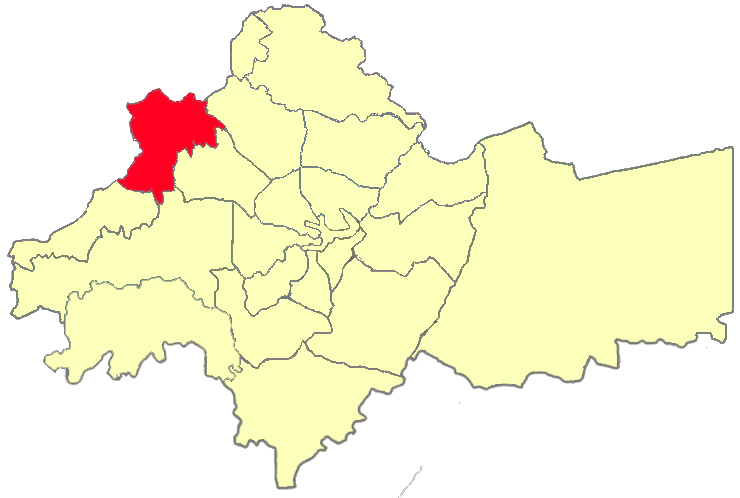 56
56 56
56 60
60 55
55The investment vehicle and how people get it wrong
There isn't one route into this visa, there are several, and picking the wrong one for your situation costs more time than any documentation gap. Real estate is the most common path, and it's the one most applicants default to because it feels tangible. But a property purchase brings its own appraisal requirement, and appraisals in a market you don't live in can run stubbornly out of step with what a buyer actually paid, especially when the purchase happens from abroad without someone local checking comparables first.
A business investment route asks for company registration papers and, where relevant, an employment plan, plus professional references that back up the applicant's stated role. That's a heavier ongoing commitment than a deposit or a share purchase, and it's the one people underestimate most: it's not a one-time transaction, it's a business that needs to keep functioning, on paper and in practice, for years afterward.
Share purchase agreements and bank confirmations sit at the lighter end. They're faster to document but come with their own scrutiny, since a reviewer will want to see that the shares or deposit represent a real, arm's-length position and not a temporary parking spot for money that leaves right after approval.
The mistake isn't picking the wrong category in the abstract. It's picking a category that doesn't match how involved the applicant can actually be from the US. A property that needs a local manager, a business that needs local hires, a deposit that just sits there, each demands a different kind of ongoing attention, and the honest question to ask before choosing is which of these someone can actually sustain administratively while still living six or more time zones away for most of the year.
After approval, before the permit is real
Preliminary approval feels like the finish line, and it isn't. The process runs on a sequence where preliminary approval precedes final submission, which means the file gets a first pass, gaps get flagged, and only after that does the complete package go in for the decision that actually produces a residency card. Applicants who treat the preliminary stage as the outcome tend to relax at exactly the point where the paperwork still needs finishing.
There's no single online portal walking an applicant through this, and the process can run either from abroad or in-country, often tied to when the property purchase itself closes. That flexibility is useful but it also means there's no default rail to follow, which is why local consultants show up so consistently in how these applications get put together. Someone coordinating the Investment Commission submission, the property or business paperwork, and the timing between them from a distance is doing work that would otherwise fall entirely on the applicant, badly, from a time zone that makes same-day follow-up impossible.
The quoted review window sits at two to three weeks, which is fast for an investment-based permit, and that speed is specifically about the Commission's own decision once a complete file is in front of it. It does not include the time to finalize a property purchase, get an appraisal that matches the purchase agreement, or assemble a business registration if that's the chosen route. Anyone budgeting their move around that two-to-three-week figure alone will be surprised by how much runway the steps before it actually consume.
There's no interview and no medical exam built into this path, which removes two of the more unpredictable delay points other visas carry. What replaces that friction is document consistency: a file where the appraisal, the bank confirmation, and the tax returns all tell the same number the same way moves through review in exactly the window it's supposed to.
The five-year path to permanent residence
Permanent residence sits five years out, and the visa itself renews along the way, which sounds like a formality until the actual presence math sets in. Staying eligible isn't just a matter of keeping the investment intact and paying whatever renewal costs come due. There's a physical presence expectation running in parallel, and a ceiling on how long an absence can stretch before it starts working against that record, currently set at 180 consecutive days.
That combination punishes a specific pattern: buying in, collecting the card, and going back to living in the US full time with occasional short visits. It's an easy trap for someone whose income is fully remote and untethered from Jordan in the first place, because nothing about earning a living requires being there, and the visa's investment logic doesn't force a reason to show up either. The presence requirement is the mechanism that closes that gap, and it's the part of the file people plan around least, because it doesn't show up as a line item on an application checklist, it shows up two or three years in as a pattern of stamps in a passport.
The renewability of the underlying permit helps here. There's no cliff where a single missed year kills the whole track, but there is a cumulative record being built toward that five-year mark, and Commission-side reviewers looking at a renewal will be looking at that record as much as at the investment's continued existence. Anyone structuring their life around holding this visa passively, the way some Caribbean or Gulf residency programs are marketed and sometimes used, should assume Jordan expects a heavier physical footprint than that model, even though nothing in the entry requirements forces the point up front.
Jordan versus the Gulf alternative
The comparison most people run in their head is Jordan against something like the UAE, and the honest answer is that they're not solving the same problem. The UAE's golden visa track tends to draw people who want a business and banking base in the region with minimal presence obligations and a tax environment built around that light touch. Jordan asks for more actual residence over time and offers a slower, more traditional route toward permanent status rather than a residency card that mostly functions as a banking and travel convenience.
For a US remote worker earning in the $4,000 to $10,000 a month range, the real decision isn't which country has the flashier pitch, it's which one matches the kind of presence they're actually willing to build. Someone who wants a legal base while continuing to live mostly in the US, taking occasional trips to keep a foothold, will find the UAE's lighter presence expectations a better fit for that pattern than Jordan's. Someone who wants an actual five-year track toward permanent status, and who is willing to spend real time living there rather than just holding paper, is better served by Jordan's structure, even though it demands more of that time upfront.
Cost is the other lever, and it cuts both ways depending on the vehicle chosen on either side. What doesn't cut both ways is nationality restriction: Jordan's program is open regardless of nationality, which removes a filtering step some competing programs apply. For someone weighing both, the deciding question isn't the sticker price on the investment, it's whether the applicant actually wants to become a resident of the place, in the literal sense of spending meaningful time there, or wants a card that mostly stays in a drawer.
Work Permissions
What's typically permitted:
Application Steps
- 1
📋 Choose real estate investment
1-4 weeks
- 2
📄 Gather identity and financial documents
1-2 weeks
- 3
📋 Finalize property purchase
2-4 weeks
- 4
📬 Submit to Jordan Investment Commission
Same day to 1 week
- 5
⏳ Undergo background checks
not specified
- 6
⏳ Receive residency permits
not specified
- 7
🏛️ Register locally upon arrival
1-2 days
Frequently Asked Questions
Click any question to expand the answer.
Ready to Apply?
Work with trusted visa specialists who handle the paperwork so you can focus on your move.
Get help with this visa →* We may earn a commission if you apply through our link
At a Glance
Last verified: July 9, 2026