Chile Residencia Temporal, Jubilados y Rentistas
Application Fee
$205
Processing Time
about 1 year
Difficulty
Moderate
Duration
24 months
Path to Citizenship
5 years
Overview
The Residencia Temporal for retirees and rentistas (Jubilados y Rentistas) is a Chilean residence permit for foreigners who live on a retirement pension, on rent from real estate or on income from financial assets. It is subcategory 11 of the Residencia Temporal and is issued by the Servicio Nacional de Migraciones (SERMIG).
The rules set no fixed income figure. Applicants prove a regular pension or income that covers at least their basic needs in Chile, measured against indicators estimated by the Ministerio de Desarrollo Social y Familia. The permit lasts up to 2 years, can be renewed for further two-year periods and allows paid work.
Applications are filed online from outside Chile, and US citizens pay a government fee of USD 205. The catches are a wait that commonly runs 4 to 12 months, documents that must be apostilled and recent, and worldwide tax exposure once the first three years of residence end.
Eligibility Requirements
The permit has no nationality restrictions, and passports from every country are accepted. Nationality changes the government fee, which SERMIG sets for each country in its fee table by nationality. Chile also runs a separate residence route for Mercosur nationals, handled as its own subcategory of the Residencia Temporal.
Application Fee
$205
Duration
24 months
Language
Documents must be in Spanish or English, or carry an official translation authorized by the competent body.
Pension / Social Security · Passive / Investment Income
Requirements Checklist
0 of 11 documents in hand
0%These take the longest, so start them first.
Request these while the slow items are in progress.
You only need these on the day you submit.
Extra requirements for this visa
- Apostille required on official documents
How and where to apply
Online from outside Chile, through the Portal de Trámites Digitales of the Servicio Nacional de Migraciones, with a ClaveÚnica login or a portal account.
Tax Information
How Chile taxes new residents
Under Article 3 of the Ley sobre Impuesto a la Renta, a foreigner who sets up domicile or residence in Chile is taxed only on Chilean-source income during the first three years counted from entry. The regional director of the Servicio de Impuestos Internos can extend that period in qualified cases, and the request has to be filed before the three years end. Foreign pensions and foreign investment income become taxable in Chile when the period ends without an extension.
Rental income from property in Chile counts as Chilean-source income from the start. Residents pay the Impuesto Global Complementario on a progressive scale: annual income up to 13.5 UTA is exempt and the top marginal rate is 40% on income above 310 UTA.
What the IRS still requires
The US-Chile income tax treaty entered into force on 19 December 2023. It applies to taxes withheld at source from 1 February 2024 and to other taxes for periods beginning on or after 1 January 2024. It includes tie-breaker rules for people who count as residents of both countries and credits for tax paid in the other country. A savings clause lets the US keep taxing its citizens as if the treaty did not exist, so Chilean residency does not end a US filing obligation. Roth IRA distributions to a Chilean resident are exempt to the extent they would be exempt in the US.
The Foreign Earned Income Exclusion is USD 132,900 for 2026 but covers earned income only, so pensions, rent and dividends fall outside it. The Foreign Tax Credit is the tool that applies to passive income. A US person whose foreign accounts, Chilean ones included, exceed USD 10,000 in total at any point in the year files FinCEN Form 114 (FBAR). Single filers living abroad also file Form 8938 when foreign financial assets pass USD 200,000 at year end or USD 300,000 at any time.
Living in Chile
COL Index vs NYC
38.5
Monthly Cost (excl. rent)
$670
1BR Rent (City Center)
$474
Safety Index
39.4
Healthcare Index
63.7
Quality of Life Index
108.6
Time Zone
UTC-06:00
Capital
Santiago
Population
19.1M
Official Languages
Spanish
Avg Internet Speed
359 Mbps
Public Transit Quality
Good
With a budget covering rent and living costs, you'd need roughly $1,144/mo for a comfortable single-person lifestyle in Chile.See how far your money goes →
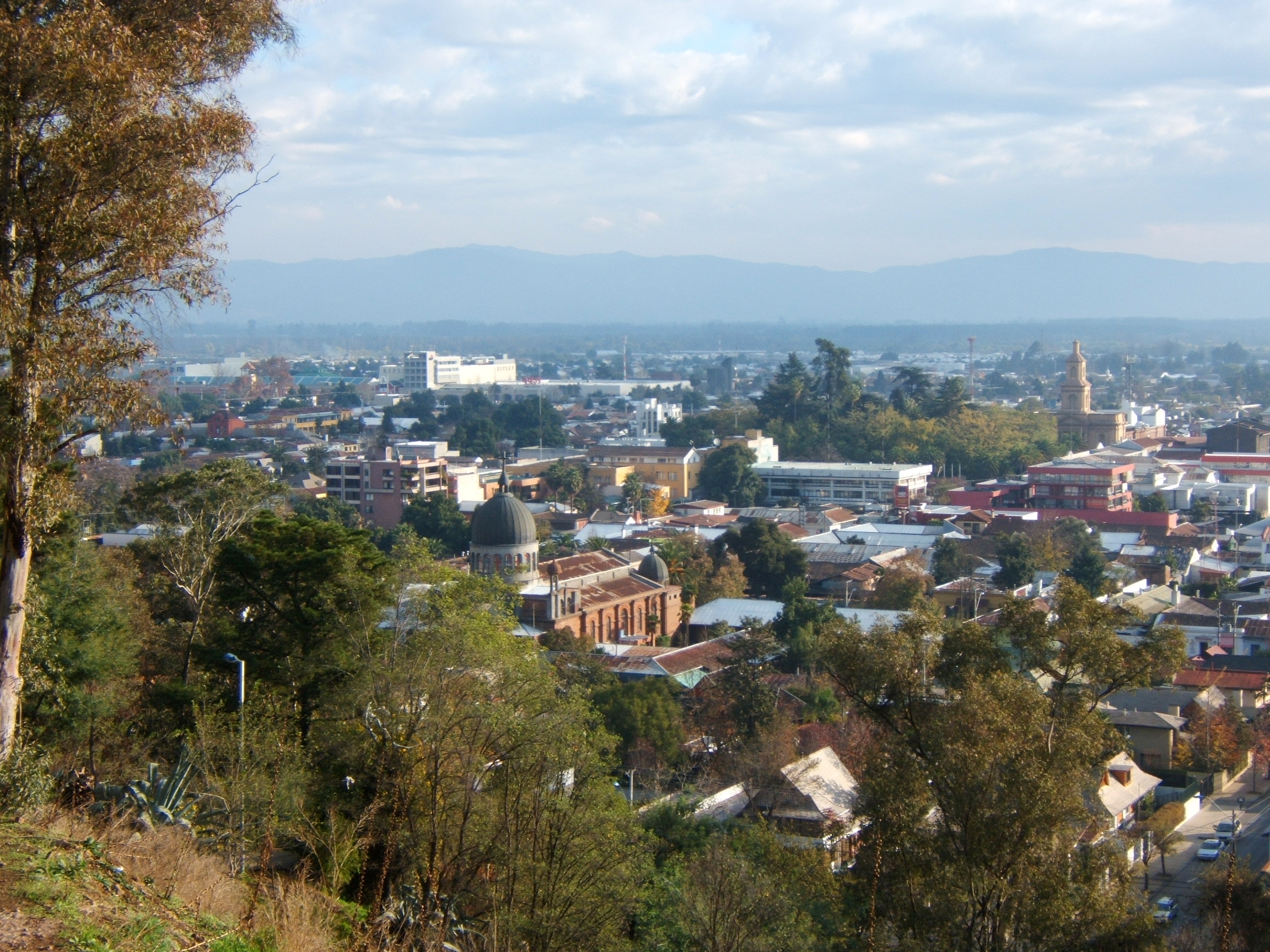
🏙️ Best Cities in Chile for Retirees
 72
 72
 68
 69
 72
 72
Who qualifies
The permit covers two groups. Retirees hold a pension granted under the rules of their country of residence, and the pension must cover at least their basic needs during the stay. Rentistas receive constant income from real estate or financial assets, paid regularly and enough to cover at least basic needs. For both groups the benchmark is the set of indicators estimated by the Ministerio de Desarrollo Social y Familia.
Passports from every country are accepted, but the passport must stay valid for at least one year from the application date. Applicants over 18 also need a criminal record certificate from their country of origin, or from any country where they lived in the past five years, issued no more than 60 days before filing.
Where to apply
This subcategory is filed only from outside Chile, through the Portal de Trámites Digitales with a ClaveÚnica login or a portal account. People on a tourist stay in Chile cannot apply for residence from inside the country except in a few listed cases, such as family ties to a Chilean or a permanent resident.
What the documents must look like
Documents issued abroad must carry an apostille or be legalized under Articles 345 and 345 bis of the Código de Procedimiento Civil. Anything in a language other than Spanish or English needs an official translation, and every file goes up as a PDF. Documents from private bodies must be attached within 30 days of issue, and those from public bodies within 60 days, unless the document sets its own validity. SERMIG can ask for current documents while it reviews the file, so papers close to expiry are worth renewing early.
Retirees prove the pension with a retirement certificate that states the amount and duration, plus the receipt for the latest payment. Rentistas who own property add the title certificate, a lease showing the regular payment owed to them and proof of the rental income. Rentistas who own financial assets add a certificate of ownership and proof of income that comes directly from those assets. Title certificates for property in Chile, and assets that earn income in Chile, do not need an apostille.
Costs
The government fee depends on nationality and is listed in US dollars in a SERMIG fee table by nationality, paid in Chilean pesos. Dependents pay USD 15, and children and teenagers are exempt. For applications filed abroad, payment goes through the portal of the Tesorería General de la República before the application is sent.
The later Residencia Definitiva costs CLP 142,726 for most applicants and nothing for minors or for a foreigner married to a Chilean. Apostille, translation and certificate costs depend on the issuing country and come on top.
Permit duration and renewal
The permit is issued for a maximum of two years and can be renewed for two years at a time. After approval, the applicant downloads the Estampado Electrónico and has 90 days to enter Chile. The two years start on the date of entry.
Renewals are filed between 90 and 10 days before the permit expires. Retirees show that they still hold the pension and add a document proving enough financial means to cover living costs in Chile. Rentistas show current documents proving that their income still covers the cost of living.
Working in Chile
Temporary residents may carry out paid activities under Ley 21.325, so the retiree and rentista permit does not bar employment or running a local business.
Family members
Family members who fall within points 1 and 2 of Article 74 of Ley 21.325 can receive a Residencia Temporal as dependents of the holder. Their permit lasts only as long as the holder’s residence does.
Rejection and appeals
SERMIG can reject an application that misses the requirements, relies on false or altered documents or hits a bar in Article 32 of Ley 21.325. Before rejecting, it notifies the applicant by email and allows 10 business days to submit documents on the stated ground. The applicant can then file an administrative appeal under Ley 19.880, which suspends the effects of the decision.
Path to Residencia Definitiva and citizenship
Holders can apply for the Residencia Definitiva, which allows indefinite residence. For temporary residences requested after 14 May 2022 the minimum is 24 months of residence, and time spent outside Chile lengthens it: up to 2 months of absence keeps it at 24 months, more than 2 and up to 6 months raises it to 30, more than 6 and up to 12 months to 36, and more than 12 months to 48. The minimum can drop to 12 months under Article 79 of Ley 21.325 when circumstances such as available income or a pension apply. It can also rise above 24 months, for example when household income falls below the minimum set for basic needs or when the person has labor, tax or migration infractions.
A Residencia Definitiva lapses after more than two continuous years outside Chile, unless the holder asks a Chilean consulate for a two-year extension in the last 60 days before the two years run out. Chilean citizenship through a Carta de Nacionalización requires a valid Residencia Definitiva and five years of residence counted from the Estampado Electrónico of the temporary residence that led to it.
Work Permissions
Application Steps
- 1
📋 Create a SERMIG account
- 2
📄 Order the criminal record certificate and photo
- 3
📄 Assemble and apostille the income documents
- 4
📬 Pay the fee and submit the application
- 5
⏳ Follow the status and answer notices
4 to 12 months
- 6
🏛️ Download the Estampado Electrónico and enter Chile
Up to 90 days
- 7
📅 Get the Chilean ID card
Within 30 days of arrival
- 8
📬 Plan the renewal or the permanent residency filing
10 to 90 days before the permit expires
Planning a long stay? Compare international health plans for Chile.
Compare health insuranceWe may earn a commission at no cost to you.
Compare this visa
Curated comparisons that include this route.
Frequently Asked Questions
Click any question to expand the answer.
Ready to Apply?
Work with trusted visa specialists who handle the paperwork so you can focus on your move.
Get help with this visa →* We may earn a commission if you apply through our link
At a Glance
Last verified: October 26, 2026