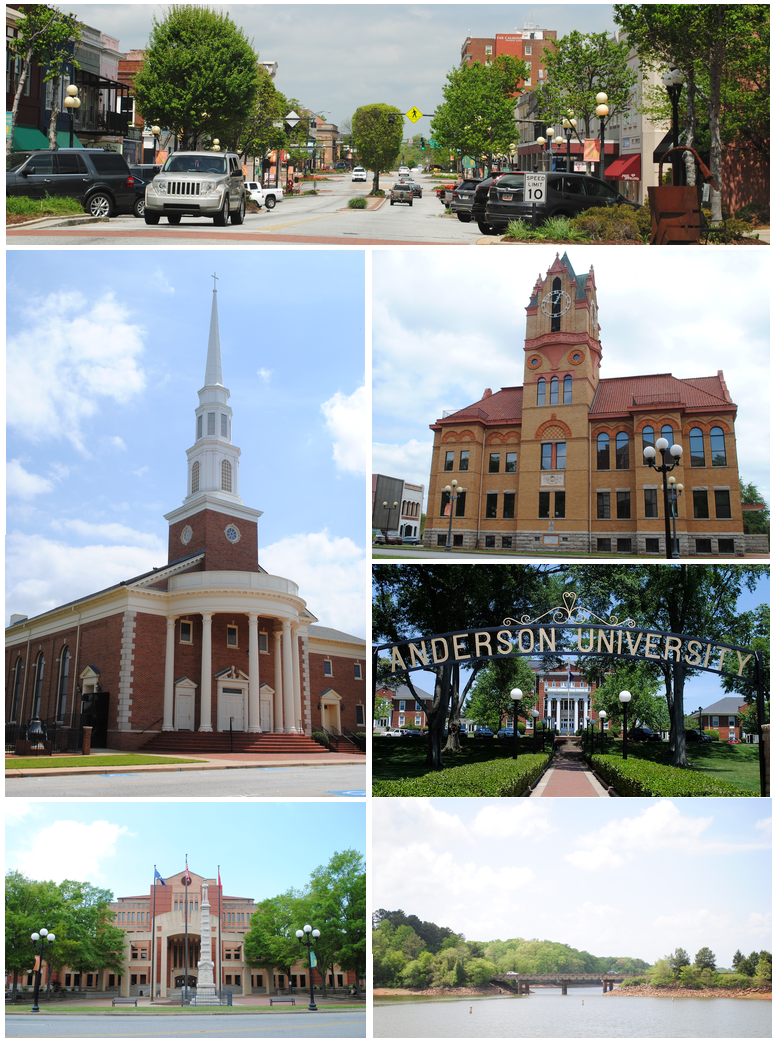
Anderson sits in east-central Indiana, roughly 6 kilometers from its regional airport, at an elevation of 270 meters. The city experiences a humid continental climate, with hot, muggy summers from June through August and cold, snowy winters from December through February, while spring and fall stay mild. For expats, the main residential draw is the North Anderson neighborhood, which offers a straightforward, suburban feel close to everyday conveniences. The expat community itself is essentially nonexistent, so newcomers should expect to build their social circle from scratch rather than plug into an established network.
Living costs here are notably lower than in major US metros, with a cost of living index of 63 out of 100 relative to New York City. A one-bedroom apartment in the city center rents for $944/mo, while the same unit outside the center runs $833/mo; three-bedroom units go for $1,428/mo downtown and $1,182/mo further out. For a single adult, the budget tier totals $1,133/mo including rent, the mid-range tier comes to $1,610/mo, and the comfortable tier reaches $1,866/mo. Excluding rent, a single person spends about $980/mo, while a family of four spends $3,450/mo. Utilities add $170/mo, internet $58/mo, and a mobile plan $51/mo, with a monthly public transport pass at $65/mo and a gym membership at $25/mo. Local wages are surprisingly solid, with an average monthly net salary of $4,549/mo, which means even the comfortable tier leaves meaningful room for savings.
Safety in Anderson is moderate, with a safety index of 55 out of 100 and a crime index of 45 out of 100, where lower is safer. That puts it in a middle ground, not a high-risk city but not a particularly tranquil one either. Healthcare quality is rated as good, which is reassuring for both short-term visitors and long-term residents. The air quality index sits at 52, lower being better, so pollution is not a major concern for most people, though those with respiratory sensitivities might still notice seasonal variations.
Getting to Anderson is straightforward via its nearest airport, AID, located just 6 kilometers away. Visa pathways exist for those looking to stay longer, though specific program names are not covered here; the standard US immigration routes apply, and English is widely spoken, which eases the paperwork and daily life. This city suits practical-minded travelers and remote workers who value low overheads over urban excitement. The digital nomad score of 60 out of 100 reflects decent but not exceptional infrastructure, with average internet speeds of 85 Mbps. Retirees might find the 56 out of 100 retiree score a bit underwhelming, while the overall expat score of 64 out of 100 and a FIRE score of 64 out of 100 make Anderson a reasonable choice for those prioritizing financial independence over cultural buzz.