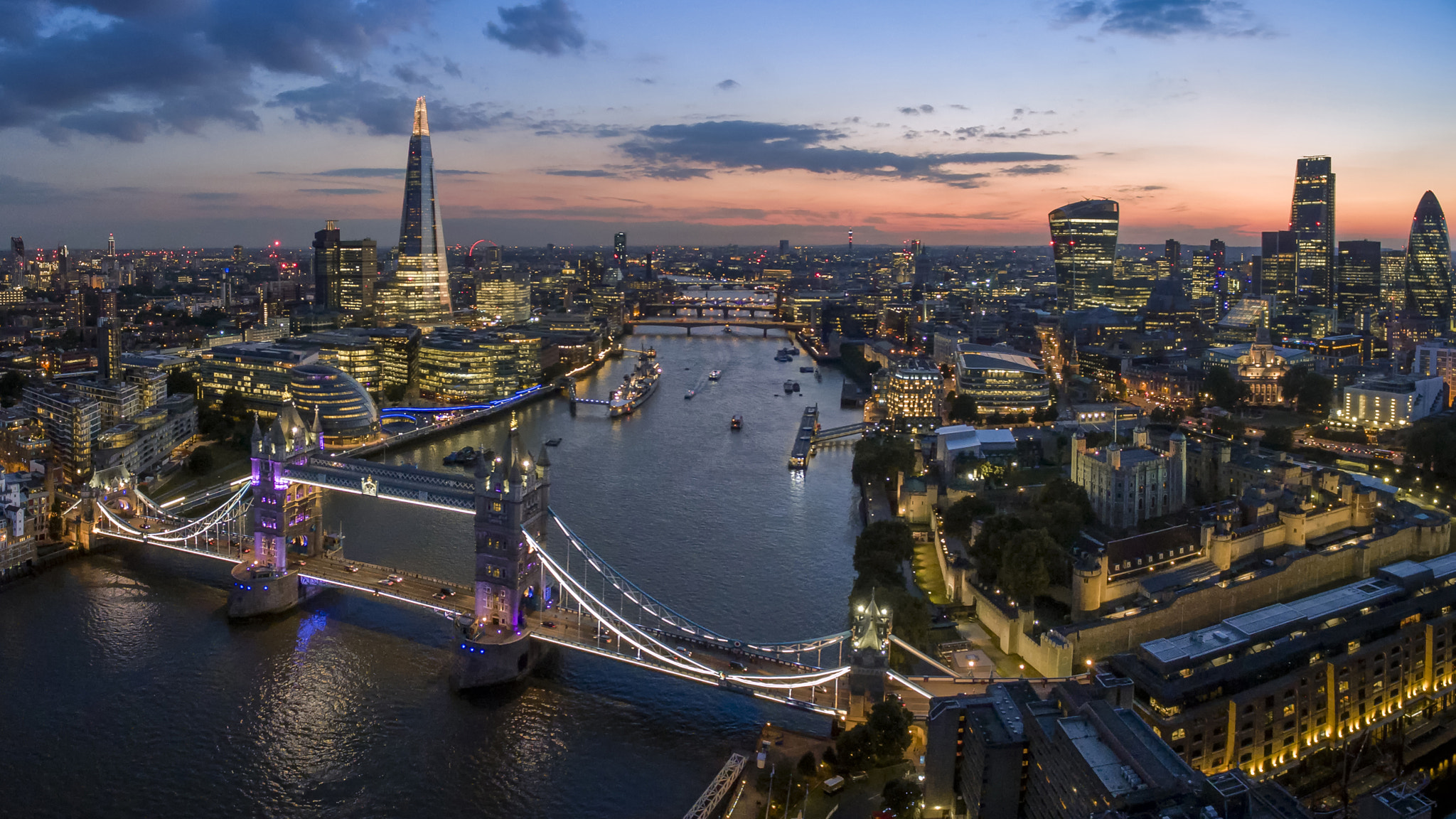
London sits low on the Thames, just 11 meters above sea level, with a temperate oceanic climate that brings mild summers and cool, damp winters. The city stretches across 8.8 million people, and expats tend to cluster in neighborhoods like Islington, Kensington, and Shoreditch, each offering a different rhythm of London life. Islington pulls in young professionals with its Georgian squares and weekend markets, Kensington appeals to those who want leafy streets and museum-adjacent calm, while Shoreditch draws creatives and tech workers with its galleries and nightlife. The weather rarely extremes, so you can plan a walk along the river most months, just keep an umbrella handy.
Living costs here are steep but not as punishing as New York, with the cost of living index sitting at 93 out of 100. A one-bedroom in the city center runs $826 per month, dropping to $661 outside the center, while a three-bedroom in the center costs $1,277 and $969 further out. For a single adult, the budget tier total including rent comes to $815 per month, the mid-range tier to $1,298, and the comfortable tier to $1,669. Excluding rent, a single person spends about $1,450 monthly, and a family of four around $5,200. Utilities run $132, internet $42, a mobile plan $16, and a monthly public transport pass $53. A meal at an inexpensive restaurant sets you back $19, a three-course dinner for two at a mid-range spot costs $73, and a cappuccino is $4. The average monthly net salary is $2,731, which means many locals budget carefully, especially for housing.
On safety and health, London performs well. The safety index is 70 out of 100, and the crime index is 28 out of 100, where lower is safer, so you can generally walk around at night in central areas without constant worry. Healthcare quality is rated excellent, and the city has a robust public health system that residents and expats can access once they are set up. Air quality is moderate, with an index of 45, so it is not pristine but far from the worst in Europe. You will find English widely spoken, which removes a major barrier for newcomers, and the large, active expat community means you can quickly find social circles and practical advice.
Getting to London is straightforward via the nearest airport, LCY, located 13 kilometers from the city center, which offers quick connections to the financial district and beyond. For visas, you will need to research the current pathways, as the rules change frequently and depend on your nationality and work situation. This city suits a wide range of people: digital nomads score it 71 out of 100, retirees 54, and the overall expat score is 69. If you value cultural depth, reliable public transit, and a global hub for work, London delivers, but you should come with a realistic budget and a plan for housing. The FIRE score is 45, so it is not the cheapest place to build wealth, but for those who prioritize experience over savings, it remains one of the most compelling cities in the world.
Estimate the cost of moving to London, United Kingdom
Get a free moving cost estimate for moving to London, United Kingdom. Takes 10 seconds.
How much are you shipping?
When are you moving?
Powered by Sirelo. Free quotes from international movers.
🏚️ Cost of Living
💰 Budgets and Costs
$1,155/mo, one person, rent included
Selected: budget lifestyle
London at the budget tier comes to about $1,155 a month for one adult, with $661 of that going to rent. Beyond rent the estimate covers $135 on groceries, $74.00 on dining out, $42.00 on entertainment and lifestyle, $190 on utilities and connectivity and $53.00 on transport.
Rent
$661/mo
1BR outside the centre
Groceries
$135/mo
75% of mid-range grocery spend
Dining out
$74.00/mo
4 inexpensive meals
Entertainment & lifestyle
$42.00/mo
1 cinema trip, 8 cappuccinos
Utilities & connectivity
$190/mo
utilities, mobile, internet
Transport
$53.00/mo
Monthly pass
Budgets (excl. rent)
Single person$494/mo
Excludes rent. The total above is all-in, rent included.
$1,373/mo, one person, rent included
Selected: mid-range lifestyle
London at the mid-range tier comes to about $1,373 a month for one adult, with $661 of that going to rent. Beyond rent the estimate covers $180 on groceries, $185 on dining out, $104 on entertainment and lifestyle, $190 on utilities and connectivity and $53.00 on transport.
Rent
$661/mo
1BR outside the centre
Groceries
$180/mo
Staples basket scaled to a full month
Dining out
$185/mo
10 inexpensive meals
Entertainment & lifestyle
$104/mo
gym, 2 cinema trips, 12 cappuccinos
Utilities & connectivity
$190/mo
utilities, mobile, internet
Transport
$53.00/mo
Monthly pass
Budgets (excl. rent)
Single person$712/mo
Excludes rent. The total above is all-in, rent included.
$1,807/mo, one person, rent included
Selected: comfortable lifestyle
London at the comfortable tier comes to about $1,807 a month for one adult, with $826 of that going to rent. Beyond rent the estimate covers $252 on groceries, $329 on dining out, $157 on entertainment and lifestyle, $190 on utilities and connectivity and $53.00 on transport.
Rent
$826/mo
1BR in the centre
Groceries
$252/mo
140% of mid-range grocery spend
Dining out
$329/mo
6 inexpensive meals + 6 mid-range meals
Entertainment & lifestyle
$157/mo
gym, 4 cinema trips, 20 cappuccinos
Utilities & connectivity
$190/mo
utilities, mobile, internet
Transport
$53.00/mo
Monthly pass
Budgets (excl. rent)
Single person$981/mo
Excludes rent. The total above is all-in, rent included.
Estimates for one adult, built from this city's average prices and the usage shown for each tier. Your spending will differ with how often you eat out and where you live.
A 1BR in the center runs about $825.9/mo. If your income is in another currency, bank FX fees add up. A multi-currency account can cut that cost.
London is genuinely safe for daily life, with a Security Index of 70 reflecting well-policed neighborhoods and reliable infrastructure. Most expats walk freely during day and evening hours across central areas like Westminster, Kensington, and Canary Wharf. The city's reputation for safety is largely justified—violent crime against expats is rare, and the police presence is visible and responsive. However, like any major city, awareness and common sense matter.
Petty theft and pickpocketing are the primary concerns, especially on crowded public transport, at major tourist sites, and in busy shopping districts like Oxford Street. Avoid displaying expensive jewelry, phones, or cameras carelessly. South London areas (Peckham, Brixton) and parts of East London have higher property crime rates and should be researched before choosing accommodation. Solo female travelers report feeling safe overall, though standard urban precautions apply—avoid isolated areas late at night and use licensed taxis or Uber rather than hailing cabs.
The UK has stable governance, reliable police, and no significant political instability affecting expats. Occasional protests occur but rarely turn violent or disrupt daily life. Corruption is minimal, and the legal system is transparent and fair. London is one of Europe's safest major cities for long-term residents. Americans will find the rule of law predictable and institutions trustworthy. Overall, it's an excellent choice for expats prioritizing safety and stability.
🏥 Healthcare
Excellent
Public Hospitals
Yes
Private Clinics
Yes
English-Speaking Doctors
Widely Available
See how London's healthcare compares with Killearn
🌤️ Climate
Summer Temp
23°C
Winter Temp
2°C
Humidity
75%
Air Quality Index
45
Annual Rainfall
781 mm
Best Months
JunJulAugSep
Climate Notes
Temperate oceanic climate with mild summers and cool, damp winters.
💻 Digital Nomad
Avg Internet Speed
85 Mbps
Internet (monthly)
$42/mo
Coworking Availability
Abundant
Coworking Spaces Nearby
52
Digital Nomad Score
71/100
Community Notes
London is a global digital nomad hub with endless coworking spaces and cultural experiences.
See how London's digital nomad life compares with Killearn
🧳 Expat Life
English Proficiency
Widely Spoken
Expat Community
Large & Active
Top Neighborhoods
Islington, Kensington, Shoreditch
Banks Nearby
307
ATMs Nearby
748
Expat Life Notes
A global capital with an endless variety of expat communities and world-class amenities.
Pros
✓ Global career hub
✓ Incredible diversity
✓ Infinite entertainment options
Cons
✗ Very high cost of living
✗ Gray and rainy weather
✗ Fast-paced and crowded
🏘️ Neighborhoods in London
Notable areas of London, with descriptions adapted from public reference sources. Rent figures are Numbeo's city-wide averages, not prices for a specific area.
Conditions can change from one block to the next, and these descriptions are general guides, not safety assessments. Before choosing where to stay or live, check current travel advisories, talk to people who live there, and visit in person if you can.
Camden
Camden is an inner northern district of London whose heart is Camden Town, known for its market and colorful nightlife. King's Cross, St. Pancras and Euston stations are in the area. Camden Town has been a hub of alternative culture for half a century, with large markets of independent stalls, varied cuisine and live music. It grew from a 19th-century suburban town into a working-class inner-city area, and gentrification has occurred.
Camden has long had strong associations with drugs, in particular cannabis (weed) and magic mushrooms. Even during daylight, you are likely to be offered weed or hashish. These dealers will usually accept no for an answer. Remember that these drugs are still illegal, streetside dealers are not to be trusted and often just steal your money if you look interested. Also, there are many undercover police around to catch you. Walking around Camden at night is generally fine, but gangs of youths can seem threatening, and best avoided if alone. At night walking on well-lit streets, such as Camden High Street, is a good idea but take a taxi if you are feeling insecure. Fake goods are found in abundance in Camden. Most of the time it's fairly obvious (Bolex watches, etc.), but be careful when purchasing - refunds are not common. Fake DVDs are mostly terrible quality.
Bloomsbury is a district in London's West End within the London Borough of Camden. It is a fashionable residential area and an intellectual and literary hub, home to the British Museum, University College London, other University of London colleges and headquarters, the New College of the Humanities, the University of Law, the Royal Academy of Dramatic Art, and the British Medical Association.
Numbeo city average, center: $826 (updated Oct 8, 2026)
Covent Garden is a London district on the eastern fringes of the West End, between St Martin's Lane and Drury Lane. It is linked to the former fruit-and-vegetable market in the central square, now a shopping and tourist site, and to the Royal Opera House.
Numbeo city average, center: $826 (updated Oct 8, 2026)
Holborn-Clerkenwell is a central London district that acts in many ways as a buffer between the West End and the City of London financial district. Holborn covers the southeastern part of the London Borough of Camden and part of the Ward of Farringdon Without in the City of London. The area is noted for its ties to the legal profession, the diamond center at Hatton Garden, and Great Ormond Street Hospital.
Numbeo city average, center: $826 (updated Oct 8, 2026)
Leicester Square is a pedestrian square in London's West End and the center of the city's entertainment district. Laid out in 1670 as Leicester Fields, it became an entertainment center and now holds nationally significant cinemas such as the Odeon Luxe Leicester Square and Empire, Leicester Square, often used for film premieres. The nearby Prince Charles Cinema shows cult films and marathon runs.
Numbeo city average, center: $826 (updated Oct 8, 2026)
London has a population of approximately 8,799,728 people.
A single person can expect to spend around $2,065 per month in London, including rent. A 1-bedroom apartment in the city center costs approximately $826/month.
The nearest airport to London is LCY, approximately 12.6km away.
London is considered relatively safe, with a safety index of 70.0. As with any city abroad, expats should research specific neighborhoods before committing to a location.
London has an average internet speed of 85 Mbps. It is considered a well-established digital nomad destination.
No. The UK Skilled Worker visa still requires a UK employer sponsor, not remote work for a foreign company. The Global Talent visa and High Potential Individual visa remain the closest alternatives, and the UK has not introduced a digital nomad visa as of 2025.
Depends entirely on your income. If you're earning $100k+ in finance, tech, or law, London salaries typically compensate for the cost of living and the career network is unmatched in Europe. If you're earning a median salary (~$45k), you'll likely feel squeezed — housing alone can consume 40-50% of take-home pay. For FIRE pursuers or retirees on fixed income, London is a poor choice; cities like Lisbon, Valencia, or Tbilisi offer far better purchasing power.
London's healthcare quality is rated excellent. The city has a cost of living index of 92.5 and a monthly cost of $1,450 for one person without rent, but specific Immigration Health Surcharge fees and private insurance costs are not included in our data.
Based on current data, the average 1-bedroom rent in central London is $827.85 per month, and the cost of living index is 92.5. For more affordable options, consider areas outside the center, but specific neighborhood data is not provided.
London is generally safe, but petty crime like pickpocketing can occur in touristy areas. Some neighborhoods have higher crime rates, so it's wise to research specific areas before committing to living there; consult recent crime statistics online.
Current data shows a one-bedroom apartment in central London rents for about $827.85 per month, much lower than older estimates. Rent still varies by location, but the city-center average is roughly $830, with outer zones generally cheaper.
London has excellent internet infrastructure, with average speeds well-suited for remote work. Fiber optic is widely available, ensuring reliable connectivity for video calls and large file transfers.
Yes, London boasts a huge number of coworking spaces, from WeWork to smaller, independent options. You'll find spaces catering to various budgets and industries throughout the city.
London has a temperate maritime climate, meaning mild winters and cool summers. Expect rain year-round, with the most sunshine in June and July. Pack layers and waterproof clothing!
London's public transport system is extensive and efficient, with the Underground (Tube), buses, and overground trains covering the entire city. An Oyster card or contactless payment makes travel easy and affordable.
London has a massive and diverse expat community, making it relatively easy to connect with people from all over the world. Numerous expat groups and social events can help you build a network.
As a US citizen, you're still required to file US taxes even while living abroad. The Foreign Earned Income Exclusion (FEIE) and Foreign Bank Account Report (FBAR) are important considerations; consult a tax professional specializing in expat taxes.
Groceries are moderately expensive, but you can save money by shopping at budget supermarkets like Aldi or Lidl. Eating out can be pricey, especially in central areas; expect to pay £15-£25 for a casual meal.
English is the primary language, so accessing healthcare is straightforward. Many doctors and specialists are fluent in English, and private healthcare options are readily available if you prefer faster access or specialized care.
Major international banks operate in London, making it easy to open an account. Services like Wise (formerly TransferWise) offer competitive exchange rates and low fees for international money transfers.
Living comfortably on $3,000 USD per month in London would be challenging, requiring significant compromises on location and lifestyle. It's possible, but you'd likely need to live in a less central area, cook most meals at home, and limit discretionary spending.
There isn't a specific retirement visa for the UK. Americans typically explore options like the Investor visa (requiring substantial investment) or rely on short-term tourist visas, understanding they can't reside permanently. Consulting an immigration lawyer is crucial.
London's pace of life is fast and crowded, but it has a walkability score of 98 and excellent healthcare, making it manageable for active retirees. The city offers parks and quiet spots despite a safety index of 70 and a cost of living index of 92.5 relative to NYC.
Cutting in line is a major offense, as is being overly loud on public transport. Avoid talking about politics or religion unless you know someone well, and always say 'please' and 'thank you' – politeness is highly valued.
Credit cards are widely accepted, especially Visa and Mastercard, but it's wise to have a debit card for ATM withdrawals. Inform your bank of your travel plans to avoid your cards being blocked, and be aware of potential foreign transaction fees.
Websites like Airbnb, Booking.com, and SpareRoom are good starting points for short-term rentals. Look for apartments near tube stations for easy access to coworking spaces and other amenities. Consider areas like Shoreditch or Camden for a vibrant atmosphere.
Richmond, with its beautiful park and riverside setting, is popular with retirees. Chiswick and Hampstead also offer a quieter pace of life, good amenities, and access to green spaces, though they tend to be more expensive.
Opt for living in Zone 3 or further out from the city center, where rents are significantly lower. Take advantage of free activities like visiting museums and parks, and cook at home more often than eating out.
ATM fees vary, but many ATMs, especially those not affiliated with major banks, charge a fee for foreign card withdrawals. Look for ATMs associated with Barclays, HSBC, or NatWest, as they often have lower or no fees. Your bank may also charge a fee.
Rental income from properties in lower cost of living areas, dividend stocks, and high-yield savings accounts can supplement your FIRE budget. Consider investing in UK-based index funds for diversification, but consult a financial advisor about tax implications.
Many of London's major museums, like the British Museum and the National Gallery, offer free admission. Walking tours, exploring parks like Hyde Park and Regent's Park, and attending free events are also great options.
Mobile data in London is reliable with average internet speeds of 85 Mbps, supporting smooth connectivity for streaming and browsing. Major providers like EE, Vodafone, and O2 offer 4G and 5G coverage along with pay-as-you-go plans. Free Wi-Fi is also common in cafes and public spaces.
The smaller living spaces, higher cost of living, and different driving rules (driving on the left) are common adjustments. Also, understanding British slang and adapting to a more reserved social culture can take time.
You'll typically need proof of address (utility bill or tenancy agreement), passport, and potentially a visa or proof of residency. Some banks may require a letter from your employer or a reference from your US bank.
Cost-of-living and visa updates for London and the rest of United Kingdom. Free with RA Postcards.
By submitting your email address, you will receive a free subscription to RA Postcards and special offers from Rewire Abroad and our affiliates. You can unsubscribe at any time, and we encourage you to read more about our Privacy Policy.