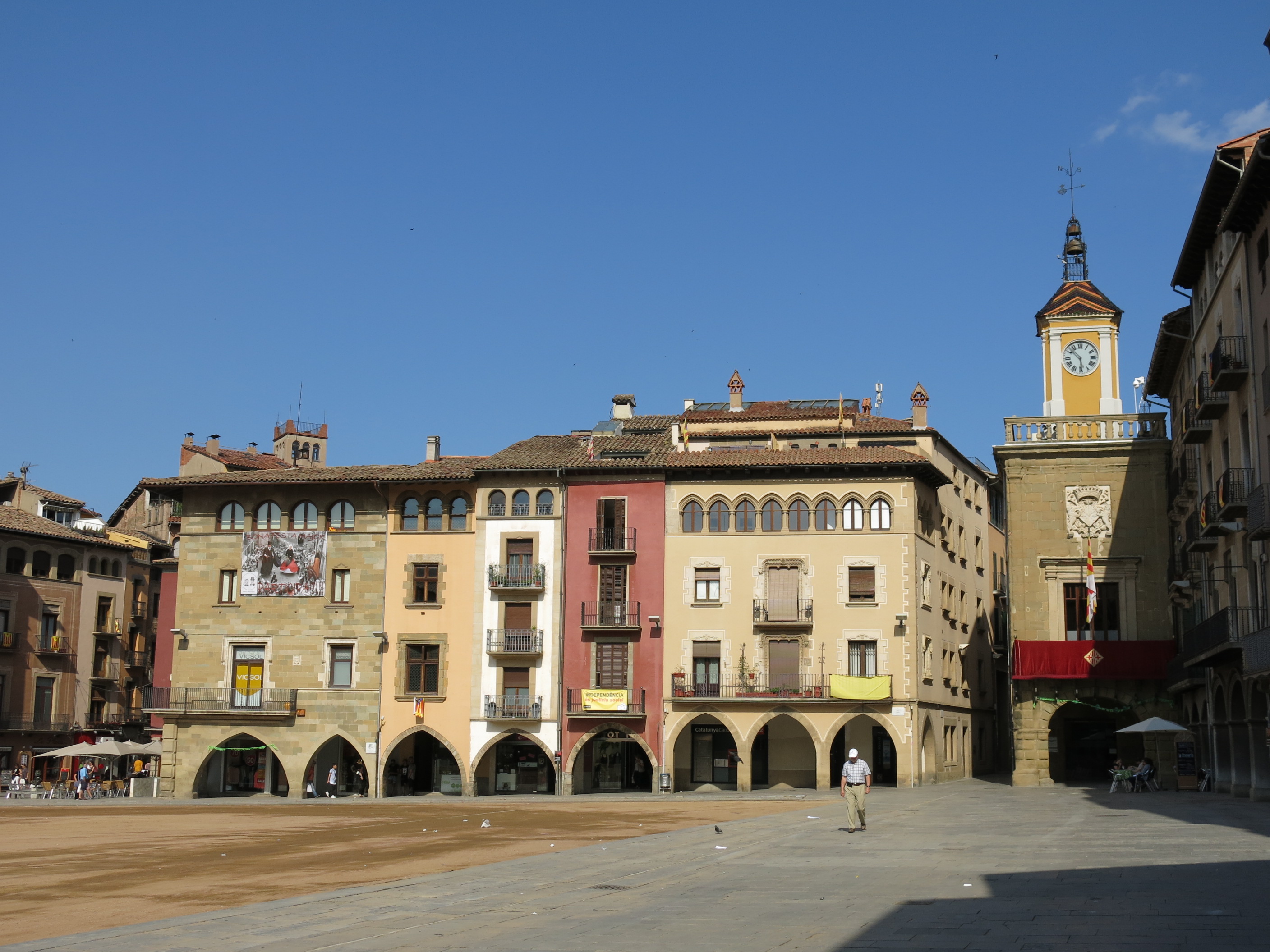
Vic's economy revolves around Universitat de Vic, which anchors white-collar employment and keeps the city functioning as a regional hub. Beyond academia, light manufacturing and services dominate; this isn't a startup scene or remote-work magnet. The university drives most stable income here, followed by retail and hospitality tied to the 50,000-person population. Don't expect tech jobs or freelance-friendly infrastructure—Vic is practical, not aspirational.
Rent runs €800–900/month for a one-bedroom city center, reasonable by Catalan standards but not cheap. Public transport connects reliably to Barcelona (1 hour by train, €8–12) and Girona, though you'll want a car for countryside access. Healthcare is solid through Spain's public system; bureaucracy for residency is standard EU friction—expect 2–3 months for NIE and empadronamiento. Winter fog is relentless (November–February), temperatures drop to -10°C regularly, and locals aren't exaggerating about the damp.
Weekends mean hiking in nearby Montseny, tapas in the medieval quarter, or day-tripping to Barcelona. The expat community is small and quiet—mostly academics and EU remote workers, not party-focused. Food is excellent: local sausage, seasonal vegetables, Catalan wine. Vic suits people seeking authentic small-city life with university culture, not those craving nightlife or digital nomad infrastructure.
Estimate the cost of moving to Vic, Spain
Get a free moving cost estimate for moving to Vic, Spain. Takes 10 seconds.
How much are you shipping?
When are you moving?
Powered by Sirelo. Free quotes from international movers.
🏚️ Cost of Living
💰 Budgets and Costs
$861/mo, one person, rent included
Selected: budget lifestyle
Vic at the budget tier comes to about $861 a month for one adult, with $463 of that going to rent. Beyond rent the estimate covers $136 on groceries, $67.00 on dining out, $26.00 on entertainment and lifestyle, $145 on utilities and connectivity and $24.00 on transport.
Rent
$463/mo
1BR outside the centre
Groceries
$136/mo
75% of mid-range grocery spend
Dining out
$67.00/mo
4 inexpensive meals
Entertainment & lifestyle
$26.00/mo
1 cinema trip, 8 cappuccinos
Utilities & connectivity
$145/mo
utilities, mobile, internet
Transport
$24.00/mo
Monthly pass
Budgets (excl. rent)
Single person$398/mo
Excludes rent. The total above is all-in, rent included.
$1,075/mo, one person, rent included
Selected: mid-range lifestyle
Vic at the mid-range tier comes to about $1,075 a month for one adult, with $463 of that going to rent. Beyond rent the estimate covers $182 on groceries, $168 on dining out, $93.00 on entertainment and lifestyle, $145 on utilities and connectivity and $24.00 on transport.
Rent
$463/mo
1BR outside the centre
Groceries
$182/mo
Staples basket scaled to a full month
Dining out
$168/mo
10 inexpensive meals
Entertainment & lifestyle
$93.00/mo
gym, 2 cinema trips, 12 cappuccinos
Utilities & connectivity
$145/mo
utilities, mobile, internet
Transport
$24.00/mo
Monthly pass
Budgets (excl. rent)
Single person$612/mo
Excludes rent. The total above is all-in, rent included.
$1,332/mo, one person, rent included
Selected: comfortable lifestyle
Vic at the comfortable tier comes to about $1,332 a month for one adult, with $561 of that going to rent. Beyond rent the estimate covers $255 on groceries, $219 on dining out, $128 on entertainment and lifestyle, $145 on utilities and connectivity and $24.00 on transport.
Rent
$561/mo
1BR in the centre
Groceries
$255/mo
140% of mid-range grocery spend
Dining out
$219/mo
6 inexpensive meals + 6 mid-range meals
Entertainment & lifestyle
$128/mo
gym, 4 cinema trips, 20 cappuccinos
Utilities & connectivity
$145/mo
utilities, mobile, internet
Transport
$24.00/mo
Monthly pass
Budgets (excl. rent)
Single person$771/mo
Excludes rent. The total above is all-in, rent included.
Estimates for one adult, built from this city's average prices and the usage shown for each tier. Your spending will differ with how often you eat out and where you live.
A 1BR in the center runs about $560.71/mo. If your income is in another currency, bank FX fees add up. A multi-currency account can cut that cost.
Vic is a genuinely safe, walkable city where expats report feeling comfortable day and night. The medieval town center is well-lit and populated, with a strong local community presence. While it's smaller and quieter than Barcelona or Madrid, this actually enhances safety—petty crime is minimal, and violent crime is rare. Most expats describe it as feeling safer than comparable U.S. towns of similar size.
Petty theft exists but is uncommon; standard precautions (not flashing valuables, securing bags) suffice. Scams targeting tourists are minimal here since Vic isn't a major tourist hub. Solo female travelers report no particular concerns. The main risk is occasional pickpocketing in crowded markets or during festivals, but this is infrequent. Avoid isolated areas late at night as in any small city, though this is more about common sense than genuine danger.
Catalonia has experienced political tension around independence, but Vic itself remains stable and welcoming to foreigners. Police are reliable and professional. Corruption is not a concern in this region of Spain. For an American considering relocation, Vic presents minimal geopolitical risk and is genuinely one of Spain's safer smaller cities—ideal for remote workers or retirees seeking a quiet, secure European base with authentic local culture.
Vic has a safety index of 39.71/100. Petty theft and lost belongings are the most common problems for newcomers. Compare travel insurance before you go.
Vic experiences a temperate Mediterranean climate with hot, dry summers and cold, damp winters, but limited industrial pollution due to its smaller size and rural surroundings.
💻 Digital Nomad
Avg Internet Speed
70 Mbps
Internet (monthly)
$23/mo
Coworking Availability
Moderate
Coworking Spaces Nearby
0
Digital Nomad Score
63/100
Community Notes
Vic's historical charm attracts creatives who appreciate a balance of inspiration and tech access.
Located in the heart of Vic, near the Plaça Major, Coworking Vic offers a friendly and collaborative atmosphere. It's a great option for digital nomads looking for a central location and a sense of community.
Espai 114 provides a modern and bright workspace with various options, including fixed desks and meeting rooms. Situated near the train station, it's convenient for those traveling to and from Barcelona.
Located on Rambla del Passeig, Regus Vic offers a professional and well-equipped workspace with flexible terms. It's a reliable choice for those seeking a corporate environment and established brand.
See how Vic's digital nomad life compares with Cuenca
🧳 Expat Life
English Proficiency
Common in Tourist Areas
Expat Community
Small
Top Neighborhoods
Centro
Banks Nearby
19
ATMs Nearby
3
Expat Life Notes
A prosperous Catalan town. The expat community is small and mostly integrated into the local food and leather industries.
Pros
✓ High quality food
✓ Safe
✓ Good local wealth
Cons
✗ Language barrier (Catalan essential)
✗ Quiet
🏘️ Neighborhoods in Vic
Areas of Vic that expats often consider.
Conditions can change from one block to the next, and these descriptions are general guides, not safety assessments. Before choosing where to stay or live, check current travel advisories, talk to people who live there, and visit in person if you can.
El Centre
Historic heart, vibrant, bustling
The city center, home to the Plaça Major, cathedral, and many shops and restaurants. Expect a lively atmosphere, especially during market days and festivals. Very walkable, but parking can be challenging. Popular with those who want to be in the thick of things.
L'Atlàntida
Modern, residential, family-friendly
A newer area with modern apartments and green spaces, located near the L'Atlàntida cultural center. More residential and quieter than El Centre, making it suitable for families or those seeking a more relaxed environment. Requires a bit more reliance on public transport or a car.
La Guixa
Quiet, residential, affordable living
A more traditional residential neighborhood with a mix of older and newer buildings. Offers a more local feel and generally lower rental prices. While not as central, it's still within walking distance of the city center for those who enjoy a stroll.
Santa Anna
Up-and-coming, diverse, local flavor
A neighborhood with a mix of cultures and a growing number of independent businesses. It's becoming increasingly popular with younger residents and those seeking a more authentic experience. Still close to the center, but with a distinct character.
Sant Josep Obrer
Working-class, authentic, budget-friendly
A more traditional working-class neighborhood with a strong sense of community. Offers some of the most affordable housing options in Vic. While further from the main tourist attractions, it provides a glimpse into everyday life in the city.
El Sucre
Historic, charming, slightly upscale
Located near the old sugar factory (now a cultural center), this area features renovated buildings and a pleasant atmosphere. It's generally considered a more desirable and slightly more expensive area to live in. Close to amenities and the city center.
Page 1 of 2
Could living/working in Vic cut years off your work life?
With a 1-bedroom in the center at $561/mo, your FIRE number here might be much lower than you think.
At the mid-range tier, one adult needs about $1,075 a month in Vic, rent included, with $463 of that going to rent. That leaves roughly $612 for everything except housing.
In Vic, a one-bedroom runs $561 in the center and $463 outside it and three bedrooms come to $1,065 in the center and $813 outside it, per month.
Average monthly net salary in Vic is $2,131. That is 198% of the $1,075 mid-range monthly budget.
Vic scores 39.71 on the safety index (higher is safer) and a crime index of 60.29 (lower is safer).
Average internet speed in Vic is 70 Mbps. A home connection costs about $23/mo.
In Vic, summer averages 40°C, winter averages -3°C and annual rainfall is 635 mm.
Severe. Thermal inversion traps fog November–February; visibility drops to 20–50 meters on bad days. Temperatures regularly hit -10°C, occasionally -24°C. If you hate gray, damp winters, skip Vic.
Not locally. Vic lacks a tech scene or coworking culture. Remote workers come here for cheap living and quiet, then work for clients elsewhere. You'll need your own income sorted before arriving.
Only if you want small-town authenticity, countryside access, and Barcelona day-trips without city chaos. Otherwise, Barcelona or Girona offer better job markets and social scenes. Vic is deliberately low-key.
You can find decent one-bedroom apartments in Vic's city center for around €600-€800 per month. Outside the center, like in the Gurb area, prices can drop to €500-€700. Expect to pay more for modern amenities or larger spaces.
While some locals speak English, especially younger people and those in tourist-facing businesses, knowing some Catalan or Spanish is highly recommended. You'll find daily life much easier, and it shows respect for the local culture. Consider taking language classes upon arrival.
The most common route is the non-lucrative visa, which requires proof of sufficient passive income or savings to support yourself without working in Spain. You'll need to demonstrate around €2,400 per month, plus additional funds for each dependent. Consult with an immigration lawyer for the latest requirements.
Vic has generally good internet connectivity, with fiber optic available in most areas. Expect speeds of 300 Mbps or higher, sufficient for video conferencing and other remote work tasks. Check with your landlord or internet provider about specific speeds at your address.
While Vic is smaller than Barcelona, there are a few coworking spaces available, such as 'El Vapor Coworking'. These offer a good alternative to working from home and a chance to connect with other professionals.
Vic is generally considered a very safe city with low crime rates. Petty theft can occur, especially in crowded areas like the market, but violent crime is rare. As always, be aware of your surroundings and take basic precautions.
Spain has a public healthcare system, but as an expat, you'll likely need private health insurance initially. You can find English-speaking doctors, especially at private clinics. The Hospital Universitari de la Santa Creu de Vic is the main hospital in the area.
Services like Wise (formerly TransferWise) and Remitly are popular for international money transfers, offering better exchange rates and lower fees than traditional banks. Check ATM fees with your US bank before withdrawing cash, and consider opening a local Spanish bank account.
Vic offers a mix of traditional Catalan cuisine and international options. A meal at a local restaurant can cost around €15-€25 per person. The Saturday market is a great place to find fresh produce and local specialties.
Vic has a Mediterranean climate with hot summers and mild winters, although the fog can be persistent in winter. Expect temperatures ranging from 5°C (41°F) in winter to 30°C (86°F) in summer. Spring and autumn are generally pleasant.
As a US citizen, you're still required to file US taxes even when living abroad. The Foreign Earned Income Exclusion (FEIE) can help you exclude a certain amount of your foreign-earned income from US taxes. Also, be aware of FBAR reporting requirements for foreign bank accounts.
Yes, $2,500 per month can provide a comfortable retirement in Vic, especially if you own your accommodation or rent outside the city center. This budget should cover rent, groceries, healthcare, and some leisure activities. It's important to factor in currency fluctuations.
Vic's central location makes it ideal for day trips. You can easily visit Barcelona, the Pyrenees mountains, or charming towns like Rupit and Besalú. Public transportation is available, but renting a car offers more flexibility.
While Vic doesn't have a large, formal expat community like Barcelona, you can connect with other expats through online forums and social media groups. Look for groups focused on Catalonia or Spain in general. Networking with locals is also a great way to build a social life.
Vic is a walkable city, and many amenities are within easy reach. The local bus system is efficient for longer distances. Biking is also a popular option, and there are bike lanes in some areas. For trips outside the city, the train station offers connections to Barcelona and other destinations.
Cost-of-living and visa updates for Vic and the rest of Spain. Free with RA Postcards.
By submitting your email address, you will receive a free subscription to RA Postcards and special offers from Rewire Abroad and our affiliates. You can unsubscribe at any time, and we encourage you to read more about our Privacy Policy.