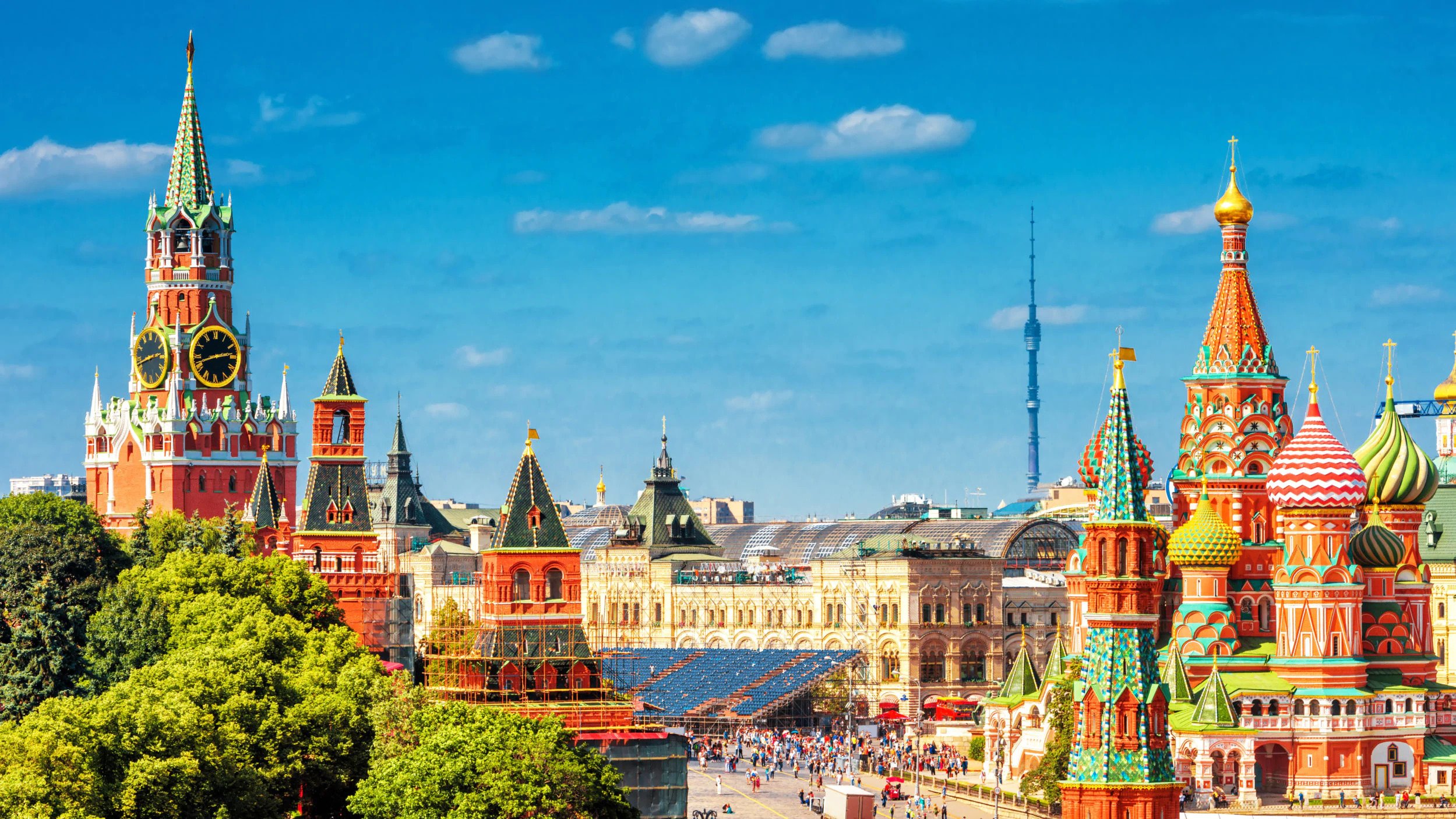
Russia's financial engine runs through this city, full stop. The Moscow International Business Center — locally called Moscow-City — concentrates banking, energy conglomerates, and consulting firms in a cluster of skyscrapers that includes some of Europe's tallest buildings. Gazprom, Lukoil, Sberbank, and dozens of state-adjacent corporations are headquartered here. For foreign professionals, the job market has contracted sharply since 2022 sanctions; most Western multinationals have exited, and remote work for foreign employers now carries serious legal and banking complications. The economy still functions, but the landscape for expats earning internationally is genuinely difficult.
A one-bedroom in the center runs around $950/month, which sounds reasonable until you factor in that international banking access is severely restricted — Visa and Mastercard stopped operating in Russia in 2022, meaning foreign cards don't work. The metro is legitimately world-class: fast, cheap, and covers the city thoroughly. Healthcare has public and private tiers; private clinics are competent but expensive by local standards. Russian is non-negotiable — English fluency outside expat-facing businesses is low. Bureaucracy for residency registration is layered and slow, and the current geopolitical climate adds friction to nearly every administrative process.
Winters are brutal and long — expect months below freezing with heavy snow from November through March. Summers are genuinely pleasant, roughly 20–25°C, and the city's parks and green corridors (over 40% green coverage) make warm months livable and social. Food culture is strong: Georgian restaurants, Soviet-era canteens, and high-end dining all coexist. The expat community has shrunk considerably post-2022 as many foreign nationals left. Weekends mean museums, the Bolshoi, or dacha trips outside the city. This city suits people with deep Russian ties, language fluency, and a clear-eyed understanding of the current political and financial constraints.
Estimate the cost of moving to Moscow, Russia
Get a free moving cost estimate for moving to Moscow, Russia. Takes 10 seconds.
How much are you shipping?
When are you moving?
Powered by Sirelo. Free quotes from international movers.
🏚️ Cost of Living
💰 Budgets and Costs
$1,235/mo, one person, rent included
Selected: budget lifestyle
Moscow at the budget tier comes to about $1,235 a month for one adult, with $804 of that going to rent. Beyond rent the estimate covers $99.00 on groceries, $47.00 on dining out, $39.00 on entertainment and lifestyle, $205 on utilities and connectivity and $41.00 on transport.
Rent
$804/mo
1BR outside the centre
Groceries
$99.00/mo
75% of mid-range grocery spend
Dining out
$47.00/mo
4 inexpensive meals
Entertainment & lifestyle
$39.00/mo
1 cinema trip, 8 cappuccinos
Utilities & connectivity
$205/mo
utilities, mobile, internet
Transport
$41.00/mo
Monthly pass
Budgets (excl. rent)
Single person$431/mo
Excludes rent. The total above is all-in, rent included.
$1,404/mo, one person, rent included
Selected: mid-range lifestyle
Moscow at the mid-range tier comes to about $1,404 a month for one adult, with $804 of that going to rent. Beyond rent the estimate covers $132 on groceries, $117 on dining out, $105 on entertainment and lifestyle, $205 on utilities and connectivity and $41.00 on transport.
Rent
$804/mo
1BR outside the centre
Groceries
$132/mo
Staples basket scaled to a full month
Dining out
$117/mo
10 inexpensive meals
Entertainment & lifestyle
$105/mo
gym, 2 cinema trips, 12 cappuccinos
Utilities & connectivity
$205/mo
utilities, mobile, internet
Transport
$41.00/mo
Monthly pass
Budgets (excl. rent)
Single person$600/mo
Excludes rent. The total above is all-in, rent included.
$2,285/mo, one person, rent included
Selected: comfortable lifestyle
Moscow at the comfortable tier comes to about $2,285 a month for one adult, with $1,455 of that going to rent. Beyond rent the estimate covers $185 on groceries, $246 on dining out, $153 on entertainment and lifestyle, $205 on utilities and connectivity and $41.00 on transport.
Rent
$1,455/mo
1BR in the centre
Groceries
$185/mo
140% of mid-range grocery spend
Dining out
$246/mo
6 inexpensive meals + 6 mid-range meals
Entertainment & lifestyle
$153/mo
gym, 4 cinema trips, 20 cappuccinos
Utilities & connectivity
$205/mo
utilities, mobile, internet
Transport
$41.00/mo
Monthly pass
Budgets (excl. rent)
Single person$830/mo
Excludes rent. The total above is all-in, rent included.
Estimates for one adult, built from this city's average prices and the usage shown for each tier. Your spending will differ with how often you eat out and where you live.
A 1BR in the center runs about $1454.91/mo. If your income is in another currency, bank FX fees add up. A multi-currency account can cut that cost.
Moscow feels relatively safe for day-to-day life in central areas, with heavy police presence and CCTV throughout the city. Walkability at night is reasonable in well-lit neighborhoods like the Garden Ring and central districts, though expats typically avoid peripheral areas after dark. The city's safety reputation is better than many Western capitals, though geopolitical tensions create an underlying uncertainty that affects the overall expat experience.
Petty theft and pickpocketing occur in crowded metro stations, markets, and tourist areas—keep valuables secure and avoid displaying expensive items. Scams targeting foreigners include inflated taxi fares and fake police stops; use official Yandex taxis and keep documents on you. Violent crime against expats is rare, but solo female travelers should exercise standard precautions. Avoid political discussions and large gatherings, as police can be unpredictable during sensitive periods.
The primary concern for American expats is geopolitical risk rather than street crime. Russia's international tensions, sanctions, and restrictions on foreign nationals create visa and banking complications. Police are generally reliable for serious crimes but can be corrupt in minor matters. The political climate has become increasingly restrictive toward Western nationals since 2022. For Americans considering relocation, Moscow remains physically safer than many global cities, but the political environment and potential for rapid policy changes present significant non-criminal risks that warrant serious consideration.
See how Moscow's digital nomad life compares with Bakaly
🧳 Expat Life
English Proficiency
Common in Tourist Areas
Expat Community
Large & Active
Top Neighborhoods
Patriarshiye Prudy, Khamovniki, Arbat
Banks Nearby
869
ATMs Nearby
853
Expat Life Notes
Moscow is a high-energy mega-city with world-class luxury; the expat scene is large but shifting due to geopolitics.
Pros
✓ Exceptional luxury and dining
✓ Efficient public transport
✓ Massive career hub for the region
Cons
✗ Difficult current political environment
✗ Severe winters
✗ Very high cost of living
🏘️ Neighborhoods in Moscow
Notable areas of Moscow, with descriptions adapted from public reference sources. Rent figures are Numbeo's city-wide averages, not prices for a specific area.
The US government advises against travel to this country. Check the current government travel advisory before you book.
Conditions can change from one block to the next, and these descriptions are general guides, not safety assessments. Before choosing where to stay or live, check current travel advisories, talk to people who live there, and visit in person if you can.
Central-North
Moscow Central-North is the section of Central Moscow lying north of the Kremlin, east of Tverskaya Street, and north of Pokrova Street, within the Boulevard Ring and including Krasnoselsky south, Meshchansky south, and Tverskoy South raions. The area has no intercity bus or train station. Churches include the Church of Saints Cosmas and Damian in Shubino, dating to 1657, and the Church of Saint Nicholas in Zvonary.
Moscow Central-South is part of Central Moscow and includes the historic districts of Yakimanka North and Zamoskvoreche North, on the right bank of the Moskva River to the Garden Ring. The area has architecturally harmonious preserved low-rise buildings and many embassies. Paveletsky station sits near the Garden Ring. The Church of the Martyr Catherine on the Field is in Yakimanka district on Ulitsa Bolshaya Ordynka.
Moscow Central-West is part of Central Moscow and includes the historic districts of Arbat East, Khamovniki North, Presnensky East, and Tverskoy South. These districts lie west of Tverskaya Street on the left bank of the Moskva River, extending to the Garden Ring. Arbat Street is a pedestrian street roughly one kilometer long in Moscow's historical center and has existed since at least the 15th century. It forms the heart of the Arbat District.
Central-East is a part of Central Moscow. The Moscow Orphanage, also called the Foundling Home, is a large 18th-century building on Moskvoretskaya naberezhnaya in Kitay-gorod. Catherine the Great and Ivan Betskoy conceived it, and it was built in 1764 to raise abandoned children as refined, cultivated citizens with professional qualifications. The ensemble now houses the Academy of Missile Forces and the Russian Academy of Medicine.
The Moscow Outskirts cover areas from Moscow's 3rd Ring to the Moscow Ring Road (MKAD). The districts include Moscow East from Shchelkovskoye shosse to Volgogradskiy prospekt, Moscow North from Leningradskiy prospekt to Shchelkovskoye shosse, Moscow South from Volgogradskiy prospekt to Leninskiy prospekt, and Moscow West from Leninskiy prospekt to Leningradskiy prospekt. All airports are outside Central Moscow.
Zelenograd and New Moscow are two large parts of Moscow city that lie outside the consolidated residential zone within and just beyond the MKAD. Zelenograd was added to Moscow in 1968 as one of the leading scientific centers. New Moscow was added in 2012, forming Novomoskovky and Troitskiy Administrativniy Okrugs with plans for vast expansion. New Moscow is yet to change according to its new city status; Troitskiy Administrativniy Okrug still mostly has a rural feel.
The Exhibition of Achievements of National Economy, known as VDNKh or VDNH, is a permanent general purpose trade show and amusement park in Moscow, Russia. It operated under the name All-Russia Exhibition Centre from 1991 to 2014 and is a state joint-stock company.
Numbeo city average, outside-center: $804 (updated Oct 8, 2026)
Arbat Street, known in English as the Arbat, is a pedestrian street roughly one kilometer long in Moscow's historical center. It has existed since at least the 15th century and forms the heart of the Arbat District. Originally part of a trade route, it was home to many craftsmen. In the 18th century the Russian nobility regarded it as Moscow's most prestigious living area. The great fire of 1812 almost completely destroyed it, and the street required rebuilding.
Numbeo city average, center: $1,455 (updated Oct 8, 2026)
Moscow has a population of approximately 13,149,803 people.
A single person can expect to spend around $3,637 per month in Moscow, including rent. A 1-bedroom apartment in the city center costs approximately $1455/month.
The nearest airport to Moscow is SVO, approximately 27.8km away.
Moscow is considered relatively safe, with a safety index of 70.0. As with any city abroad, expats should research specific neighborhoods before committing to a location.
Moscow has an average internet speed of 150 Mbps. It is considered a well-established digital nomad destination.
No — Visa and Mastercard suspended Russian operations in 2022, so foreign-issued cards don't work. International wire transfers are heavily restricted. You'll need a Russian bank account, and moving money in or out of the country is genuinely complicated. This is one of the biggest practical barriers for foreign residents right now.
Street crime is relatively low — the safety index sits at 70, which is respectable for a city of 13 million. Petty theft exists but violent crime targeting foreigners is uncommon. The more significant concern is legal and political risk: laws around 'discrediting the military' and foreign agent designations create real exposure for expats who are publicly vocal online or in person.
Yes, practically speaking. English is spoken in some international business contexts and upscale hotels, but daily life — dealing with landlords, government offices, doctors, and most shops — requires Russian. Unlike some European capitals where you can get by indefinitely in English, Moscow will frustrate you quickly without at least intermediate Russian language skills.
Moscow can be surprisingly affordable if you avoid tourist traps. Expect to pay $800-$1500 per month for a decent one-bedroom apartment outside the city center, while groceries and dining out are generally cheaper than in major US cities. Public transport is very efficient and inexpensive, further reducing your expenses.
Unfortunately, there isn't a straightforward retirement visa for Russia. Most Americans obtain a tourist visa initially, then explore options like a business visa (if you have a registered company), a work visa (through a Russian employer), or a student visa. Keep in mind that visa regulations can change, so consult the Russian embassy for the most up-to-date information.
Moscow has a two-tiered healthcare system: public and private. While public healthcare is available, expats generally prefer private clinics for shorter wait times and better English-speaking staff. You can find many reputable private clinics with English-speaking doctors, especially in expat-heavy areas like Khamovniki and Presnensky.
Khamovniki is popular for its central location and upscale apartments, but it's pricier. For a more budget-friendly option, consider areas like Sokol or Ramenki, which still offer good transport links and amenities. Expats often choose areas near international schools if they have children.
Moscow boasts excellent internet infrastructure, with some of the fastest speeds in the world. You can easily find reliable and high-speed internet connections in apartments, cafes, and coworking spaces, making it ideal for digital nomads.
Yes, Moscow has a growing number of coworking spaces catering to freelancers and remote workers. You'll find options ranging from budget-friendly shared offices to high-end spaces with all the amenities, particularly in the city center.
Moscow has a continental climate with cold winters and warm summers. Expect heavy snowfall and temperatures well below freezing in winter (November-March), while summers (June-August) are generally pleasant and sunny. Pack accordingly for all seasons.
Moscow's public transportation system is extensive, efficient, and affordable. The metro is the fastest way to get around, and buses, trams, and trolleybuses are also readily available. Consider getting a Troika card for easy payment on all forms of public transport.
As a US citizen, you're still required to file US taxes even when living abroad. You may be able to exclude a certain amount of your foreign earned income using the Foreign Earned Income Exclusion (FEIE). Also, remember to report foreign bank accounts if they exceed $10,000 total at any point during the year (FBAR).
Retiring in Moscow on $2500 per month is possible, but requires careful budgeting and lifestyle adjustments. You'll likely need to live outside the city center, cook most of your meals, and take advantage of free activities. It's definitely more feasible than retiring on the same budget in many Western European cities.
Moscow has a sizable expat community, making it relatively easy to connect with other foreigners. There are numerous expat groups and social events, especially in areas like Patriarshiye Ponds. Learning some basic Russian will significantly enhance your social life and integration.
While Moscow is generally safe, it's always wise to be aware of your surroundings. Like any major city, petty crime can occur, especially in crowded tourist areas. Avoid poorly lit or isolated areas at night, and be cautious of scams targeting tourists.
While many younger Muscovites speak some English, knowing at least basic Russian is highly recommended for daily life. It will make tasks like grocery shopping, using public transport, and interacting with locals much easier and more enjoyable. Consider taking a Russian language course before or after you arrive.
ATM fees can vary depending on the bank and your card. Look for international banks like Citibank or HSBC, which may offer lower fees. Opening a local bank account can be beneficial for managing your finances and avoiding international transaction fees, but it requires some paperwork and a Russian address.
Your US Social Security benefits will be directly deposited into your US bank account as usual. You can then transfer funds to a Russian bank account or use your US debit card for withdrawals, keeping in mind potential fees. It's wise to consult a financial advisor about managing your social security income while living abroad.
Yes, Moscow has a thriving expat community with many English-language social groups. Check out InterNations Moscow, Meetup groups focused on expats, and the Anglo-American Club of Moscow for social events and networking opportunities. These are great ways to meet people and combat culture shock.
Healthcare in Moscow can be significantly cheaper than in the US, especially for routine care. While the quality of public healthcare may vary, private clinics offer excellent services with modern equipment and English-speaking doctors, often at a fraction of the cost in the US. Private health insurance is recommended.
Rental costs vary greatly depending on the neighborhood and apartment size. Expect to pay around $1200-$2500 per month for a one- or two-bedroom apartment in popular expat areas like Tverskoy, Arbat, or Khamovniki. Prices are generally higher closer to the city center.
Using a reputable real estate agent who specializes in expat rentals is highly recommended. Websites like Cian.ru and Avito.ru also list apartments, but may require some Russian language skills. Be prepared to pay a deposit and potentially the first and last month's rent upfront.
You absolutely must try borscht (beet soup), pelmeni (dumplings), blini (pancakes), and shashlik (grilled meat skewers). Explore local restaurants and cafes to discover regional variations and hidden culinary gems. Don't be afraid to experiment!
Peak tourist season in Moscow is during the summer months (June-August) and around the New Year holidays (late December-early January). Prices for accommodation and flights tend to be higher during these times. The shoulder seasons (spring and fall) offer pleasant weather and lower prices.
Russians can initially seem reserved, but are generally very warm and hospitable once you get to know them. Politeness and respect for elders are highly valued. Dress modestly when visiting religious sites. Direct eye contact is common, but prolonged staring can be considered rude.
Russia doesn't currently have a specific digital nomad visa. You'll likely need to explore options like a tourist visa (which doesn't allow for official work) or a business visa if you have a registered company. Consult with a Russian immigration lawyer for the most up-to-date information and personalized advice.
Moscow offers investment opportunities in real estate, stocks, and bonds, but it's essential to understand the local market and associated risks. Consult with a financial advisor familiar with Russian investments and regulations. Be aware of currency fluctuations and geopolitical factors that can impact your investments.
Moscow offers many free activities, including exploring parks like Gorky Park and VDNKh, visiting Red Square, and walking along the Moscow River. Many museums offer free admission on certain days. Take advantage of free walking tours to learn about the city's history and culture.
Obtaining a long-term residency permit in Russia is a complex process. Common pathways include investment, marriage to a Russian citizen, or highly skilled worker status. The process involves extensive paperwork, medical examinations, and language proficiency tests. Consulting with an immigration lawyer is highly recommended.
Cost-of-living and visa updates for Moscow and the rest of Russia. Free with RA Postcards.
By submitting your email address, you will receive a free subscription to RA Postcards and special offers from Rewire Abroad and our affiliates. You can unsubscribe at any time, and we encourage you to read more about our Privacy Policy.