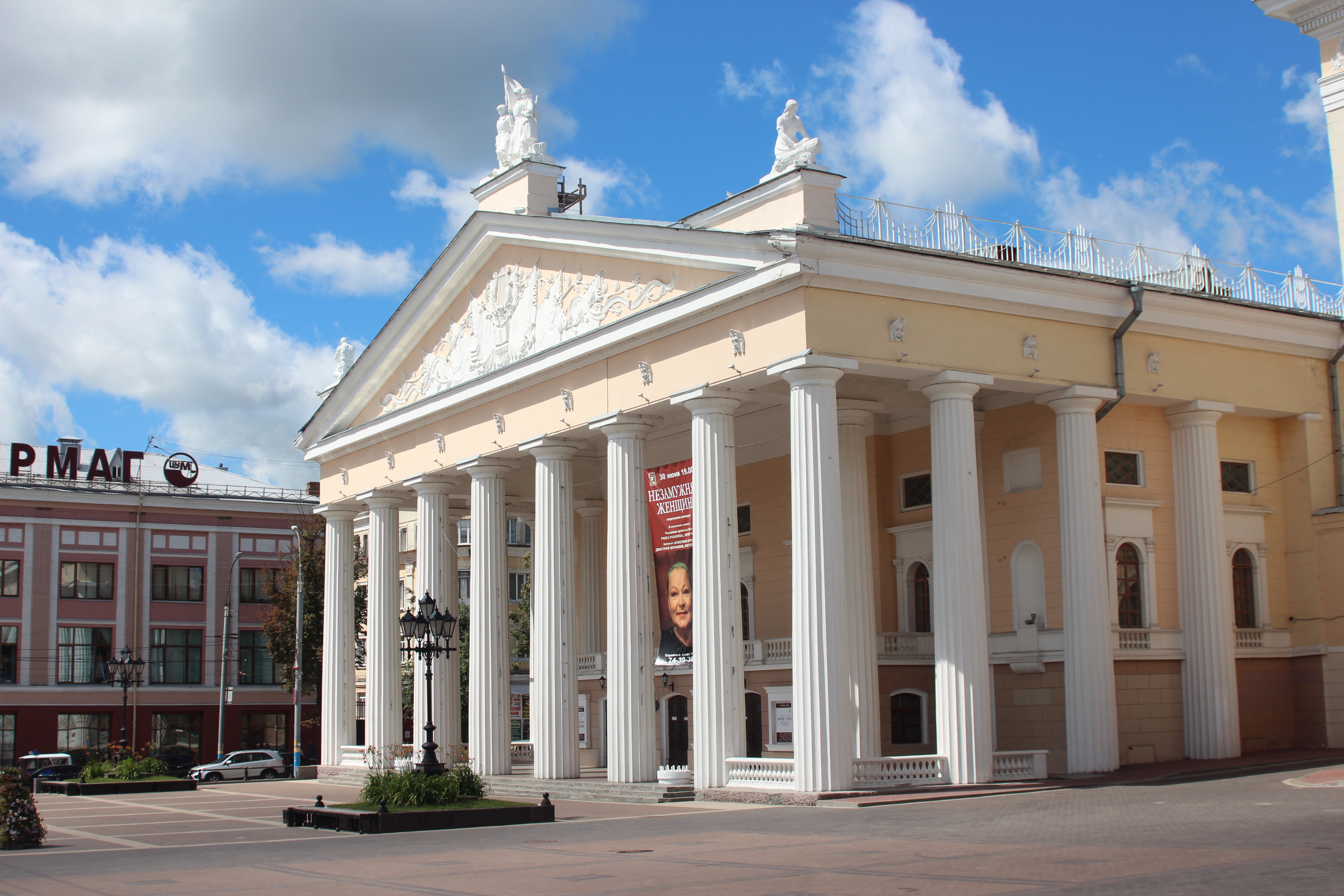
Bryansk sits in western Russia on the Desna River, about 214 m above sea level, in the Europe/Moscow timezone. The climate is humid continental with moderate rainfall, which means real winters and warm, wet summers. Of the city's 373 thousand residents, the small expat presence clusters in Bryansk Center, the one neighborhood that reliably shows up as a choice for newcomers. That concentration matters, because with an expat community size described as very few, living near the center is often the difference between occasional contact with other foreigners and none at all.
Housing is the clearest argument for the city. A one-bedroom in the city center runs $309/mo, while the same apartment outside the center drops to $204/mo. Three-bedroom units follow the same pattern: $454/mo in the center and $262/mo outside it. Utilities add $122/mo, internet $8/mo, and a mobile phone plan $6/mo. A monthly public transport pass costs $26/mo and a gym membership $21/mo. Eating out is modest, with an inexpensive restaurant meal at $13 per person, a mid-range three-course meal for two at $35, and a cappuccino at $2. Numbeo puts monthly costs excluding rent at $470/mo for a single person and $1,520/mo for a family of four. Budget, mid-range, and comfortable tiers for a single adult, rent included, come to $362/mo, $581/mo, and $817/mo respectively. Against an average monthly net salary of $559/mo and a cost of living index of 33/100 where NYC equals 100, local wages and local prices are unusually close together, though the salary figure also shows how tight the margin can be.
Safety is middling rather than alarming. The safety index is 55/100 and the crime index, where lower is safer, is 45/100. Air quality is decent, with an index of 42 where lower is better. Healthcare quality is rated poor, which is the single most important practical caveat for anyone with ongoing medical needs or a preference for English-speaking doctors. English proficiency is limited, so everyday errands, leases, and clinic visits generally require Russian or a patient translator.
For stays of more than a few months, the Russia Digital Nomad Visa is the relevant route, and it requires a minimum monthly income of $9,678/mo, a threshold far above the local average net salary. The nearest airport is BZK, 31 km away. Internet averages 45 Mbps, enough for calls and remote work without much strain. The overall expat score is 50/100, the digital nomad score 57/100, and the FIRE score 75/100, while the retiree score is 43/100. That mix points to a specific audience: remote workers and early retirees who already earn outside Russia, want very low fixed costs, and can accept limited English, thin healthcare, and a tiny expat circle in exchange for rents that leave room in the budget.