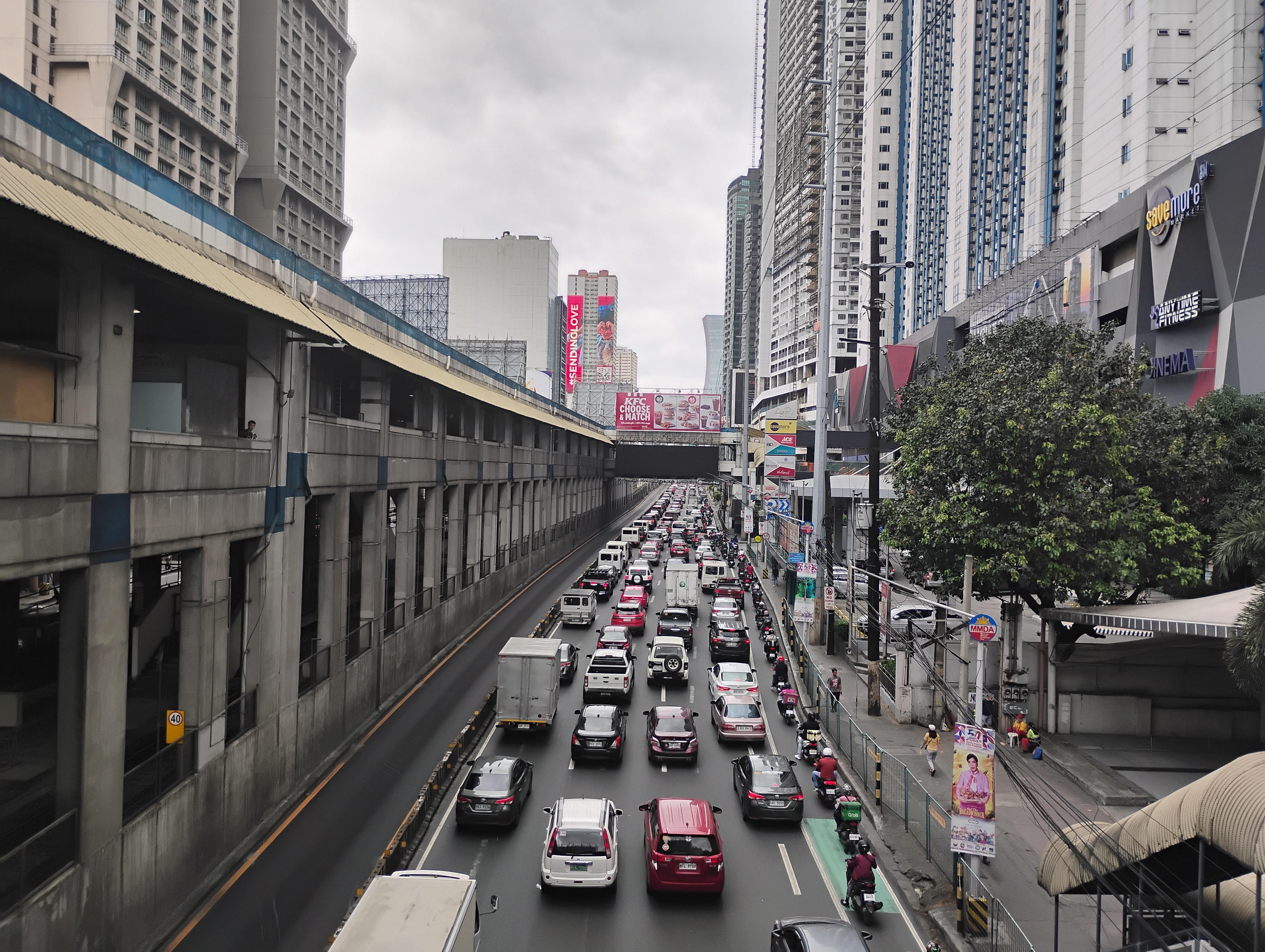
The money here comes from the BPO sector and the tech companies that have stacked their Philippine operations into the Ortigas skyline. You can easily work remotely from Mandaluyong because the internet holds at 40 Mbps on average, good enough for Zoom calls unless the building's backup generator fails during one of the frequent brownouts. Foreigners rarely land local jobs unless they're in senior management at a multinational or teaching, so most expats bring their own income. That's just fine when your base expenses are surprisingly predictable: $650 for a one-bedroom in a central condo tower, another $650 for food, transport, utilities, and the odd San Miguel. You can scrape by on less if you live further out, but then you'll lose your sanity to the commute.
A decent condo here will have a gym and a pool you'll never use because the traffic makes quick errands a two-hour affair. The MRT runs through Mandaluyong but at rush hour you'll be pressed against strangers in tropical heat, so most people budget for Grab rides. Healthcare is private and passable if you pay out of pocket; the bigger hospitals are in neighboring cities anyway, and serious cases get medevaced to Singapore. English is everywhere, which spares you the language headaches you'd get elsewhere, but Philippine bureaucracy for visas is a slow grind of forms and fixers and waiting rooms that smell of damp paper. And the flooding. When a big typhoon hits, streets in low-lying barangays turn to creeks. You'll learn to check multiple weather apps.
You'll like it here if you're a freelancer in your 30s or 40s who wants city energy, cheapish rent, and a base to explore Asia. Retirees on a fixed income can make the numbers work, but the noise and the crowds will test you daily. This is not a place for anyone seeking peace, clean air, or walkable streets. If you're a digital nomad who needs reliable infrastructure and can handle a bit of grime, Mandaluyong does the trick. If you're dreaming of a tropical paradise, fly straight to the provinces. This is Metro Manila, and it acts like it.
Estimate the cost of moving to Mandaluyong, Philippines
Get a free moving cost estimate for moving to Mandaluyong, Philippines. Takes 10 seconds.
How much are you shipping?
When are you moving?
Powered by Sirelo. Free quotes from international movers.
🏚️ Cost of Living
💰 Budgets and Costs
$487/mo, one person, rent included
Selected: budget lifestyle
Mandaluyong at the budget tier comes to about $487 a month for one adult, with $188 of that going to rent. Beyond rent the estimate covers $90.00 on groceries, $16.00 on dining out, $26.00 on entertainment and lifestyle and $167 on utilities and connectivity.
Rent
$188/mo
1BR outside the centre
Groceries
$90.00/mo
75% of mid-range grocery spend
Dining out
$16.00/mo
4 inexpensive meals
Entertainment & lifestyle
$26.00/mo
1 cinema trip, 8 cappuccinos
Utilities & connectivity
$167/mo
utilities, mobile, internet
Budgets (excl. rent)
Single person$299/mo
Excludes rent. The total above is all-in, rent included.
$601/mo, one person, rent included
Selected: mid-range lifestyle
Mandaluyong at the mid-range tier comes to about $601 a month for one adult, with $188 of that going to rent. Beyond rent the estimate covers $120 on groceries, $41.00 on dining out, $85.00 on entertainment and lifestyle and $167 on utilities and connectivity.
Rent
$188/mo
1BR outside the centre
Groceries
$120/mo
Staples basket scaled to a full month
Dining out
$41.00/mo
10 inexpensive meals
Entertainment & lifestyle
$85.00/mo
gym, 2 cinema trips, 12 cappuccinos
Utilities & connectivity
$167/mo
utilities, mobile, internet
Budgets (excl. rent)
Single person$413/mo
Excludes rent. The total above is all-in, rent included.
$986/mo, one person, rent included
Selected: comfortable lifestyle
Mandaluyong at the comfortable tier comes to about $986 a month for one adult, with $438 of that going to rent. Beyond rent the estimate covers $168 on groceries, $96.00 on dining out, $117 on entertainment and lifestyle and $167 on utilities and connectivity.
Rent
$438/mo
1BR in the centre
Groceries
$168/mo
140% of mid-range grocery spend
Dining out
$96.00/mo
6 inexpensive meals + 6 mid-range meals
Entertainment & lifestyle
$117/mo
gym, 4 cinema trips, 20 cappuccinos
Utilities & connectivity
$167/mo
utilities, mobile, internet
Budgets (excl. rent)
Single person$548/mo
Excludes rent. The total above is all-in, rent included.
Estimates for one adult, built from this city's average prices and the usage shown for each tier. Your spending will differ with how often you eat out and where you live.
A 1BR in the center runs about $438.35/mo. If your income is in another currency, bank FX fees add up. A multi-currency account can cut that cost.
Mandaluyong is a relatively safe urban district within Metro Manila, with a noticeably better safety profile than surrounding areas. Daytime walkability is good in commercial and residential zones; nighttime requires standard urban caution but isn't prohibitively risky. Expats report feeling reasonably secure in established neighborhoods like Ortigas and Greenmeadows. The city's business-district character and police presence contribute to a safer-than-average Metro Manila experience.
Petty theft and pickpocketing remain the primary concerns, especially in crowded markets, jeepneys, and malls. Scams targeting foreigners—overcharging, fake tours, romance schemes—are common. Avoid displaying expensive jewelry, cameras, or large cash amounts. Solo female travelers should exercise standard precautions after dark and use registered taxis or ride-sharing apps. Violent crime against expats is rare but possible in isolated areas; stick to populated, well-lit routes.
The Philippines has moderate political stability, though occasional protests occur in Metro Manila. Police corruption exists but is less prevalent in Mandaluyong's business districts. The PNP (Philippine National Police) is generally responsive to expat concerns. Overall, Mandaluyong is a reasonable choice for American expats seeking Metro Manila proximity with above-average safety—manageable risks if you adopt sensible urban habits and avoid complacency.
🏥 Healthcare
Good
Public Hospitals
Yes
Private Clinics
Yes
English-Speaking Doctors
Available
See how Mandaluyong's healthcare compares with Marawi
🌤️ Climate
Summer Temp
32°C
Winter Temp
26°C
Humidity
74%
Air Quality Index
68
Annual Rainfall
1946 mm
Best Months
NovDecJanFeb
Climate Notes
Mandaluyong has a tropical climate with hot, humid conditions year-round, a dry season from November to April, and a wet monsoon season from May to October.
💻 Digital Nomad
Avg Internet Speed
40 Mbps
Internet (monthly)
$28/mo
Coworking Availability
Abundant
Coworking Spaces Nearby
12
Digital Nomad Score
67/100
Community Notes
Mandaluyong offers an urban lifestyle with plenty of coworking spaces.
A well-established coworking space with a professional atmosphere, located in the heart of Mandaluyong. Provides a reliable and productive environment for remote workers.
Located in nearby Makati, but easily accessible from Mandaluyong, WeWork provides a premium coworking experience with a strong community. Ideal for those seeking a global network and high-end amenities.
Offers a range of coworking options in a convenient Mandaluyong location. Caters to freelancers and small teams with flexible plans and a collaborative environment.
See how Mandaluyong's digital nomad life compares with Marawi
🧳 Expat Life
English Proficiency
Limited
Expat Community
Large & Active
Top Neighborhoods
Greenhills, Wack-Wack, Pioneer
Banks Nearby
1261
ATMs Nearby
354
Expat Life Notes
A central business and residential district in Metro Manila, offering modern high-rises and excellent shopping.
Pros
✓ Central location
✓ Great shopping and dining
✓ High English proficiency
Cons
✗ Heavy traffic
✗ Noise pollution
✗ Dense urban environment
🏘️ Neighborhoods in Mandaluyong
Areas of Mandaluyong that expats often consider.
Conditions can change from one block to the next, and these descriptions are general guides, not safety assessments. Before choosing where to stay or live, check current travel advisories, talk to people who live there, and visit in person if you can.
Ortigas Center
Bustling business and residential
Ortigas is a major business district with numerous high-rise condos, malls, and restaurants. It's popular with expats and young professionals due to its convenience and amenities. Traffic can be heavy, but public transportation is readily available.
Barangka Ilaya
Local, residential, budget-friendly
A more local and less developed area, Barangka Ilaya offers more affordable housing options. It's less walkable than Ortigas, and English proficiency may be lower. Good for expats on a tight budget who want an authentic experience.
Plainview
Quiet, residential, family-oriented
Plainview is a quieter residential neighborhood with a more suburban feel. It's primarily residential with houses and smaller apartment buildings. It's less convenient for public transport and nightlife compared to Ortigas.
Highway Hills
Convenient, accessible, mixed-use
Highway Hills offers a mix of residential and commercial establishments, making it a convenient location. It's close to major thoroughfares and public transportation. Expect some noise from traffic, but it's generally safe and well-maintained.
Wack-Wack Greenhills East
Upscale, residential, golf course
Adjacent to the Wack Wack Golf and Country Club, this area is more upscale and residential. It offers a quieter environment and is popular with families and retirees. Expect higher rental costs and a reliance on private transportation.
Addition Hills
Residential, established, accessible
Addition Hills is a more established residential area with a mix of houses and apartments. It's relatively accessible to both Mandaluyong and San Juan. It's less geared towards expats but offers a comfortable local living experience.
Page 1 of 2
Could living/working in Mandaluyong cut years off your work life?
With a 1-bedroom in the center at $438/mo, your FIRE number here might be much lower than you think.
At the mid-range tier, one adult needs about $601 a month in Mandaluyong, rent included, with $188 of that going to rent. That leaves roughly $413 for everything except housing.
In Mandaluyong, a one-bedroom runs $438 in the center and $188 outside it and three bedrooms come to $940 in the center and $399 outside it, per month.
Average monthly net salary in Mandaluyong is $239. That is 40% of the $601 mid-range monthly budget.
Mandaluyong scores 67.75 on the safety index (higher is safer) and a crime index of 32.25 (lower is safer).
Average internet speed in Mandaluyong is 40 Mbps. A home connection costs about $28/mo.
In Mandaluyong, summer averages 32°C, winter averages 26°C and annual rainfall is 1946 mm.
Budget around $1,200-1,500/month total. Rent for a 1BR apartment in the city center runs about $650/month, plus $200-300 for utilities, food, and transport. Dining and entertainment costs vary widely depending on whether you stick to local spots or expat-oriented establishments.
Generally safe with a safety index of 60, especially in the business districts and upscale areas around Ortigas Center. Petty crime like pickpocketing exists, particularly in crowded areas and public transport. The main risks are traffic accidents and occasional flooding during heavy monsoons.
Strong opportunities in banking, finance, and corporate services given the concentration of major Filipino and international companies in Ortigas Center. Most expat positions require specialized skills or senior management experience. Competition is intense, and work permits can be bureaucratic to obtain.
For extended stays, Americans typically pursue a tourist visa extension, which allows you to stay for up to 36 months. Alternatively, you could explore the Special Resident Retiree's Visa (SRRV) if you're over 50 and meet the deposit requirements, or an employment visa if you secure a job with a local company.
Rental costs vary greatly depending on the location and size. Expect to pay anywhere from PHP 15,000 to PHP 40,000 per month for a decent one- to two-bedroom apartment in areas like Ortigas Center or near Shaw Boulevard. Cheaper options can be found further from the main business districts.
Internet speeds in Mandaluyong are generally reliable, especially in commercial areas. You can expect speeds of 50 Mbps or higher in most apartments and co-working spaces, sufficient for video conferencing and other remote work tasks. Check the specific internet provider and plan before committing to a lease.
Yes, Mandaluyong has several reputable hospitals with English-speaking doctors, including The Medical City and Cardinal Santos Medical Center. Many doctors have trained abroad, and English is widely spoken in the medical community, making it easy for expats to communicate their healthcare needs.
Mandaluyong has a tropical climate, with hot and humid weather year-round. The rainy season is from June to November. Pack lightweight, breathable clothing, an umbrella, and rain gear. Air conditioning is essential for comfort.
Public transportation in Mandaluyong is readily available but can be crowded. Options include jeepneys, buses, and the MRT-3 train line. Ride-hailing apps like Grab are also popular and convenient, though traffic congestion can be a challenge, especially during peak hours.
Mandaluyong offers a diverse culinary scene. You'll find everything from local Filipino eateries (carinderias) to international restaurants. Popular spots include Kapitolyo for its diverse food scene, and Shangri-La Plaza for upscale dining options. Expect to pay around PHP 200-500 for a meal at a mid-range restaurant.
As a US citizen, you're still required to file US taxes even when living abroad. The Foreign Earned Income Exclusion (FEIE) can help you exclude a certain amount of your foreign-earned income from US taxes. Also, be aware of FBAR and FATCA reporting requirements for foreign bank accounts.
Opening a bank account in the Philippines as a foreigner can be challenging but is possible with the right documentation (passport, visa, proof of address). Major banks like BDO and Metrobank have branches in Mandaluyong. ATM fees can vary, so check with your bank. Remittances are easy through services like Wise or Xoom.
Yes, Mandaluyong has several co-working spaces, particularly in the Ortigas Center area. These spaces offer a professional environment with reliable internet, meeting rooms, and networking opportunities. CommonGround and Acceler8 are popular options.
The quality of life is generally good, especially if you appreciate a vibrant and bustling city. English is widely spoken, making daily interactions relatively easy. However, be prepared for traffic congestion, pollution, and cultural differences.
A comfortable retirement in Mandaluyong can be achieved on a budget of $1,500 - $2,500 USD per month, depending on your lifestyle. This should cover rent, food, healthcare, and some leisure activities. Living more frugally is possible, but this range allows for a decent quality of life.
Be prepared for a more collectivist culture, where family and community ties are strong. Traffic and crowds can be overwhelming at first. Patience and flexibility are key. Learning a few basic Tagalog phrases can also go a long way in showing respect and easing interactions.
While Mandaluyong is generally safe, it's wise to exercise caution in less-developed areas, especially at night. Stick to well-lit and populated streets. Be aware of your surroundings and avoid displaying expensive jewelry or electronics. Ask locals for advice on specific areas to avoid.
Cost-of-living and visa updates for Mandaluyong and the rest of Philippines. Free with RA Postcards.
By submitting your email address, you will receive a free subscription to RA Postcards and special offers from Rewire Abroad and our affiliates. You can unsubscribe at any time, and we encourage you to read more about our Privacy Policy.