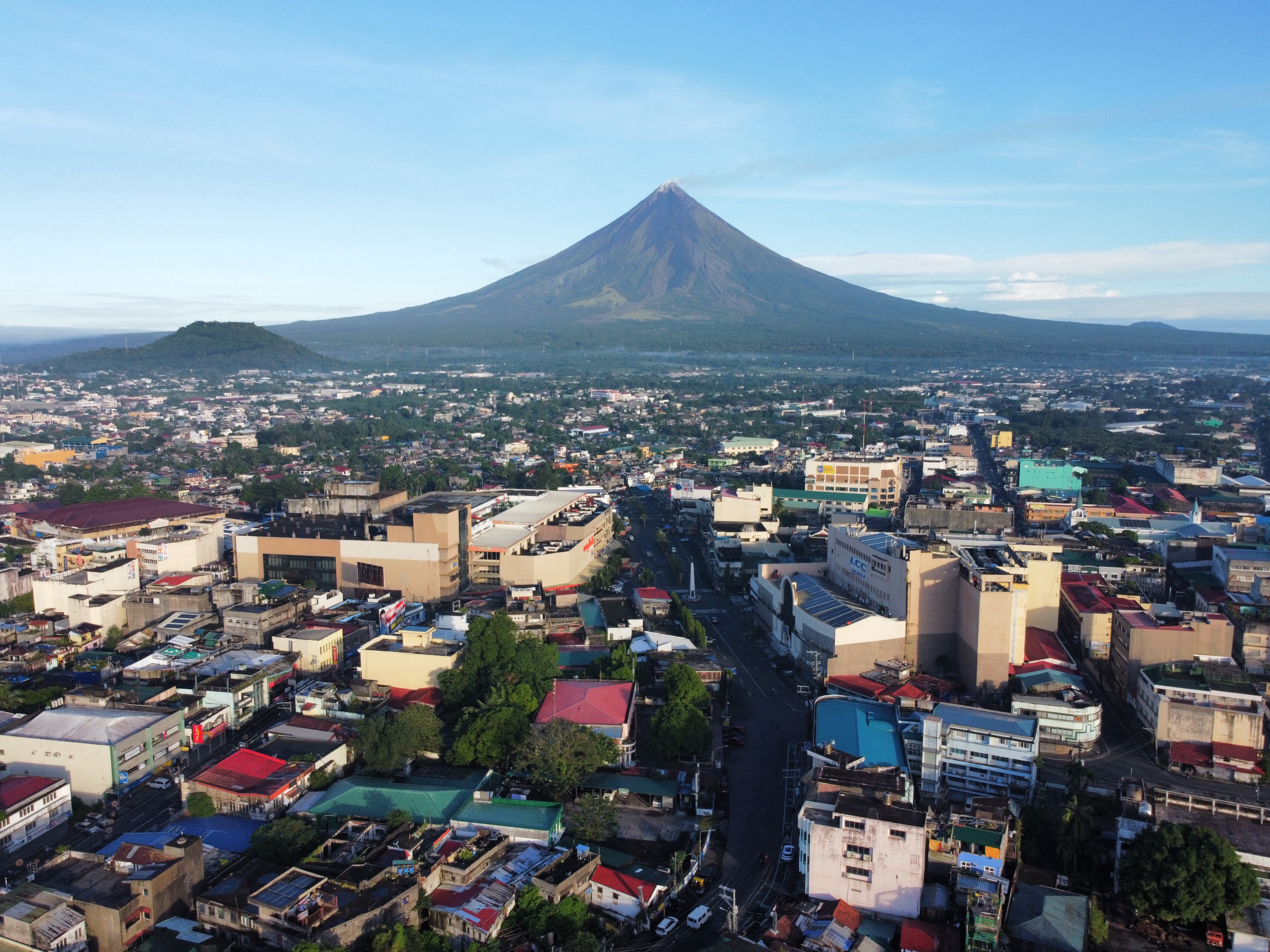
Legazpi sits on the southeastern coast of Luzon, the capital of Albay province, at an elevation of 15 meters above sea level. The city has a tropical climate with hot, humid conditions year-round, a wet monsoon season from June to November, and a drier season from December to May with occasional typhoons. Expatriates tend to settle in the neighborhoods of Rawis and Daraga, though the overall expat community remains small.
Living costs in Legazpi are low by American standards, with a cost of living index of 37 out of 100 (New York City equals 100). A single adult can live on a budget of $337 per month including rent, while a comfortable tier runs $550 per month including rent. A one-bedroom apartment in the city center rents for $199 per month, and outside the center it drops to $143 per month. Utilities run $238 per month, internet costs $30 per month, and a mobile phone plan is $8 per month. An inexpensive restaurant meal costs $4 per person, a three-course meal for two at a mid-range restaurant is $24, and a cappuccino is $3. By contrast, the average monthly net salary for a local worker is $266 per month.
Safety is a relative strength for Legazpi, with a safety index of 65 out of 100 and a crime index of 35 out of 100 (lower is safer). Healthcare quality is rated as fair, and English proficiency among locals is limited. The air quality index is 45, where lower is better.
For those looking to stay long-term, the Philippines offers the SRRV Retirement Visa, which requires a minimum monthly income of $1,500 per month. Digital nomads can apply for the Philippines SEZ Remote Work Visa (PEZA Zone). Getting to Legazpi requires flying into the region and then traveling overland. The city suits budget-conscious retirees and early-stage FIRE seekers (FIRE score: 78 out of 100) more than digital nomads (score: 62 out of 100) or general retirees (score: 56 out of 100), though the overall expat score is a solid 76 out of 100.