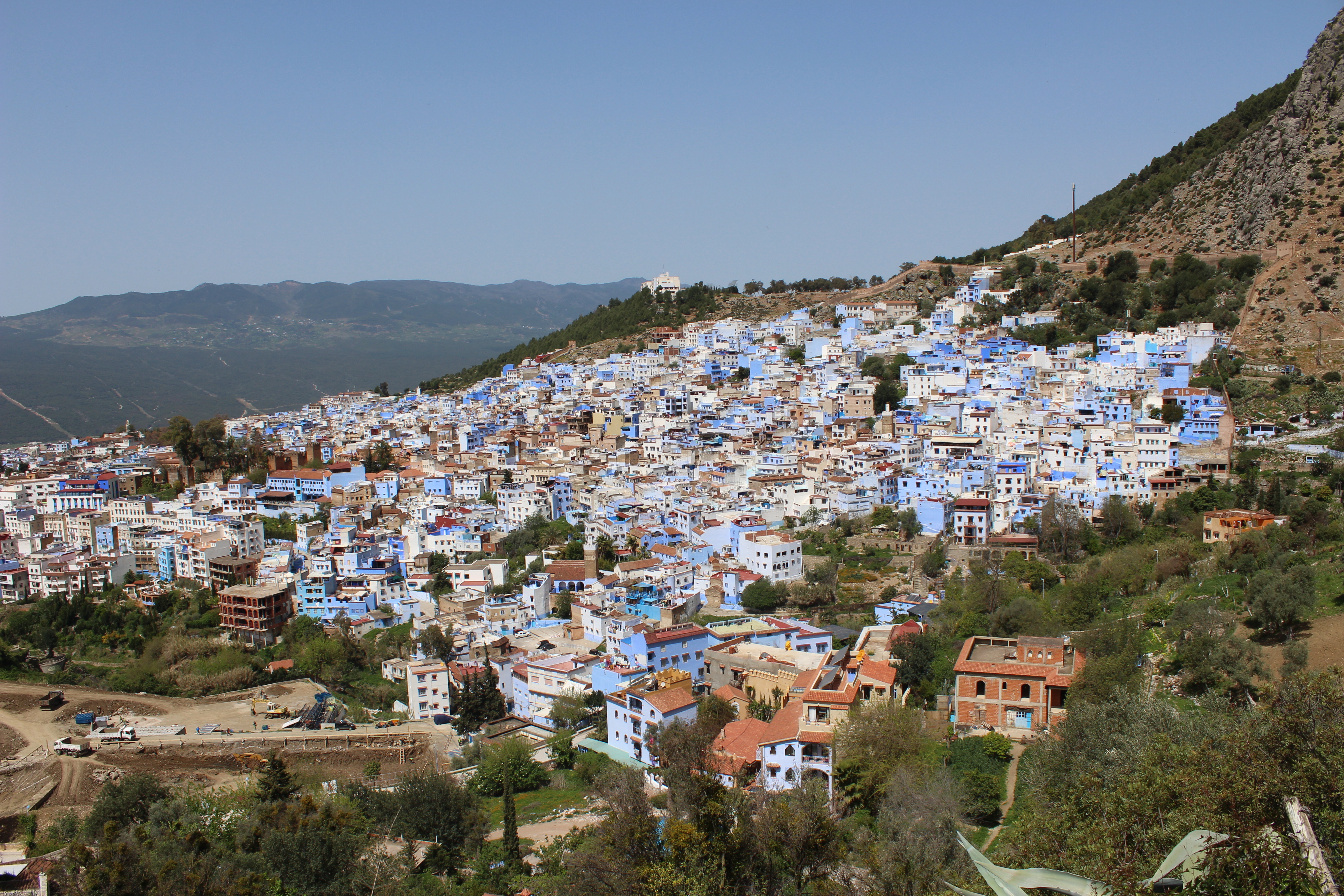
Tourism dominates the economy—500,000+ visitors annually fund hotels, restaurants, and artisan shops selling carpets, leather goods, and textiles. Traditional handicrafts remain genuinely important, not just souvenir theater; many families export goods internationally. Work here means either running a guesthouse, café, or shop, or being a digital nomad who treats the city as a base. Local employment is seasonal and modest; most expats work remotely or run their own ventures.
Rent runs $10–30/night for budget rooms, $300–600/month for a furnished apartment in the medina or newer areas. Meals cost $3–8. French and Arabic dominate; English is spotty outside tourist zones, creating real friction for admin tasks and healthcare. Bureaucracy for residency is slow but manageable if patient. Transport to Tétouan (1 hour) or Fes (3 hours) is reliable by bus. The medina is entirely pedestrian—no cars, steep stairs, charming until you're hauling groceries.
Winters are cool and wet (5–10°C); summers mild (15–25°C) at 600m elevation—no oppressive heat. Food is solid Moroccan fare; restaurants cater heavily to tourists but quality varies. The expat scene is substantial: artists, photographers, digital nomads, and bohemians create a genuine creative community, though it can feel transient. Weekends mean hiking nearby mountains, exploring the medina's blue alleyways, or day-tripping to Tétouan. Best for remote workers, artists, and budget travelers seeking community and aesthetic inspiration, not for those needing serious job prospects or modern infrastructure.