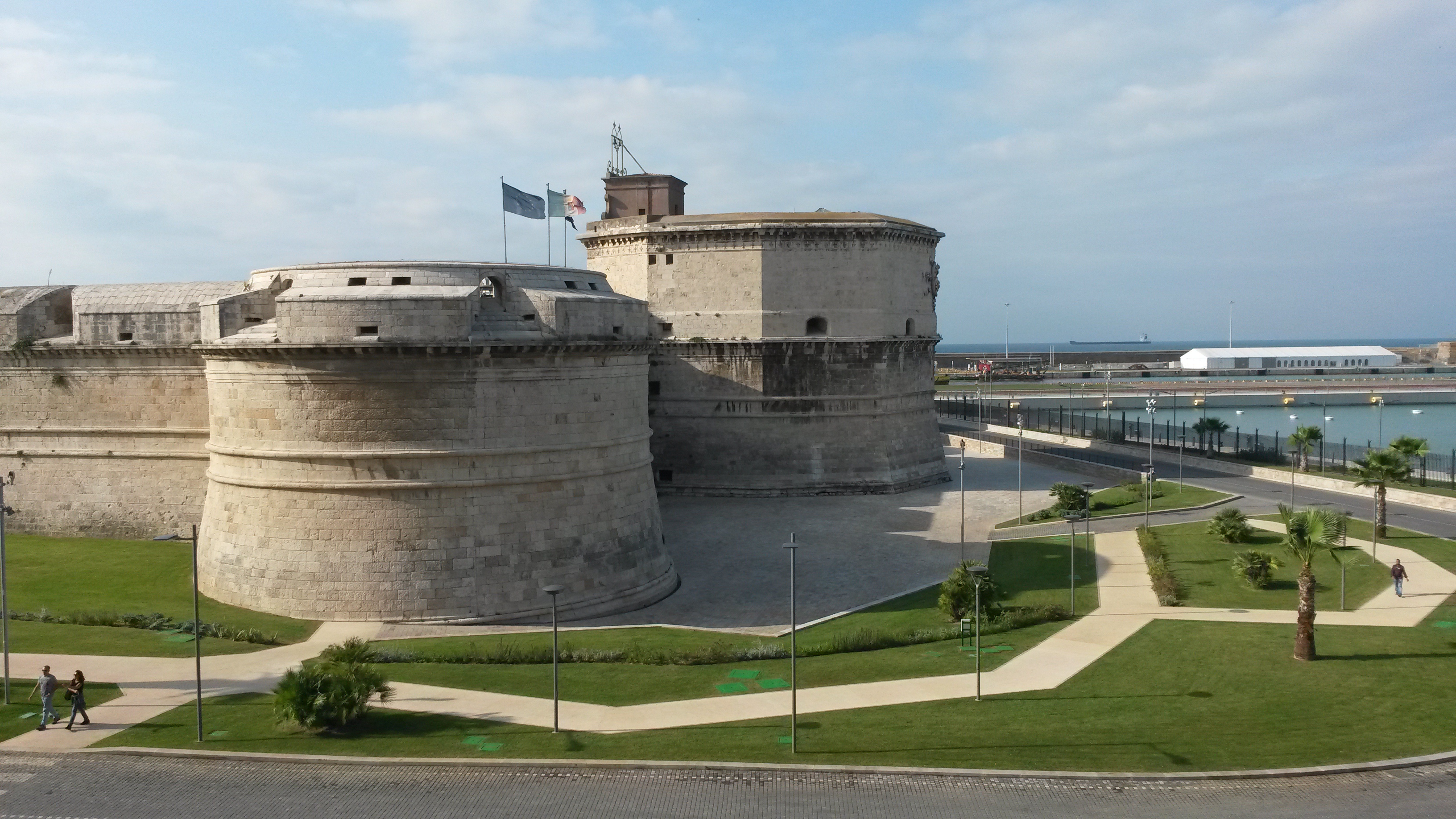
Civitavecchia sits on the Tyrrhenian coast about 80 kilometers northwest of Rome, a Mediterranean port city where summers are hot and dry and winters stay mild. At just 4 m above sea level, the sea shapes daily life, from the waterfront promenade to the fishing boats that still work out of the harbor. The population is around 52 thousand, and the timezone is Europe/Rome. Expats tend to settle in Porto, close to the docks and the ferry terminals, or in Centro, the historic core with its markets, cafes, and grid of narrow streets. Both neighborhoods put you within walking distance of the train station, which makes Rome an easy day trip. The climate is Mediterranean, meaning long beach seasons and short, rainy winters.
Rents are moderate by Italian coastal standards. A one-bedroom apartment in the city center runs $841/mo, while the same outside the center drops to $673/mo. Three-bedroom units go for $1,346/mo in the center and $897/mo outside it. Utilities average $241/mo, internet $36/mo, and a mobile phone plan $14/mo. A monthly public transport pass costs $39/mo, and a gym membership is $50/mo. Eating out is affordable: an inexpensive restaurant meal is $22 per person, a mid-range three-course dinner for two is $67, and a cappuccino at a restaurant is $2. Excluding rent, a single person spends about $1,050/mo, and a family of four about $3,500/mo. Budget tiers land at $1,010/mo, mid-range at $1,543/mo, and comfortable at $1,942/mo for a single adult with rent included. The local average net salary is $1,458/mo, so many residents commute to Rome or work in the port and tourism sectors. The cost of living index is 67/100 against New York City at 100.
Safety is a strong point. The safety index is 76/100 and the crime index is 24/100, with lower numbers meaning safer. Air quality sits at 45, a moderate reading for a port city, and healthcare quality is rated Good. English proficiency is common in tourist areas, though less so in residential pockets, and the expat community is small, which means newcomers often build social circles through work, language exchanges, or the sailing and diving clubs along the coast. Average internet speed is 86 Mbps, enough for remote work and streaming.
For longer stays, Italy offers the Italy Elective Residence Visa, which requires a minimum monthly income of $2,895/mo, and the Italy Digital Nomad Visa, which requires $2,615/mo. The nearest airport is FCO, 12 km away, making international connections straightforward. With an overall expat score of 70/100, a FIRE score of 72/100, a retiree score of 67/100, and a digital nomad score of 71/100, Civitavecchia suits budget-conscious renters, remote workers who want sea air and Rome access, and retirees drawn to a quiet port town with good healthcare and low crime. It is less suited to those who need a large expat scene or a fast-paced social calendar.