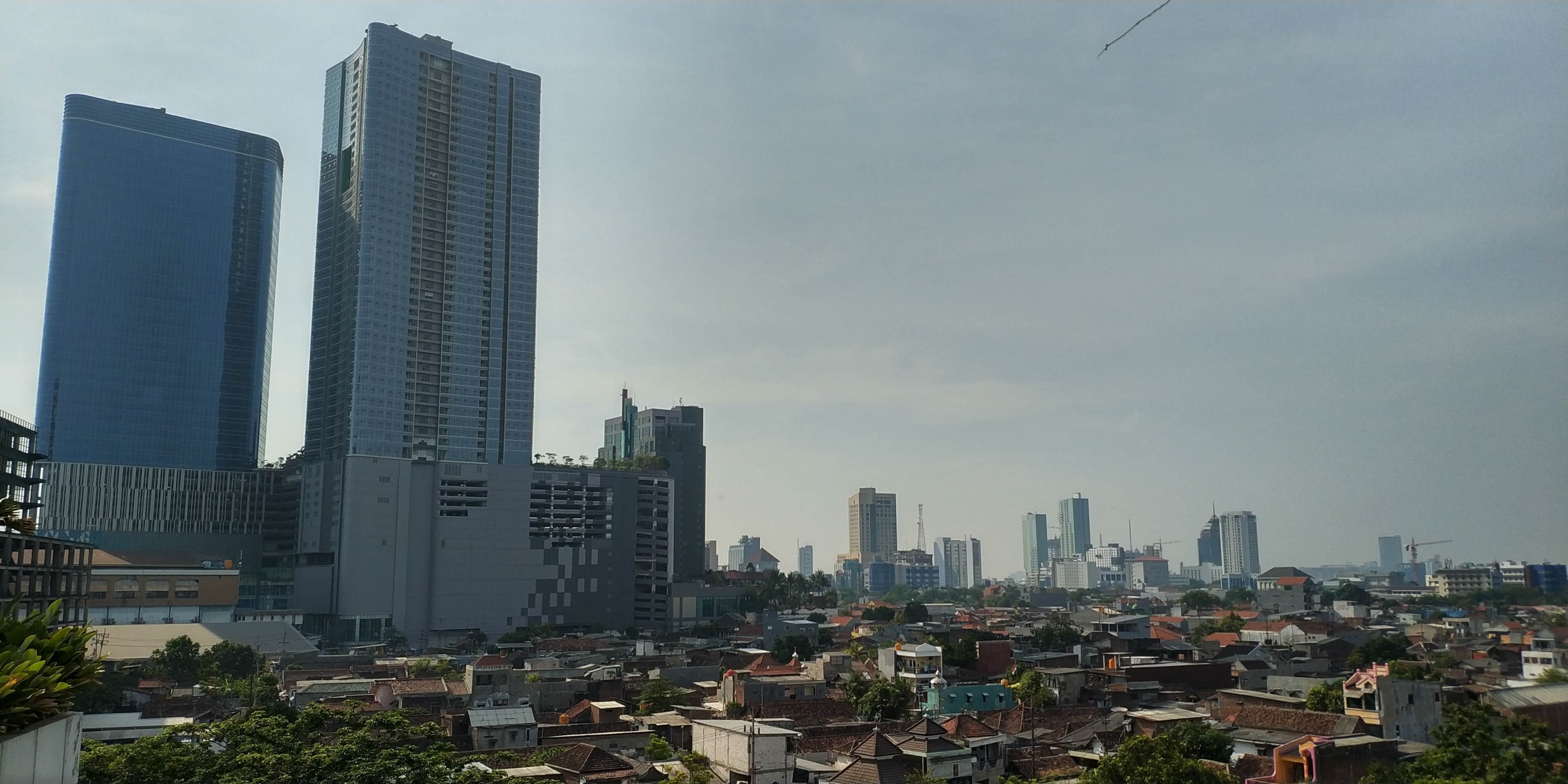
Surabaya sits on Indonesia's eastern Java coast, a sprawling port city of 3 million people built just 5 m above sea level in the Asia/Jakarta timezone. The climate is tropical savanna, with high temperatures year-round and a distinct dry season that shapes daily rhythms. Expats tend to cluster in Darmok and Graha Famili, two neighborhoods that offer a mix of residential calm and access to the city's commercial life. The nearest airport is SUB, 16 km away, which keeps international connections within easy reach without putting flight paths over the central districts.
Living costs here are low enough to surprise almost anyone arriving from a major Western city. A 1-bedroom apartment in the city center rents for $280/mo, while the same unit outside the center drops to $147/mo. Families or those wanting more space can expect $1,242/mo for a 3-bedroom in the center or $609/mo outside it. Monthly utilities run $87/mo, internet $19/mo, and a mobile phone plan just $5/mo. A public transport pass costs $9/mo and a gym membership $18/mo. Eating out is equally gentle on the wallet: an inexpensive restaurant meal is $2 per person, a mid-range three-course meal for two is $11, and a cappuccino is $2. For a single adult, budget-tier living including rent comes to $295/mo, mid-range to $388/mo, and comfortable to $544/mo. Excluding rent, a single person spends about $480/mo and a family of four about $1,450/mo. Against a cost of living index of 37/100 (NYC = 100), the local average monthly net salary of $273/mo tells a different story, one where local wages and expat budgets occupy very separate worlds.
Safety is a mixed but generally workable picture. The safety index sits at 65/100 and the crime index at 35/100, where lower is safer, so everyday life rarely feels threatening. Air quality is a concern, with an index of 85 where lower is better, and healthcare quality is rated Fair. English proficiency is Limited, which means daily errands and bureaucracy often require patience or a local helper. The expat community is Medium in size, large enough to find company but not so large that it feels like a bubble.
For longer stays, Indonesia offers the Retirement Visa (KITAS) and the Remote Worker Visa (E33G), both requiring a minimum monthly income of $2,000/mo. Arrivals typically come through SUB, 16 km from the city. With an overall expat score of 76/100, a FIRE score of 78/100, a digital nomad score of 67/100, and a retiree score of 53/100, Surabaya suits frugal long-stayers, early retirees chasing low fixed costs, and remote workers who value a genuine Indonesian city over a resort town. It rewards those who can meet the income thresholds and adapt to Limited English and Fair healthcare, and it punishes anyone expecting a polished expat playground.
Estimate the cost of moving to Surabaya, Indonesia
Get a free moving cost estimate for moving to Surabaya, Indonesia. Takes 10 seconds.
How much are you shipping?
When are you moving?
Powered by Sirelo. Free quotes from international movers.
🏚️ Cost of Living
💰 Budgets and Costs
$361/mo, one person, rent included
Selected: budget lifestyle
Surabaya at the budget tier comes to about $361 a month for one adult, with $147 of that going to rent. Beyond rent the estimate covers $65.00 on groceries, $7.00 on dining out, $15.00 on entertainment and lifestyle, $111 on utilities and connectivity and $16.00 on transport.
Rent
$147/mo
1BR outside the centre
Groceries
$65.00/mo
75% of mid-range grocery spend
Dining out
$7.00/mo
4 inexpensive meals
Entertainment & lifestyle
$15.00/mo
1 cinema trip, 8 cappuccinos
Utilities & connectivity
$111/mo
utilities, mobile, internet
Transport
$16.00/mo
Monthly pass
Budgets (excl. rent)
Single person$214/mo
Excludes rent. The total above is all-in, rent included.
$419/mo, one person, rent included
Selected: mid-range lifestyle
Surabaya at the mid-range tier comes to about $419 a month for one adult, with $147 of that going to rent. Beyond rent the estimate covers $87.00 on groceries, $17.00 on dining out, $41.00 on entertainment and lifestyle, $111 on utilities and connectivity and $16.00 on transport.
Rent
$147/mo
1BR outside the centre
Groceries
$87.00/mo
Staples basket scaled to a full month
Dining out
$17.00/mo
10 inexpensive meals
Entertainment & lifestyle
$41.00/mo
gym, 2 cinema trips, 12 cappuccinos
Utilities & connectivity
$111/mo
utilities, mobile, internet
Transport
$16.00/mo
Monthly pass
Budgets (excl. rent)
Single person$272/mo
Excludes rent. The total above is all-in, rent included.
$632/mo, one person, rent included
Selected: comfortable lifestyle
Surabaya at the comfortable tier comes to about $632 a month for one adult, with $280 of that going to rent. Beyond rent the estimate covers $122 on groceries, $44.00 on dining out, $59.00 on entertainment and lifestyle, $111 on utilities and connectivity and $16.00 on transport.
Rent
$280/mo
1BR in the centre
Groceries
$122/mo
140% of mid-range grocery spend
Dining out
$44.00/mo
6 inexpensive meals + 6 mid-range meals
Entertainment & lifestyle
$59.00/mo
gym, 4 cinema trips, 20 cappuccinos
Utilities & connectivity
$111/mo
utilities, mobile, internet
Transport
$16.00/mo
Monthly pass
Budgets (excl. rent)
Single person$352/mo
Excludes rent. The total above is all-in, rent included.
Estimates for one adult, built from this city's average prices and the usage shown for each tier. Your spending will differ with how often you eat out and where you live.
A 1BR in the center runs about $279.54/mo. If your income is in another currency, bank FX fees add up. A multi-currency account can cut that cost.
Surabaya is moderately safe for expats, with a Numbeo Safety Index of 65 reflecting a relatively secure environment compared to many Indonesian cities. Petty theft, pickpocketing on crowded public transport, and motorcycle theft are the primary concerns; avoid displaying valuables and use registered taxis or ride-sharing apps. Street crime is generally low, though certain areas near the port and outlying neighborhoods warrant caution after dark. Scams targeting foreigners exist but are less prevalent than in tourist hubs. The city's large expat community and established infrastructure make it manageable for those taking standard precautions. Overall, it's a reasonable choice for remote workers or retirees comfortable with typical Southeast Asian urban safety practices.
Surabaya has a safety index of 63.48/100. Petty theft and lost belongings are the most common problems for newcomers. Compare travel insurance before you go.
Located in the Spazio Tower, this GoWork location offers a modern and professional environment. It's a good option for those seeking a reliable coworking space with a strong network and is located in a central business district.
Regus has multiple locations in Surabaya, offering a consistent and professional coworking experience. They provide various options, from hot desks to private offices, and are generally located in prime business areas, making them a dependable choice.
Co&Co Space is a smaller, independent coworking space known for its community vibe. It's a good option for those looking for a more relaxed and collaborative atmosphere, often hosting events and workshops. Check their Instagram for current pricing and availability.
KORNER Coworking Space offers a more budget-friendly option with a focus on fostering a creative community. Located in a more local area, it provides a glimpse into the everyday life of Surabaya while still offering essential coworking amenities. Check their Instagram for current pricing and availability.
See how Surabaya's digital nomad life compares with Yogyakarta
🧳 Expat Life
English Proficiency
Limited
Expat Community
Medium
Top Neighborhoods
Darmok, Graha Famili
Banks Nearby
311
ATMs Nearby
39
Expat Life Notes
Indonesia's second city is a major business hub with a more orderly feel than Jakarta, though English is less common.
Pros
✓ High safety for a mega-city
✓ Strategic business location
✓ Excellent healthcare infrastructure
Cons
✗ Very hot climate
✗ Limited expat social scene
✗ Language barrier outside business
🏘️ Neighborhoods in Surabaya
Areas of Surabaya that expats often consider.
Conditions can change from one block to the next, and these descriptions are general guides, not safety assessments. Before choosing where to stay or live, check current travel advisories, talk to people who live there, and visit in person if you can.
Dharmahusada
Central, convenient, slightly upscale
Dharmahusada is centrally located and offers a mix of housing options, from apartments to houses. It's known for its proximity to universities and hospitals, making it popular with students and medical professionals. The area is relatively walkable and has good access to public transportation, but traffic can be heavy.
Gubeng
Bustling, commercial, well-connected
Gubeng is a major transportation hub, home to Gubeng train station. It's a busy commercial area with many hotels, restaurants, and shops. While convenient for getting around, it can be noisy and crowded. Suitable for those who value accessibility over tranquility.
Rungkut
Residential, industrial, affordable living
Rungkut is a large residential and industrial area in eastern Surabaya. It offers more affordable housing options compared to central areas. While not particularly known for its charm, it provides a more local Indonesian experience. Public transport is less frequent, so owning a vehicle is recommended.
Citraland
Modern, suburban, family-oriented
Citraland is a large, planned community with modern housing, parks, and amenities. It's popular with families and offers a more Westernized lifestyle. It's located further from the city center, so a car is essential. Expect higher prices than other areas.
Tunjungan
Historic, central, shopping district
Tunjungan is a historic area in the heart of Surabaya, known for its colonial-era buildings and the Tunjungan Plaza shopping mall. It's a vibrant area with plenty of restaurants and entertainment options. Expect higher prices and more tourist activity. Walkable, but traffic can be intense.
Kenjeran
Coastal, developing, local flavor
Kenjeran is a coastal area in eastern Surabaya, known for its beach and Kenjeran Park. It's a developing area with a more local Indonesian feel. Housing is generally more affordable, but amenities and infrastructure may be less developed. Good for those seeking a less touristy experience.
Genteng
Central, traditional, local markets
Genteng is a central district known for its traditional markets and local shops. It offers a glimpse into everyday Indonesian life. While centrally located, it can be crowded and noisy. English is not widely spoken, so some knowledge of Bahasa Indonesia is helpful.
Page 1 of 2
Could living/working in Surabaya cut years off your work life?
With a 1-bedroom in the center at $280/mo, your FIRE number here might be much lower than you think.
At the mid-range tier, one adult needs about $419 a month in Surabaya, rent included, with $147 of that going to rent. That leaves roughly $272 for everything except housing.
In Surabaya, a one-bedroom runs $280 in the center and $147 outside it and three bedrooms come to $1,242 in the center and $609 outside it, per month.
Average monthly net salary in Surabaya is $245. That is 59% of the $419 mid-range monthly budget.
Surabaya scores 63.48 on the safety index (higher is safer) and a crime index of 36.52 (lower is safer).
Average internet speed in Surabaya is 45 Mbps. A home connection costs about $19/mo.
In Surabaya, summer averages 33°C, winter averages 23°C and annual rainfall is 1635 mm.
Surabaya has a safety index of 65, which is reasonably solid for a Southeast Asian city of 3 million. Petty theft exists, as in any large Indonesian city, but violent crime targeting foreigners is uncommon. Stick to well-lit areas at night and use ride-hailing apps like Gojek or Grab rather than unmarked taxis.
Yes, practically speaking. English is spoken in upscale malls, international hotels, and some corporate offices, but daily life — markets, clinics, government offices, landlords — runs in Bahasa Indonesia. Unlike Bali or parts of Jakarta, Surabaya has very little English-language infrastructure for everyday expat needs. Basic Bahasa will make your life significantly easier within weeks.
Indonesia's Second Home Visa allows stays of up to 10 years with a $130,000 deposit requirement. The Social-Cultural KITAS works for retirees sponsored by a local agent. Digital nomads can use the B211A tourist visa with extensions, though it requires visa runs every 60 days. Indonesia's visa system is improving but still involves real paperwork and processing delays — budget time and patience.
Surabaya is very affordable. You can comfortably live on $1,000-$1,500 USD per month, covering rent in a nice apartment (around the West Surabaya area), groceries, dining out, and local transportation. Of course, luxury living will cost more, but it's still significantly cheaper than most Western cities.
Yes, several hospitals in Surabaya have English-speaking doctors, particularly those catering to international patients. Mitra Keluarga Hospital and Siloam Hospitals are good options. It's always best to confirm English proficiency when booking appointments.
West Surabaya, particularly areas like Citraland and Pakuwon Indah, are popular with expats due to their modern housing, international schools, and amenities. For a more local experience, consider areas closer to the city center like Darmo, but be prepared for less English spoken.
Internet speed in Surabaya is generally good, especially in newer buildings and co-working spaces. Expect speeds of 20-50 Mbps, sufficient for most remote work tasks. However, power outages can occasionally disrupt service, so a backup plan is advisable.
Surabaya has a tropical climate, meaning it's hot and humid year-round. The dry season is from May to September, while the wet season is from October to April. Expect temperatures around 80-90°F (27-32°C) throughout the year.
Taxis and ride-hailing apps like Grab and Gojek are the most convenient ways to get around Surabaya. Public buses are available but can be crowded and confusing for newcomers. Renting a car is an option, but traffic can be heavy.
Yes, Surabaya has a growing number of co-working spaces, offering a productive environment for digital nomads. Options like GoWork and Regus provide various membership plans and amenities.
Surabaya is generally safe, but it's always wise to be cautious, especially at night. Stick to well-lit and populated areas, and avoid walking alone in unfamiliar neighborhoods. Petty theft can occur, so keep your belongings secure.
Surabaya's low cost of living allows retirees to stretch their income significantly. Housing, food, and transportation are all much cheaper than in the US. You can live comfortably on a modest pension or social security income.
Several international and local banks operate in Surabaya. BCA (Bank Central Asia) and Mandiri are popular local choices. Opening an account requires a visa and other documentation. ATM fees can vary, so check with your bank.
While not as large as in Bali or Jakarta, Surabaya has a growing expat community. You can connect with other expats through online forums, social media groups, and international organizations. Social events are held regularly.
Surabaya offers a lower cost of living than Jakarta and a more relaxed pace than Bali, making it an attractive option for early retirement. While it may lack the tourist attractions of Bali, it provides a more authentic Indonesian experience.
Surabaya is a predominantly Muslim city, so dressing modestly is appreciated, especially when visiting religious sites. Politeness and respect are highly valued. Public displays of affection are generally avoided. Learning a few basic Indonesian phrases will go a long way.
For long-term stays, many retirees pursue a retirement visa (KITAS Lansia), which requires being over 55, having health insurance, and demonstrating sufficient funds. A sponsor is also needed. Consult with a visa agency for the most up-to-date requirements.
Cost-of-living and visa updates for Surabaya and the rest of Indonesia. Free with RA Postcards.
By submitting your email address, you will receive a free subscription to RA Postcards and special offers from Rewire Abroad and our affiliates. You can unsubscribe at any time, and we encourage you to read more about our Privacy Policy.