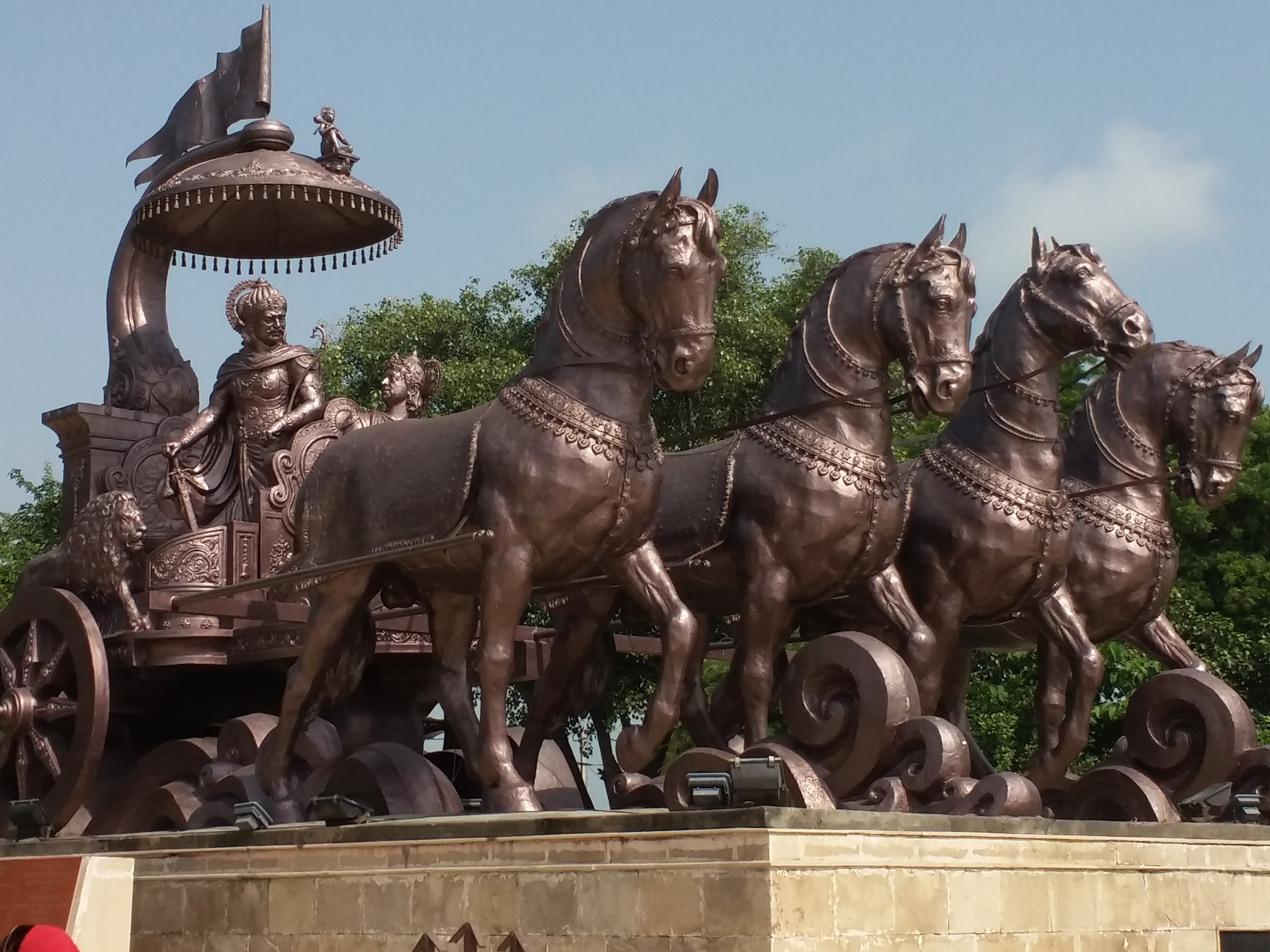
Kurukshetra sits in the northern Indian state of Haryana, about 260 m above sea level, on a stretch of land where the climate runs arid and the seasons arrive with little softness. Summers are dry and punishing, the monsoon brings a short, sharp relief, and winters turn cool enough for a sweater. The city keeps time on Asia/Kolkata, and its population of 155 thousand gives it the feel of a mid-sized town rather than a metropolis. Foreign residents tend to settle where daily errands stay close and rents stay low, though the city spreads its housing across a compact core and quieter outer pockets rather than any single expat quarter.
Living costs here are low even by Indian standards, and the numbers make that plain. A one-bedroom apartment in the city center rents for $41/mo, while the same outside the center drops to $31/mo. Families or sharers looking at three bedrooms pay $124/mo centrally or $103/mo farther out. Utilities run $38/mo, internet $8/mo, and a mobile phone plan just $4/mo. A monthly public transport pass costs $5/mo and a gym membership the same. Eating out is cheap: an inexpensive restaurant meal is $1 per person, a mid-range three-course dinner for two is $15, and a cappuccino is $1. A single adult can cover the budget tier, rent included, for $100/mo, while monthly costs excluding rent come to $313/mo. Against that, the average monthly net salary locally is $213/mo, so the arithmetic rewards anyone arriving with remote income or savings and pinches anyone relying on a local wage.
Safety is one of the city's stronger points. The safety index stands at 70/100 and the crime index at 28/100, where lower is safer, so walking familiar streets after dark is not the gamble it can be in larger Indian cities. Healthcare quality is rated Fair, which means routine care and common complaints are manageable, but serious or specialized treatment usually means traveling to a bigger center. Air quality is the real trade-off: an index of 185 signals pollution that sensitive visitors will feel, particularly in the dry months when dust hangs in the air.
Visas follow India's standard immigration framework, and travelers should sort out the correct category before arrival rather than after. The nearest airport is IXC, 34 km away, which keeps the final leg short. Internet averages 32 Mbps, enough for calls and remote work, though English proficiency is Limited, so a few Hindi phrases go a long way. The city scores 50/100 overall for expats, 52/100 for retirees, and 52/100 for digital nomads. It suits budget-conscious long-stayers, remote workers who want very low overhead, and retirees drawn to a quiet, affordable, historically rich setting, while those needing top-tier hospitals, fast connectivity, or a large international community will find it a compromise.