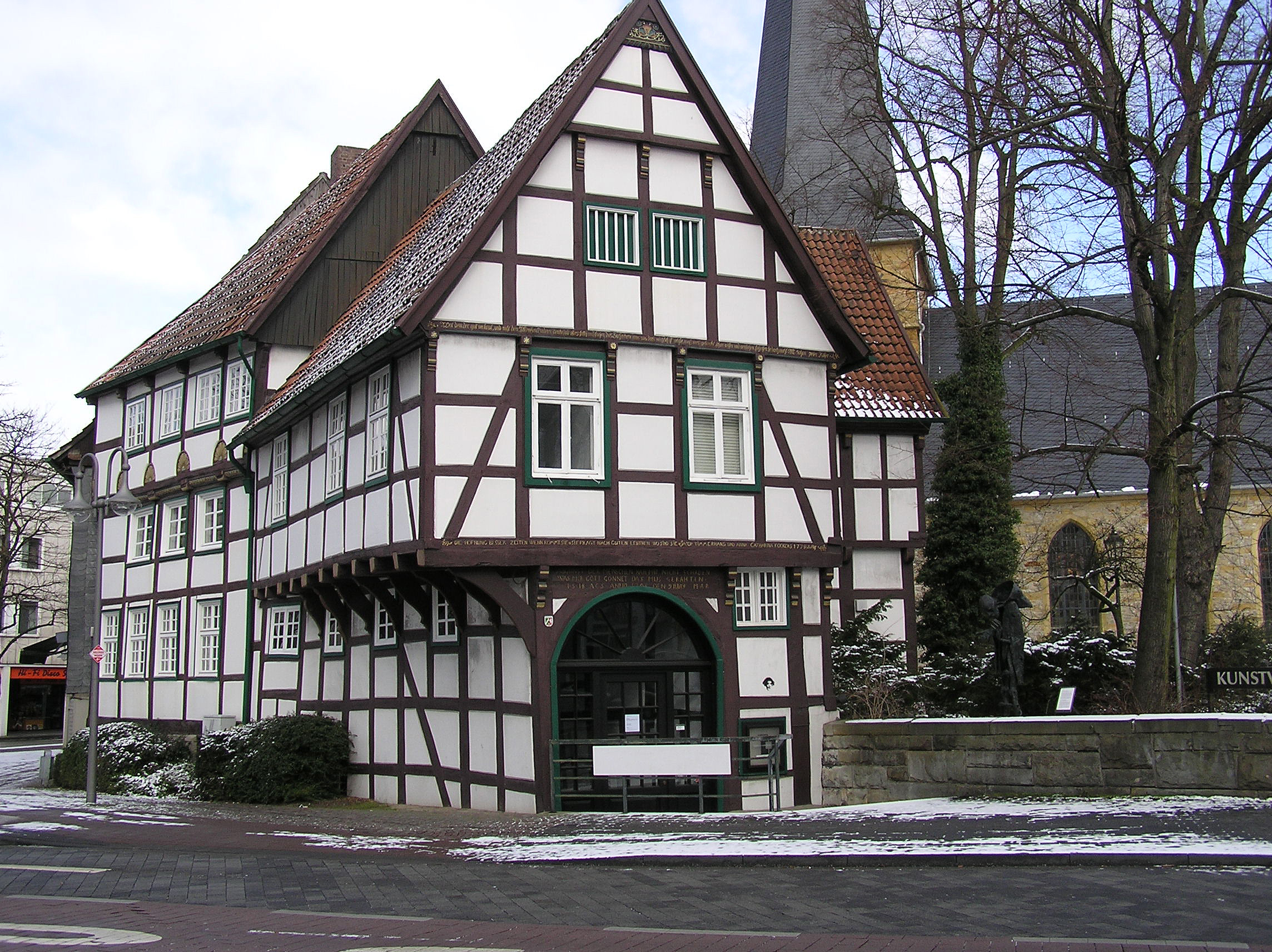
Gütersloh sits in the temperate lowlands of northwestern Germany, about 73 m above sea level in the state of North Rhine-Westphalia, keeping time on Europe/Berlin. The climate is temperate, with mild summers and cool, gray winters that shape daily rhythms more than any dramatic seasonal swing. Among the small number of expats who settle here, Spexard is the neighborhood that comes up most often, a district on the eastern edge of town that draws newcomers looking for quieter streets and easy access to the center. With a population of 102 thousand, Gütersloh stays compact enough that most errands, commutes, and social plans fit inside a short bike ride or bus trip.
Housing costs split sharply depending on where you land. A one-bedroom apartment in the city center runs $952/mo, while the same unit outside the center drops to $672/mo. Three-bedroom places follow the same pattern: $1,344/mo centrally and $1,008/mo farther out. Beyond rent, a single adult can expect roughly $1,000/mo in living expenses, while a family of four faces about $3,400/mo. Utilities add $299/mo, internet $44/mo, and a mobile plan $33/mo. Everyday spending stays modest: a cappuccino is $4, an inexpensive restaurant meal $20 per person, and a three-course mid-range dinner for two $84. A monthly public transport pass costs $73 and a gym membership $26. Against those numbers, the average monthly net salary of $2,351/mo matters, and the overall cost of living index of 66/100 against New York City gives a sense of how far a local paycheck stretches. Budget-conscious singles can plan around $1,052/mo, mid-range spenders around $1,550/mo, and those wanting comfort around $2,064/mo, all rent included.
Safety is one of Gütersloh's quiet strengths. The safety index reads 74/100, with a crime index of 26/100, so violent and property crime rarely dominate daily conversation. Air quality sits at 45 on the index, a middling figure that reflects the region's mix of industry and green space rather than any acute problem. Healthcare quality is rated Good, and residents plug into Germany's standard insurance system without the access headaches common elsewhere. Internet service averages 75 Mbps, enough for remote work, streaming, and video calls, though anyone with heavy data needs should check what each address actually supports before signing a lease.
For longer stays, the legal pathways are specific. Retirees can look to the §7 Abs. 1 S. 3 AufenthG residence permit, which requires a minimum monthly income of $1,200/mo. Freelancers and remote workers have the Freelancer Residence Permit under Section 21 of the German Residence Act. Getting in is straightforward through BFE, the nearest airport at 13 km from town. English proficiency locally is Limited and the expat community is Very Few, so day-to-day life rewards at least some German. The overall expat score of 67/100, a FIRE score of 69/100, a retiree score of 59/100, and a digital nomad score of 58/100 sketch a place that suits budget-minded savers, retirees seeking calm and affordable rent, and remote workers who value low costs over a buzzing international scene.