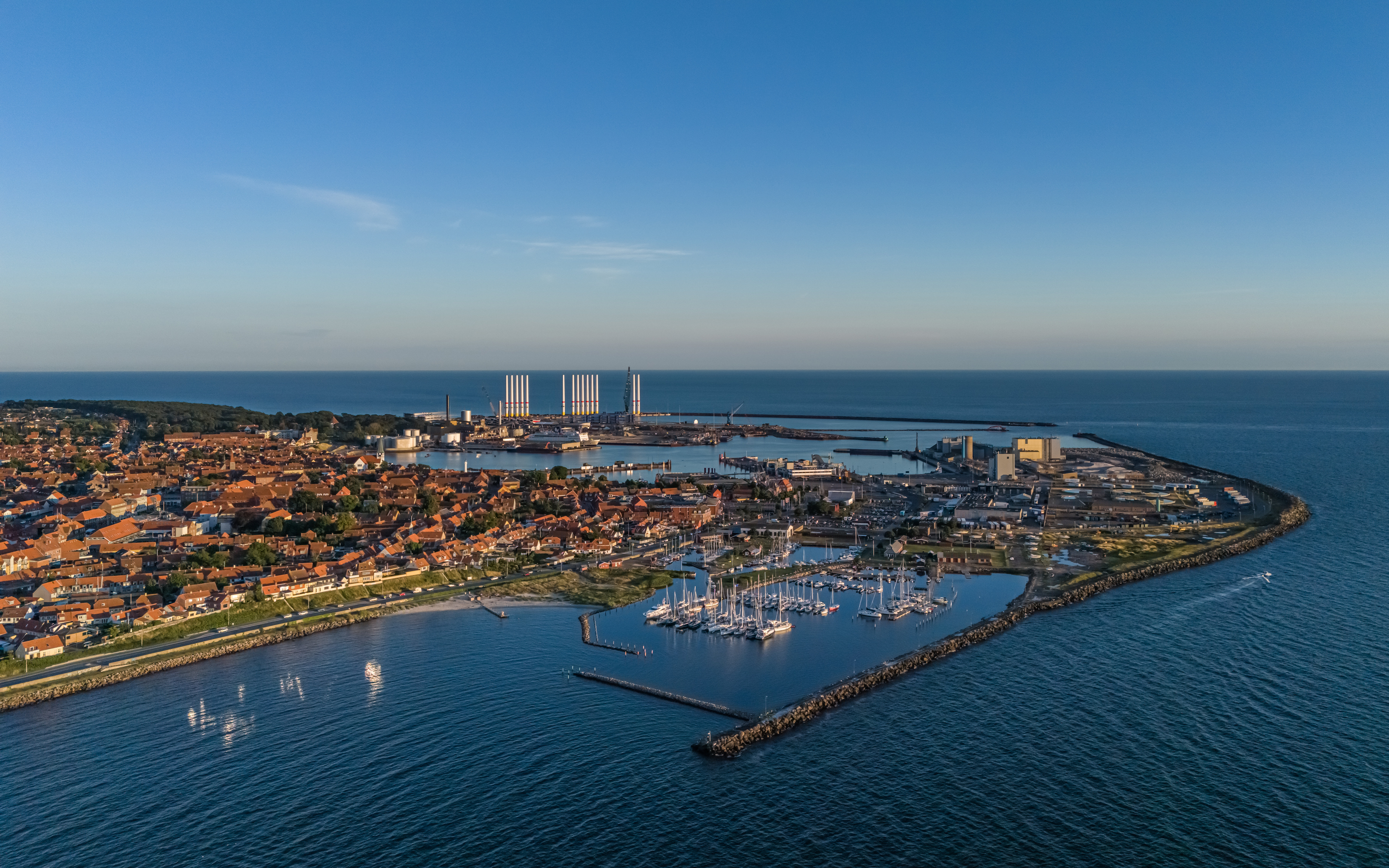
Rønne sits on the western coast of Bornholm, a Danish island in the Baltic Sea, at just 10 m above sea level and within the Europe/Copenhagen timezone. The climate is temperate, which means mild summers and cool winters shaped by the surrounding water rather than extreme swings. Among the roughly 11 thousand residents, expats tend to settle in Rønne Centrum, where the harbor, shops, and everyday errands sit within walking distance, or in Hasle, a smaller coastal town to the north that draws people who want quieter streets and easy access to the sea.
Monthly costs here run well below what you would pay in a major European capital. A one-bedroom apartment in the city center rents for about $950/mo, while the same outside the center drops to $750/mo. Three-bedroom units go for $1,750/mo in the center and $1,350/mo outside it. Beyond rent, a single adult can expect around $1,180/mo in living expenses, and a family of four closer to $3,950/mo. Put together, a single adult living on a budget needs roughly $2,100/mo with rent included, a mid-range lifestyle runs about $2,850/mo, and a comfortable one reaches $3,800/mo. The cost of living index of 76/100 against New York City reflects that gap, though everyday prices still follow Danish norms rather than bargain-bin ones.
Safety is one of Rønne's strongest selling points. The safety index stands at 85/100, with a crime index of just 15/100, so walking home after dark or leaving a bike unlocked outside a bakery is far less of a gamble than in most cities of comparable size. Air quality is good as well, with an index of 28. Healthcare quality is rated Good, and the Danish system provides reliable primary and emergency care, though specialist appointments can involve a wait. English is widely spoken, which smooths the path for newcomers navigating doctors, pharmacies, and municipal offices.
Getting to Rønne is straightforward thanks to Bornholm Airport (RNN), only 5 km from the center, with connections to mainland Denmark. Residency paperwork for non-EU citizens follows national rules, and the practical steps are best handled through official channels before arrival. Internet speeds average 100 Mbps, enough for remote work and video calls. The overall expat score of 68/100, a digital nomad score of 70/100, a FIRE score of 66/100, and a retiree score of 63/100 point to a place that rewards people seeking calm, affordability, and space over big-city energy. The expat community is very few in number, so this suits self-starters who are comfortable building a social life from scratch rather than those who want an instant network of fellow newcomers.