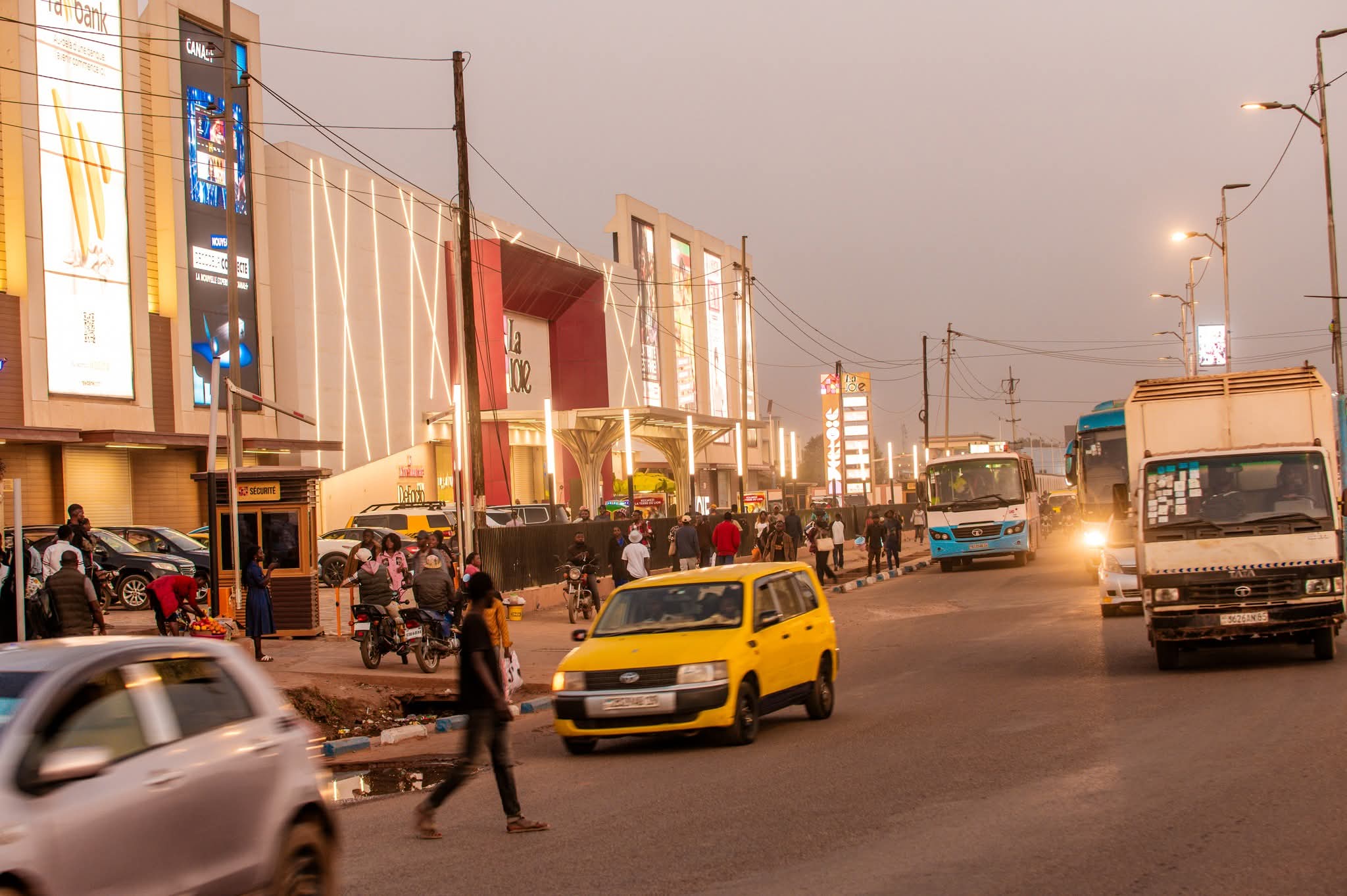
Kolwezi, Democratic Republic of the Congo
Data updated Sep 29, 2026
📊 Scores
Best fit: FIRE / Geoarbitrage (score: 44)
Is Kolwezi Safe? An Honest 2026 Guide to the DRC's Cobalt Capital
Short answer: no, not by the standards most travelers or relocating workers use. Kolwezi sits in a country under a Level 4 "Do Not Travel" advisory from the US, UK, Canada, Australia, and New Zealand, and through late 2025 and into 2026 the city itself has seen escalating mining-related violence, deadly industrial accidents, and serious environmental hazards. The important nuance, and the reason almost nobody searching this question gets a straight answer, is that Kolwezi is not the war zone people picture when they hear "Congo." Its dangers are a different set, and understanding which ones actually apply is the difference between an informed decision and a scary headline.
Is Kolwezi safe? The honest breakdown
Kolwezi is the capital of Lualaba Province in the southeastern DRC, and it holds roughly 70 percent of the world's known cobalt reserves, which is why it exists in the global conversation at all. Almost everyone who relocates here does so for one reason: the mining industry. If you are reading this, you are most likely a mining-sector worker, a contractor, an engineer, or an NGO staffer weighing a posting, not a tourist or a digital nomad. So the real question is not "is it a nice place to visit," it's "what is the actual risk profile, and how do people manage it." Here is that profile, straight.
First, the distinction that matters: this is not the eastern conflict
When the news covers fighting in the DRC, it is almost always the east: North Kivu, South Kivu, and Ituri, where the M23 rebellion, the ADF, and more than a hundred armed groups operate, where Goma and Bukavu have changed hands, and where the "Do Not Travel" warnings are about active armed conflict. Kolwezi is roughly 1,500 kilometers from that fighting, on the opposite side of an enormous country. The militias, the front lines, and the siege conditions of the east are not present in Lualaba.
This matters because a lot of fear about Kolwezi is really displaced fear about the Kivus. The two are not the same security situation. Kolwezi's risks are crime, mining-sector unrest, industrial and environmental hazards, and weak health infrastructure, not rebel offensives. That is a meaningfully different list, and for the mining workforce it is a manageable one, which is why major international companies operate here at all. It is still a serious list.
Crime
Violent crime is a real and ongoing concern across urban DRC, and foreigners are targets. Government security reports for the country describe armed robbery, home invasion, carjacking, and so-called express kidnappings, where someone is held briefly and forced to withdraw cash. Lubumbashi, the nearest major city to Kolwezi and the gateway most people fly through, is singled out by several governments for very high crime rates, with street robbery common near hotels and supermarkets in the center.
The practical upshot is that independent, unsecured living the way you might in a normal expat city is not how Kolwezi works for foreigners. People here move with awareness, avoid displaying wealth or phones, do not walk at night, and lean heavily on company or private security. Petty and opportunistic crime is the baseline. The risk rises after dark and in isolated areas.
The mining-sector unrest is the live issue right now
This is the part of Kolwezi's safety picture that changed sharply in the last year, and it's the part current. In December 2025 the government issued a decree suspending artisanal mining and closing informal sites, and the response in the cobalt belt was immediate and violent. Through late December and into January 2026, artisanal miners, known locally as creuseurs, barricaded roads, stoned and burned trucks, looted shops, and ransacked police stations in Kolwezi neighborhoods. Local reporting described the city as nearly paralyzed, with workers afraid to commute because of the risk of being ambushed. In one incident at the end of December, an employee of an industrial mining company was beaten to death by artisanal miners while returning home from a shift.
This is not a one-off. The mines run by major operators, including Glencore's Kamoto Copper Company and the Chinese-owned COMMUS, have reported truck robberies and attacks on their workers, and company employees marched on the provincial government in December 2025 to demand protection. The underlying conflict, hundreds of thousands of desperate informal miners competing with industrial concessions over the same ground, has no resolution in sight, and the government's April 2026 announcement of a 100 million dollar "paramilitary mining guard" of some 20,000 personnel signals that the official answer is more force, not less tension. For anyone working in or around these operations, civil unrest tied to mining policy is the most active near-term risk.
Industrial and environmental hazards
The accidents here are frequent and lethal, though they fall hardest on artisanal miners rather than on company staff in secured operations. In November 2025 a makeshift bridge collapsed at the Mulondo site near Kolwezi, killing 49 people who had forced their way into a closed concession. Landslides at informal sites in the province killed 17 in July 2024 and 11 in February 2026. Also in November 2025, a tailings dam failed at the Kasulo mine and flooded parts of Kolwezi, raising fears of toxic contamination of groundwater.
The environmental risk extends to people who never set foot in a mine. Sulfuric acid used in processing has poisoned rivers, air and water pollution are widespread, and a local geologist quoted in investigative reporting warned that exposure is serious even for residents outside the industry. Parts of the city are built over old, unmapped tunnels, which carries a long-term subsidence risk. If you live here, your water source, your air, and the ground under your housing are all things to ask hard questions about before you arrive.
Health and medical care
Treat Kolwezi as a place with limited medical capacity and plan accordingly. Malaria is endemic and is a daily-prophylaxis issue, the local health infrastructure does not meet Western standards, pharmacies are poorly regulated, and there is no reliable national emergency number. Serious medical events generally mean evacuation, which is why every credible employer here carries medical evacuation insurance for foreign staff, and why you should never accept a posting without confirming yours.
One health note that sounds scarier than it is for Kolwezi specifically: the DRC declared an Ebola outbreak a public health emergency in May 2026, but that outbreak is in Ituri Province in the east, the same distant region as the armed conflict, not in Lualaba. It affects entry screening and border measures rather than day-to-day risk in Kolwezi.
How foreigners actually live here
The realistic picture of expat life in Kolwezi is not apartments and cafes. It is secured mining compounds and camps with controlled access, private security, company-arranged transport, and managed movement. Foreign mining staff, a mix of Chinese workers tied to operators like COMMUS and Tenke Fungurume, and Western staff with companies like Glencore and the Canadian-backed Kamoa-Kakula project, largely live and move inside that protective bubble. Within it, day-to-day life is structured and the acute risks are mitigated. Outside it, the ordinary safety calculus of urban DRC applies in full.
That is the honest frame for "is Kolwezi safe." For an independent traveler wandering in, no, and the advisories mean it. For a worker arriving under a serious employer with a real security and evacuation setup, it is a high-risk environment that thousands of people nonetheless work in safely by following the protocols built around them.
If you are going anyway, the practical baseline
Confirm before you accept anything: a security briefing and managed accommodation, company transport (do not arrange your own ground movement loosely), medical evacuation insurance, and a clear emergency and extraction plan. Register with your embassy, though understand that consular help outside Kinshasa is extremely limited. Carry copies of your passport and visa and keep originals secured. Avoid all mining-protest areas and demonstrations, which can turn violent fast. Do not move at night. Do not photograph mines, security forces, or government and military sites, which can get you arrested. And follow your security team's guidance over your own instincts about what looks fine.
The bottom line
Kolwezi is not safe in the way the word is normally meant, and the responsible answer to anyone asking is to take the Level 4 advisories seriously. But it is also not the rebel-held front line that the word "Congo" conjures, and the people who go there for the cobalt economy manage a specific and known set of risks, crime, mining unrest, industrial and environmental hazards, and thin medical care, through the security infrastructure their employers provide. If you have that infrastructure and you follow it, people do this every day. If you do not, this is not a place to improvise.
Safety conditions and travel advisories for the DRC were verified in June 2026 and can change quickly. Always check your own government's current advisory and consult your employer's security team before traveling to Kolwezi.
🏚️ Cost of Living
💰 Budgets and Costs
Grocery Basket
Eating Out
Utilities & Lifestyle
Housing
A 1BR in the center runs about $600/mo. If your income is in another currency, bank FX fees add up. A multi-currency account can cut that cost.
See low-fee transfersWe may earn a commission at no cost to you.
💰 Real Spend Reports
🛡️ Safety & Crime
(Higher is safer)
(Lower is safer)
Kolwezi presents significant safety challenges for expats. A mining city with limited formal economy outside extraction, it experiences petty theft, armed robbery, and occasional violent crime, particularly after dark. Avoid displaying wealth, traveling alone at night, and certain neighborhoods like Kasulo. Carjacking and home invasions targeting foreigners occur. Political instability in eastern DRC and occasional civil unrest add background risk. Security infrastructure is weak. This city is not recommended for most American expats unless you have strong local ties, security arrangements, and professional necessity.
Kolwezi has a safety index of 50/100. Petty theft and lost belongings are the most common problems for newcomers. Compare travel insurance before you go.
Compare travel insuranceWe may earn a commission at no cost to you.
🏥 Healthcare
🌤️ Climate
Best Months
Climate Notes
Kolwezi has a tropical savanna climate with hot, humid summers (September-March, 33°C peaks) and mild, drier winters (June-August, 11°C lows), requiring adaptation to high humidity year-round and seasonal rainfall patterns.
💻 Digital Nomad
Community Notes
| Name | Price/mo | Notes |
|---|---|---|
| Regus Lubumbashi | $180 | While technically in Lubumbashi (a larger city relatively near Kolwezi), Regus offers a reliable coworking option with professional amenities like meeting rooms, high-speed internet, and administrative support. It's a good choice for expats needing a familiar and structured workspace, even if it requires a commute. |
| WorkSpaceDRC | $150 | Located in Lubumbashi, WorkSpaceDRC provides a modern coworking environment with various membership options. It features reliable internet, printing services, and a collaborative atmosphere, making it suitable for digital nomads seeking a professional setting outside of Kolwezi itself. |
Working remotely from Kolwezi? Nomad health insurance covers you across borders, month to month.
See nomad insuranceWe may earn a commission at no cost to you.
🧳 Expat Life
Expat Life Notes
Kolwezi is the capital of Lualaba Province and a major mining city in the DRC, at the center of the global cobalt supply chain. It has seen a significant influx of mining industry expats, particularly from China, Australia, and the West, following surging demand for cobalt. Some expat-oriented services have emerged including restaurants and private healthcare tied to mining operations. Security requires constant attention.
Pros
- ✓ At the center of the global cobalt economy
- ✓ Growing expat infrastructure linked to mining
- ✓ Some English spoken in mining operations
- ✓ Low cost of living outside company housing
Cons
- ✗ Security risks — armed groups operate in surrounding areas
- ✗ Environmental concerns from mining
- ✗ No conventional expat social scene
- ✗ French is the working language
- ✗ Limited quality healthcare
Could living/working in Kolwezi cut years off your work life?
With a 1-bedroom in the center at $480/mo, your FIRE number here might be much lower than you think.
Estimate the cost of moving to Kolwezi, Democratic Republic of the Congo
Get a free moving cost estimate for moving to Kolwezi, Democratic Republic of the Congo. Takes 10 seconds.
How much are you shipping?
When are you moving?
Powered by Sirelo. Free quotes from verified international movers.
Share This Guide
Kolwezi won't stay this cheap forever.
Cost-of-living and visa updates for Kolwezi and the rest of Democratic Republic of the Congo. Free with RA Postcards.
By submitting your email address, you will receive a free subscription to RA Postcards and special offers from Rewire Abroad and our affiliates. You can unsubscribe at any time, and we encourage you to read more about our Privacy Policy.