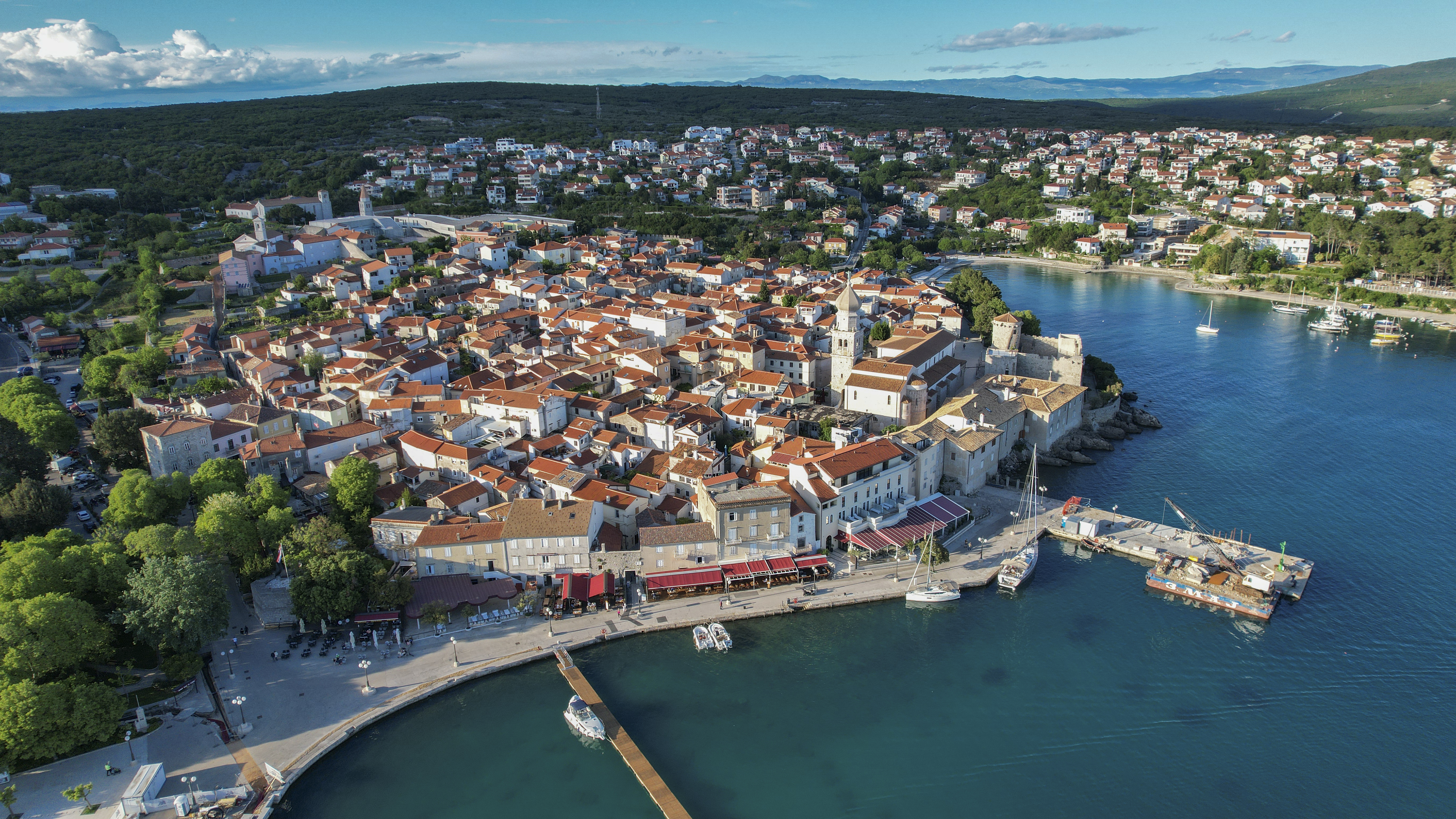
Krk, Croatia, sits on an island in the northern Adriatic, connected to the mainland by a bridge, and its compact center is a maze of stone lanes and harborfront cafes. The climate is Mediterranean, with warm, dry summers from June through September and mild, wet winters, so beach days dominate the peak season while rain gear is essential from November through March. Expats tend to settle in the Old Town or the Harbor area, where daily life unfolds within walking distance of the water and the island's main attractions. With a population of just 6,000, Krk offers a small-town rhythm that appeals to those seeking a slower pace.
Living here is notably affordable compared to many Western European destinations. A one-bedroom apartment in the city center rents for $617/mo, the same as outside the center, while a three-bedroom in the center costs $950/mo and $780/mo outside. For a single adult, the budget tier total, including rent, comes to $841/mo, the mid-range tier to $1,275/mo, and the comfortable tier to $1,489/mo. Excluding rent, monthly expenses average $650, with utilities at $181, internet at $43, and a mobile plan at $27. A meal at an inexpensive restaurant runs $17, a three-course dinner for two at a mid-range spot is $79, and a cappuccino costs $2. The average local net salary is $1,346/mo, which means many residents find the cost of living manageable, though expats earning in stronger currencies will find their money goes further.
Safety is a strong point, with a safety index of 78 and a crime index of just 22, indicating a very low level of crime. Healthcare quality is rated as good, and the air quality index is 35, which is considered clean. English is common in tourist areas, so newcomers can get by without speaking Croatian, though learning the local language will deepen connections. The expat community is medium-sized, providing a support network without overwhelming the local character.
For those considering a longer stay, Croatia offers two main pathways. The Temporary Residence Permit (Privremeni boravak) requires a minimum monthly income of $1,000/mo, making it accessible for retirees or those with passive income. The Croatia Digital Nomad Visa requires a higher threshold of $3,762/mo, suited to remote workers with established earnings. The nearest airport is RJK, just 11 km away, offering easy access to the island. Krk suits travelers who value a safe, affordable Mediterranean base with a genuine local feel, whether they are digital nomads, retirees, or simply seeking a change of scenery.