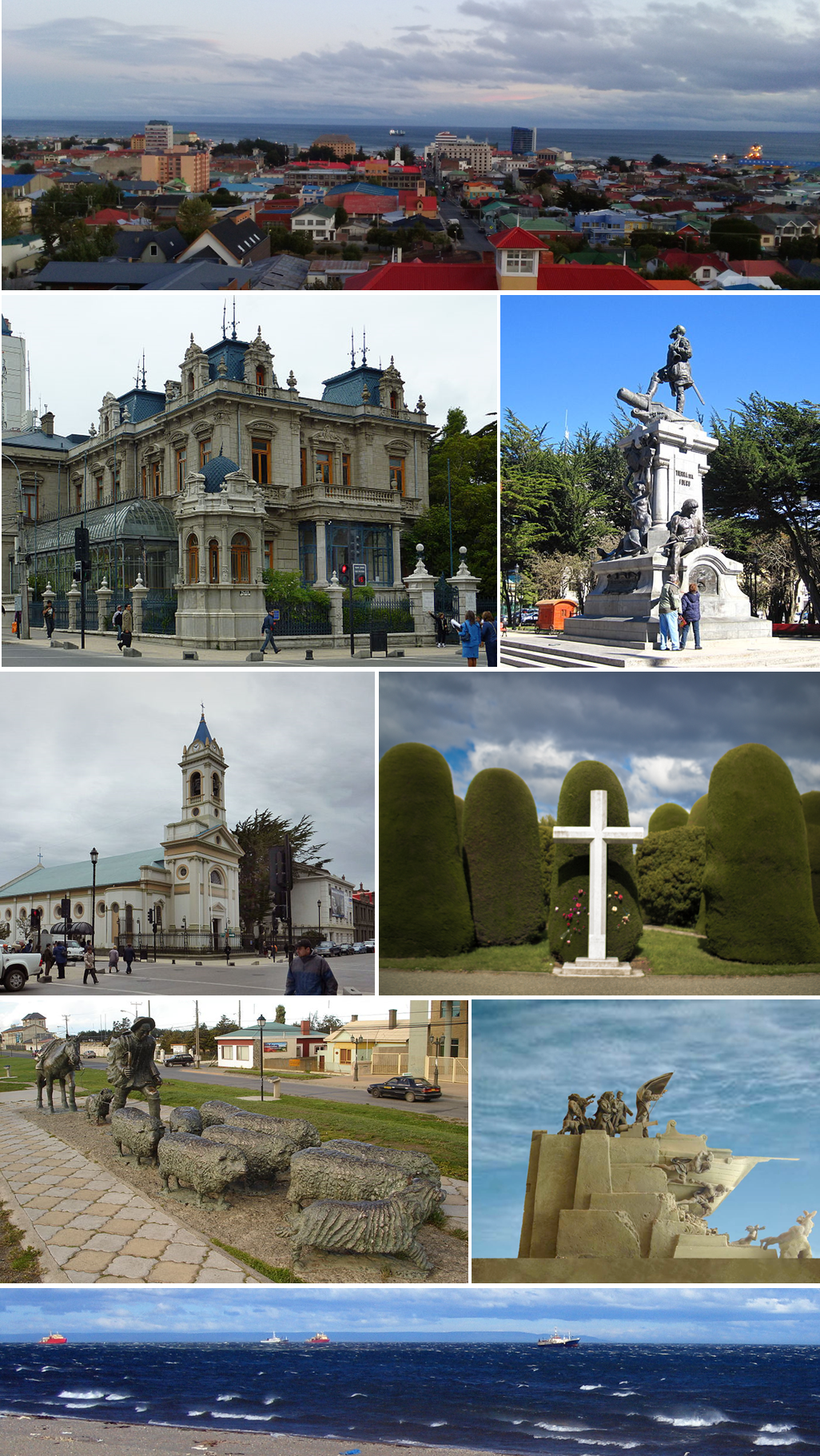
Punta Arenas sits on the arid southern edge of Chile, facing the Strait of Magellan in the Magallanes region. Its climate is dry and windswept, with cool summers and brisk winters that shape a hardy, frontier character. The expat community is small, and most newcomers gravitate to the Centro Area, the compact downtown where services, cafes, and the main plazas cluster. With a population of 123 thousand, it is a modest city that feels both remote and welcoming, a place where the vast Patagonian landscape is never far from view.
Living here is notably affordable compared to major global cities, with a cost of living index of 55 out of 100 relative to New York City. A one-bedroom flat in the city centre rents for $572/mo, while the same outside the centre costs $382/mo; a three-bedroom in the centre runs $966/mo, dropping to $664/mo outside. For a single adult, the budget tier total, including rent, comes to $632/mo, the mid-range tier to $959/mo, and the comfortable tier to $1,297/mo. Excluding rent, a single person spends about $850/mo, and a family of four about $2,600/mo. Utilities add $149/mo, internet $21/mo, a mobile plan $10/mo, and a monthly public transport pass $20/mo. Meals are inexpensive, with a restaurant meal at $11 per person and a three-course meal for two at $51, while a cappuccino costs $4. The average local net salary is $800/mo, which sits below the comfortable tier but above the budget tier, making the city viable for those with remote income or savings.
Safety is a strong point, with a safety index of 72 out of 100 and a crime index of 28 out of 100, where lower is safer. Healthcare quality is rated good, and while English proficiency is limited, the local health system is generally reliable for routine and emergency care. The overall expat score is 72 out of 100, with a FIRE score of 74 out of 100, reflecting strong potential for financial independence and early retirement, though the retiree score is a more moderate 57 out of 100 and the digital nomad score 58 out of 100.
For those seeking longer stays, Chile offers two relevant visa programs. The Residencia Temporal - Jubilados y Rentistas requires a minimum monthly income of $1,000/mo, and the Chile Digital Nomad Visa also requires $1,000/mo. The nearest airport is PUQ, located 34 km from the city, connecting Punta Arenas to the rest of Chile and beyond. This city suits retirees and remote workers who value low costs, safety, and a stark, beautiful environment, but who are comfortable with a small expat community and limited English use in daily life.