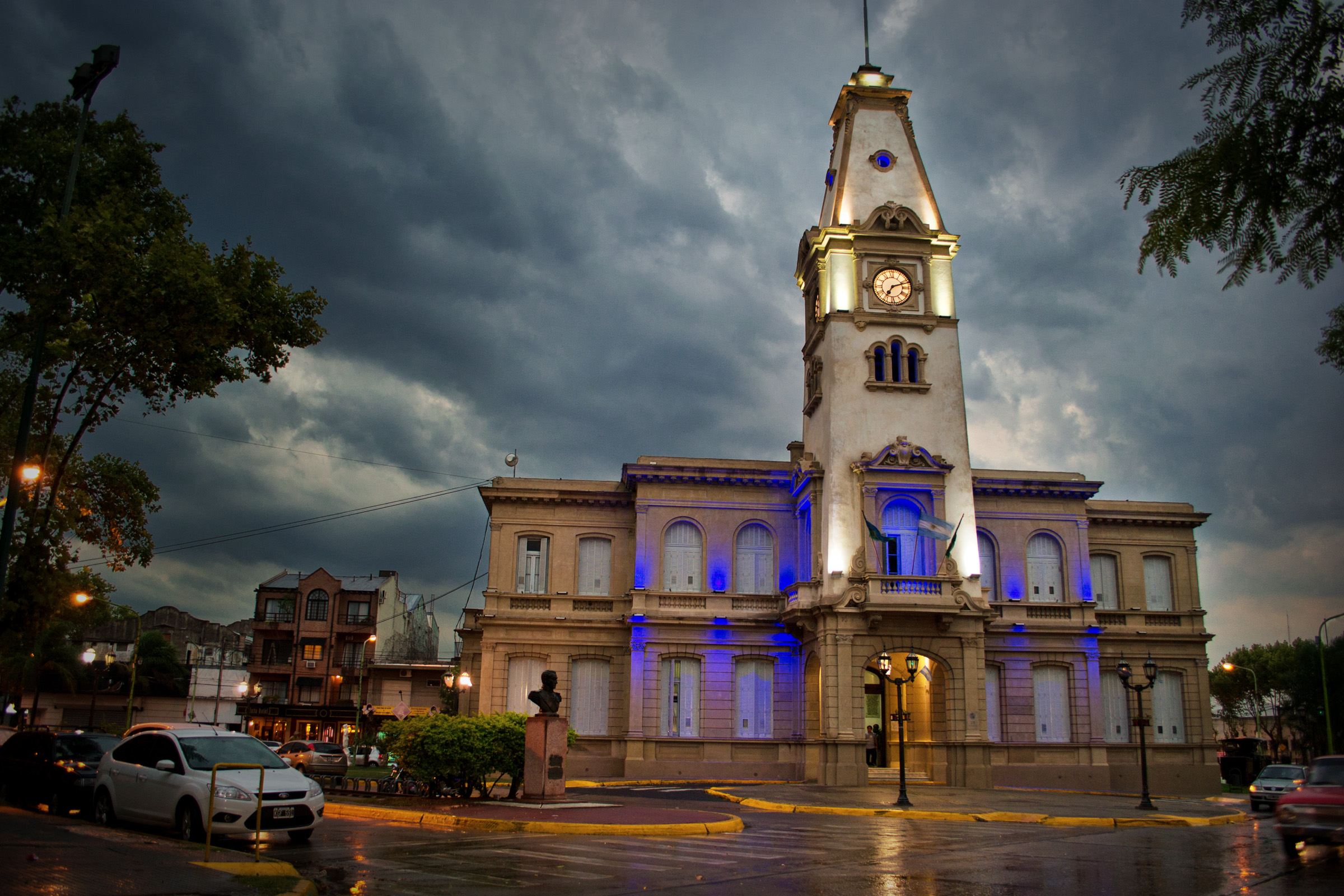
Campana sits on the Paraná River's western bank, about 6 kilometers from El Palomar Airport (EPA), in Argentina's Buenos Aires Province. Its humid subtropical climate brings hot, humid summers that can reach 39°C in December through February, and mild winters that occasionally drop to -2°C in June through August, with moderate rainfall year-round and 69% average humidity. Expats gravitate toward the Centro and Barrio Dalmine neighborhoods, where the city's 87 thousand residents live at an elevation of just 19 meters above sea level, in the America/Argentina/Buenos_Aires timezone.
Living costs here are strikingly low. A single adult can manage on roughly $900/mo in the budget tier, which includes rent, while the mid-range tier runs about $1,350/mo and the comfortable tier about $1,900/mo. Excluding rent, a single person spends about $520/mo, and a family of four about $1,850/mo. Rent itself is modest: a one-bedroom in the city centre costs $380/mo, dropping to $280/mo outside the centre, while a three-bedroom in the centre runs $700/mo and $520/mo outside the centre. Utilities add $212/mo, internet $31/mo, and a mobile phone plan $25/mo. Meals are inexpensive too, with a basic restaurant meal at $19, a three-course meal for two at $65, and a cappuccino at $4. The cost of living index sits at 45/100 relative to New York City.
Safety is moderate, with a safety index of 63/100 and a crime index of 37/100, where lower is safer. Healthcare quality is rated as fair, and the air quality index is 45, which is lower and better. English proficiency is limited, so basic Spanish helps, though the expat community is medium-sized. The overall expat score is 74/100, with a FIRE score of 74/100, a retiree score of 53/100, and a digital nomad score of 61/100.
For those seeking to stay long-term, Argentina offers the Rentista Visa, which requires a minimum monthly income of $1,500/mo, and the Digital Nomad Visa, requiring $2,000/mo. Getting to Campana is straightforward via the nearest airport, EPA, just 6 km away. This city suits budget-conscious expats, early retirees, and remote workers who prioritize low costs over urban buzz, especially those comfortable with a fair healthcare system and a slower pace of life along the river.