Spain Freelance Visa (Autónomo)
Spain · Europe
Data updated Sep 3, 2026
Min Monthly Income
$3,254
Application Fee
$91
Processing Time
~13 wks
Difficulty
Difficult
Duration
1 months
Path to Citizenship
10 years
Overview
Spain’s Freelance Visa (Autónomo) is built for non‑EU self‑employed professionals who can show at least $3,254/month in income (as of 2026) plus $7,824 in savings. In practice, consulates focus on whether your self‑employment activity can realistically generate that $3,254/month inside Spain. Purely passive income from ETFs or rentals back home helps for the $7,824 savings test and as a financial cushion, but the core narrative has to be: “this is my freelance or small‑business activity, and here’s how it supports me in Spain.” Local work is explicitly permitted, but only as self‑employed; this is not an employee work permit.
Initial residence is granted for 1 month and is renewable, with the program marked as renewable in the program rules. Spain requires at least 183 days of physical presence per year, but if you are aiming at long‑term residency (5 years) or citizenship (10 years), prolonged absences will undermine those clocks. Someone planning to spend only a few weeks per year in Spain and otherwise live in, say, Thailand will technically struggle to accumulate the 5 or 10 years of actual residence implied by the permanent residency and citizenship timelines.
From a long‑term perspective, the permit can be renewed and, after 5 years of legal residence, you can convert to permanent residency; after 10 years, you become eligible to apply for Spanish citizenship, according to the the program rules. This freelance track counts in full toward permanent residency, and in practice Spanish long‑stay residence permits are structured to roll into long‑term status after that 5‑year threshold as long as you have remained legally resident and renewed on time.
Friction points include the $91 application fee (paid at the consulate, as of 2026), a required business plan, private health insurance, and a fair amount of documentation around your skills and finances. Unlike some visas, an FBI background check, medical exam, and consular interview are not required under the program rules, though documents typically need apostille certification, which keeps the bureaucracy score at 1/5. You do need to be at least 18, and you should expect to register as an autónomo once in Spain, with corresponding tax and social security obligations.
This path makes most sense if you can show $3,254/month from bona fide self‑employment (design, consulting, development, etc.) plus $7,824 in savings and you actually want to base your working life in Spain for 5–10 years. It is a poor fit if your $4,000/month comes entirely from dividends and rental income and you don’t intend to run a real business in Spain, in which case Spain’s Non‑Lucrative Visa or Digital Nomad Visa align better with how you actually live and earn.
Eligibility Requirements
EU and EEA citizens have free movement and the right to live and work in Spain without this visa, so the Spain Freelance Visa (Autónomo) is aimed at non‑EU/EEA nationals. That includes Americans, Canadians, Australians, New Zealanders, Britons post‑Brexit, and most Asian and Latin American nationalities who need a residence‑plus‑work authorization.
Common confusion centers on the EEA and Switzerland. Norway, Iceland, and Liechtenstein are in the EEA and enjoy similar free‑movement rights, so their citizens do not use this freelance visa either. Swiss nationals, while not in the EU or EEA, benefit from separate agreements granting rights very close to EU free movement, so they also generally register under EU/Swiss procedures rather than applying for this non‑EU autónomo route. UK citizens, by contrast, lost EU free‑movement rights after Brexit and now fall squarely in the non‑EU pool that must apply for this visa if they want to freelance in Spain long‑term.
Dual nationals who hold any EU citizenship (for example, a US–Irish, Canadian–Italian, or Australian–German dual national) should enter and register in Spain on their EU passport instead of applying for the Spain Freelance Visa. Using the EU passport bypasses consular pre‑approval, avoids the $87 application fee and many supporting documents, and gives a more straightforward path to residence and local work rights than the non‑EU self‑employment route.
Min Income
$3,254
Application Fee
$91
Min Age
18 yrs
Duration
1 months
Physical Presence
183 days/yr
Self-Employed
Requirements Checklist
• Identity: National visa application form; EX-07 application form; valid passport; passport-sized photographs.
• Employment: Detailed business plan; proof of professional qualifications or experience; relevant professional registration or association certificate, if applicable; activity permits and licences, if applicable; approval/report from a competent professional association on the viability of the business, if required.
• Financial: Proof of sufficient financial means; bank statements; evidence of investment capital or funding for the business.
• Health: Private health insurance valid in Spain; medical certificate proving no serious illness posing a public health risk.
• Background: Criminal record certificate from your country of residence and any country lived in for more than 6 months during the last 5 years.
• Accommodation: Proof of accommodation in Spain.
• Other: Payment of visa fees; copies of previous visas, if any.
Apostille required on official documents
Tax Information
Local tax regime and what gets taxed
Spain taxes tax residents on worldwide income under a standard worldwide regime; there is no territorial or remittance‑basis system for this visa. For an autónomo, that means your self‑employment income from clients in Spain or abroad is taxable in Spain once you become tax resident. ETF dividends from a US brokerage, bond interest, rental income from US/Canadian property, and foreign pensions are all brought into the Spanish tax base when you are resident.
Capital gains from selling foreign index funds or ETFs (e.g., at Vanguard or Interactive Brokers) are generally treated as savings income and taxed at progressive savings rates; the savings scale runs from 19% up to 30% on gains above 300,000 EUR, and they are not exempt. There is no indication in the facts of a special preferential rate or an exemption for foreign capital gains, so a FIRE retiree liquidating part of a portfolio while resident in Spain should assume Spanish tax will apply.
Tax residency usually arises after spending more than 183 days in Spain in a calendar year or having your primary economic interests there. Tax residency is not automatically triggered by visa grant; it flows from presence and ties. Once resident, you are expected to register with the Spanish tax authority, obtain an NIE if you don’t already have one, and file annual income tax returns declaring worldwide income.
Spain and the United States have an income tax treaty in force to prevent double taxation and fiscal evasion, along with a separate totalization agreement governing social security contributions. Treaty provisions affect relief on double-taxed income, Social Security, and dividends, so confirm with an advisor exactly how they apply before you structure your business or pension withdrawals around assumed treaty benefits.
For US Citizens and Green Card Holders
US persons on the Spain Freelance Visa remain fully taxable by the US on worldwide income, regardless of Spanish rules. Three US tools matter most:
- Form 2555 – Foreign Earned Income Exclusion (FEIE)
- Form 1116 – Foreign Tax Credit (FTC)
- FBAR (FinCEN 114) and FATCA Form 8938
FEIE on Form 2555 can exclude up to $132,900 of earned income for 2026, such as your Spanish autónomo profits from consulting, design, or coding. It does not cover dividends, capital gains from ETF sales, rental income, pensions, or Social Security. Because this visa supports full‑time residence, most holders targeting long‑term stay will rely on the Bona Fide Residence Test after a complete calendar year in Spain; highly mobile nomads bouncing in and out of Spain might instead rely on the Physical Presence Test (330 full days abroad in any 12‑month period).
The Foreign Tax Credit on Form 1116 becomes important once Spain taxes your self‑employment income, foreign dividends, and capital gains. If Spain’s effective tax rate on your freelance profits or portfolio withdrawals is higher than the corresponding US rate, FTCs can offset some or all of your US liability on that same income. If an income stream is not taxed in Spain (for example, during a non‑resident period where you still have US‑source dividends), the FTC gives no benefit on that income.
FBAR (FinCEN 114) is required if your combined foreign bank and brokerage balances exceed $10,000 at any point during the year, which will be common once you open a Spanish bank account to operate as an autónomo. FATCA Form 8938 kicks in at higher thresholds but often applies for FIRE‑level portfolios. Non‑willful FBAR penalties start at a statutory $10,000 per violation (inflation-adjusted to approximately $16,700 as of 2026), so this is not paperwork to ignore.
To avoid expensive mistakes, you realistically need two professionals: a US CPA experienced in expat returns (FEIE vs FTC strategy, treaty application, FBAR/FATCA) and a Spanish tax advisor who understands autónomo registration and filings. The $1,500–$3,000 you spend in year one on coordinated advice usually pays for itself through optimized elections, correct registrations, and avoided penalties on both sides.
Living in Spain
COL Index vs NYC
43.5
Monthly Cost (excl. rent)
$823
1BR Rent (City Center)
$1,028
Safety Index
63.4
Healthcare Index
77.3
Quality of Life Index
184.4
Time Zone
UTC
Capital
Madrid
Population
47.4M
Official Languages
Spanish, Catalan, Basque, Galician
Avg Internet Speed
263 Mbps
Public Transit Quality
Excellent
With a budget covering rent and living costs, you'd need roughly $1,851/mo for a comfortable single-person lifestyle in Spain.See how far your money goes →
🏙️ Best Cities in Spain for Freelancers
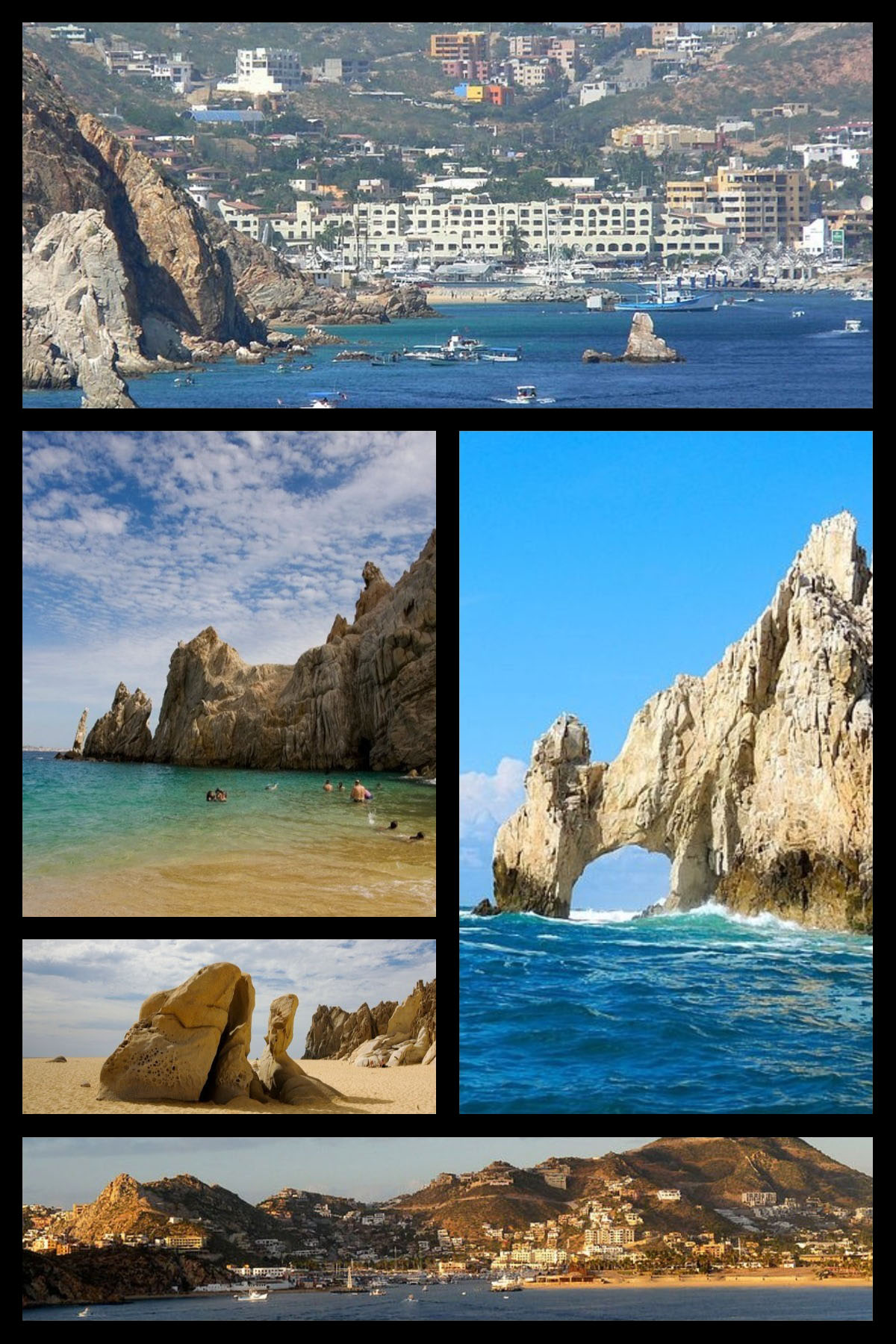 ✦ 79
✦ 79 ✦ 78
✦ 78 ✦ 79
✦ 79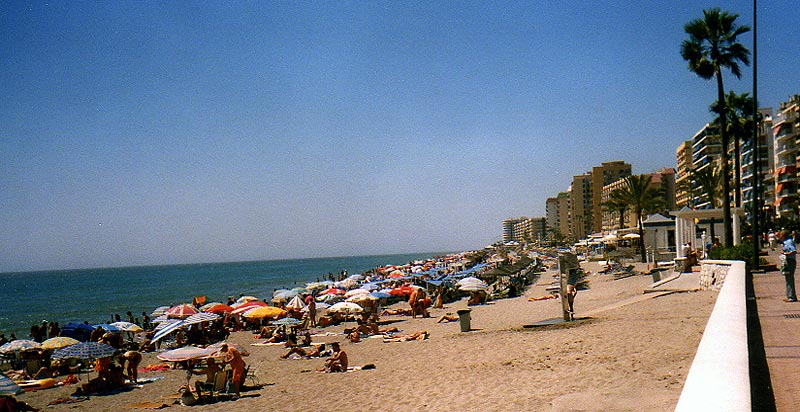 ✦ 78
✦ 78 ✦ 78
✦ 78 ✦ 83
✦ 83The housing requirement and how people get it wrong
Proof of accommodation sounds like a formality until you're the one trying to produce it from another country. The instinct is to book a short-term rental for a month, screenshot the confirmation, and submit that as proof. Sometimes that clears. Often it raises a follow-up question, because a one-month booking signals that you haven't actually worked out where you're going to live, which undercuts the whole premise of a business plan built around operating from Spain.
The stronger move is a longer lease or a notarized statement from someone hosting you, ideally covering enough time to outlast the initial visa period. If you're going the rental route, a contract of six months or longer reads as intent rather than a placeholder. If a family member or friend is hosting you, the accommodation letter needs to match the standard Spanish consulates expect for this exact purpose, not a generic invitation letter written for a tourist visit. Consulates have seen every version of an improvised hosting letter and they know the difference between one written by someone who looked up the requirement and one that wasn't.
There's a sequencing problem hiding in here too. You often need a Spanish address to open the local bank account the visa requires, and you need financial documentation tied to that account before you file. If you try to nail down housing after everything else is ready, you can end up sitting on a complete application for weeks waiting on a lease to materialize. Handle accommodation early, even though it feels like the requirement you can solve last since you're not moving yet. It's the one most likely to become the critical path.
What actually happens after you land
Getting the visa stamped in your passport is not the end of the process, it's the start of a second one that happens entirely inside Spain and on Spanish bureaucratic time. After arrival, the sequence runs through the local Foreigners' Office, the Tax Agency, and Social Security, and each of these offices operates on its own appointment system, its own backlog, and its own tolerance for incomplete paperwork.
The mistake people make is treating the consulate approval as the finish line and only then starting to research what comes next. Appointment slots at the Foreigners' Office in larger cities can run weeks out, and if you arrive without already knowing which office serves your registered address, you lose time you didn't need to lose. Registering with the Tax Agency and Social Security as a self-employed worker isn't optional paperwork you get around to eventually, it's the thing that makes your presence in Spain match what you told the consulate you'd be doing, and gaps between the two invite scrutiny later.
Bring more paper than you think you need to every one of these appointments. Photocopies of everything, the apostilled documents from your original file, translated versions where required. Offices in different cities interpret the same national rule with enough local variation that what worked for someone in Barcelona doesn't guarantee the same experience in Alicante. Build in a buffer of a few weeks after arrival before you assume you're fully operational, not because the process is unusually slow, but because it involves three separate government bodies that don't share a calendar.
The path to permanent residency, timeline versus reality
On paper, five years of legal residence gets you to permanent residency, and ten gets you to citizenship. Those numbers are clean. What's less clean is what counts toward them and what quietly resets the clock.
Permanent residency in Spain requires continuous legal residence, and continuous doesn't mean present every single day, it means no gaps where your permit lapsed or your renewal was late enough to create a hole in the record. Freelancers with income that fluctuates year to year sometimes hit a renewal cycle where their prior year's earnings dipped below what they'd need to show, and if the renewal isn't handled carefully, that can jeopardize the continuity the five-year clock depends on. This is a good reason not to treat renewal years as a formality just because the first approval went smoothly.
The ten-year citizenship path is where people's assumptions from other countries stop applying. Ten years is the general rule, and it requires its own residence and documentation history, largely independent of how comfortable your day-to-day life has felt. Nothing about the freelance visa itself shortens that timeline. If citizenship by year ten is the actual goal, plan the renewal file, the tax filings, and the physical presence pattern from day one as parts of a single ten-year record, not as separate annual chores. The applicants who get to year ten cleanly are the ones who treated year two the same way they treated year nine.
Autónomo versus the digital nomad route
If most of your income comes from clients or an employer outside Spain, you likely qualify for more than one Spanish visa, and the choice between the freelance visa and Spain's digital nomad visa is a real decision, not a formality.
The freelance route asks you to prove you're building a business with an activity that can, in principle, include Spanish clients, and it comes with the full weight of registering as self-employed with Spanish tax and social security systems from the start. The digital nomad route is built for people whose work relationship is with a foreign employer or foreign clients and who aren't trying to build a Spanish client base at all. If your actual plan is to keep working for the same US clients or employer you have now with no real intention of ever invoicing a Spanish company, that framing matters when you choose which visa to apply for, because the paperwork and the tax posture that follow are shaped by which story you tell at the outset.
The practical tell is where your business plan naturally wants to point. If writing an honest business plan for the freelance visa feels like inventing a Spanish market you don't actually intend to enter, that's a sign the digital nomad framing fits your situation better, and forcing the autónomo route anyway just adds friction and a professional registration process aimed at a business you're not really building. If, on the other hand, you actually want Spanish clients as part of your income mix and you're comfortable with the self-employed tax and social security obligations that come with that, the freelance visa is the more direct route to the same residency outcome. Don't pick based on which one sounds easier to research, pick based on which story matches what you're actually going to do for the next several years.
Work Permissions
Application Steps
- 1
📋 Prepare detailed business plan
1-2 weeks
- 2
📄 Gather required documents
2-4 weeks
- 3
📅 Book consulate appointment
1-4 weeks
- 4
📬 Submit visa application
Same day
- 5
⏳ Wait for visa approval
not specified
- 6
🏛️ Travel to Spain
1 day
- 7
🏛️ Register as autónomo
1-2 weeks
- 8
🏛️ Apply for TIE card
1-2 weeks
Frequently Asked Questions
Click any question to expand the answer.
Ready to Apply?
Work with trusted visa specialists who handle the paperwork so you can focus on your move.
Get help with this visa →* We may earn a commission if you apply through our link
At a Glance
Last verified: July 15, 2026