South Africa Digital Nomad Visa
South Africa · Africa
Data updated Sep 3, 2026
Min Monthly Income
$2,950
Application Fee
$26
Processing Time
8 wks–10 wks
Difficulty
Difficult
Duration
36 months
Overview
Remote workers eyeing South Africa need to clear a single hard financial bar: at least USD 3,200 per month in remote-work income from a foreign employer or foreign clients. Salary or contractor payments count; portfolio income does not. Social Security benefits, pension income, ETF dividends, and rental income from back home are explicitly excluded as qualifying income under this regime, even if they are part of your personal FIRE plan. You must also hold private health insurance and pay a USD 26 application fee per person at the South African mission or VFS center.
This is a visitor-class remote work visa under Section 11(1)(b)(iv), not a work permit, and it runs up to 36 months at a time, with renewal allowed but no path to permanent residency. There is a minimum presence requirement of 91 days but no maximum consecutive absence in days, which gives flexibility if you want to split time between South Africa and, say, Portugal or Mexico, but you will still trigger tax residency once you hit South Africa’s 183‑day threshold in any 12‑month period. Local employment is banned: 0% of your total income can come from South African sources, and you cannot contract with South African clients under this status.
Processing time runs 8–10 weeks, and all applications must be lodged in person at a consulate or VFS center in your country of origin or long-term residence. Expect to provide a signed foreign employment or service contract, three months of bank statements showing the income level, proof of accommodation, and a round‑trip or onward ticket. Despite the bureaucracy score of 1.575/5, friction comes from consular nuances: medical forms, police clearances, and the in‑person biometrics visit turn this into a project rather than a quick form.
The visa does not lead to permanent residence or citizenship; there is no conversion channel or years-to-PR timeline, so plan on it as a 3‑year, renewable lifestyle base rather than a long-term immigration track. For a FIRE retiree living off USD 4,000 per month in dividends and capital gains with no ongoing remote work, this status simply will not qualify; there is no recognition of passive income or pensions as the financial test. It makes the most sense if you earn at least USD 3,200 per month from a foreign W‑2 job or consulting contracts and want 36 months of low‑cost geo‑arbitrage with no local work and no PR ambitions. It is a poor fit if your USD 3,500 per month budget comes from Social Security, IRA withdrawals, or a rental portfolio and you have no intention of running remote-work income through a foreign employer or freelance platform.
Local tax picture
South Africa runs a residence‑based tax system, which in practice means once you become a South African tax resident, you are taxed on worldwide income: remote salary, contractor income, ETF dividends in a US brokerage, pension distributions, and foreign rental income are all within scope. For someone on this visa earning USD 3,200+ per month from a foreign employer, that salary becomes fully taxable in South Africa once tax residency is triggered, subject to normal progressive rates and standard allowances. There is no dedicated digital nomad or non‑dom regime attached to this visa; it slots you into the standard individual income tax rules.
On capital gains, South Africa taxes gains on both local and foreign investments for tax residents. Selling index funds or ETFs held in a foreign brokerage is not exempt: gains are included in taxable income via the capital gains inclusion mechanism at the standard individual rates, rather than a special zero‑tax or remittance‑based treatment. Non‑residents are generally taxed only on South African‑source income, but the moment this visa holder crosses into tax residency, foreign portfolio gains become relevant for South African tax as well.
Tax residency is not triggered by the visa grant itself but by day count and other connection tests. The key operational rule for most nomads is the 183‑day presence threshold in any 12‑month period; cross that and you are very likely to be treated as tax resident unless a double tax treaty deems you resident elsewhere. Once you are required to register (the official embassy guidance references registration with SARS after exceeding 183 days where a tax treaty exists), you must obtain a South African tax number, file annual income tax returns, and, where applicable, provisional tax. Filing deadlines are set by SARS each year and differ for e‑filing vs. paper submissions.
South Africa’s tax treaty status with the US is marked as partial. That reflects an income tax treaty covering certain categories such as business profits, interest, dividends, and pensions, but it is not a blanket exemption from South African tax. The treaty allocates taxing rights and is used to relieve double taxation, often through foreign tax credits in the US or exemptions/reductions in South Africa. There is no separate US–South Africa totalization agreement for Social Security listed in the facts, and this visa does not treat US Social Security as qualifying income for eligibility in any case.
For US Citizens and Green Card Holders
US citizens and green card holders on the South Africa Digital Nomad Visa keep full US tax obligations regardless of where they live. Form 2555, the Foreign Earned Income Exclusion, can shield up to USD 126,500 of earned income in 2024, but only for salary or self‑employment income from work performed abroad. Your remote W‑2 or 1099 income from a US or other foreign employer in South Africa qualifies as earned income; dividends from ETFs, long‑term capital gains, US rental income, IRA/401(k) distributions, and Social Security do not. Given the visa’s 36‑month duration and the likelihood that you spend over 183 days per year in South Africa, the Physical Presence Test (330 full days abroad in any 12‑month period) is the most mechanically reliable way to claim FEIE, although some long‑term stayers may also qualify under the Bona Fide Residence Test.
Form 1116, the Foreign Tax Credit, becomes relevant once you are a South African tax resident paying income tax on your remote earnings and foreign investment income. Credits only help when South African effective tax on a given income stream is greater than zero and can offset US tax on that same stream. While you are a non‑resident for South African tax (e.g., if you manage to stay under the 183‑day threshold), there is little or no South African tax on foreign salary or investments, so the FTC does not reduce US liability on that income. Once resident, FTC planning must be coordinated with FEIE; many practitioners use a blend (FEIE for part of salary, FTC for the rest) to avoid wasting credits.
FBAR (FinCEN 114) kicks in once the aggregate value of your non‑US financial accounts exceeds USD 10,000 at any point in the year, including any South African bank or brokerage accounts you open while on this visa. This filing is separate from your tax return and from FATCA Form 8938; non‑willful penalties start around USD 10,000 per year, per set of violations. Even though this visa does not require a local bank account, most long‑term residents open one for rent and utilities, pushing many over the FBAR threshold when combined with other foreign accounts.
For this specific setup, South African residence taxation interacting with US worldwide taxation, you need two specialists: a US CPA who focuses on expat issues and understands FEIE, FTC, Forms 2555 and 1116, FBAR, and FATCA, and a South African tax advisor experienced with SARS registration and non‑resident/resident transitions. The USD 1,500–3,000 spent in year one on coordinated advice usually pays for itself via optimized FEIE/FTC choices, correct treaty application, and avoiding SARS or IRS penalties for missed registrations or disclosures.
Any nationality can apply in principle for the South Africa Digital Nomad Visa; the official facts list nationality restrictions as “all,” meaning there is no published eligibility list limited to certain passports. In practice, applicants from heavily sanctioned or politically sensitive states such as Iran, Syria, North Korea, and, depending on current measures, Russia, may encounter consular refusals, difficulty securing appointments, or banking and compliance friction even where the legal framework does not expressly bar them. Before collecting police clearances and medical reports, verify your eligibility and any current restrictions directly with South Africa’s Department of Home Affairs or the nearest South African embassy or consulate, as they administer and interpret the remote work visa rules in practice.
Eligibility Requirements
Min Income
$2,950
Application Fee
$26
Renewal Cost
$36/yr
Min Age
18 yrs
Duration
36 months
Physical Presence
91 days/yr
Remote Work / Freelance
W2 Employee (foreign employer) · 1099 Contractor
Max 0% from local sources
Requirements Checklist
• Identity: Valid passport (at least 30 days beyond intended stay and with at least two blank pages); completed Temporary Residence Visa Application Form DHA-1738; two recent passport-sized photographs.
• Employment: Employment contract with foreign employer or evidence of business registered and operating outside South Africa; employer letter confirming remote work and foreign-sourced income; cover letter explaining purpose of stay and intended duration.
• Financial: Recent bank statements (typically at least three months) showing minimum gross annual income meeting ZAR 650,976 threshold; payslips and/or tax returns evidencing ongoing foreign income; proof of payment of visa application fee.
• Accommodation: Hotel booking, rental/lease agreement, or invitation letter from host in South Africa.
• Travel: Flight reservation or proof of return/onward air ticket.
• Health: Comprehensive private health insurance covering full intended stay; completed Medical Report Form BI-811; completed Radiological Report Form BI-806 (if required by mission); yellow fever vaccination certificate (if arriving from or transiting through a yellow fever risk country).
• Background: Police clearance certificates from each country of residence of 12 months or more during the past five years.
• Family: Marriage certificate (if accompanying spouse applies as dependent); birth certificates for accompanying dependent children.
Tax Information
How South African Residency Taxes Your Income
South Africa taxes residents on worldwide income, full stop. Once you meet the residency trigger, everything you earn or hold anywhere becomes visible to SARS: US remote salary, freelance invoices billed to American clients, dividends sitting in your brokerage account back home, rental income from a property you still own in Ohio, and any capital gains realized on US-based investments. The trigger is a 91-day physical presence test, applied as of 2026 to the current tax year and each of the preceding five years using a weighted formula rather than a simple day count, so a nomad who splits time across several countries can still land inside South African tax residency without spending half the year there.
Once you're in, the brackets are steep by US standards. Income above ZAR 1,817,000 (roughly USD 96,000) is taxed at 45% as of 2026, with a sliding scale starting at 18% on the first ZAR 237,100 and climbing through 26%, 31%, 36%, 39%, and 41% before it gets there. Dividends from South African companies carry a flat 20% withholding tax at the source as of 2026, applied whether you're resident or not. Capital gains don't get a standalone rate: 40% of your net gain gets folded into ordinary taxable income, capping the effective rate at 18% as of 2026 for someone sitting in the top bracket. Foreign pension income, if you're retired and drawing one, is fully taxable at those same marginal rates once you're resident, with no favorable inclusion rule carved out for foreign retirement accounts.
South Africa doesn't run a preferential tax regime for new residents or remote workers. There's no reduced rate tied to this visa, no special expat program, no lump-sum deal for early years. You pay under the same progressive brackets as any other South African taxpayer from the day residency starts, and that's the end of it.
What the IRS Still Wants From You
Moving to Cape Town or Joburg doesn't change what the IRS expects from a citizen or green card holder: full worldwide income reporting continues exactly as before. The Foreign Earned Income Exclusion lets you exclude up to USD 132,900 for tax year 2026, which covers remote salary and freelance revenue and nothing beyond that; dividends, capital gains, rental income, pensions, and Social Security stay outside the exclusion and get taxed by the US on their own terms. Given how aggressively South Africa taxes at the top end, the Foreign Tax Credit usually does more work than the FEIE for anyone earning enough to land in the 39% or 45% brackets: the South African tax paid generates a dollar-for-dollar credit against US liability on the same income, and at a 45% top rate there's often credit left over to carry forward.
A tax treaty between the US and South Africa exists, and it matters for a narrow set of items rather than for your filing obligation as a whole. The savings clause inside it preserves the US's right to tax its own citizens regardless of residence, so the treaty doesn't get you out of filing; it repositions specific income types. Social Security is the clean example: under treaty provisions, US Social Security paid to a South African resident is generally taxed only by the US, not by SARS. Private US retirement distributions don't get that treatment. 401(k) and IRA withdrawals are treated as ordinary South African income once you're resident, taxed at your marginal rate, and the R550,000 lump-sum exemption that applies to local retirement funds does not extend to US accounts. Roth distributions sit in an unresolved spot: South African law has no category for them, and SARS may tax a distribution as ordinary income if it doesn't recognize the tax-free character of the original contributions.
The visa itself doesn't require a South African bank account, but most people end up opening one anyway, along with a local brokerage account through something like EasyEquities or a retirement annuity with a local insurer. The moment the combined value of your foreign accounts crosses USD 10,000 (as of 2026) at any point in the year, FBAR filing through FinCEN Form 114 becomes mandatory, and South Africa's status as a FATCA partner means your local bank is already repor
Living in South Africa
COL Index vs NYC
30.0
Monthly Cost (excl. rent)
$645
1BR Rent (City Center)
$482
Safety Index
25.3
Healthcare Index
63.8
Quality of Life Index
152.4
Time Zone
UTC+02:00
Capital
Pretoria
Population
59.3M
Official Languages
Afrikaans, English, Southern Ndebele, Northern Sotho, Southern Sotho, Swazi, Tswana, Tsonga, Venda, Xhosa, Zulu
Avg Internet Speed
48 Mbps
Public Transit Quality
Fair
With a budget covering rent and living costs, you'd need roughly $1,127/mo for a comfortable single-person lifestyle in South Africa.See how far your money goes →
🏙️ Best Cities in South Africa for Digital Nomads
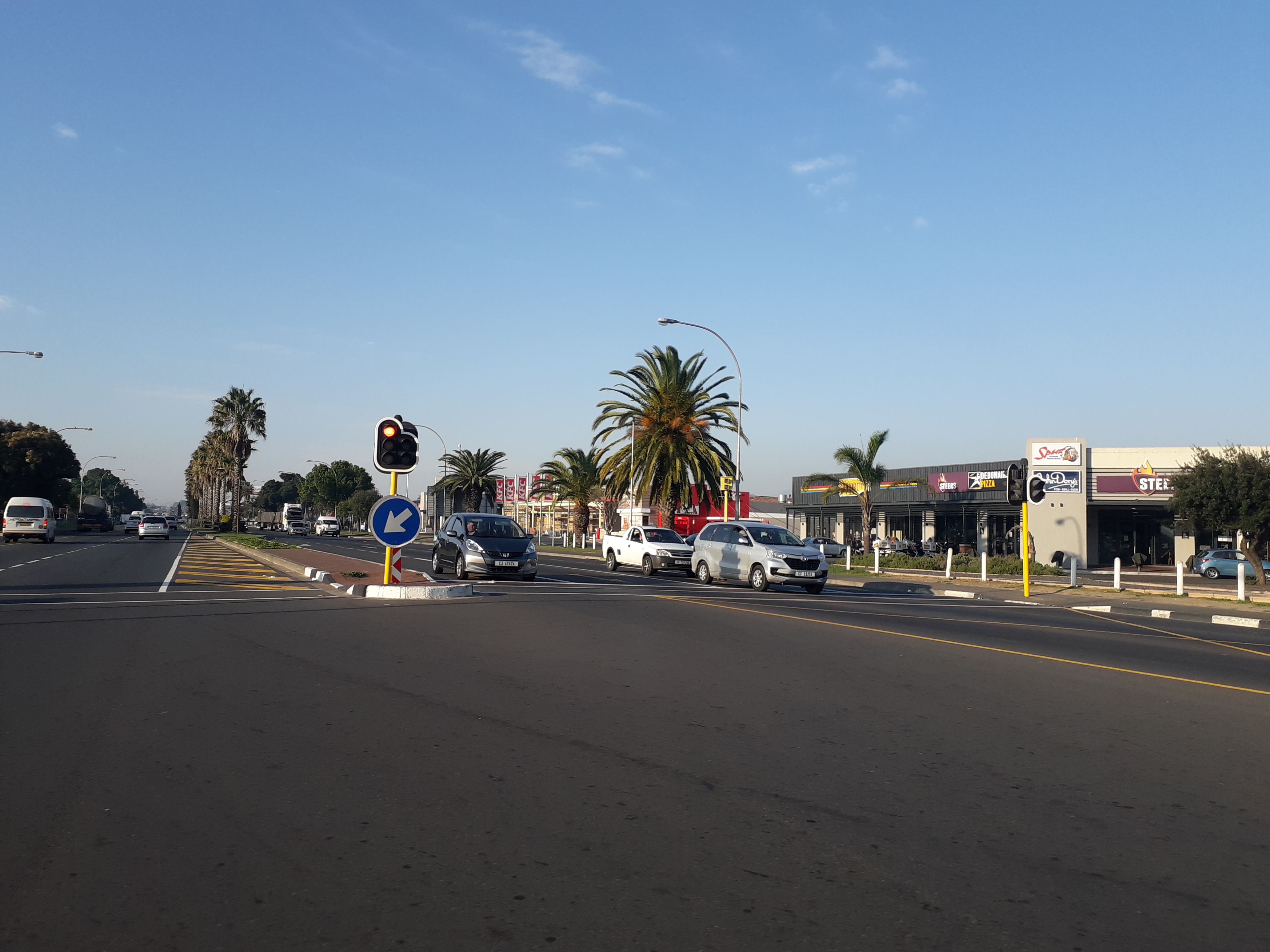 ✦ 78
✦ 78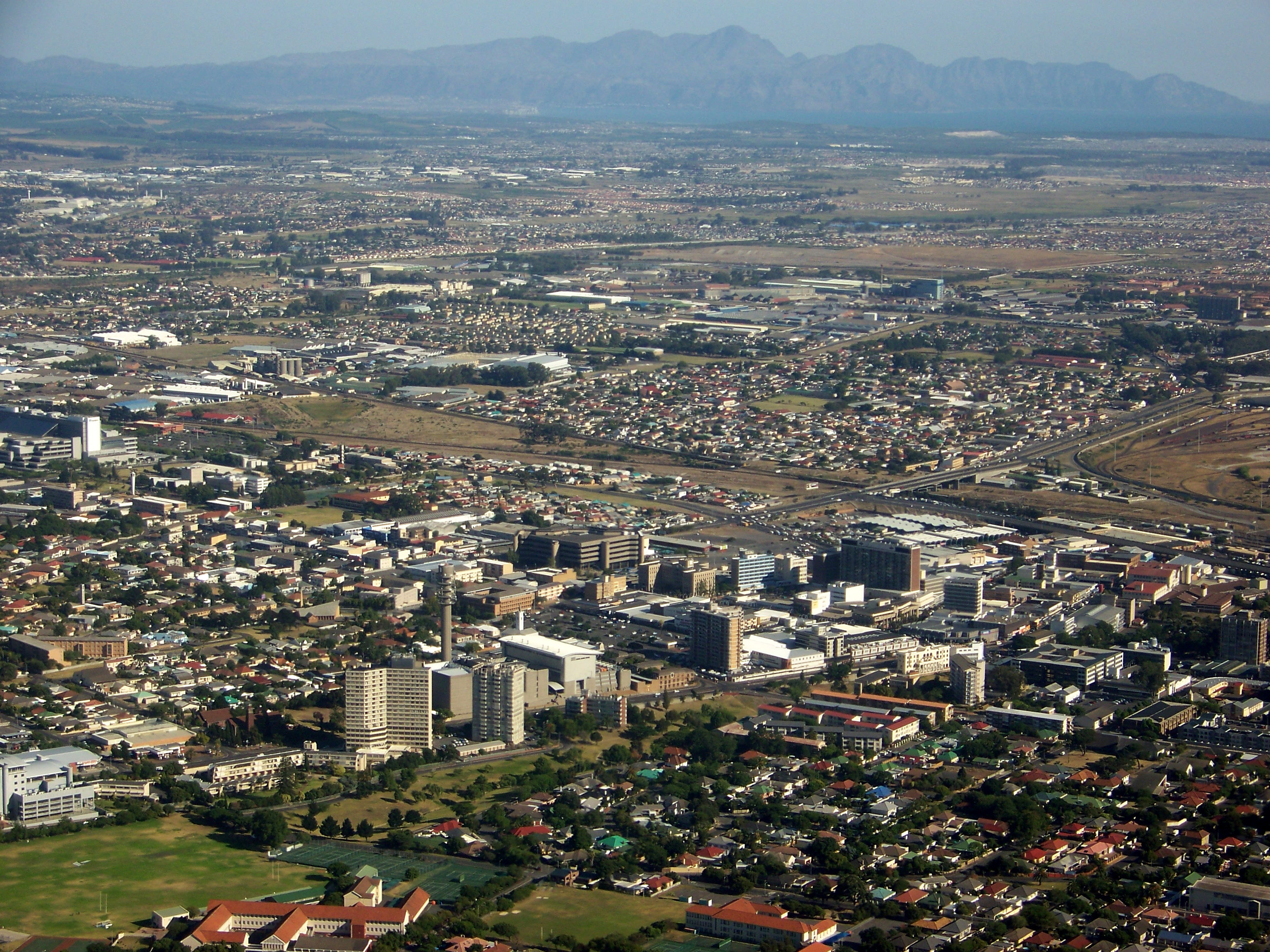 ✦ 77
✦ 77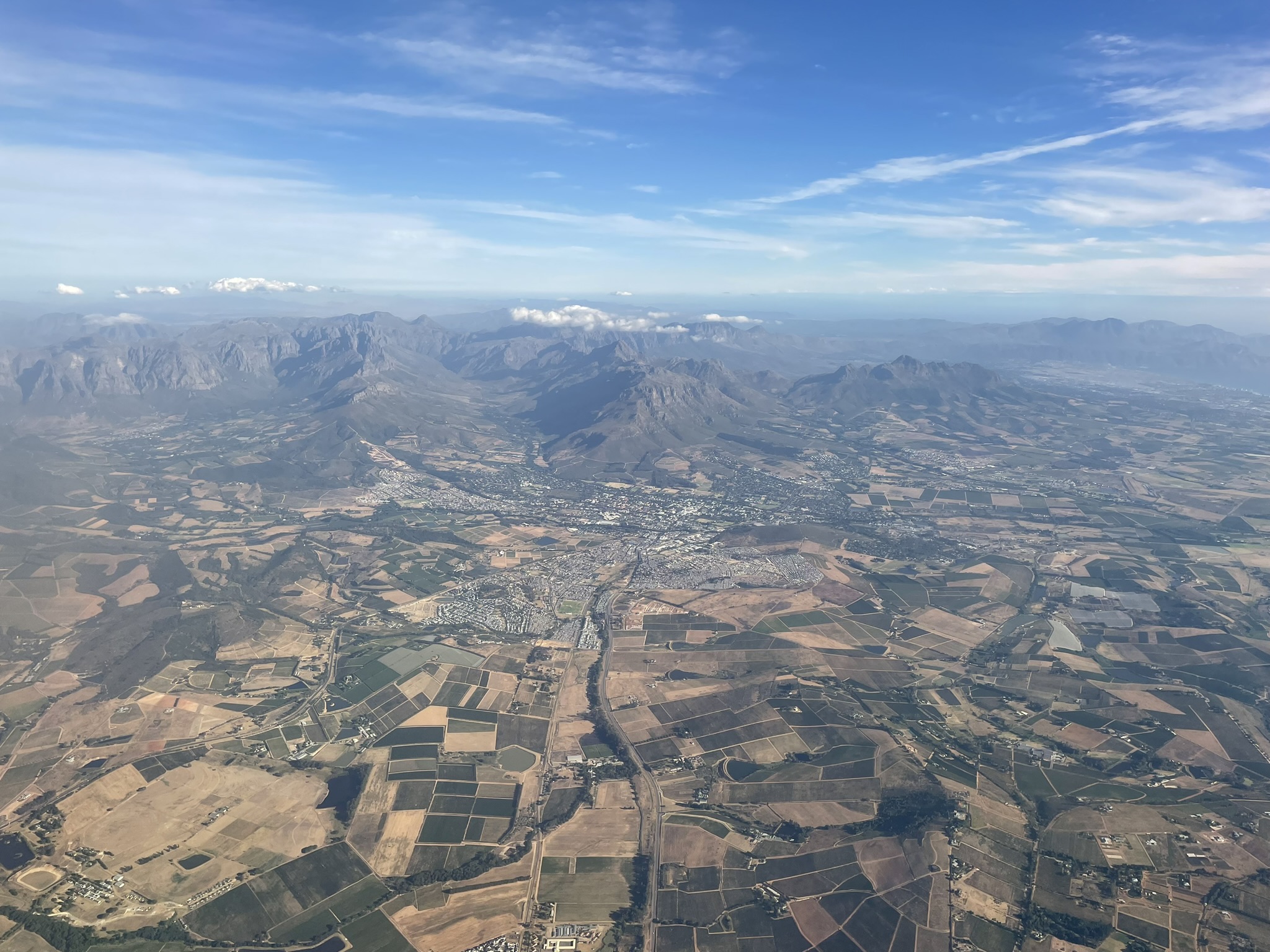 ✦ 82
✦ 82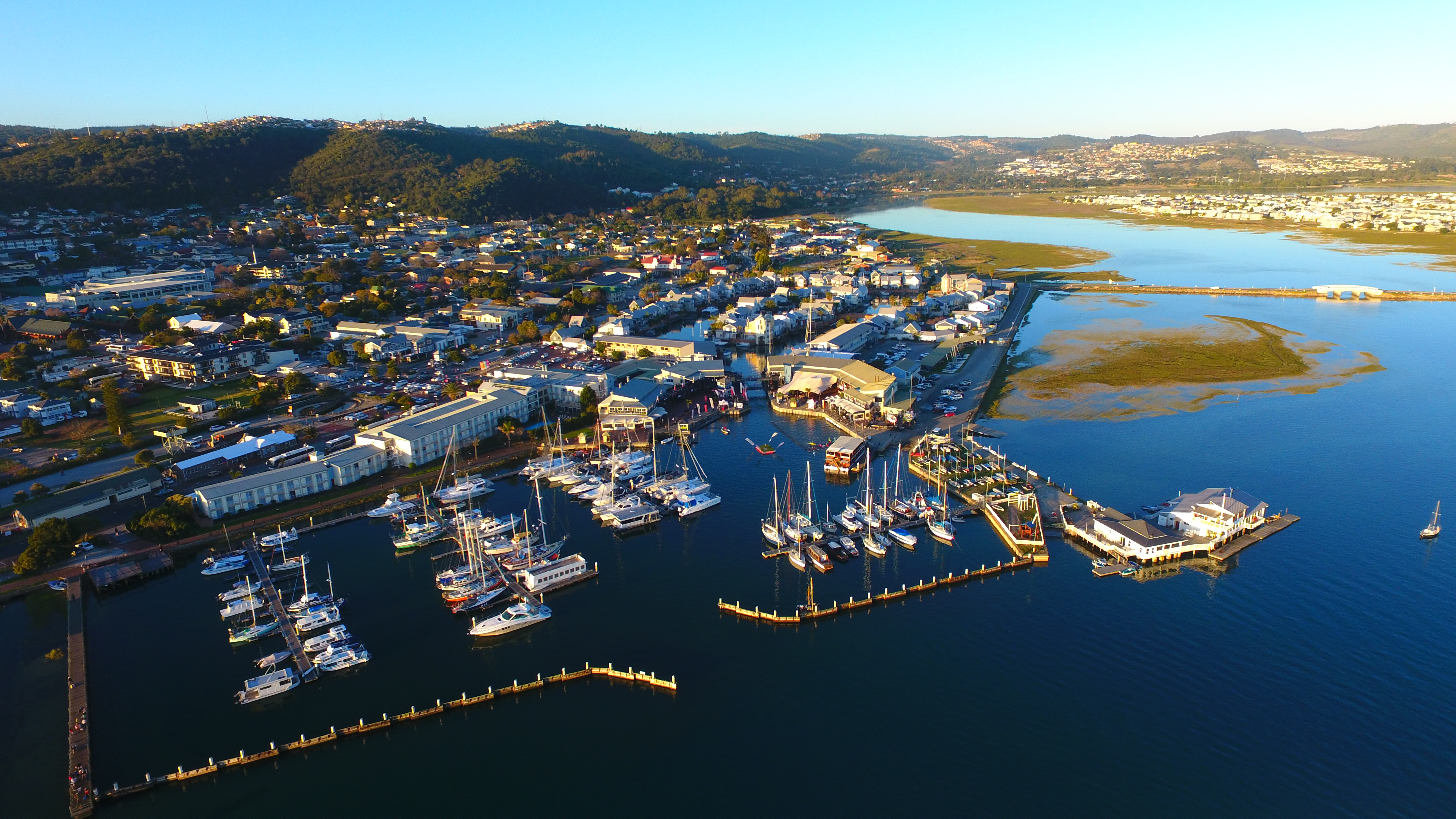 ✦ 76
✦ 76The housing requirement and how people get it wrong
South Africa doesn't ask for much here on paper: a hotel booking, a lease, or an invitation letter from a host will satisfy the requirement. The problem shows up in sequencing, not substance. Applicants who sign a twelve-month lease before the visa is approved are betting a security deposit on an outcome that isn't guaranteed, and if the visa is refused or delayed past the lease start date, that deposit is usually gone. The safer order is to secure a short booking or a flexible short-term lease for the purposes of the application, then negotiate a longer-term arrangement once the visa is actually in hand and the entry process at the border is behind you.
The other recurring issue is a mismatch between the address on the accommodation proof and the story told in the cover letter. If the cover letter says you intend to be based in Cape Town for the full three years and the accommodation proof is a two-week hotel booking in Johannesburg, that gap invites questions the officer doesn't need to ask. It doesn't need to be airtight for the entire permit duration, but it does need to be internally consistent with everything else in the file, including the intended duration you've stated elsewhere.
People also assume an invitation letter from a friend or relative carries the same weight as a lease. It can work, but it tends to get more scrutiny, because it's the accommodation proof most likely to be either informal or difficult to verify. If you're going that route, the letter needs specifics: address, duration, and the host's relationship to you, not a vague offer of a place to stay.
What actually happens after you land
There's no online portal for this visa, and no in-country application route for the initial visa itself. You apply in person at a South African embassy or consulate in your country of residence, which for some US applicants means a specific regional post rather than whichever embassy is closest, and if you happen to hold a US B1/B2 visa, you're required to apply from your country of origin rather than from inside the United States. That single rule catches people who assumed proximity to an embassy was the only variable that mattered.
Processing runs eight to ten weeks, and that window is before you've boarded a flight. What follows on arrival isn't automatic. For stays intended to run beyond ninety days, there's a further step handled at the port of entry itself, where the visa gets converted into the actual permit that lets you stay for the full duration. This means the approval you receive from the consulate is necessary but not sufficient. It gets you on the plane. It doesn't, by itself, finish the process.
Once you're through that step, the terms are strict on one point that surprises people: no local work is permitted, full stop, not a percentage cap, not an exception for occasional local consulting. The entire logic of the visa rests on every dollar of your income originating outside South Africa, so taking on even a small local client or accepting local payment for a side project undermines the basis of the permit you're holding. If your plan involves any hybrid income, sort that out before you land, not after.
The long-term path, on paper versus in practice
This visa does not lead to permanent residency. That's worth sitting with before you commit three years of planning to it, because the renewal mechanics can feel deceptively similar to a path that's actually going somewhere. The permit runs thirty-six months initially, it's renewable, and the renewal cost is trivial at $36. None of that momentum converts into a residency application later. Renewing this visa five times in a row still leaves you exactly where you started in immigration terms: a temporary resident on a foreign-income visa, not someone accumulating years toward citizenship.
The tax side is the part people underestimate. South Africa applies its resident tax regime once someone crosses a physical presence threshold, and the test here runs on ninety-one days. Stay past that pattern across the relevant years and you become a tax resident on worldwide income, not just South African-sourced income, which is a very different conversation with your accountant than the one most digital nomads expect to have. The partial tax treaty with the US softens some of the double-taxation exposure but doesn't erase it, and pension income and social security contributions earned abroad aren't recognized toward anything here, so retirees or anyone counting on those income types to qualify or to offset local tax exposure need a different plan entirely.
Treat this visa as a rolling three-year lease on a life abroad rather than a runway toward anything more permanent. For some applicants that's exactly the shape they want. For anyone quietly hoping renewal cycles eventually turn into a residency card, they won't, and building a five-year plan around that assumption is the mistake to catch now rather than at renewal three.
The call against the obvious alternative
The comparison most Americans actually run isn't South Africa against another African country, it's South Africa against a European digital nomad visa, usually Portugal's or Spain's. Those programs tend to be built with an eventual residency track in mind, where years on the visa count toward something more permanent if you stay the course. South Africa's version is explicit that it doesn't work that way, and that's the real trade-off, not cost of living, not paperwork volume.
What South Africa offers instead is friction that's truly lower on entry. No apostille requirement on the documents, no medical exam, no FBI background check demanded specifically, and dependents are allowed on the same application without a separate track. The police clearance requirement covers any country you've lived in for twelve months or more over the past five years, which is more paperwork than a single-country European application but still a known quantity rather than an open-ended medical or biometric process.
The decision, then, isn't really about which country is easier. It's about what you're optimizing for over the next several years. If the plan is truly temporary, if you want three years somewhere with a strong lifestyle-to-cost ratio and no ambition to convert that stay into a passport, South Africa does that cleanly and cheaply. If the multi-year plan includes eventually settling somewhere permanently, the renewal cycle here will start to feel like treading water, and the European route, slower and more bureaucratic up front, is doing something this visa was never designed to do.
Work Permissions
Application Steps
- 1
📋 Confirm eligibility criteria
1-2 days
- 2
📄 Gather required documents
1-2 weeks
- 3
📅 Book consulate appointment
1-4 weeks
- 4
📬 Submit application in person
Same day
- 5
⏳ Wait for processing decision
4-10 weeks
- 6
🏛️ Travel and register with SARS
1-2 weeks post-arrival
Frequently Asked Questions
Click any question to expand the answer.
Ready to Apply?
Work with trusted visa specialists who handle the paperwork so you can focus on your move.
Get help with this visa →* We may earn a commission if you apply through our link
At a Glance
Last verified: July 15, 2026