Portugal D2 Entrepreneur Visa
Portugal · Europe
Data updated Sep 3, 2026
Processing Time
~26 wks
Difficulty
Moderate
Duration
24 months
Overview
A freelancer or self-employed applicant needs more than a vague business idea here: the financial floor is $11,040 in minimum savings plus about $5,500 in investment required. Passive income counts, but Social Security does not, and pension income is not recognized; local work is permitted, and the allowed employment types are contractor, owner, and self_employed. For a reader with $3,800/month from ETF dividends and rentals, the key question is not the monthly figure but whether the business setup and bank balance satisfy the file.
Residence is not a light-touch arrangement. Portugal expects 146 days per year in-country, and the maximum consecutive absence is 180 days. That makes this a poor fit for someone trying to spend most of the year elsewhere while keeping a Portuguese base, because the permit structure assumes real residence rather than occasional visits.
The first permit lasts 24 months and is renewable. It does not lead directly to permanent residency, but it can support a path to PR after 2 years and citizenship after 10 years. That timeline matters for anyone planning a decade-long move rather than a short-term arbitrage play.
The friction sits in the file-building: a local bank account is required, health insurance is required, and the visa requires an apostille, but does not require an FBI background check, medical exam, or interview. Processing runs from approximately 25.7 weeks, which is wide enough to affect move dates and lease timing. The bureaucracy score of 2.2375/5 suggests the issue is less obscure paperwork than proving a viable business, cash trail, and residence plan that match each other.
This makes most sense if you are launching a contractor or owner-operated business with at least $11,040 in savings and can live in Portugal for 146 days a year. It is a poor fit if you want a zero-presence backdoor to Europe while keeping your tax and travel footprint mostly outside Portugal.
Eligibility Requirements
EU citizens do not need this visa at all; the D2 is for non_EU nationals who want Portuguese residence through business activity, self-employment, or capital-backed entrepreneurial work.
EEA nationals from Norway, Iceland, and Liechtenstein sit outside the EU but inside the wider European economic framework, while Switzerland, post-Brexit UK, the US, Canada, Australia, and New Zealand are outside the EU and therefore in the pool for this route. Dual nationals holding an EU passport should use the EU passport instead of the D2, because that bypasses the visa entirely and is faster and cheaper.
The practical line is simple: if you hold an EU citizenship, use it; if you do not, the D2 is one of Portugal’s non-EU residence routes and the business and residence rules apply in full.
Min Age
18 yrs
Duration
24 months
Physical Presence
146 days/yr
Max Absence
180 days
Min Lease
12 months
Business Income · Passive / Investment Income
1099 Contractor · Business Owner · Self-Employed
+50% per adult · +30% per child
Requirements Checklist
• Identity: Valid passport (valid at least 6 months beyond visa expiry); Certified copy of passport (if requested); Two recent passport‑size color photos; Completed national/D2 visa application form.
• Background: Criminal record certificate or police clearance from country of residence (issued within the last 90 days or 3 months, as applicable); Authorization form allowing Portuguese authorities to check criminal records.
• Financial: Portuguese bank account statement showing sufficient funds for at least 12 months of subsistence (plus required amounts for family members, if applicable); Proof of capital available for the business (e.g., bank statement with capital transfer).
• Business: Detailed business plan describing activity in Portugal and economic impact; Proof of company incorporation in Portugal or documents showing ability to establish a company (e.g., share capital evidence); Investment declaration or proof of made/committed investment in Portugal; Portuguese tax identification number (NIF); Portuguese business bank account details (if company already set up).
• Employment: Service contract or formal service proposal for freelance/self‑employed activity in Portugal; Proof of professional qualifications (if relevant to the activity).
• Health: Travel medical insurance or health insurance valid in Portugal and the Schengen Area (or affidavit of intention to purchase within 90 days of arrival, if accepted by the consulate).
• Accommodation: Proof of accommodation in Portugal (12‑month rental agreement, hotel booking, or property title deed).
• Other: Declaration outlining reasons for Portugal residency; Proof of current address in country of residence (e.g., utility bill, driver’s licence, bank statement).
• Family: Marriage certificate (for spouse); Birth certificates for children; Single status certificate and proof of student enrollment for dependent children over 18; Birth certificates of main applicant or spouse for dependent parents.
Apostille required on official documents
Tax Information
Local tax picture Portugal uses a resident tax regime for this visa. Once you become a Portuguese tax resident, Portugal taxes you on worldwide income rather than just local-source income. That means remote salary, consulting fees, ETF dividends from a foreign brokerage, and rental income from property abroad all enter the Portuguese filing picture. Portugal offers the IFICI regime (formerly NHR 2.0) for qualifying activities, but the visa itself does not guarantee a special preferential regime, so there is no public basis here to claim a reduced rate or territorial carve-out for foreign investments.
For foreign capital gains on index funds or ETFs, the visa does not specify a separate exemption or preferential treatment. In practical terms, a resident filing posture means those gains are not safe to assume exempt. The local tax authority will care about residence status, account reporting, and source characterization, especially once the applicant has a Portuguese bank account and a resident tax profile.
Tax residency is triggered by the resident regime, with the visa demanding 146 days per year in Portugal. Portugal grants tax residency after more than 183 days in any 12-month period starting or ending in the tax year, so the only safe statement is that this is a resident-tax country for D2 holders and the compliance burden starts with local registration, a Portuguese bank account, and a tax number.
Local filing requires Portuguese tax setup and ongoing resident reporting. No special deadline or preferential election window is disclosed, so no extra regime can be assumed.
For US Citizens and Green Card Holders - FEIE uses Form 2555 and covers earned income only: remote work, consulting, and self-employment income, up to $132,900 for 2026. - FEIE does not cover dividends, capital gains, pension distributions, or Social Security. - Because this visa requires 146 days per year in Portugal, the Bona Fide Residence Test can matter more than the Physical Presence Test. The 330-day test still works only if you stay outside the US enough in a 12-month period. - Form 1116 FTC helps only when Portuguese tax on a given income stream exceeds the US tax due on that same stream. If Portugal taxes foreign dividends or gains at a low rate, the FTC is highly useful to offset US tax liability on income already taxed in Portugal. - FBAR on FinCEN 114 applies once foreign account balances exceed $10,000 at any point in the year. This matters directly because a Portuguese bank account is required.
Use a US CPA who specializes in FEIE, FTC, and FBAR, plus a Portuguese tax advisor for resident registration and annual filings. The $1,500–$3,000 spent in year one on professional guidance typically recovers itself in avoided penalties and cleaner elections.
Living in Portugal
COL Index vs NYC
41.2
Monthly Cost (excl. rent)
$776
1BR Rent (City Center)
$1,040
Safety Index
67.9
Healthcare Index
72.2
Quality of Life Index
167.8
Time Zone
UTC+00:00
Capital
Lisbon
Population
10.3M
Official Languages
Portuguese
Avg Internet Speed
352 Mbps
Public Transit Quality
Good
With a budget covering rent and living costs, you'd need roughly $1,816/mo for a comfortable single-person lifestyle in Portugal.See how far your money goes →
🏙️ Best Cities in Portugal for Expats
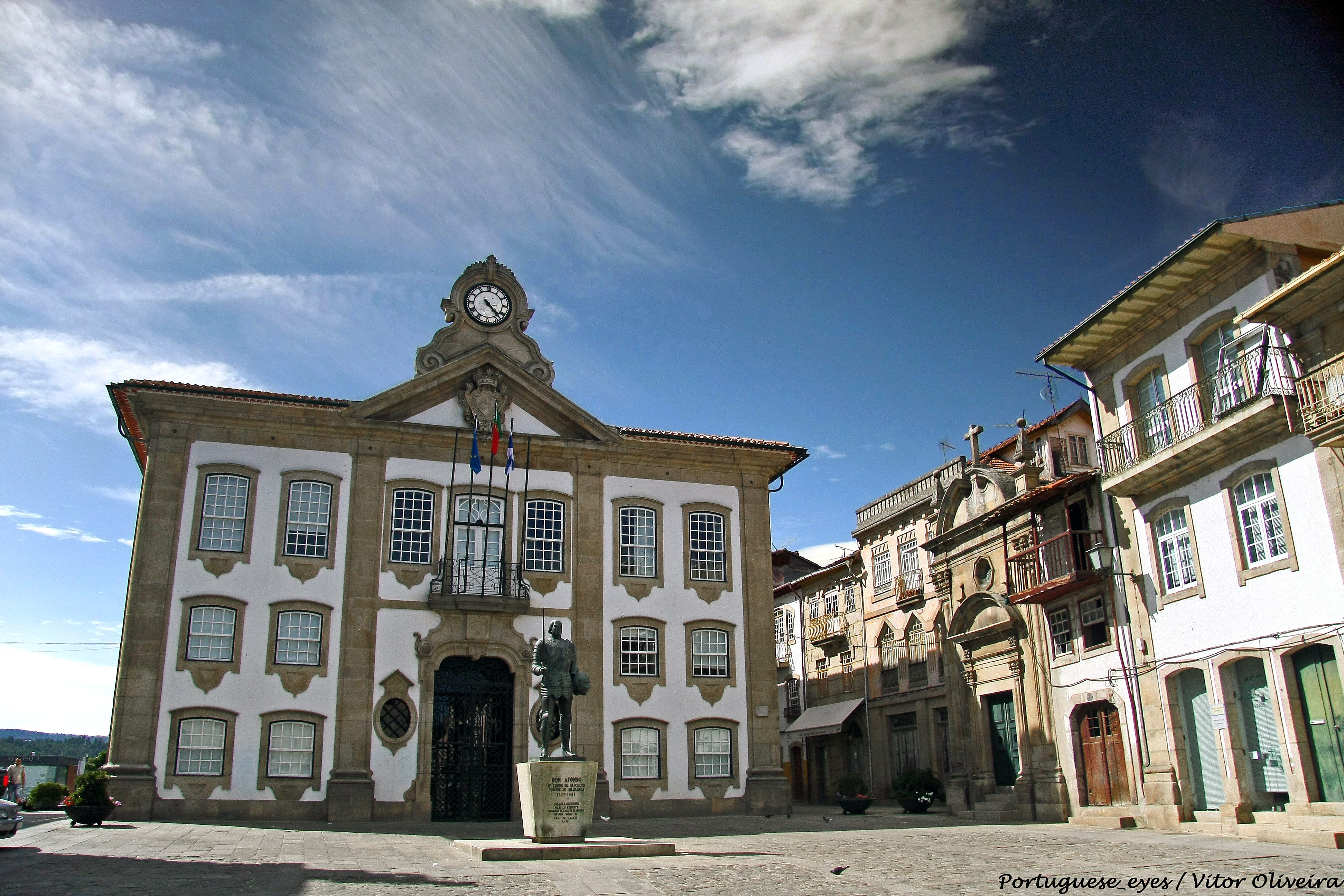 ✦ 87
✦ 87 ✦ 89
✦ 89 ✦ 88
✦ 88 ✦ 87
✦ 87 ✦ 87
✦ 87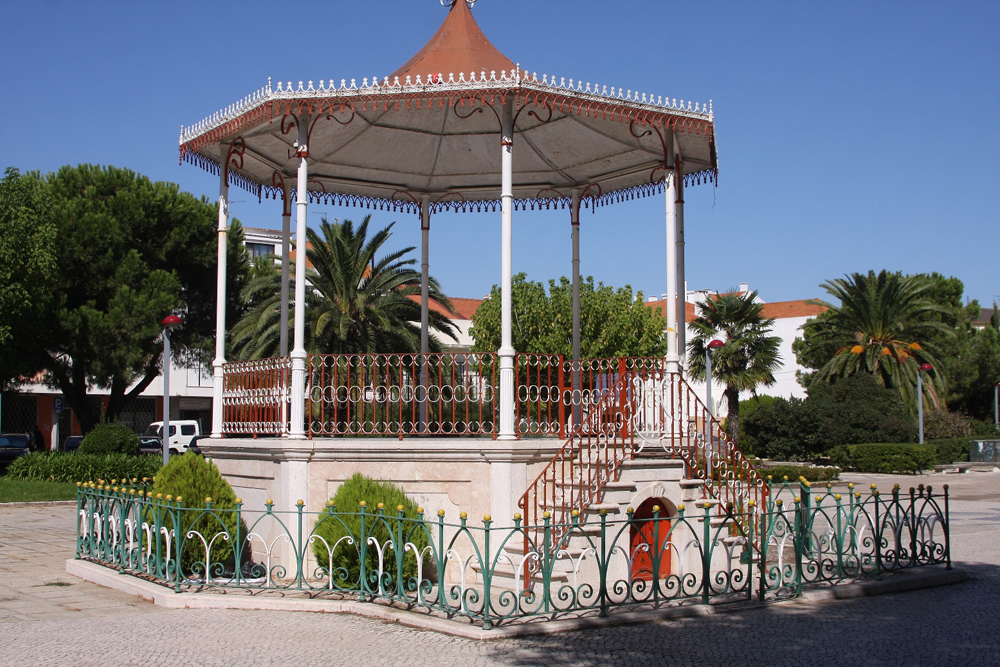 ✦ 88
✦ 88Getting the Income Story Straight Before You Apply
The subsistence requirement is modest: you need to show funds covering 12 months at roughly €1,256/month (approx. $1,256 USD) for yourself, plus 50% more for a spouse and 30% more for each child. That is a low bar for most US-based applicants. The trap is not meeting the number. The trap is how you present the money.
A Portuguese bank account statement showing a lump sum transfer from your US account three days before the consulate appointment will get questions. The consular officer sees a staged balance, not proof of ongoing capacity. The better approach is to open the Portuguese account early, fund it with the required amount, and let the balance sit for at least a statement cycle before you submit. If your business is already generating revenue, route some of it through that account. The statement then tells a story of activity, not a single panic transfer.
For freelancers, the income documentation problem is slightly different. Your US tax returns and client contracts prove you earn money in the United States. The D2 application asks you to prove you will earn money in Portugal, through a Portuguese entity. Those are not the same thing. A service contract or proposal letter from a client who agrees to pay your Portuguese company closes that gap. If you do not have one yet, a detailed pipeline of prospective Portuguese or EU clients, with correspondence, is the next best thing. What you cannot do is submit a business plan that describes US clients paying your US LLC and call it a Portuguese business. The consulate reads that as a tourist who wants a residency card.
The Accommodation Requirement Trips People Who Rush It
A 12-month lease is not a suggestion. It is on the document list, and consulates in major US cities have been known to reject applications that submit a six-month lease with a renewal clause or a long-term Airbnb booking confirmation. The logic is straightforward: the D2 grants a two-year initial permit, and the officer wants to see that you have a place to live for at least half of it.
The sequencing matters. You need the lease before you apply, which means committing to a rental in a country where you do not yet have the right to live. This feels backwards, and it is. Most applicants handle it by making a reconnaissance trip, viewing apartments, and signing a lease that starts a few weeks before the consulate appointment. A property title deed works too, but buying a Portuguese apartment to satisfy a visa requirement is an expensive way to solve a paperwork problem.
One workaround that sometimes succeeds: a notarized letter from a Portuguese resident stating you will reside at their address, combined with their title deed and a utility bill in their name. Consulates in less busy jurisdictions accept this. The ones in New York and San Francisco often do not. If you are applying through a high-volume consulate, get the lease.
What Happens After the Visa Sticker Goes in Your Passport
The D2 visa you receive is a 4-month, double-entry sticker that lets you enter Portugal. It is not your residence permit. That distinction matters because the gap between landing and holding the actual permit is where people lose momentum.
You must schedule an appointment with AIMA, the immigration agency, shortly after arrival. In some regions, appointment availability lags by weeks or months. During that waiting period, you are legally in Portugal on the basis of your visa, but you cannot leave and re-enter freely once the 4-month window closes, and you may struggle to do things that require a residence card, like signing certain contracts or accessing public services. The practical advice is to arrive, get the AIMA appointment locked in immediately, and treat the weeks that follow as a period for setting up your business operations rather than traveling.
Once the residence permit is issued, it is valid for two years. You can work through your Portuguese company, take on local clients, and travel within the Schengen Area. The permit is renewable as long as your business remains active and you meet the physical presence requirement of at least 146 days per year in Portugal. Absences of more than 180 consecutive days can jeopardize renewal, so extended trips back to the US need to be planned around that clock.
The Long-Term Path Looks Fast on Paper
Two years to permanent residency and two years to citizenship eligibility are among the shortest timelines in the European Union. The numbers are real, but the clock starts differently than most applicants assume. The two-year count for PR begins from the date your first residence permit is issued, not from the date your visa is approved or the date you land. If you spend six months waiting for an AIMA appointment, those months do not count.
The citizenship timeline runs on the same logic: five years of legal residency total, with the D2 years counting fully. The catch is that citizenship requires demonstrated ties to Portugal, including A2-level Portuguese language proficiency. That is not a formality. The language exam is administered in Portugal and tests reading, writing, speaking, and comprehension. Someone who spends two years in an expat bubble in Lisbon and never learns beyond obrigado will hit the time requirement and fail the integration requirement. The people who get through start language study early, often before they move.
The physical presence requirement for maintaining residency, 146 days per year, means you cannot treat Portugal as a mailbox address while living mostly elsewhere. The D2 is not a part-time residency program. If your business requires frequent travel, structure it so that Portugal remains your primary base and your absences stay under the 180-day continuous threshold.
The Judgment Call Against the D7
The obvious alternative for someone with passive or remote income is the D7 visa, which requires proof of stable passive income rather than an active business. The D7 has a lower administrative burden: no business plan, no company incorporation, no investment requirement. For a retiree with a pension or a remote worker whose employer will not support a Portuguese entity, the D7 is usually the better fit.
The D2 pulls ahead when you want to build something in Portugal that generates local revenue, when you need to invoice Portuguese or EU clients, or when your income does not fit the D7's passive-income definition. The D7 also faces higher scrutiny on income stability. A freelancer with variable monthly earnings may struggle to prove the required passive income stream, while the same freelancer can structure a D2 application around an existing client base and a credible business plan.
The decision comes down to whether you want Portugal to be the place your business lives or just the place you live while your business happens elsewhere. The D2 is built for the first answer. If that is not your answer, the paperwork burden will feel like overkill, and the D7 or a digital nomad visa in another country may make more sense.
Work Permissions
Application Steps
- 1
📋 Prepare business plan and finances
2-4 weeks
- 2
📋 Open Portuguese bank account
1-2 weeks
- 3
📄 Obtain Portuguese NIF tax number
1 week
- 4
📄 Gather all required documents
1-2 weeks
- 5
📬 Submit at Portuguese consulate
- 6
⏳ Wait for consulate approval
2-4 months
- 7
🏛️ Enter Portugal on entry visa
Same day
- 8
🏛️ Apply for residence permit
1-2 months
- 9
🏛️ Register business and start operations
2-4 weeks
Frequently Asked Questions
Click any question to expand the answer.
Ready to Apply?
Work with trusted visa specialists who handle the paperwork so you can focus on your move.
Get help with this visa →* We may earn a commission if you apply through our link
At a Glance
Last verified: July 15, 2026