Netherlands Self-Employed Permit (Zelfstandige)
Netherlands · Europe
Data updated Sep 3, 2026
Difficulty
Difficult
Duration
24 months
Overview
For non‑EU freelancers, the Netherlands Self-Employed Permit (Zelfstandige) is built around one core reality: you are granted up to 24 months of residence to run a business that serves an “essential Dutch interest,” not to live off foreign passive income. The IND and the Netherlands Enterprise Agency (RVO) score you on a points system that weighs your personal experience, business plan, and benefit to the Dutch economy. There is no fixed minimum income or savings threshold, but in practice you must show that your projected business income will cover your living costs in the Netherlands for the full 24‑month permit.
Remote income from non‑Dutch clients and existing investment, pension, or Social Security income can strengthen your “financial stability” story, yet they do not replace the requirement to be self‑employed in the Netherlands. Local work is explicitly permitted, but only as self-employment; you are not granted open access to Dutch salaried jobs under this permit. If your plan is to sit in Amsterdam living solely off $3,800/month in US dividends and rental income with no Dutch business activity, this route does not match the legal framework and will likely fail the “essential Dutch interest” test.
The permit is issued for up to 24 months and is renewable, and it does lead to permanent residency (after 5 years of continuous legal stay). Those same 5 years also form the standard clock for Dutch long‑term residence and, eventually, naturalisation, though naturalisation timing depends on separate rules. Expect that you must actually reside in the Netherlands for your self‑employment to be credible; while specific physical presence and maximum absence rules vary, Dutch permanent residence law generally penalises long gaps outside the country when counting your 5‑year clock.
On the paperwork side, the bureaucracy score is a low 1/5 but the difficulty is rated “difficult,” which captures the reality: no FBI background check, no medical exam, no apostille requirement, and no mandatory interview, yet the substantive review of your business plan and evidence by RVO is demanding. Health insurance is required from day one, and although a local bank account is not required, you will often find it practically necessary to run a Dutch business and receive client payments. Processing time and application fees vary by case, but you should assume months, not weeks, from first planning to a decision.
This route makes the most sense if, for example, you already run a consulting or SaaS business generating $6,000–$10,000/month, can show Dutch or EU clients, and want a 5‑year path to permanent residence built around self‑employment. It is a poor fit if your real plan is early retirement on $3,000–$4,000/month from index fund withdrawals with no intention of building a business that the Dutch authorities would recognise as economically valuable.
Eligibility Requirements
Citizens of EU countries do not need the Netherlands Self-Employed Permit; they can live and work in the Netherlands under free movement rules and only need to handle municipal registration and tax formalities. The audience for this permit is non‑EU/EEA nationals who want to run a business locally: Americans, Canadians, Australians, New Zealanders, Britons, and other non‑European freelancers and entrepreneurs.
EEA countries (Norway, Iceland, Liechtenstein) plus Switzerland sit on the same side as EU nationals for this program: they do not need this self‑employed residence permit to work as independent professionals in the Netherlands. Post‑Brexit UK nationals, however, are now treated as non‑EU and do fall inside the target group for this permit; a British freelancer cannot rely on EU free movement and must qualify under the self‑employed framework or another residence category.
Dual nationals who hold any EU, EEA, or Swiss citizenship should always enter and reside in the Netherlands on that European passport instead of applying for the Netherlands Self-Employed Permit as a non‑EU citizen. Using your EU (or EEA/Swiss) nationality bypasses the economic interest test and the complex self‑employment scrutiny, and it considerably simplifies both the immigration and work authorization process.
Min Age
18 yrs
practical
Duration
24 months
Self-Employed
Requirements Checklist
• Identity: Valid passport; completed IND application form for residence permit to work on a self-employed basis; passport-sized photos meeting Dutch requirements.
• Background: Completed Appendix Antecedents Certificate (criminal record declaration); birth certificate (legalised or apostilled if required).
• Financial: Bank statements and/or financial projections demonstrating sufficient and sustainable income from self-employment; any existing tax returns or financial statements relevant to the business.
• Business: Detailed business plan (including description of activities, market analysis, financial forecast, and contribution to Dutch economy); proof of professional qualifications or relevant experience; contracts or letters of intent from Dutch or other clients, if available.
• Employment: Proof of or readiness for registration with the Dutch Chamber of Commerce (KvK), such as draft or issued KvK registration extract, depending on whether registration before decision is required.
• Health: Proof of Dutch health insurance coverage or readiness to obtain Dutch health insurance upon arrival; tuberculosis (TB) test referral form and TB test results if required for your nationality.
• Accommodation: Proof of address in the Netherlands (rental contract, housing confirmation, or registration appointment with municipality), if requested by IND.
• Other: Proof of legal stay in current country of residence (visa or residence permit) if applying from within the Netherlands or a third country; proof of payment of IND application fee.
• Translation: Certified translations of all required foreign-language documents into Dutch, English, French, or German; legalisation or apostille for foreign civil status and business documents where applicable.
Tax Information
Local tax regime and what gets taxed
The Netherlands applies a worldwide income tax regime for residents, including holders of the Netherlands Self-Employed Permit who become tax resident. Once resident, your Dutch taxable base covers Dutch and foreign income: self-employment profits, remote salary, foreign rental income, and most investment income. Pension and Social Security income from abroad can also be taxable, although whether a treaty shifts primary taxing rights to another country depends on the specific treaty text, and the VISA FACTS list the US treaty status as unknown.
Investment income is treated under the Dutch box system. While exact rates and brackets are not specified in the VISA FACTS, conceptually: business and employment income are taxed on actual amounts, and portfolio wealth is assessed under notional return rules. For someone with a global ETF portfolio in a foreign brokerage, the Dutch system generally looks at your net assets rather than realised dividends alone, so you cannot assume that keeping assets outside the Netherlands shields them from Dutch tax once you are resident.
Capital gains on foreign investments
If you sell index funds or ETFs held in a foreign brokerage while Dutch tax resident, gains are not exempt under a territorial or remittance concept; the Netherlands taxes worldwide capital income. Under the box system this often means you are taxed on a deemed yield on your portfolio value rather than the exact realised gain. The precise effective rate depends on annual policy settings and is not specified here, so a FIRE investor with a large brokerage balance should model Dutch box‑tax outcomes before committing to a long‑term move.
Tax residency triggers and filings
Tax residency is driven by facts and circumstances: primary home, family location, and where your economic and social life is centred. There is no simple published 183‑day “bright line” here, but if you move on a 24‑month residence permit, register at a Dutch municipality, and run a local business, the Dutch authorities will treat you as a tax resident from the date you settle. That status pulls your worldwide income into the Dutch system.
New arrivals generally must:
- register at the municipality (BRP) to obtain a BSN (citizen service number),
- register with the Dutch Tax Administration as a self‑employed person,
- file an annual income tax return reporting worldwide income if resident.
Filing deadlines and methods are set by the Belastingdienst; missing them can trigger fines and estimated assessments.
Tax treaty status
VISA FACTS list the Tax Treaty with US status as unknown for this permit. In practice, the Netherlands does have an income tax treaty and a totalization agreement with the US, but because this dataset marks treaty status as unknown, you should not rely on treaty relief as a planning assumption without reading the actual treaty articles on pensions, dividends, and self‑employment. Unknown in this context means you cannot assume that Dutch tax paid will always cleanly offset US tax or that US Social Security enjoys special treatment; both need to be analysed using the treaty text and current administrative practice.
For US Citizens and Green Card Holders
US persons on the Netherlands Self-Employed Permit face full US worldwide taxation on top of Dutch worldwide taxation once resident. For earned income from freelancing or remote work, you can use Form 2555 (Foreign Earned Income Exclusion) to exclude up to $126,500 of 2024 earned income if you meet either the Physical Presence Test (330 days outside the US in any 12‑month period) or the Bona Fide Residence Test. Because this visa is designed for a 24‑month stay that can extend to 5 years and beyond, many long‑term holders end up qualifying under the Bona Fide Residence Test once they genuinely settle in the Netherlands.
Passive income is different. Dividends, capital gains on ETFs, rental income from US or other foreign property, pension distributions, and Social Security are not covered by Form 2555. For those streams you rely on the Foreign Tax Credit via Form 1116. The FTC only helps where Dutch effective tax on an income type is greater than zero and up to or above the corresponding US tax. If Dutch tax on your investment portfolio is high under the box system, FTC can substantially offset US tax; if Dutch tax is low or nil on a specific item, you still owe the full US liability.
Opening local accounts is common when running a Dutch business, and even though a local bank account is not formally required in the VISA FACTS, once your combined non‑US financial accounts exceed $10,000 at any point in the year, you must file an FBAR (FinCEN 114). FATCA Form 8938 can also apply at higher thresholds. Non‑wilful FBAR penalties start at $10,000 per violation, so ignoring small Dutch business or personal accounts is expensive.
For a Netherlands‑based FIRE or self‑employed plan, you need two specialist advisors: a US CPA experienced in expat taxation (FEIE, FTC, FBAR, Form 8938) and a Dutch tax adviser who understands self‑employment and the box system. In practice, spending $1,500–$3,000 in year one on coordinated advice often pays for itself through correct treaty application, optimal use of Form 2555/Form 1116, and the avoidance of both Dutch and US penalties.
Living in Netherlands
COL Index vs NYC
60.5
Monthly Cost (excl. rent)
$1,177
1BR Rent (City Center)
$1,674
Safety Index
73.1
Healthcare Index
79.3
Quality of Life Index
211.3
Time Zone
UTC+01:00
Capital
Amsterdam
Population
18.5M
Official Languages
Dutch
Avg Internet Speed
344 Mbps
Public Transit Quality
Excellent
With a budget covering rent and living costs, you'd need roughly $2,851/mo for a comfortable single-person lifestyle in Netherlands.See how far your money goes →
🏙️ Best Cities in Netherlands for Freelancers
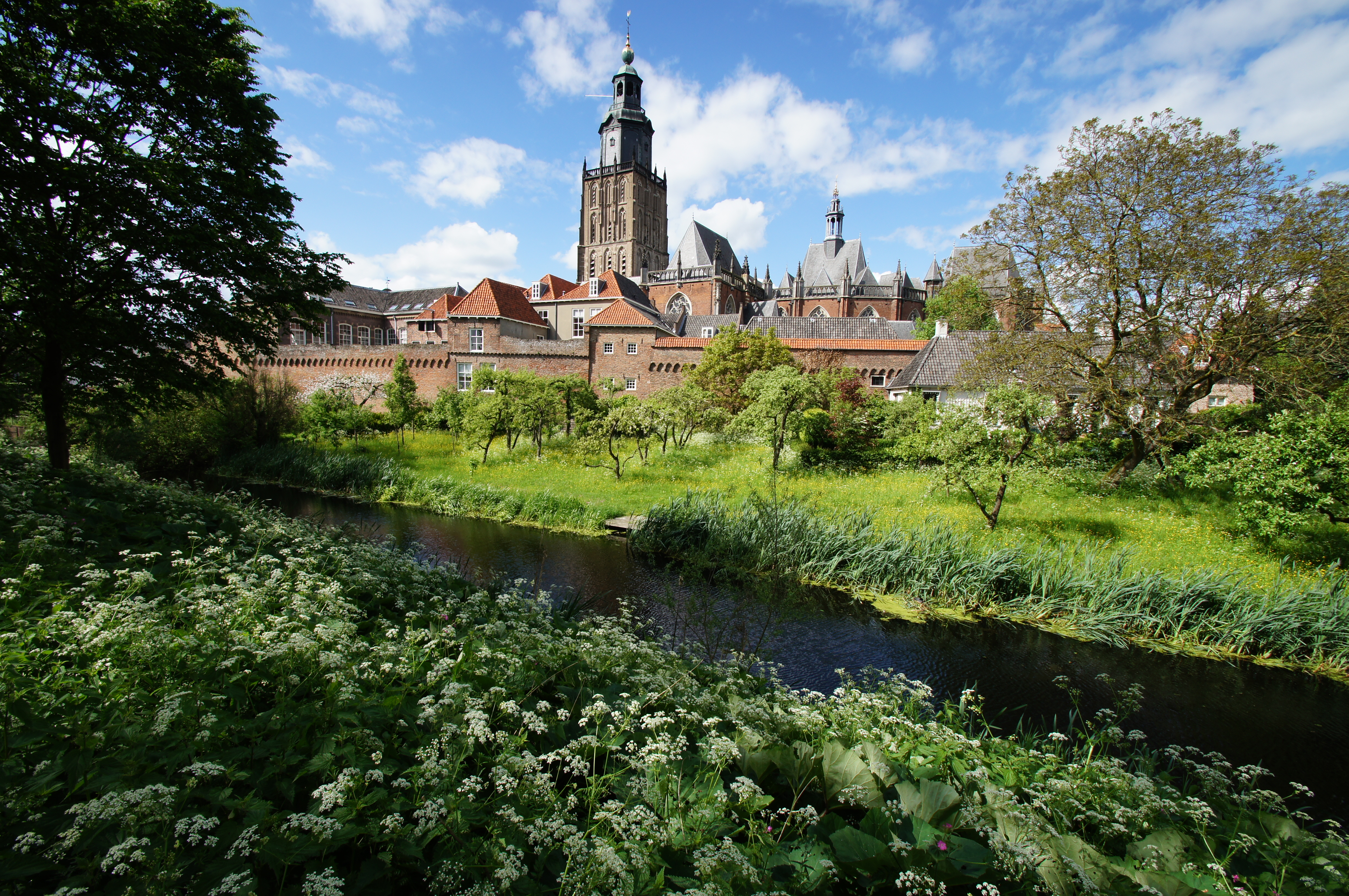 ✦ 81
✦ 81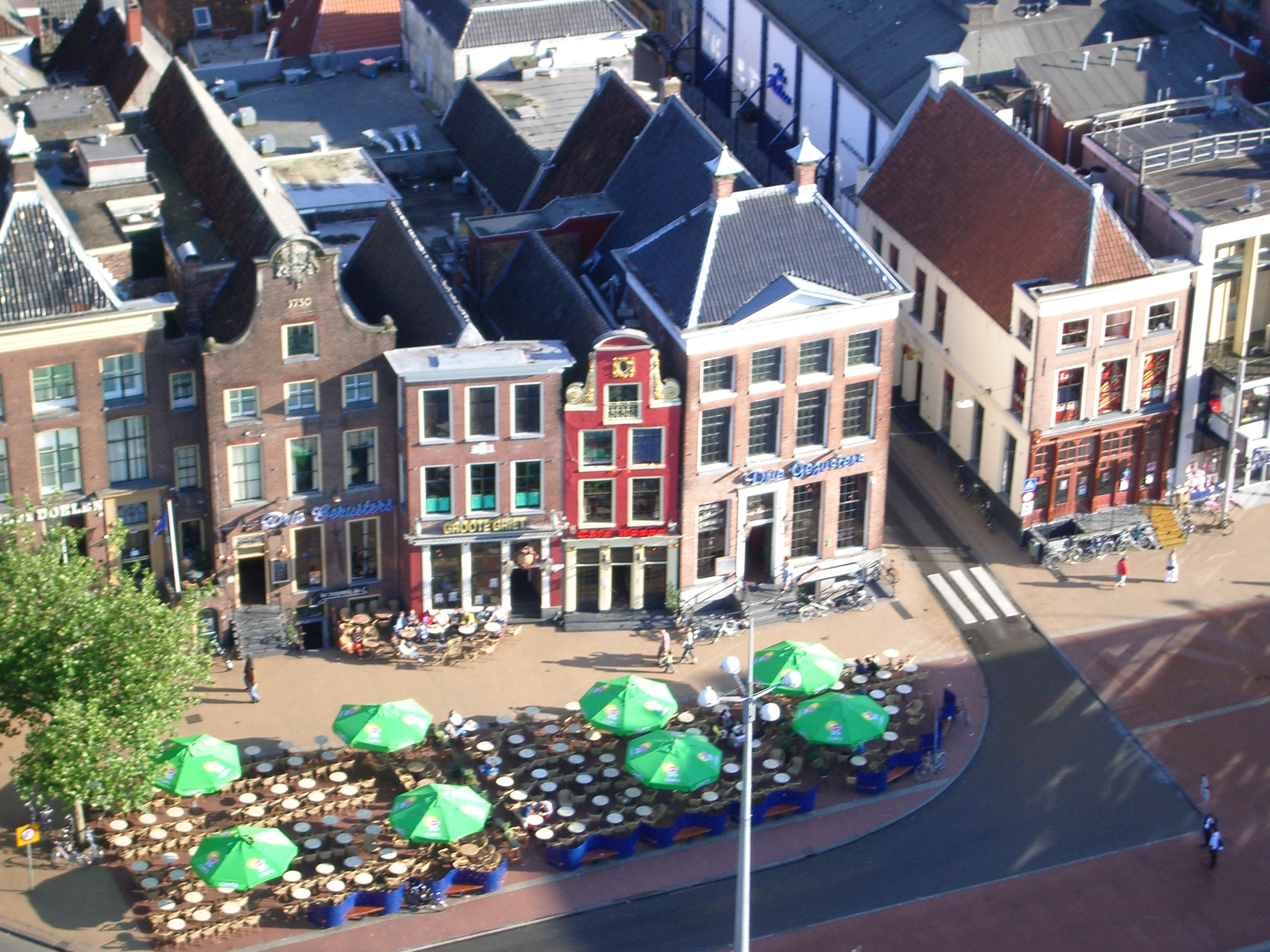 ✦ 82✦ 80
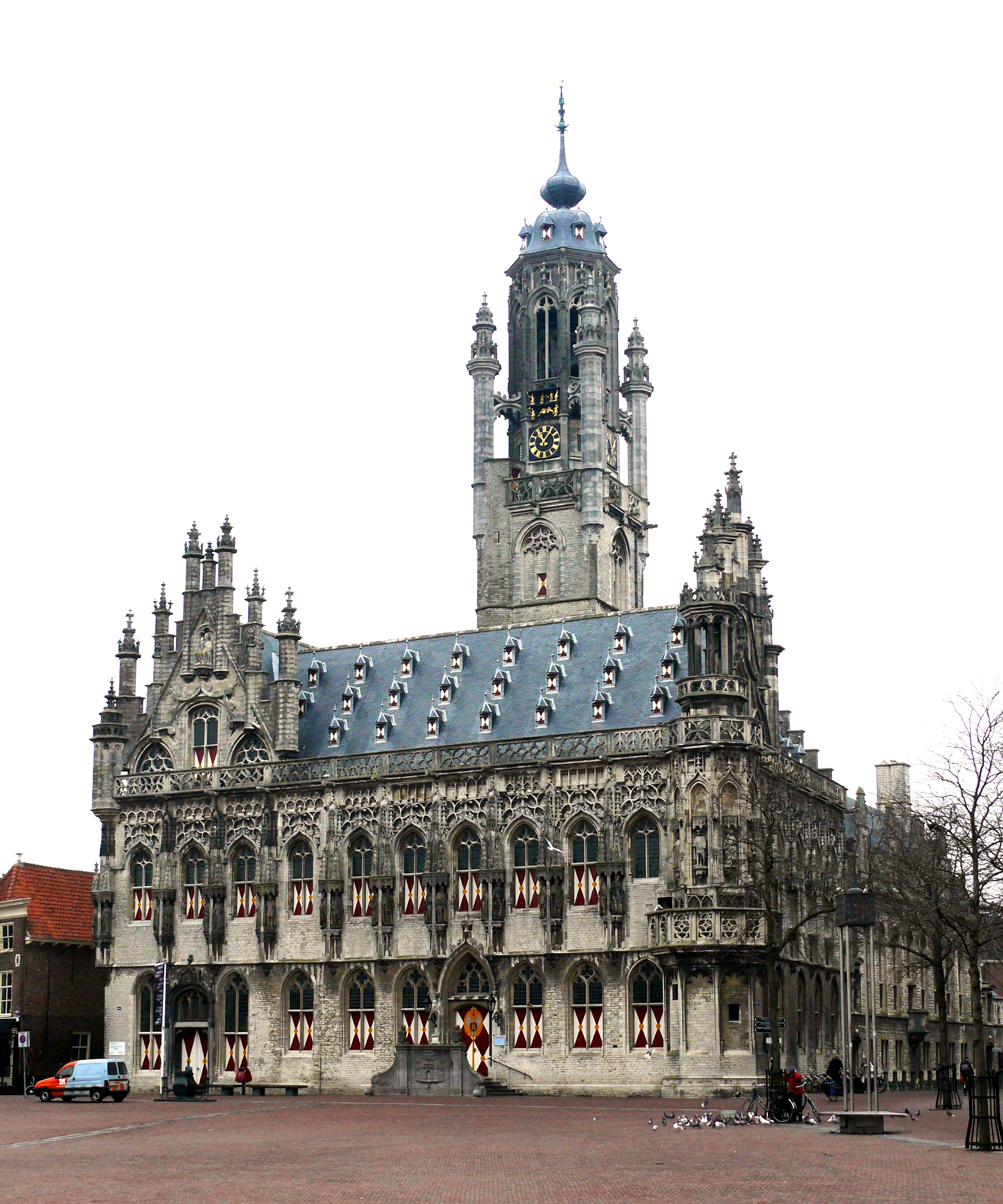 ✦ 78
✦ 78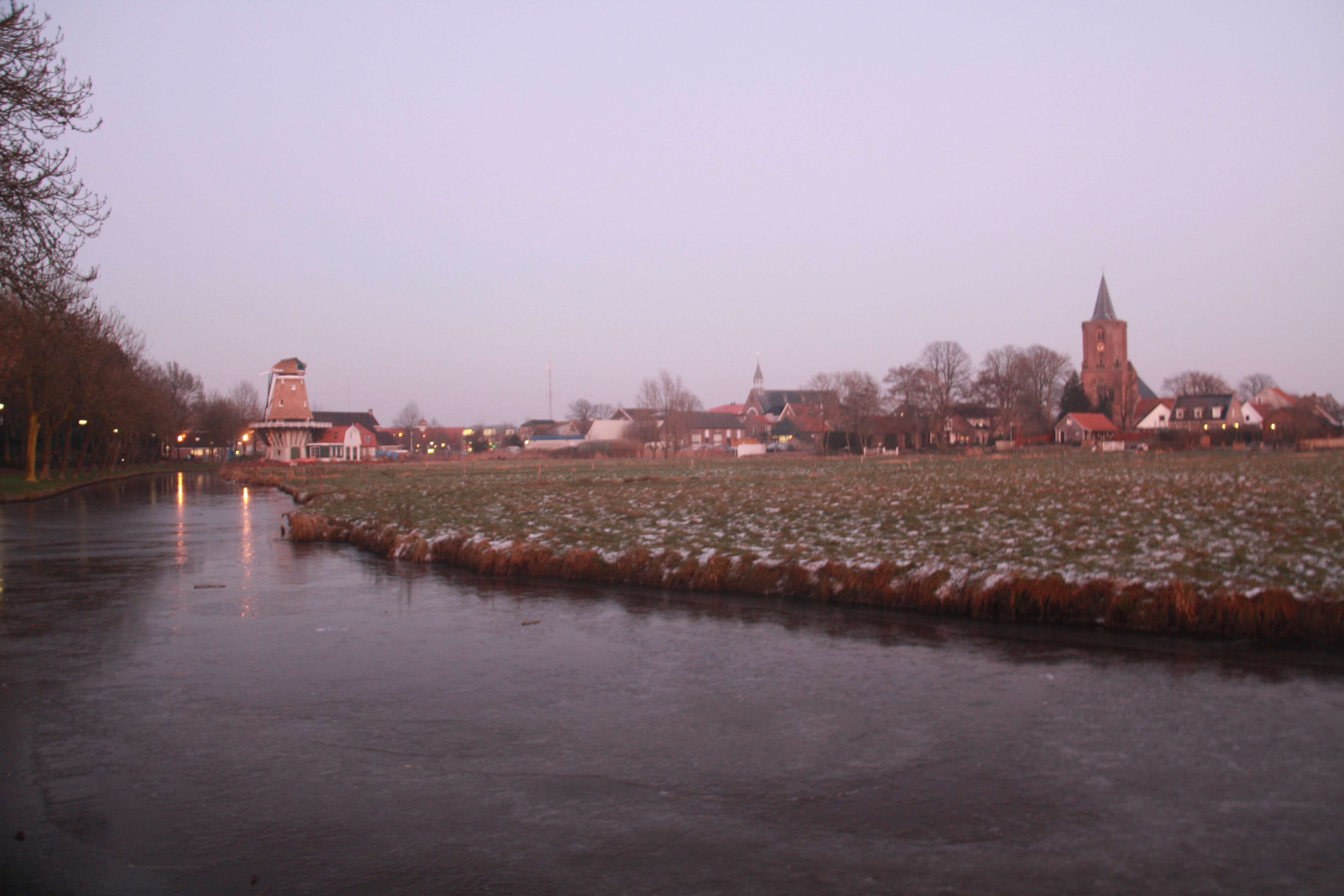 ✦ 80
✦ 80 ✦ 79
✦ 79The housing and accommodation requirement, and where people trip on it
IND may ask for proof of address in the Netherlands, whether that's a rental contract, a housing confirmation, or a registration appointment with the municipality. This sounds simple until you're actually trying to time it against an application that takes at least twelve weeks to process, with no fixed upper bound.
The mistake people make in one direction is signing a twelve-month lease before they have any decision on the permit, because they want the address on file to look solid. If the application is refused, or takes six months longer than expected, that lease is now a liability, not an asset, and Dutch landlords are not generally sympathetic to visa timelines. The mistake in the other direction is showing up with nothing concrete, assuming a hotel reservation or a vague statement of intent will satisfy the requirement if IND asks. It often will not, and if you're applying from outside the Netherlands, you may be juggling proof of legal stay in your current country of residence at the same time, which adds another layer to get sequenced correctly.
The workable middle path most people land on is a short-term or flexible-term rental, sometimes through a relocation-oriented agency, that produces a real signed document without locking in a year of obligation before the permit is even issued. It costs more per month than a standard lease would. That premium is close to the smallest expense in the entire process, and it buys flexibility at exactly the point where you have the least control over timing. Once the permit is granted and you're through municipal registration, converting to a standard long-term lease is straightforward, and most people do it within their first few months.
What happens after your permit is approved, and before you're actually settled
Approval is not the finish line, it's the start of a second, quieter process. The MVV and the residence permit get applied for and decided together, but the paperwork that lands in your hands at a consulate abroad is not the same as being functionally set up to live and work in the Netherlands.
Once you arrive, you still need to complete municipal registration to get onto the BRP, the population register, which is the thing that actually makes you visible to Dutch institutions, banks, insurers, tax authorities, everyone. Without it you are, administratively, a person with a permit and no address on file, which creates friction with almost everything else you try to do in your first weeks. If your KvK registration was submitted in draft form as part of the application, this is also the point where it needs to be finalized, because a draft extract that satisfied IND during review will not satisfy a client asking for your VAT number.
Health insurance follows a similar logic. Readiness to obtain Dutch coverage on arrival is enough at the application stage, but you have a limited runway after landing to actually arrange it, and gaps in coverage create their own downstream problems if you need care before you've sorted it. Layered on top of all this is a tax registration deadline of three months from when your business activity begins in the Netherlands, which runs on its own clock regardless of how long the rest of your settling-in takes. People who treat the permit approval as the end of the administrative burden tend to discover, a few weeks in, that they've actually just entered a second checklist with its own deadlines and its own way of quietly penalizing anyone who assumes it will sort itself out.
The road to permanent residence looks shorter on paper than it runs in practice
Five years gets you to permanent residence eligibility, and the initial permit runs for twenty-four months, which means everyone in this category renews at least once, and often twice, before they're anywhere near that milestone. The renewal is not a formality. It's a second, and sometimes third, evaluation of whether the business you described in your original plan actually turned into the business you're running.
This is where the paperwork discipline from your first application starts to compound in a very literal way. If your original business plan projected a certain revenue trajectory and reality diverged from it, in either direction, you need to be able to explain that divergence with the same kind of documentation IND wanted the first time. A freelancer whose client base shifted entirely from US-based work to Dutch or EU clients over two years should have that shift reflected clearly in invoices and contracts, not just asserted in a renewal letter. IND is not looking for the exact plan to have played out. It's looking for evidence that the underlying business is real and still self-sustaining, which is a different bar than simply showing you didn't go broke.
The five-year clock also does not pause for the ordinary disruptions of running a small international business. A slow quarter, a client who churns, a pivot into a different service line, none of it stops the clock, and none of it lowers the bar at renewal. What tends to catch people off guard is realizing, around year three or four, that they now have to reconstruct a coherent income and business narrative across a much longer span than the one they built for the initial application, often pulling from years of Dutch tax filings, invoices, and KvK records rather than the tighter US-based documentation they started with.
Weighing this against the more obvious freelance route into Europe
For a US-based freelancer looking at Northern Europe, Germany's freelance permit sits right next to this one as the natural point of comparison, and the two ask for truly different things. Germany's version leans harder on your professional credentials and existing client relationships and lighter on the forward-looking business plan; the Dutch permit inverts that, asking you to essentially pitch a business to a government agency that then gets weighed by RVO alongside IND's own review. If your work is credential-driven, consulting built on a specific professional qualification, the German path plays closer to your actual strengths. If your work is closer to founder-style, an emerging service business with room to grow rather than a fixed professional practice, the Dutch structure is arguably fairer to you, because it's explicitly built to evaluate potential and trajectory rather than just credentials on file.
The other factor worth sitting with is what each country asks of you after approval. The Dutch path bakes in municipal registration, KvK finalization, and a tax registration deadline that starts running the moment your business activity begins, all stacked in your first few months. That is more post-arrival administrative sequencing than some alternative routes require, and it rewards people who like structure and punishes people who assume the hard part ends at the consulate. If your business is well-documented, growing, and you don't mind a bureaucratic entry that continues well past your arrival date, the Dutch route rewards exactly that kind of applicant. If you want the lighter post-landing lift and you already have strong, established professional credentials to lean on, it's worth seriously pricing out the alternative before committing to this one.
Work Permissions
Application Steps
- 1
📋 Prepare business plan
2-4 weeks
- 2
📄 Gather financial documents
1-2 weeks
- 3
📄 Secure health insurance
1 week
- 4
📬 Apply at Dutch representation
- 5
📅 Attend interview if required
1 day
- 6
⏳ Wait for IND decision
Several months
- 7
🏛️ Collect residence document
1-2 weeks
- 8
🏛️ Register in BRP municipality
Same day
- 9
🏛️ Undergo TB test if required
1-2 weeks
- 10
🏛️ Register business and taxes
1-2 weeks
Frequently Asked Questions
Click any question to expand the answer.
Ready to Apply?
Work with trusted visa specialists who handle the paperwork so you can focus on your move.
Get help with this visa →* We may earn a commission if you apply through our link
At a Glance
Last verified: July 15, 2026