Denmark Pay Limit Scheme
Denmark · Europe
Data updated Sep 3, 2026
Min Monthly Income
$6,600
Application Fee
$1,042
Processing Time
4 wks–12 wks
Difficulty
Moderate
Duration
1 months
Path to Citizenship
9 years
Overview
Denmark’s Pay Limit Scheme is built around one hard gate: an employment contract in Denmark with a minimum annual salary of DKK 552,000 in 2026, paid for at least 30 hours per week. This is employment income only; foreign rental income, ETF dividends, Social Security, or pension payments do not count toward this threshold. The salary must be paid into a Danish bank account in your own name, which aligns with a local bank account is required, and only cash salary, pension contributions, and paid holiday allowance count toward meeting the pay limit.
From a lifestyle perspective, this is a local work visa: you are expected to relocate and actually perform the job in Denmark, with local work explicitly permitted under the scheme. There is no minimum presence requirement in days per year or maximum consecutive absence limit, but your residence and work permit is tied to your Danish employment and salary being paid into a Danish bank account within 180 days of entry. Anyone planning to spend half the year in Denmark and half elsewhere needs to assume that long absences could jeopardize both the job and the permit, even though no numeric absence limit applies.
The initial permit lasts 1 month before renewal, and the scheme leads to citizenship eligibility after about 9 years. You should treat this as a medium-term work-led residence path rather than a guaranteed PR or passport track with clear timelines. Processing is relatively fast by global standards, with a 4–12 week range and a normal government estimate of about 1–3 months depending on complexity.
Friction points are concrete: application fees are about $1,042 USD as of 2026 (the official site denominates this in Danish kroner), you must open a Danish bank account within 180 days, and your employment contract must meet Danish standards on salary, pension, and holiday. On the other hand, there is no apostille, no FBI background check, no medical exam, and no interview required according to program rules, which aligns with its relatively low bureaucracy score of 1.125 / 5.
This scheme makes most sense if you have or can secure a Danish job paying at least DKK 552,000 per year and want a straightforward way to live and work in Denmark while maintaining foreign investments for FIRE. It is a poor fit if your income is primarily from US or Canadian pensions, index fund dividends, or rental properties and you are not prepared to take on a Danish employee role at the required pay level.
Eligibility Requirements
Any nationality can apply in principle under the Denmark Pay Limit Scheme, as the VISA FACTS list nationality restrictions as “all.” In practice, applicants who are citizens of countries subject to EU or Danish sanctions or banking de‑risking, such as Iran, North Korea, Syria, Cuba, and in some cases Russia or Belarus, can encounter consular scrutiny or difficulty opening the required Danish bank account even though the rules do not categorically exclude them. Before assembling a full application dossier, confirm your individual eligibility and any current sanctions implications directly with the Danish Agency for International Recruitment and Integration (SIRI) via the official New to Denmark (nyidanmark.dk) portal.
Min Income
$6,600
Application Fee
$1,042
Duration
1 months
Requirements Checklist
• Identity: Valid passport; passport-style photographs (if required by application form).
• Employment: Signed employment contract stating job title, duties, salary meeting pay limit threshold, working hours and employment period; employment confirmation letter from Danish employer (if separate from contract); documentation of any required Danish professional authorization (for regulated professions, if applicable).
• Qualifications: Educational diplomas and degrees; transcripts or mark sheets; employer reference letters documenting relevant professional experience.
• Financial: Proof that offered salary meets or exceeds current Pay Limit Scheme threshold (as stated in employment contract and, if required, supplementary employer documentation).
• Background: Curriculum vitae/resume; copies of previous employment letters (if requested to document experience).
• Application: Completed residence and work permit application form for Pay Limit Scheme; payment receipt for visa/residence permit application fee.
• Translation: Certified translations into Danish or English of all documents not in Danish, English, Norwegian or Swedish.
Tax Information
Local tax regime and what gets taxed
Denmark taxes on a worldwide basis once you are a Danish tax resident, with no special non-dom or remittance-style regime in ordinary use for Pay Limit Scheme workers. That means Danish tax will apply to your Danish salary, but also to foreign-source income such as ETF dividends from a US brokerage, rental income from property in Canada, and US or UK pension distributions once you become resident. Rates are progressive and high by OECD standards when you combine state, local, and labour-market contributions. There is no indication of any special tax regime tied specifically to this visa.
Capital gains on foreign investments
Capital gains on foreign investments, such as selling index funds or ETFs held with a foreign broker, are taxable in Denmark if you are a Danish tax resident. Denmark does not run a territorial or remittance-based system for ordinary residents, so gains are not exempt merely because they arise abroad. Exact rates depend on asset type and your total income, but for planning purposes FIRE investors should assume that both realized capital gains and foreign dividends fall within Danish tax scope once resident.
Tax residency triggers and registration
Danish tax residency normally arises if you acquire a home in Denmark or stay more than 183 days in a 12‑month period, and Pay Limit Scheme holders coming to live and work locally will almost always be treated as residents from arrival once they have accommodation. Tax residency is not triggered only by visa grant; it is driven by presence and access to a home. New arrivals generally need a CPR number, then registration with the Danish Tax Agency (Skattestyrelsen) and possibly a preliminary tax assessment so withholding on the DKK 552,000+ salary is correct.
Filing and deadlines
As a resident worker, you are in the Danish filing net. You obtain a Danish tax ID as part of CPR registration, your employer withholds tax at source, and you receive a pre-populated annual assessment that you must confirm or correct, including foreign income and capital gains. Deadlines can shift, but residents normally confirm or amend their tax return in the spring following the tax year; late corrections can generate interest and penalties.
Tax treaty status
The US–Denmark tax treaty provides relief from double taxation, though you should check current treaty text for specifics. In practice, Denmark has wide treaty coverage, but you need to check the current US–Denmark income tax treaty text to understand treatment of US Social Security, dividends, and pensions, plus any totalization agreement concerning Social Security and Medicare payroll taxes. “Treaty” never means blanket exemption; it mainly allocates taxing rights and offers partial relief from double taxation.
For US Citizens and Green Card Holders
US persons on the Pay Limit Scheme must treat Denmark as their country of residence for local tax while still filing annually with the IRS. Three US mechanisms matter most:
- Foreign Earned Income Exclusion (FEIE) on Form 2555 can shelter up to $132,900 of earned income as of 2026 (indexed annually), covering your Danish salary under the DKK 552,000+ contract. It does not apply to ETF dividends, capital gains, rental income, pensions, or Social Security. Because this visa implies genuine relocation, the Bona Fide Residence Test (full calendar year with clear residential ties) is often more realistic long-term than continually meeting the 330‑day Physical Presence Test, though many start out on physical presence in year one.
- Foreign Tax Credit (FTC) on Form 1116 will be crucial because Danish effective tax rates on salary, dividends, and gains can exceed US rates. Once Danish tax is higher, FTCs often provide better long-run relief than FEIE, especially if your income grows above the FEIE cap or you care about maximizing US Social Security earnings; many Pay Limit workers eventually switch from FEIE to an FTC‑centric strategy.
- FBAR (FinCEN 114) and FATCA Form 8938 become unavoidable because this visa requires a Danish bank account. If the aggregate balance of your non‑US accounts (Danish current and savings accounts, Danish brokerages, local pension schemes) exceeds $10,000 at any point in the year, you must file an FBAR. Form 8938 has higher thresholds but broader asset reporting; non‑willful FBAR penalties start at approximately $16,700 per year as of 2026.
US citizens and green card holders on a DKK 552,000+ Danish salary should work with two specialists: a US CPA experienced in expat taxation (FEIE vs FTC strategy, treaty positions, FBAR/FATCA) and a Danish tax adviser who handles expats and stock/ETF portfolios. The $1,500–$3,000 spent in year one on coordinated advice usually pays for itself in optimized elections and avoided penalties.
Living in Denmark
COL Index vs NYC
66.9
Monthly Cost (excl. rent)
$1,255
1BR Rent (City Center)
$1,160
Safety Index
74.0
Healthcare Index
78.4
Quality of Life Index
209.9
Time Zone
UTC+01:00
Capital
Copenhagen
Population
5.8M
Official Languages
Danish
Avg Internet Speed
376 Mbps
Public Transit Quality
Excellent
With a budget covering rent and living costs, you'd need roughly $2,415/mo for a comfortable single-person lifestyle in Denmark.See how far your money goes →
🏙️ Best Cities in Denmark for Expats
 ✦ 81.8
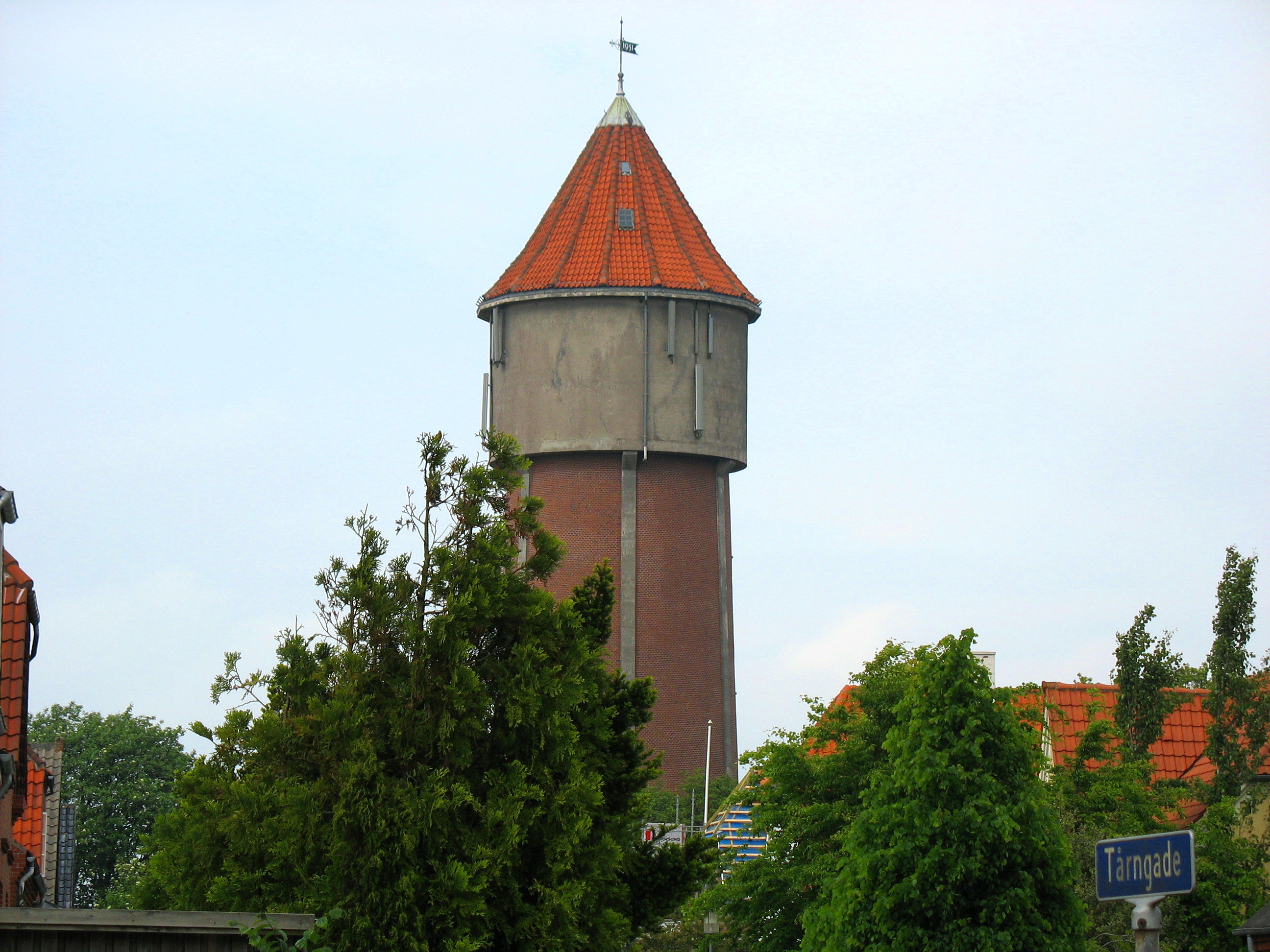 ✦ 79
✦ 79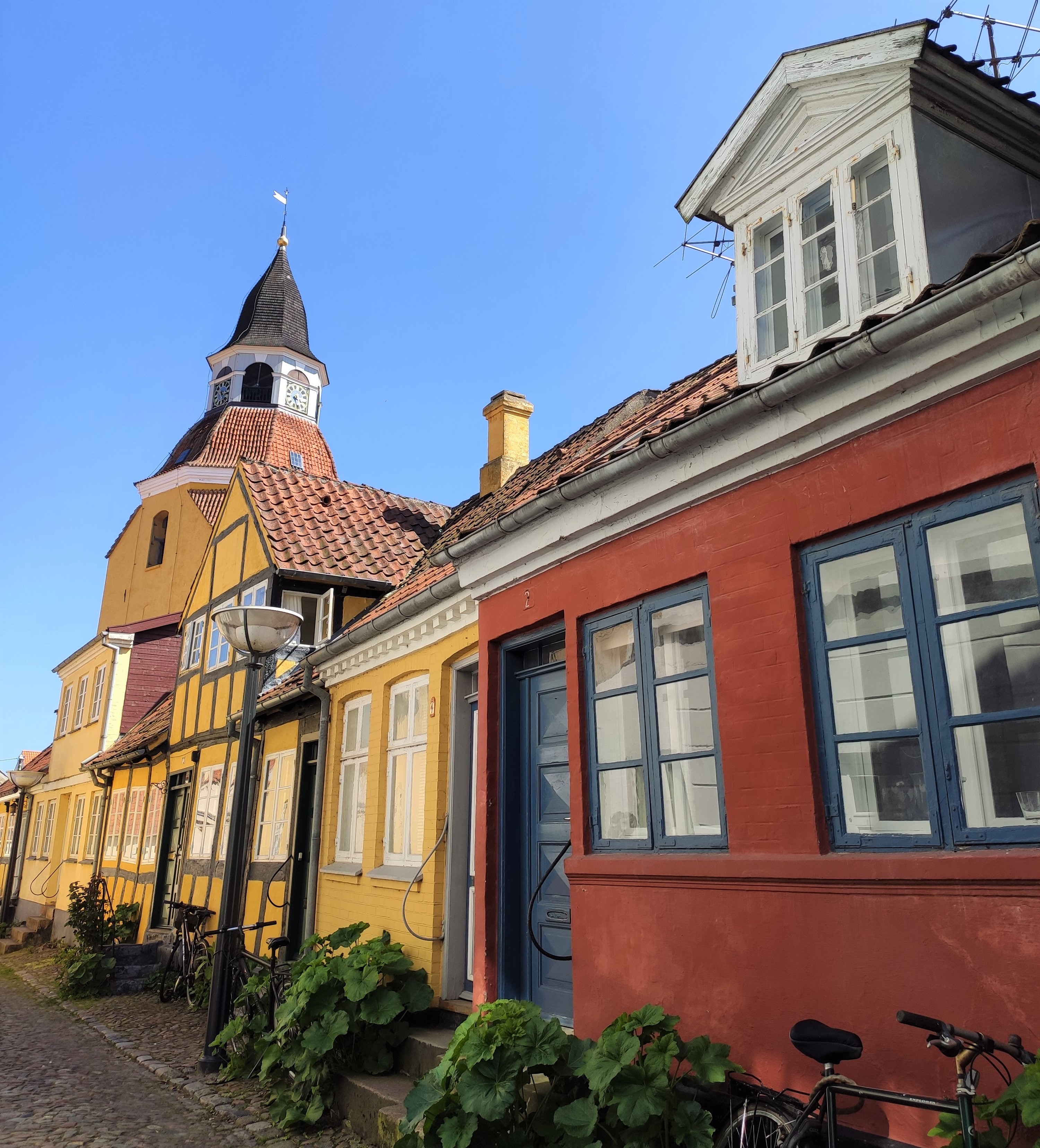 ✦ 75
✦ 75 74.9
74.9Getting the income documentation story straight before applying
The number that matters here is not your net worth, your savings, or your freelance revenue history. It's the salary figure sitting inside the contract your Danish employer signs, and whether that figure clears the current Pay Limit Scheme threshold, roughly $6,600 a month as of 2026. Everything else in the financial documentation is there to corroborate that one line, not to stand on its own.
This trips up people coming from a US remote work background more than almost anything else on the checklist. If you've spent the last three years invoicing US clients as a contractor, your income history is real, but it's the wrong shape for this application. The scheme wants an employment contract, with a job title, defined duties, working hours, and an employment period, issued by a Danish entity that intends to actually employ you inside Denmark. A pile of 1099s or Stripe payout records doesn't substitute for that, no matter how much money moved through your account last year. If your plan is to get hired by a Danish company and this is your intended visa route, the sequencing has to run through the job offer first. Trying to build your case around personal income and hoping the employer piece falls into place later is backwards.
The document that consulates and caseworkers actually scrutinize is the contract's internal consistency: does the stated salary, the stated hours, and the job title line up with what the role plausibly pays in Denmark. A contract that technically clears the threshold but describes a junior role, or specifies suspiciously few hours for that salary, invites a second look. Employers unfamiliar with the scheme sometimes structure compensation with allowances or irregular bonuses to hit the number, and that's exactly the kind of thing that reads as engineered rather than earned. If your employer has sponsored someone through this before, lean on their HR or legal team to draft the contract in the plain, boring format the immigration office expects to see. If they haven't, expect a round or two of revisions once you or an advisor flags the wording.
Translations matter more than people expect too. Anything not already in Danish, English, Norwegian, or Swedish needs a certified translation, and if your diplomas, transcripts, or reference letters are in another language, get that handled well before your appointment rather than scrambling once a caseworker asks for it.
The housing and bank account tangle
There's no line item on the checklist that says "find an apartment," but the requirement that you hold a local bank account creates a housing problem by the back door, and it's one of the more common places people lose time. Danish banks generally want proof of a registered address before they'll open an account for you, and you can't easily register an address without already being in Denmark, which means the sequence that looks clean on paper, get the permit, arrive, get a bank account, get paid, often stalls somewhere in the middle for people who assumed each step would simply follow the last.
The practical fix most people land on is temporary housing for the first several weeks, something with a real street address you can use to start the registration process, rather than a hotel that won't count for anything official. It doesn't need to be your long-term apartment. It needs to be a real, provable address that lets you move through the address registration and account-opening steps without waiting on a lease you haven't signed yet.
Employers who regularly sponsor foreign hires sometimes have relocation support that smooths this, temporary corporate housing, an HR contact who's walked five people through the same bank before. If your employer has never sponsored anyone through this scheme, don't assume they know this part exists. It's worth asking directly, before you land, rather than discovering the gap once you're standing in a bank branch with a passport and no address to show for it.
None of this shows up as a rejection reason on your application. It shows up as weeks of dead time between approval and actually being paid, which matters more than it sounds like it should when you're trying to start a job on a specific date.
What actually happens after your permit is approved
Approval is not the end of the process, it's the point where a second, more logistical process starts. After your online application clears, you're required to attend a biometrics appointment, either at an immigration office inside Denmark or at a Danish embassy or consulate in your home country. Which one applies to you depends partly on whether you're already in the country on something like a tourist visa when your case is decided, and it's worth confirming this directly with the immigration service when you schedule rather than assuming.
Processing itself runs anywhere from about four weeks to twelve, which is a wide enough window that timing a job start date around it takes some cushion. Employers used to faster hiring cycles in other markets sometimes push for a start date that assumes the fast end of that range, and then everyone is stuck renegotiating once the case takes longer.
Once biometrics are done and the permit is issued, the work of actually functioning in Denmark begins: registering your address, sorting the bank account sequencing described above, and settling into whatever renewal or documentation cadence your specific permit carries. This is also where people sometimes discover that what they thought was a long-settled question, exactly how long their initial permit runs before anything needs renewing, is worth confirming directly with your caseworker rather than assuming from general research, since permit lengths and renewal triggers for employer-sponsored schemes can shift in ways that don't always make it into secondhand guides.
No medical exam and no interview are required for this pathway, which removes two of the more unpredictable steps other visas carry. That's a genuine advantage, but it also means the immigration office is putting more weight on the paper record itself, which loops back to why the contract and documentation need to be airtight before submission rather than treated as something you can clarify later in person.
The long road to permanence
Denmark's route to citizenship runs nine years as of 2026, and that number is the same whether you arrived on this scheme or a different work-based one. What's easy to miss is that the nine years is a floor, not a guarantee tied to holding this specific permit the whole time. Career changes, gaps in employment, or a period where your salary dips below whatever the threshold happens to be at that point can all interrupt the kind of continuous, qualifying residence the clock actually counts.
This is where people planning around a "nine years and I'm done" mental model run into trouble. A job change to a Danish employer offering less than the pay limit threshold, even temporarily, can knock you out of this specific scheme's eligibility, even if you stay in the country on some other basis. If your long-term plan depends on staying inside this exact scheme for most of a decade, it's worth treating every job change during that window as a compliance question, not just a career one, because Denmark isn't grading you on total years present, it's grading you on the specific legal basis for each one of them.
The permit also carries local work rights and allows dependents to work locally as well, which matters more over a nine-year horizon than it does in year one. A spouse building their own career and their own income history in Denmark changes the shape of the household's long-term case in ways that are easy to ignore early on and expensive to have ignored later.
Pay Limit Scheme versus the shortage-occupation route
The scheme's real competitor inside Denmark itself is the Positive List, which grants work permits for occupations the country has designated as facing labor shortages, generally at a lower salary bar than the general Pay Limit Scheme threshold. If your role happens to sit on that list, and it changes periodically, the calculation shifts: a lower income floor to clear versus a scheme that applies regardless of occupation but demands the higher salary as the price of that flexibility.
The honest way to think about this is not which one is "better" but which one your actual job offer supports. If your Danish employer is offering a salary that comfortably clears the Pay Limit Scheme threshold, there's little reason to go hunting for a Positive List angle just because it sounds like the easier door. The paperwork and structure are similar enough that occupation-list eligibility mostly matters when your salary is closer to the shortage-occupation floor than to the general one, and forcing your job into the Positive List framework when it doesn't naturally sit there just adds a layer of scrutiny over whether your role truly matches the listed occupation.
Where the comparison actually bites is for people evaluating Denmark against a different country entirely, rather than against a different Danish scheme. Employer-sponsored, salary-threshold visas of this shape exist across a handful of European countries, and the deciding factor is rarely the visa mechanics themselves, since those tend to converge on a similar shape: contract, threshold, permit, renewal. It's the underlying job market and whether an employer there is actually willing to sponsor a US hire at all. Denmark's advantage is the absence of a medical exam or interview step and the openness to all nationalities without restriction, which lowers the number of ways an individual application can go wrong. What it doesn't do is lower the bar on having a real, salaried Danish job in hand before any of this starts.
Work Permissions
Application Steps
- 1
📋 Secure a job offer meeting salary requirements
Varies (before application)
- 2
📄 Gather required identity and employment documents
1-2 weeks
- 3
📬 Create account on SIRI immigration portal
Same day
- 4
📬 Submit application and pay processing fee
1 day
- 5
📅 Attend biometrics appointment
2-4 weeks after submission
- 6
⏳ Await decision and permit issuance
1-3 months
- 7
- 8
🏛️ Receive residence and work permit
Same day or 1-2 weeks
- 9
🏛️ Register with Danish tax authority
1-2 weeks after arrival
- 10
🏛️ Obtain CPR number and Danish address
1-2 weeks after arrival
Frequently Asked Questions
Click any question to expand the answer.
Ready to Apply?
Work with trusted visa specialists who handle the paperwork so you can focus on your move.
Get help with this visa →* We may earn a commission if you apply through our link
At a Glance
Last verified: July 15, 2026