
Before I moved, I spent months researching every "low-tax" destination that people talk about on forums and YouTube. Here's why I ruled them all out except Cyprus.
Portugal (NHR regime): This was my first choice. The Non-Habitual Resident regime offered a flat 20% on Portuguese-source income and exemptions on foreign income for 10 years. Beautiful country, good food, close to Spain. But in late 2024, Portugal officially ended NHR for new applicants. The door closed. If you're still weighing your options, our Portugal vs Spain comparison breaks down how the two countries stack up now that NHR is off the table.
Dubai: Zero personal income tax sounds incredible on paper. But when I dug deeper, the reality was different. No EU access for business. Expensive cost of living — a one-bedroom in Dubai Marina costs more than a two-bedroom in Larnaca. Limited social safety net. And as a young woman from Spain, the cultural adjustment felt like a bigger leap than I wanted.
Estonia (e-Residency): The e-Residency program is brilliant for company formation, but it doesn't actually give you tax residency. You still pay taxes where you physically live. So e-Residency alone doesn't solve the tax problem. It just gives you an Estonian company that you'd still need to manage from somewhere with favorable tax treatment.
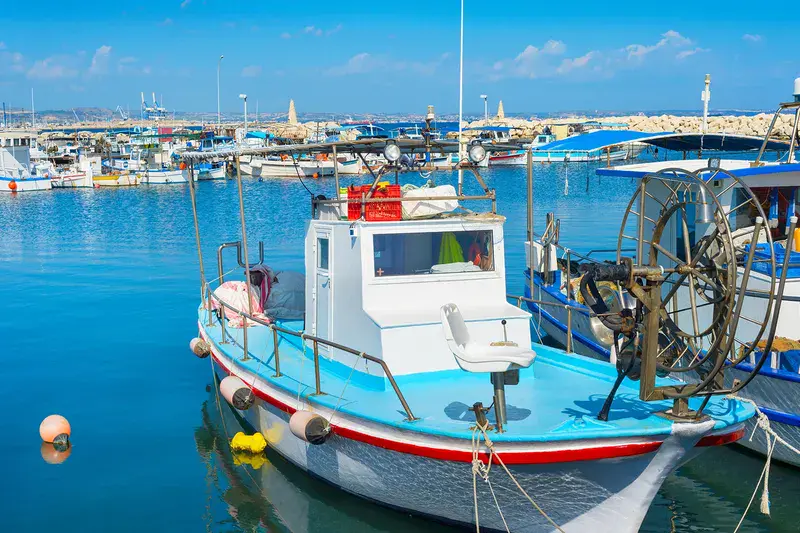
Cyprus stood out for three reasons:
- The Non-Dom regime, where foreign residents pay 0% on dividend income for 17 years
- The 60-day rule, meaning you only need to spend 60 days per year in Cyprus to qualify as tax resident (not the usual 183 days)
- EU membership, so your company is an EU entity, your bank accounts are EU-protected, and you have freedom of movement
That combination doesn't exist anywhere else in Europe. If you want to see how Cyprus compares against other low-tax jurisdictions, our guide to global retirement tax havens is a good next read.
The 60-Day Rule: How It Actually Works
Most countries require you to spend at least 183 days per year to be considered a tax resident. Cyprus has an alternative: the 60-day rule.
To qualify, you need to meet all of these conditions in a single tax year:
- Spend at least 60 days in Cyprus
- Don't spend more than 183 days in any other single country
- Don't be a tax resident of any other country
- Have a source of income in Cyprus (employment, a company, or being a director)
- Maintain a permanent residence in Cyprus (owned or rented)
That last point is important. You need a rental contract or property deed, not just an Airbnb. I signed a 12-month lease on a one-bedroom apartment in Larnaca for EUR 650/month. That was enough.
The 60-day rule is what makes Cyprus work for remote workers and digital nomads. You can spend winters in Spain, summers in Cyprus, and autumn traveling — as long as you hit those 60 days and don't exceed 183 anywhere else. For a deeper look at how this fits into a location-flexible lifestyle, see our piece on slowmad living abroad long-term.

Non-Dom Status: The Real Tax Numbers
Here's where it gets interesting. When you become a tax resident of Cyprus as a foreigner, you automatically qualify for Non-Domiciled (Non-Dom) status. You don't need to apply for it. It's granted by default to anyone whose father wasn't born in Cyprus. It lasts for 17 years.
Non-Dom status exempts you from Special Defence Contribution (SDC), which is the tax that normally applies to:
- Dividends: normally 17%, with Non-Dom 0%
- Interest: normally 30%, with Non-Dom 0%
- Foreign rental income: normally 3%, with Non-Dom 0%
The only remaining charge on dividends is the General Healthcare System (GHS) contribution at 2.65%, capped at EUR 4,770 per year.
What About Corporate Tax?
Cyprus has a corporate tax rate of 15% on net profits. That's the headline rate, and it's what your company will formally owe.
However, the effective amount you end up paying can be significantly lower through legitimate optimizations. The key tools are: keeping your salary modest (the first EUR 22,000 is tax-free), distributing most of your income as dividends (which are tax-free under Non-Dom), deducting real business expenses (office, software, travel, professional services), and using the Notional Interest Deduction (NID), which allows you to deduct a deemed interest on equity injected into your company.
None of this is aggressive tax planning. It's how Cyprus companies are designed to work, fully within the law and set up by your accountant as part of the normal annual filing. The result is that many small entrepreneurs end up with an effective overall tax burden of around 5–8% on their total income. For a broader look at optimizing your tax situation as an expat, see our FIRE tax optimization playbook.
The Full Picture: What You Actually Pay
Let me walk through a real example. Say you earn EUR 100,000 through your Cyprus company:
- You pay yourself a salary of EUR 22,000 (tax-free, within the personal allowance)
- Corporate tax at 15% on the remaining profit after deducting your salary and business expenses. If expenses bring taxable profit down to, say, EUR 50,000, that's EUR 7,500 in corporate tax
- Distribute the rest as dividends. Under Non-Dom, you pay 0% SDC and only 2.65% GHS on dividends
- GHS on dividends: roughly EUR 1,100
Total tax paid: around EUR 8,600 on EUR 100,000, or about 8.6%
Compare that to Spain, where I'd have paid corporate tax at 25% plus personal income tax on dividends at 19–26%. On the same EUR 100,000, I'd have been looking at EUR 35,000–40,000 in total tax. That's not a small difference. That's the difference between reinvesting in your business and wondering where your money went. If you're a US citizen running these numbers, our guide to retire abroad tax planning for US expats covers how FEIE and foreign tax credits interact with a setup like this.

Setting Up a Company: Timeline and Real Costs
I set up a Private Limited Company (Ltd) in Cyprus. Here's exactly what happened and what it cost.
Week 1–2: Finding a service provider
I contacted three corporate service providers in Limassol and Larnaca. Prices ranged from EUR 1,800 to EUR 3,500 for incorporation. I went with one that charged EUR 2,100, which included:
- Company registration with the Registrar of Companies
- Memorandum and Articles of Association
- Registered office address for the first year
- Appointment of directors and secretary
Week 2–3: Documents and approvals
I needed to provide a passport copy, proof of address (my Spanish utility bill worked), and a brief description of the business activity. The service provider handled everything with the Registrar.
Week 3–4: Company registered
I received the Certificate of Incorporation, the company registration number, and the Tax Identification Code (TIC). The company was officially alive.
Ready to Rewire your Life?
Sign up to receive updates and insights.
By submitting your email address, you will receive a free subscription to RA Postcards and special offers from Rewire Abroad and our affiliates. You can unsubscribe at any time, and we encourage you to read more about our Privacy Policy.
Week 4–5: Bank account
This was the most frustrating part. Cyprus banks are notoriously slow with due diligence. I applied at Bank of Cyprus and it took almost three weeks to get the account opened. Some people use Revolut Business as a bridge while waiting for the local bank account. Our guide on avoiding bank account freezes as a digital nomad is essential reading before you move any money.
Total incorporation cost: EUR 2,100
Annual running costs (roughly):
- Accounting and VAT filing: EUR 1,500–2,000
- Annual audit (mandatory for all Cyprus companies): EUR 800–1,200
- Registrar of Companies annual levy: EUR 350
- Registered office renewal: EUR 300–500
- Total: EUR 2,950–3,750/year
Yes, the mandatory annual audit is annoying and adds cost. Every Cyprus company, no matter how small, must be audited by a licensed auditor. It's one of the downsides. But it also adds credibility when you're dealing with EU clients or opening bank accounts in other countries.
Getting the Yellow Slip: EU Residence Registration
As an EU citizen, I didn't need a visa or work permit. But I did need to register my residence, a process that results in the famous "Yellow Slip" (officially called the MEU1 certificate).
The Yellow Slip is your proof of legal residence in Cyprus as an EU citizen. You need it for everything: opening a bank account, signing a lease, registering for healthcare, and establishing tax residency.
Where to apply: The Civil Registry and Migration Department. In Larnaca, it's on Athinon Avenue.
Documents I brought:
- Valid passport
- Rental agreement (12-month lease)
- Employment contract or proof of self-employment (I used my company registration)
- Health insurance certificate (private or GHS registration)
- Two passport-size photos
- Application fee: EUR 20
Processing time: I was told 2–4 weeks. Mine took 3 weeks. Some people report getting it the same day in smaller towns.
The experience at the immigration office was exactly what you'd expect from a government office anywhere in Southern Europe. Arrive early, bring all your documents in triplicate, and be patient. To avoid the most common pitfalls, see our rundown of residency mistakes and visa violations to avoid.
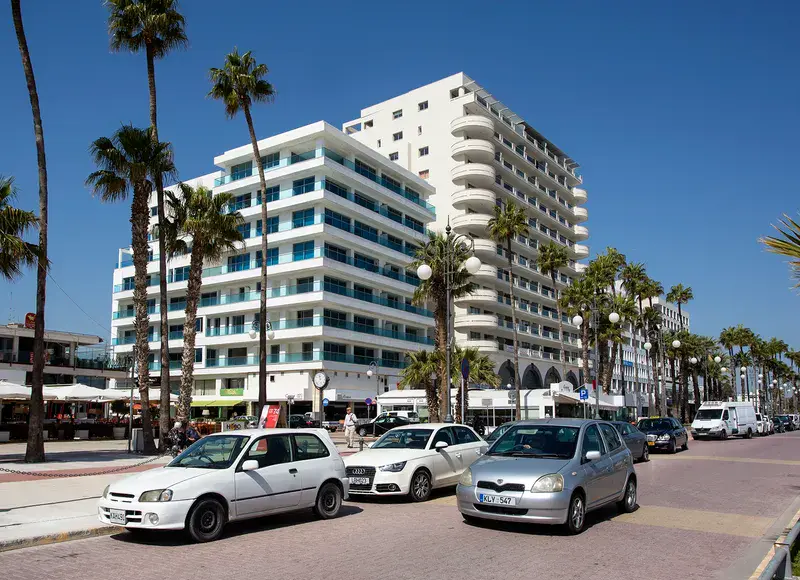
Cost of Living in Larnaca: My Actual Monthly Budget
One of the biggest surprises about Cyprus was how affordable it is compared to Western Europe. Here's what I actually spend per month in Larnaca:
- Rent (1-bedroom, center): EUR 650
- Utilities (electricity, water, internet): EUR 120
- Groceries: EUR 300
- Eating out (2–3x per week): EUR 200
- Transportation (car fuel): EUR 80
- Health insurance (private): EUR 60
- Gym: EUR 40
- Mobile phone: EUR 20
- Total: ~EUR 1,470
For context, I was paying EUR 900 for a smaller apartment in Córdoba, and groceries were about the same. The main savings come from the dramatically lower tax burden, not from cheaper rent.
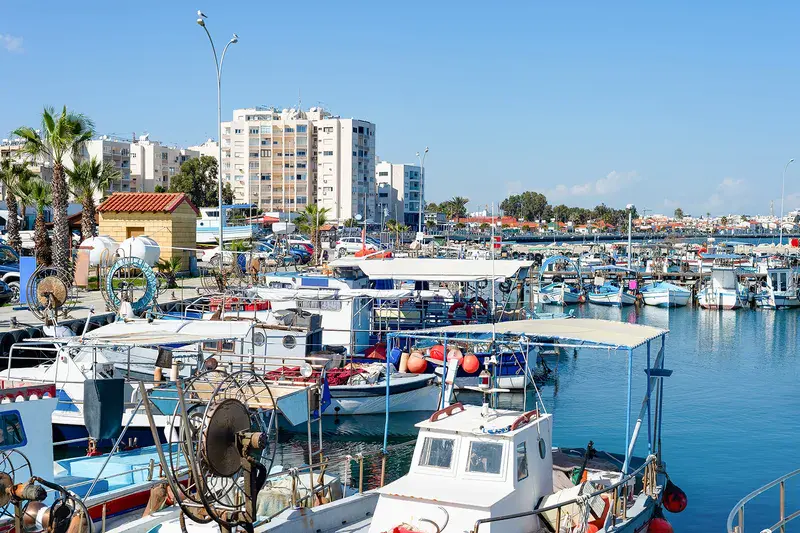
Larnaca isn't the flashiest city in Cyprus. Limassol has the high-rises and the nightlife. But Larnaca has a beautiful promenade (Finikoudes), a functioning airport 10 minutes from the center, and a growing community of remote workers. It's quieter, more affordable, and feels more real than the expat bubble in Limassol. If you want to understand what geoarbitrage looks like in practice across different countries, our real geoarbitrage stories from the FIRE community are worth a read.
The Downsides: What Nobody Tells You
I promised honesty, so here's what's not great about Cyprus.
Summers are brutal. July and August hit 40°C regularly. If you're from Northern Europe, this is a serious adjustment. I'm from southern Spain so I can handle heat, but even I found August oppressive.
Bureaucracy is slow. Everything takes longer than it should. Bank accounts, government registrations, utility connections. Add 50% to whatever timeline they give you.
The car situation. Public transport barely exists outside Nicosia. You need a car. Period. Cars are more expensive than in mainland Europe due to import duties.
It's a small island. After a few months, you'll have driven everywhere. If you need constant novelty, Cyprus might feel limiting. But with flights to Athens in 1.5 hours and to most European capitals in 3–4 hours, it works if you travel regularly.
One thing that pleasantly surprised me was the healthcare. I registered for the GHS public system and was able to get a doctor's appointment very quickly. The attention was excellent and the whole process was smooth. If healthcare is a major factor in your decision — and it should be — our guide to overseas health coverage covers how to think through this properly before you move.
Was It Worth It?
Absolutely. In my first year in Cyprus, the tax savings alone covered my entire cost of living twice over. I reinvested that money into building my website, Cyprus Tax Life (cyprustaxlife.com), which is now a comprehensive free resource for expats navigating the same decisions I faced.
But beyond the numbers, something unexpected happened: I actually love living here. The pace of life is slower. The sea is five minutes away. People are genuinely warm. And there's a growing community of young professionals and entrepreneurs who chose Cyprus for the same reasons I did.
If you're a remote worker or entrepreneur paying high taxes in Western Europe and wondering whether there's a better option, there is. It takes about 60 days to set up, and it might be the best financial decision you ever make. If you want to dig further into how Cyprus fits into a broader early retirement plan, check out our full Cyprus FIRE guide, or browse our roundup of the best countries to retire abroad if you're still weighing your options.

Miriam Alonso
Miriam Alonso is a 24-year-old Spanish entrepreneur who traded 45% income tax in Spain for sunshine and single-digit rates in Cyprus. She founded Cyprus Tax Life (cyprustaxlife.com) to give expats the guide she wished she'd had when she made the move. When she's not writing about tax codes, you'll find her on the Finikoudes promenade pretending she's on holiday.
Cyprus Tax Life
Guide to Living and Retirement: Costs, Visas, and Essentials in Croatia
Everything you need to know about retiring in Croatia—visas (90-day, retirement, digital nomad) to living costs, healthcare, and retirement locales.

Global Retirement Guide: Tax-Friendly Destinations & Estate Planning for Americans
Discover top tax-friendly countries for American retirees and essential estate planning tips to secure your financial future abroad.

FIRE & Retire Abroad: Early Retirement in Low-Cost Destinations
Use FIRE principles with international living to accelerate your path to financial independence. Explore top affordable countries with FIRE.