Givat Shmuel Aliyah Guide 2026: The "Soft Landing" for American Tech Workers
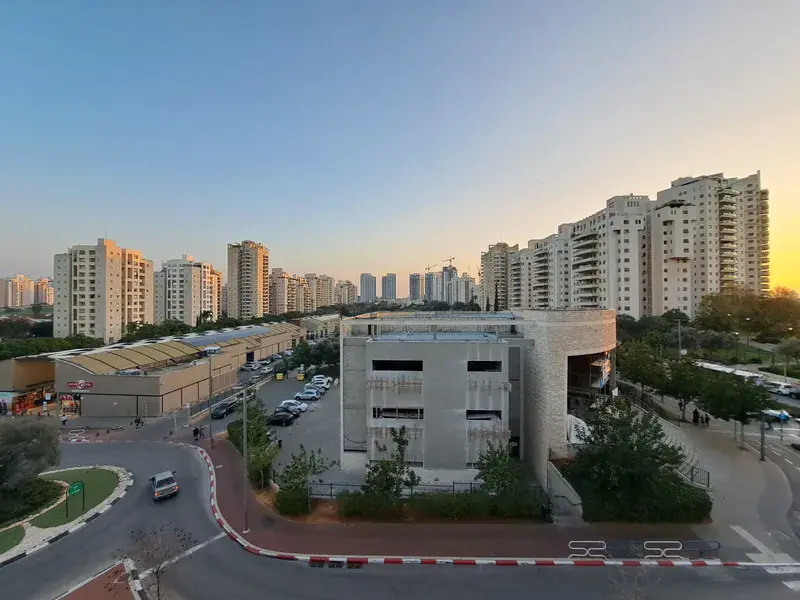
The suburb 20 minutes from Tel Aviv where a new Israeli tax law lets US remote workers keep nearly 100% of their salary — and an organized Anglo community makes the whole thing work.
If you earn a US salary and you're even vaguely Jewish-eligible, Israel quietly passed one of the most aggressive geo-arbitrage packages in the world this year. And the best address to make it work isn't Tel Aviv — it's the small, leafy suburb next to a major university that most Americans have never heard of.
Welcome to Givat Shmuel.
At roughly 25,000 residents and sandwiched between Ramat Gan and Petah Tikva, Givat Shmuel won't appear on anyone's "coolest neighborhoods in Israel" listicle. That is precisely the point. While American tech workers compete for overpriced apartments in Tel Aviv's Florentine or Rothschild corridors, a quietly growing wave of Anglo olim (new immigrants) has figured out that Givat Shmuel gives you everything Tel Aviv offers — the jobs, the energy, the startup culture — at a fraction of the price, with a plug-and-play English-speaking community already waiting for you.
Add Israel's landmark 2026 tax reform for new immigrants, and the financial case becomes almost impossible to ignore.

The 2026 Tax Shield: What US Remote Workers Actually Need to Know
Let's get into the headline number first, because it is genuinely extraordinary — but it requires some precision to understand fully.
When the Israeli government announced its new Horaat Sha'a (temporary provision) tax reform in late 2025, Finance Minister Bezalel Smotrich called 2026 the "year of revolution in aliyah." That wasn't hyperbole. For those considering Aliyah (Israel's specific residency and citizenship pathway for those with Jewish heritage), Givat Shmuel is a top choice.
The Two-Layer Tax Benefit
New olim who complete aliyah between November 5, 2025 and December 31, 2026 receive two stacked tax exemptions simultaneously:
Layer 1 — The Classic 10-Year Foreign Income Exemption (Existing Law)
Israel has long offered new immigrants a 10-year exemption from paying Israeli tax on foreign-sourced income. This means your US salary, US brokerage dividends, US rental income, and US retirement distributions remain untaxed in Israel for a full decade. This law is unchanged and remains fully in force for 2026 arrivals.
Layer 2 — The NEW 2026 Israeli Income Exemption
This is what's new. The Knesset's Finance Committee advanced legislation granting a graduated exemption from Israeli income tax on Israeli-sourced earned income for qualifying new arrivals. The structure looks like this:
Tax Year | Exemption Rate | Income Cap (Approx. USD) |
|---|---|---|
2026 | 0% | Up to ~$183,000 (₪600K) |
2027 | 0% | Up to ~$305,000 (₪1M) |
2028 | 0% | Up to ~$305,000 (₪1M) |
2029 | 10% | Up to ~$107,000 (₪350K) |
2030 | 20% | Up to ~$46,000 (₪150K) |
Note: Income caps are approximate USD equivalents at current exchange rates. The law applies to earned income — salary and self-employment — not passive income like dividends or rent.
Important caveat: As of publication, this legislation has passed the Finance Committee and is moving through final Knesset readings as part of the 2026 state budget. The bill is not yet fully signed into law. Consult a qualified Israeli tax attorney before making financial decisions based on this benefit — the timeline and caps are subject to minor changes before final passage.
The American Remote Worker Scenario
Here is where Givat Shmuel becomes a genuine geo-arbitrage case study. Consider a US tech professional earning $150,000 per year in remote income from a US employer:
- Israeli tax on US salary: ₪0. Foreign-sourced income is fully exempt under the existing 10-year rule — regardless of the new 2026 reform.
- US federal tax: Potentially reduced by the Foreign Earned Income Exclusion (FEIE), which allows qualifying expats to exclude up to approximately $132,000 in earned income per year.
- Net result: With proper structuring, a US remote worker living in Givat Shmuel may owe very little in combined US and Israeli income tax for several years — while their cost of living drops significantly from a US major city.
This combination — the 10-year foreign income exemption stacked with the FEIE — is what makes Israel uniquely compelling for American tech workers in a way that most other geo-arbitrage destinations cannot match.
One more bonus: The Knesset recently also passed a separate bill exempting US olim from making National Insurance Institute (Bituach Leumi) contributions for five years after aliyah, since US citizens remain obligated to pay US Social Security taxes.
⚠️ Disclaimer: Tax law is complex, especially at the intersection of two countries. Nothing here constitutes legal or financial advice. Always work with a CPA experienced in both US and Israeli tax law before your aliyah. The FEIE has qualifying requirements including the bona fide residence test or physical presence test that must be met.
Why Givat Shmuel, Not Tel Aviv?
Fair question. If you're earning a US salary, why not just live in the coolest city in the region?
Three reasons: cost, community, and commute.
Cost
A one-bedroom apartment in Tel Aviv's desirable neighborhoods runs $2,000–$3,500/month. The same quality apartment in Givat Shmuel runs $1,150–$1,450/month. For a professional household, that gap — $600 to $2,000 per month — compounds into a significant lifestyle upgrade over five years. You get a bigger apartment, often closer to green space and good schools, in a city with one of Israel's highest socioeconomic ratings (8+ out of 10).
Everyday costs are also lower outside the Tel Aviv core: grocery runs at the local Rami Levy or Shufersal feel less punishing, restaurant meals are cheaper, and parking is not the daily existential battle it is in central Tel Aviv.
Community: The GSC Factor
This is the one that no algorithm will surface for you, and it might be the single most important reason to choose Givat Shmuel over any other suburb.
Givat Shmuel is home to Israel's largest and fastest-growing community of English-speaking lone immigrants — people who moved to Israel without their extended family network. That community has a formal organization built specifically to support you: the GSC (Givat Shmuel Community R.A.), a volunteer-run non-profit with over 900 members.

The GSC is not a Facebook group. It's a structured organization with action groups focused on specific aspects of immigrant life, running Shabbatons, barbecues, weekly Torah classes, open mic nights, and professional development workshops. They produce English-language guides on everything from navigating the local bureaucracy to finding the right accountant. They run career mentorship programs. They have figured out, collectively, every mistake you are about to make — and they will save you from most of them.
"It's amazing what these guys have built on a grassroots level," Benji Davis, Israel Program Manager at Nefesh B'Nefesh, has said of the GSC. "The community is the primary reason that so many prospective young olim ask us about Givat Shmuel."
For American tech workers making aliyah solo — without parents, cousins, or childhood friends nearby — this is not a nice-to-have. It's the infrastructure that makes the whole thing work.
Beyond the GSC, JLIC Mizrachi Givat Shmuel has become a hub for young Anglo Jewish adults seeking community and Torah learning. The city has dedicated Facebook groups and WhatsApp chats for English speakers, and the city's compact geography means Anglos run into each other constantly at the supermarket, the park, and synagogue. The dominant demographic skews toward professionals in their 30s and 40s — exactly the cohort of US tech workers who are considering this move in 2026.
The Commute: Red Line to Tel Aviv
Here is the practical piece that has shifted the calculus for US professionals in 2026: the Tel Aviv Light Rail Red Line runs directly from Givat Shmuel's area through central Tel Aviv.
The Red Line, which opened in August 2023 as the first major phase of the greater Tel Aviv metropolitan light rail system, has fundamentally changed the time cost of living outside the city center. What used to require sitting in grinding Ayalon highway traffic can now be a predictable, air-conditioned train ride. The connection to central Tel Aviv — Rothschild, Allenby, the tech corridor — takes roughly 20 minutes, making Givat Shmuel's lower rents and quieter streets genuinely compatible with a Tel Aviv-based job or coworking life.
Looking ahead, the Purple Line (currently under construction, estimated opening 2027) will add another direct light rail connection through Givat Shmuel, increasing transit options further and likely pushing property values up with it. Buying now — if you are in a position to — means getting ahead of that infrastructure premium.

The Bar-Ilan Factor: Israel's Academic Hub
Givat Shmuel is the home of Bar-Ilan University, one of Israel's leading research universities, with over 22,000 students across programs in law, business, natural sciences, engineering, and Jewish studies.
The presence of Bar-Ilan shapes the city's character in ways that matter to incoming tech professionals. It means a steady influx of young, educated, internationally-minded residents. It means an active conference and lecture circuit. It means coworking energy and intellectual density in a city that doesn't feel like a traditional suburb. It also means a pipeline of university talent for anyone considering starting a business or doing early-stage hiring in Israel's tech ecosystem.
Think of it as the "Cambridge of Israel" effect: the university keeps the city younger, more cosmopolitan, and more intellectually alive than its size would otherwise suggest. Bar-Ilan's international student programs also mean that Givat Shmuel has absorbed generations of English-speaking young Jews — the infrastructure, the cultural vocabulary, and the welcoming attitude toward Anglos is baked into the city's DNA.
What Aliyah Actually Looks Like: The Absorption Package
Beyond the tax benefits, Israel's formal aliyah absorption package through the Jewish Agency provides a material financial cushion for new immigrants. The Sal Klita (absorption basket) includes:
- A one-time financial grant upon arrival (approximately $10,000–$15,000 equivalent for an individual, more for families, paid in shekels over time)
- Discounted Ulpan (intensive Hebrew language school) — often free for new olim
- Housing assistance grants
- Health insurance coverage via the national Kupat Holim system
- Discounted property purchase taxes for a first home
The Health Insurance Gap: One critical logistical note — there is typically a waiting period of around 90 days before new olim are fully enrolled in Israel's national health system (Kupat Holim). During this window, you are technically uninsured.
Recommended Tool
The Health Insurance Gap
This is where SafetyWing Nomad Insurance is specifically useful as bridge coverage: it provides international health and travel insurance on a rolling monthly basis, making it easy to activate before your flight and cancel once your Kupat Holim registration is confirmed.
We may earn a commission at no extra cost to you. Affiliate Disclosure
Moving Your Money: The Practical Layer
One practical area where new olim consistently get tripped up: moving money internationally. Whether you're transferring your sal klita to a US account, paying an aliyah consultant, sending a security deposit from your US bank, or wiring money to a shipper for your container — the traditional banking channels are slow and expensive.
Wise (formerly TransferWise) is the standard solution in the Anglo olim community, and for good reason: it uses the mid-market exchange rate with transparent fees, transfers between Israeli and US bank accounts typically within 1–3 business days, and the Wise multi-currency account lets you hold both USD and NIS in one place. For the first months of aliyah, when you're constantly moving money between two countries, this saves real money. [Open A Wise Account Here →]
The Bureaucracy: Getting Help
Let's be honest: Israeli bureaucracy can be genuinely challenging. Between the National Insurance Institute, the tax authority, the Ministry of Interior, the Jewish Agency, the municipality, and your bank — all largely operating in Hebrew — the first six months of aliyah involve a lot of paperwork, a lot of offices, and the occasional moment of existential crisis.
This is partly what the GSC exists to smooth. But for your formal aliyah documentation and pre-arrival eligibility check, working with a professional Aliyah consultant is worth every shekel. Organizations like Nefesh B'Nefesh offer structured guidance and support. For document preparation and verification,
Recommended Tool
Check Your Visa Requirements for Israel
VisaHQ provides professional assistance with the specific paperwork requirements, which can be significant depending on your family situation, birth country, and Jewish eligibility documentation
We may earn a commission Affiliate Disclosure
A Realistic Cost of Living Snapshot
Here is an honest monthly budget for a single professional in Givat Shmuel living a comfortable mid-range lifestyle in 2026:
Expense | Monthly Cost (USD approx.) |
|---|---|
1BR apartment (center) | $1,350–$1,500 |
Groceries | $350–$450 |
Utilities (electric, internet, water) | $200–$275 |
Mobile plan | $8–$15 |
Dining out (casual, 3–4x/week) | $300–$450 |
Transportation (light rail + occasional rideshare) | $80–$150 |
Gym | $90–$120 |
Miscellaneous | $200–$300 |
Total | ~$2,600–$3,260/month |
Compare that to $6,000–$9,000/month for a comparable lifestyle in San Francisco, New York, or Seattle, and the geo-arbitrage math becomes very clear. A US remote worker earning $120,000/year and spending $36,000/year in Givat Shmuel is saving $50,000–$80,000 annually compared to their US lifestyle — while potentially paying close to zero in combined income taxes for the first several years.
Use the RewireAbroad FIRE Calculator → to run your personal numbers. With a 1-bedroom apartment running around $1,400/month, your FIRE number in Givat Shmuel could be dramatically lower than your current US projection.
Safety, Climate, and Quality of Life
Givat Shmuel scores 90/100 on the Numbeo Safety Index — genuinely low crime by any international standard. Violent crime is rare. The main considerations for expats are the broader regional security dynamics that affect Israel as a whole, rather than anything city-specific. The city has well-maintained civil defense infrastructure given its proximity to Tel Aviv.
The climate is classic Mediterranean: hot and dry from June through August (averaging 32°C/90°F), mild and occasionally rainy from December through February. Spring (April–May) and fall (October–November) are exceptional — the kind of weather that makes outdoor dinners, hiking the nearby Judean foothills, and day trips to Jerusalem or the Dead Sea feel like a permanent feature of life rather than a weekend event.
Healthcare is excellent. English-speaking doctors are widely available, both in the public Kupat Holim system and private clinics. Pharmacies are abundant.
Internet speeds average 150 Mbps, making remote work reliably functional. For coworking, the WeWork at Dubnov 8 in Tel Aviv (about 20 minutes by rail) is the premium option; local alternatives include Be All in nearby Bnei Brak (~$220/month) and Regus in the adjacent Giborim Towers in Ramat Gan (~$250/month).
The Honest Cons
No guide is worth reading if it only tells you the good parts. Givat Shmuel has real limitations:
Cost is rising. Demand from Anglo olim has pushed rents up meaningfully over the past three years. It is cheaper than Tel Aviv, but it is not cheap by Israeli standards. Expect to pay a premium for any apartment marketed in English or near Bar-Ilan.
Hebrew is required for depth. English gets you far in Givat Shmuel — farther than almost anywhere else in Israel outside central Tel Aviv. But navigating local government offices, resolving billing disputes, understanding building management meetings, or integrating with Israeli neighbors beyond small talk all require Hebrew. Budget for Ulpan seriously.
Nightlife is minimal. This is a family city with a strong religious character. If your social life in the US revolved around bars, clubs, or late-night culture, Givat Shmuel will feel quiet. Tel Aviv is 20 minutes away for that, but you won't have it on your doorstep.
Security context. Israel is a country that lives with ongoing security complexity. While day-to-day life in Givat Shmuel is normal and calm by any measure, you should understand what sirens mean, where the building safe room (mamad) is in your apartment, and how to use the Home Front Command app. Most olim adjust to this within months; it becomes part of the background of life. But it is real, and prospective movers should factor it in honestly.
Ready to Rewire your Life?
Sign up to receive updates and insights.
By submitting your email address, you will receive a free subscription to RA Postcards and special offers from Rewire Abroad and our affiliates. You can unsubscribe at any time, and we encourage you to read more about our Privacy Policy.
Your Next Steps
If Givat Shmuel is calling, here is a sensible sequence:
- Check your aliyah eligibility — Document requirements vary significantly by country of origin and Jewish lineage. Use [VisaHQ →] or contact Nefesh B'Nefesh to understand your pathway. If you're eligible and considering 2026, time is a factor: the new tax reform window closes December 31, 2026.
- Get a US/Israel tax consultation — Before you do anything else, speak with a CPA who specializes in both US and Israeli tax law. The FEIE and the Israeli 10-year exemption interact in ways that require planning, especially if you have foreign companies, trusts, or complex investment structures.
- Open a Wise account — [Wise →] lets you hold USD and NIS simultaneously and transfer between countries at real exchange rates. Set this up before you arrive.
- Book bridge health insurance — [SafetyWing →] covers the gap between arrival and Kupat Holim enrollment. Start coverage the day you board the plane.
- Connect with the GSC — Find the Givat Shmuel Community (R.A.) through Nefesh B'Nefesh or their community channels before you move. Meeting people who have already navigated what you're about to navigate is worth more than any guide.
- Run your FIRE numbers — Use the RewireAbroad Geo-Arbitrage Calculator → and FIRE Calculator → to model what Givat Shmuel's cost of living does to your retirement timeline.
- Explore all Israel pathways — See the full RewireAbroad Israel Country Guide → for visa pathways, national healthcare, and city comparisons across the country.
Frequently Asked Questions ❓
Click any question to expand the answer.
The Bottom Line
Givat Shmuel is not for everyone. If you want nightlife and a cosmopolitan street-level experience right outside your apartment, look at central Tel Aviv. If you want rock-bottom costs and rural quiet, look elsewhere in Israel.
But if you are a US tech worker or remote professional who is Jewish-eligible, earning a US salary, and willing to do the work of aliyah — Givat Shmuel is close to uniquely positioned in 2026. The tax window is real, the community infrastructure is real, the commute to Tel Aviv is real, and the financial gap between what your income can build here versus in a major US city is very, very real.
Finance Minister Smotrich called 2026 the "year of revolution in aliyah." Whether or not you agree with his politics, the financial architecture he is describing — zero tax on Israeli income, zero tax on foreign income, no National Insurance contributions, an organized absorption package, and an established Anglo community in a high-quality suburb 20 minutes from a major city — is worth taking seriously.
The window closes December 31, 2026.
Adonis Villanueva
Adonis Villanueva is a cloud architect and the creator of RewireAbroad, a data-driven platform focused on helping people achieve greater freedom through international living. His work explores geoarbitrage, relocation strategy, visas, taxes, healthcare, and financial independence, with an emphasis on helping readers make informed decisions about living, working, and retiring abroad.
Rewire AbroadRewire Abroad is reader-supported. Some links in this article are affiliate links — we may earn a commission at no cost to you. All editorial content reflects our independent research and analysis. Nothing in this article constitutes legal, tax, or financial advice. Tax laws are complex and change frequently; consult a qualified professional before making decisions based on any information here.

Guide to Living and Retirement: Costs, Visas, and Essentials in Croatia
Everything you need to know about retiring in Croatia—visas (90-day, retirement, digital nomad) to living costs, healthcare, and retirement locales.
From Tech Layoff to Early Retirement: The 18-Month Abroad Acceleration Plan
Learn how one tech worker turned job loss into early retirement by relocating smart, cutting costs, and reclaiming freedom—without waiting for 65.

Move to Poland: The Complete Guide for Expats, Retirees, and Remote Workers
Discover why Poland is Europe's hidden gem for retirement and expat living. Complete guide for visas, cost of living, healthcare, and lifestyle.

The Digital Nomad Tax Trap: 5 Countries That Will Audit Your 'Tourist' Income
Portugal hit remote workers with $47K tax penalties. EU audit rates are up 300%. Here's which countries flag tourist-visa workers and how to stay legal.