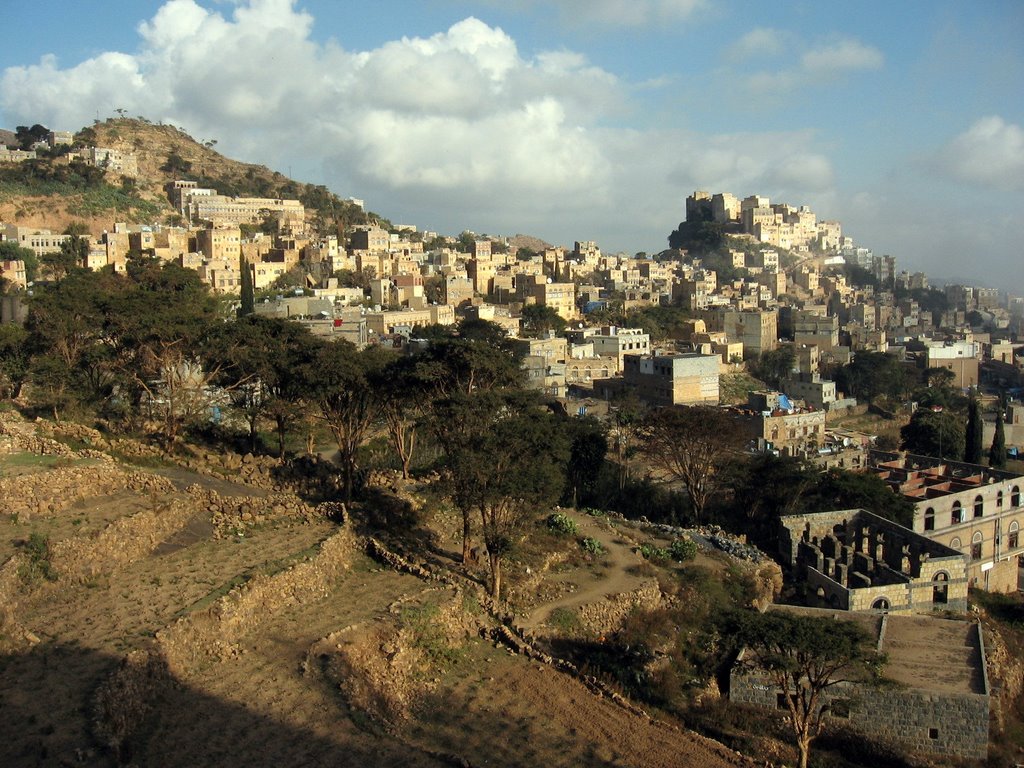
Al Mahwit, Yemen
Data updated Sep 3, 2026
📊 Scores
Best fit: Retiree (score: 13)
Agriculture dominates Al Mahwit's economy, with qat and coffee cultivation on terraced mountain slopes providing most livelihoods. The civil war has gutted formal employment; most income now comes from subsistence farming, small-scale trade, and remittances from Yemenis abroad. There are virtually no multinational employers or stable job markets for expats. Economic activity has contracted sharply since 2014.
Rent is negligible ($20–50/month for basic housing), but everything else is expensive due to currency collapse and supply chain breakdown. Healthcare is minimal—serious illness requires travel to Sana'a or abroad. Arabic is essential; English is rare. Bureaucracy is chaotic; government services are barely functional. Fuel shortages, electricity blackouts, and water scarcity are constant. Internet is unreliable.
Winters are cool and pleasant at 2,000m elevation; summers are mild. Food is simple—bread, beans, local vegetables. The expat community is essentially nonexistent outside NGO workers. Weekends mean hiking terraced valleys or visiting Shibam Kawkaban's stone fortresses if security allows. Al Mahwit suits only NGO staff, researchers, or those with deep family ties—not digital nomads or FIRE seekers.
🏚️ Cost of Living
If your income is in another currency, bank FX fees add up every month. A multi-currency account can cut that cost.
See low-fee transfersWe may earn a commission at no cost to you.
💰 Real Spend Reports
🛡️ Safety & Crime
(Higher is safer)
(Lower is safer)
Al Mahwit is a mountainous city in northwestern Yemen with limited expat presence and minimal tourism infrastructure. Day-to-day safety depends heavily on your social connections and local standing. Nighttime movement is generally restricted; most residents stay home after dark. The city feels relatively calm compared to conflict zones, but this reflects low activity rather than genuine security—it's not a place where you can walk freely or operate independently as a foreigner.
Petty theft and opportunistic crime occur, particularly targeting outsiders perceived as wealthy. Scams involving money exchange and unofficial transactions are common. Violent crime is less frequent than in major Yemeni cities, but armed groups, tribal disputes, and kidnapping of foreigners remain real risks. Solo female travelers face significant cultural and safety barriers. Avoid displaying valuables, traveling alone at night, and drawing attention to your foreign status.
Yemen is in active conflict with ongoing civil war, political fragmentation, and weak state authority. Al Mahwit has experienced fighting between Houthi forces and other armed groups. Police are unreliable and often complicit in corruption. Medical facilities are severely limited. The U.S. State Department advises against all travel to Yemen. For an American considering relocation, Al Mahwit presents extreme risks: no reliable security infrastructure, limited emergency services, and genuine danger from armed conflict. This is not a viable option for remote work or retirement.
Al Mahwit has a safety index of 30/100. Petty theft and lost belongings are the most common problems for newcomers. Compare travel insurance before you go.
Compare travel insuranceWe may earn a commission at no cost to you.
🏥 Healthcare
🌤️ Climate
Best Months
Climate Notes
Al Mahwit has a mild highland climate with cool winters (November–February) and warm summers (June–August), offering relief from Yemen's coastal heat due to its 2,000m elevation.
💻 Digital Nomad
Community Notes
| Name | Price/mo | Notes |
|---|---|---|
| Al Mahwit Business Center | $50 | Located in the heart of Al Mahwit, this center likely offers basic office amenities such as desks, internet, and printing services. It's a practical option for digital nomads seeking a functional workspace in a central location. |
| Yemen Future Center | $40 | While primarily a training center, Yemen Future Center may offer desk space and internet access to remote workers. Check for availability and pricing, as it could provide a community-focused environment in Al Mahwit. |
Working remotely from Al Mahwit? Nomad health insurance covers you across borders, month to month.
See nomad insuranceWe may earn a commission at no cost to you.
🧳 Expat Life
Expat Life Notes
Remote village in the Yemeni highlands. Currently unsafe for travel or residency due to ongoing instability.
Pros
- ✓ Terraced agriculture scenery
Cons
- ✗ Severe safety risk
- ✗ No infrastructure
- ✗ Isolated
Could living/working in Al Mahwit cut years off your work life?
With a 1-bedroom in the center at $96/mo, your FIRE number here might be much lower than you think.
Moving to Al Mahwit? Estimate what an international move would cost and compare mover quotes.
Estimate my move costShare This Guide
Al Mahwit won't stay this cheap forever.
Cost-of-living and visa updates for Al Mahwit and the rest of Yemen. Free with RA Postcards.
By submitting your email address, you will receive a free subscription to RA Postcards and special offers from Rewire Abroad and our affiliates. You can unsubscribe at any time, and we encourage you to read more about our Privacy Policy.