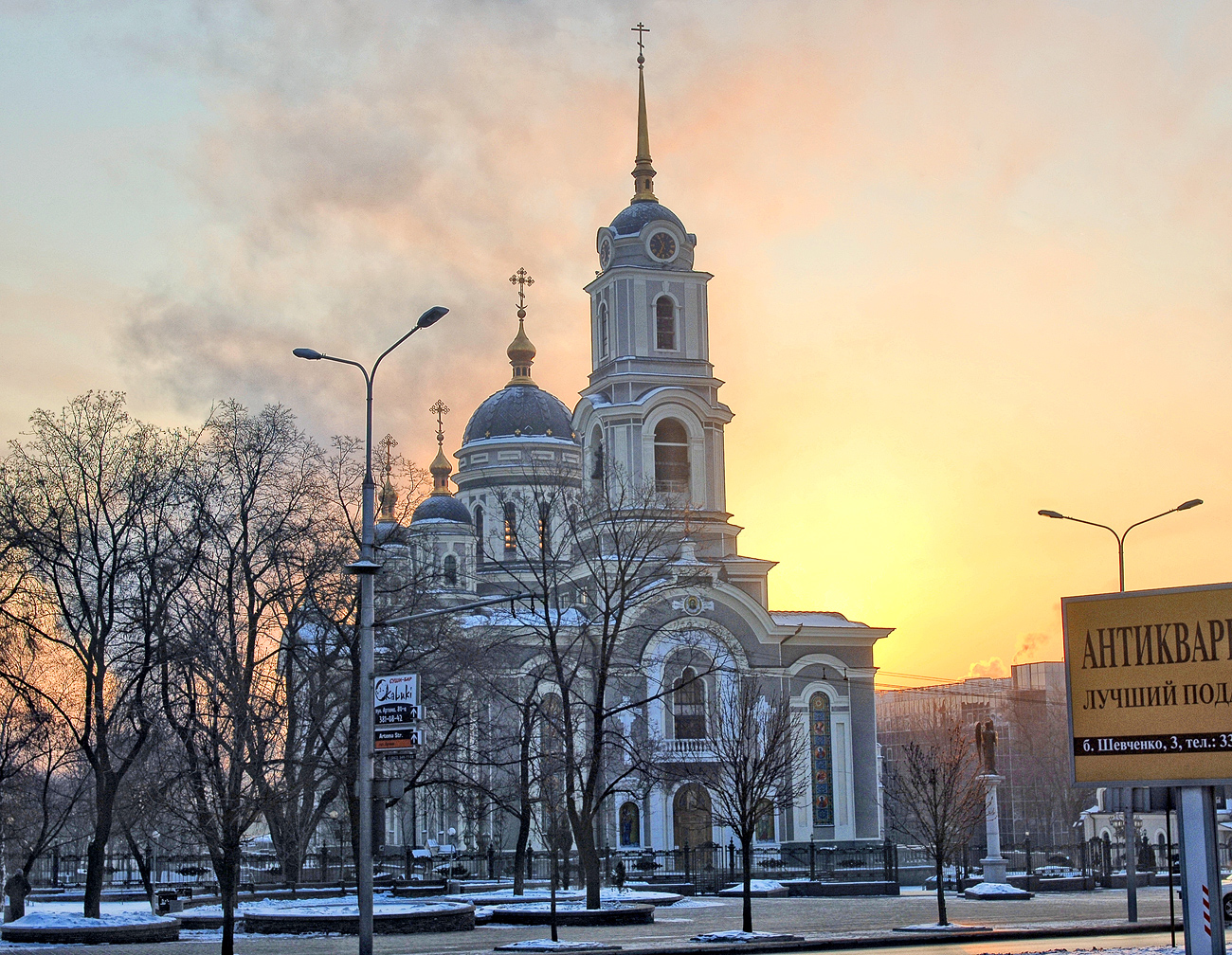
Donetsk sits in eastern Ukraine at 169 m above sea level, a city of 927 thousand people on the Europe/Kyiv clock, with a continental climate that brings cold winters and warm summers. It is a major industrial center, and daily life runs on a steady rhythm of work, markets, and neighborhood routines. For newcomers, the practical question of where to settle has a simple answer in the available information: no popular expat neighborhoods are identified, and the expat community size is none. That means there is no established enclave to slot into, and housing choices are made on the open market rather than by following a well-worn expat trail. The city center and the areas outside it are the two broad options, and the rent gap between them is wide enough to shape everything else about a budget.
Living costs in Donetsk are low by international standards, and the numbers make the case plainly. A one-bedroom apartment in the city center rents for $334/mo, while the same outside the center drops to $134/mo. Three-bedroom units run $1,335/mo in the center and $668/mo outside it. Utilities come to $96/mo, internet is $7/mo, and a mobile phone plan is $6/mo. A monthly public transport pass costs $22/mo, a gym membership is $29/mo, an inexpensive restaurant meal is $5 per person, a mid-range restaurant meal for two with three courses is $31, and a cappuccino is $2. Excluding rent, a single person spends about $420/mo and a family of four about $1,200/mo. Tier totals for a single adult, rent included, are $307/mo at the budget level, $416/mo at mid-range, and $682/mo at the comfortable level. Against that, the average monthly net salary is $623/mo, and the cost of living index is 25/100 with New York City at 100. The arithmetic is unforgiving for anyone earning locally and generous for anyone arriving with outside income.
Safety and health infrastructure demand clear eyes. The safety index is 30/100 and the crime index is 70/100, where a lower crime figure would be safer. Air quality sits at 62 on an index where lower is better. Healthcare quality is rated poor, and English proficiency is limited, which matters when navigating appointments and paperwork without Ukrainian or Russian. The overall expat score is 48/100, the retiree score is 37/100, and the digital nomad score is 39/100. Average internet speed is 10 Mbps, workable for messaging and basic browsing but not for heavy data work. The FIRE score of 73/100 stands out as the one strong mark, reflecting how far a dollar stretches when housing and daily costs are this low.
For stays, the Ukraine Digital Nomad Visa requires a minimum monthly income of $2,000/mo, a threshold that sits far above the local average monthly net salary of $623/mo and effectively reserves the route for remote workers paid from abroad. Arrival is by road or rail from elsewhere in the region, and once in the city the $22/mo transport pass covers the daily commute. Given the combination of very low rents, a poor healthcare rating, a safety index of 30/100, no expat community, and limited English, Donetsk suits a narrow profile: the remote earner chasing a FIRE score of 73/100, the long-stay budget optimizer who can handle the language barrier and the healthcare gap, and anyone whose income is anchored outside the local job market. It does not suit those who need a built-in social scene, strong medical services, or a salary earned in Donetsk.