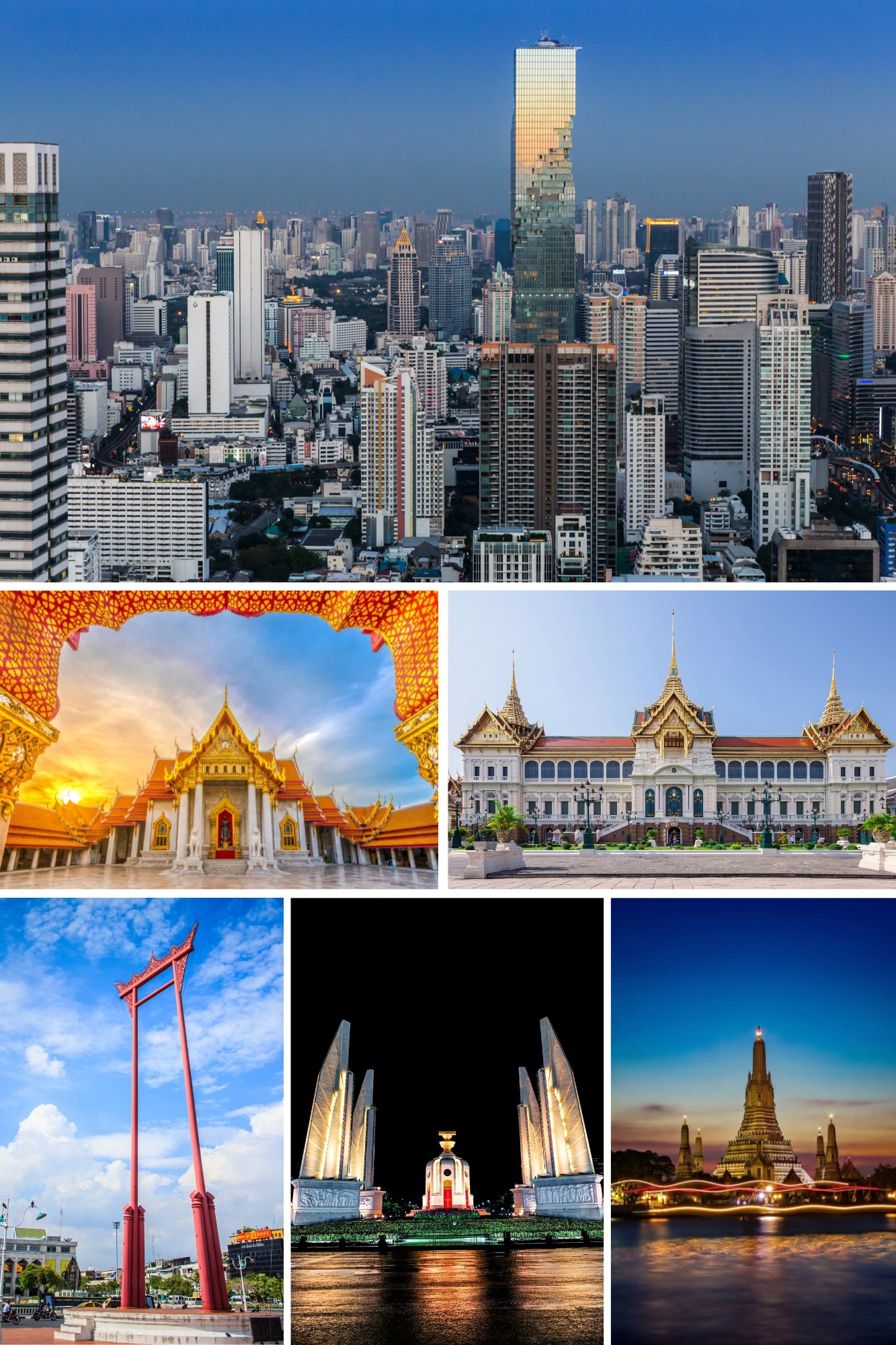
Bangkok sits in the heart of Southeast Asia on the Chao Phraya River delta, just 2 m above sea level and 17 km from DMK, the nearest airport. The city runs on Asia/Bangkok time and lives under a tropical savanna climate that ranks among the hottest on earth by average high, so newcomers learn quickly to schedule errands around the midday heat. With 11 million residents, Bangkok is vast, but expats tend to cluster in a handful of well-worn districts: Sukhumvit, Silom, Ari, and Thonglor. Each has its own rhythm, from the high-rise condos and international schools of Sukhumvit to the cafe-lined sois of Ari, and the large and active expat community means you are never far from someone who has already figured out the city.
The numbers tell a story of remarkable range. A one-bedroom apartment in the city center rents for $676/mo, while the same outside the center drops to $346/mo. Three-bedroom units run $2,005/mo centrally and $735/mo farther out. Utilities average $107/mo, internet $18/mo, and a mobile phone plan $15/mo, with a monthly public transport pass at $35/mo and a gym membership at $58/mo. A single adult can live on a budget tier total of $508/mo with rent included, step up to a mid-range tier at $747/mo, or settle into a comfortable tier at $1,133/mo. Excluding rent, a single person spends about $700/mo and a family of four about $2,554/mo. Everyday pleasures stay cheap: an inexpensive restaurant meal costs $3 per person, a cappuccino $3, and a three-course mid-range dinner for two $36. Against all this, the average monthly net salary locally is $614/mo, and the cost of living index sits at 42/100 with New York City at 100, which explains why so many remote workers and retirees treat Bangkok as a base rather than a splurge.
Safety is a mixed but manageable picture. The safety index is 55/100 and the crime index 45/100, where lower is safer, so ordinary precautions go a long way. Air quality is the bigger daily concern, with an air quality index of 110, and many residents keep an eye on seasonal haze. Healthcare quality is rated Good, and English proficiency is common in tourist areas, which smooths everything from pharmacy visits to hospital check-ins. The large and active expat community adds another layer of support, with informal networks and long-established neighborhoods where you can find familiar services and advice.
For stays, Thailand offers the Thailand Retirement Visa (Non-OA), which requires a minimum monthly income of $30,000/mo, and the Thailand Destination Thailand Visa (DTV) for remote workers. Arrivals typically land at DMK, 17 km from the city. With an overall expat score of 77/100, a FIRE score of 76/100, a retiree score of 61/100, and a digital nomad score of 79/100, Bangkok suits remote professionals, early retirees, and anyone chasing a low cost of living without giving up big-city infrastructure. Internet speeds average 150 Mbps, so the work-from-anywhere crowd has little to complain about, and the city rewards those who treat it as a long-term home rather than a quick stop.
Estimate the cost of moving to Bangkok, Thailand
Get a free moving cost estimate for moving to Bangkok, Thailand. Takes 10 seconds.
How much are you shipping?
When are you moving?
Powered by Sirelo. Free quotes from international movers.
🏚️ Cost of Living
💰 Budgets and Costs
$649/mo, one person, rent included
Selected: budget lifestyle
Bangkok at the budget tier comes to about $649 a month for one adult, with $346 of that going to rent. Beyond rent the estimate covers $87.00 on groceries, $12.00 on dining out, $30.00 on entertainment and lifestyle, $139 on utilities and connectivity and $35.00 on transport.
Rent
$346/mo
1BR outside the centre
Groceries
$87.00/mo
75% of mid-range grocery spend
Dining out
$12.00/mo
4 inexpensive meals
Entertainment & lifestyle
$30.00/mo
1 cinema trip, 8 cappuccinos
Utilities & connectivity
$139/mo
utilities, mobile, internet
Transport
$35.00/mo
Monthly pass
Budgets (excl. rent)
Single person$303/mo
Excludes rent. The total above is all-in, rent included.
$775/mo, one person, rent included
Selected: mid-range lifestyle
Bangkok at the mid-range tier comes to about $775 a month for one adult, with $346 of that going to rent. Beyond rent the estimate covers $117 on groceries, $30.00 on dining out, $108 on entertainment and lifestyle, $139 on utilities and connectivity and $35.00 on transport.
Rent
$346/mo
1BR outside the centre
Groceries
$117/mo
Staples basket scaled to a full month
Dining out
$30.00/mo
10 inexpensive meals
Entertainment & lifestyle
$108/mo
gym, 2 cinema trips, 12 cappuccinos
Utilities & connectivity
$139/mo
utilities, mobile, internet
Transport
$35.00/mo
Monthly pass
Budgets (excl. rent)
Single person$429/mo
Excludes rent. The total above is all-in, rent included.
$1,292/mo, one person, rent included
Selected: comfortable lifestyle
Bangkok at the comfortable tier comes to about $1,292 a month for one adult, with $676 of that going to rent. Beyond rent the estimate covers $163 on groceries, $133 on dining out, $146 on entertainment and lifestyle, $139 on utilities and connectivity and $35.00 on transport.
Rent
$676/mo
1BR in the centre
Groceries
$163/mo
140% of mid-range grocery spend
Dining out
$133/mo
6 inexpensive meals + 6 mid-range meals
Entertainment & lifestyle
$146/mo
gym, 4 cinema trips, 20 cappuccinos
Utilities & connectivity
$139/mo
utilities, mobile, internet
Transport
$35.00/mo
Monthly pass
Budgets (excl. rent)
Single person$616/mo
Excludes rent. The total above is all-in, rent included.
Estimates for one adult, built from this city's average prices and the usage shown for each tier. Your spending will differ with how often you eat out and where you live.
A 1BR in the center runs about $675.8/mo. If your income is in another currency, bank FX fees add up. A multi-currency account can cut that cost.
Bangkok feels reasonably safe for daily life, with heavy police presence and active street life even after dark in central areas. Expats report comfortable walkability in established neighborhoods like Sukhumvit, Silom, and Thonglor, though situational awareness remains important. The city's reputation for danger is often overstated; serious violent crime against foreigners is relatively rare, though petty crime and scams are more common than in Western cities.
Petty theft, bag snatching, and motorcycle taxi scams are the primary concerns—avoid displaying expensive jewelry or leaving valuables unattended. Drink spiking and overcharging at tourist bars occur regularly; stick to reputable establishments. Solo female travelers should exercise standard precautions, particularly late at night in red-light districts (Patpong, Nana). Avoid unlicensed taxis; use Grab or hotel-arranged transport. Counterfeit goods and gem scams target tourists specifically.
Thailand's political landscape has experienced periodic instability, with military coups and protests historically concentrated in specific areas (Democracy Monument, Government House). Corruption exists but rarely affects expats directly; police are generally professional with foreigners, though bribery expectations can arise in minor traffic stops. For Americans considering relocation, Bangkok remains a stable, established expat hub with reliable infrastructure and medical care. Exercise normal urban caution rather than heightened concern.
Bangkok has a safety index of 61.63/100. Petty theft and lost belongings are the most common problems for newcomers. Compare travel insurance before you go.
See how Bangkok's digital nomad life compares with New York City
🧳 Expat Life
English Proficiency
Common in Tourist Areas
Expat Community
Large & Active
Top Neighborhoods
Sukhumvit, Silom, Ari, Thonglor
Banks Nearby
427
ATMs Nearby
337
Expat Life Notes
A global expat favorite offering world-class food, affordable luxury, and a high quality of life. Highly accessible for newcomers.
Pros
✓ Excellent value for money
✓ World-class healthcare
✓ Vibrant nightlife and dining
Cons
✗ Intense traffic and pollution
✗ Extreme heat
✗ Bureaucratic visa processes
🏘️ Neighborhoods in Bangkok
Notable areas of Bangkok, with descriptions adapted from public reference sources. Rent figures are Numbeo's city-wide averages, not prices for a specific area.
Conditions can change from one block to the next, and these descriptions are general guides, not safety assessments. Before choosing where to stay or live, check current travel advisories, talk to people who live there, and visit in person if you can.
Siam Square
Siam Square is an area of Bangkok, Thailand, and its BTS Skytrain station is often considered the center of the city. The area includes Ratchaprasong, Phloen Chit Road, and Chulalongkorn University. Its first buildings went up in the 1970s on land belonging to Chulalongkorn University. Despite the name, it is not a square in the traditional sense but a warren of small sois with tiny boutiques, restaurants, cafés, record stores, and bookshops.
Numbeo city average, center: $676 (updated Nov 13, 2026)
Sukhumvit is a high-end area of Bangkok with fancy condominiums, hotels, restaurants, bars and clubs. It has attracted affluent Thais and people from around the world. Following the road southeast, the area changes character and becomes a residential neighborhood similar to other suburban areas in Bangkok. Sukhumvit Road is a major road in Thailand and one of the four major highways of Thailand. The road was opened in 1936 and is named after Phra Bisal Sukhumvit.
Numbeo city average, outside-center: $346 (updated Nov 13, 2026)
Silom is a Bangkok area with skyscrapers bearing the names of financial institutions. After nightfall, the small sois between Silom Road and Surawong Road fill with people out for a good time, and Patpong's well-known red light district is often sought out. Bang Rak, the former trade quarter, is included here and has many of Bangkok's top luxury hotels, such as the Oriental. Bang Rak lies on the eastern bank of the Chao Phraya River.
Numbeo city average, outside-center: $346 (updated Nov 13, 2026)
Rattanakosin, also called Rattanakosin Island, is a historic area in Bangkok's Phra Nakhon District, Thailand. The Chao Phraya River borders it on the west, and canals dug as moats for the original fortified city center lie to the east. It sits on the eastern convex bank of a river meander and holds the Grand Palace and the City Pillar Shrine. The district centers on the Grand Palace and Sanam Luang.
Numbeo city average, center: $676 (updated Nov 13, 2026)
Khao San Road is a 410-meter street in central Bangkok's Bang Lamphu area of Phra Nakhon District, built in 1892 under Rama V, roughly 1 km north of the Grand Palace and Wat Phra Kaew. The name means milled rice, recalling the street's role in the rice trade. It draws backpackers with cheap lodging and travel deals. The area is known for scams: avoid tuk-tuks offered by strangers, free rides, and some private bus companies selling VIP trips.
Never enter a tuk-tuk if someone else is trying to convince you Khao San Road is the worst district in Bangkok when it comes to scams and annoyances. Be very skeptical of anyone telling you that your intended destination is closed. If someone offers you a free whole-day tuk-tuk ride, smile faintly and keep on walking. If you agree to this, you probably will get a free tuk-tuk ride all day, but the only thing you will see are dozens of shops where you get tricked into buying worthless gems, while the driver gets a commission. Never enter a tuk-tuk if someone else is trying to get you into one. A recent scam involves cheap transport offers to discos, massage parlours etc. late at night. The unwary who take up these offers will find themselves dropped off on a quiet street (shortcut), where the tuk-tuk has accomplices waiting to assault and rob any gullible tourists. Better pull over a taxi yourself. Beware of private bus companies around Khao San Road offering direct trips from Bangkok to other cities with "VIP buses". Some are reputable and will be able to provide you with a great deal, but many of them are shopfronts for scam artists and dodgy services. The so-called direct "VIP" trips may end up changing three or four uncomfortable minibuses to the destination, and the 10-11 hour trip may as well turn into 17–18 hours.
Dusit is a leafy, European-style district of Bangkok that serves as Thailand's political center. King Rama V built the Dusit Palace there in the early 1900s to escape the heat and chaos of the Grand Palace. The district holds the National Assembly, Dusit Palace, and several ministries, and is connected to Rattanakosin Island by Ratchadamnoen Avenue.
Numbeo city average, center: $676 (updated Nov 13, 2026)
Bangkok has a population of approximately 11,084,201 people.
A single person can expect to spend around $1,690 per month in Bangkok, including rent. A 1-bedroom apartment in the city center costs approximately $676/month.
The nearest airport to Bangkok is DMK, approximately 16.8km away.
Bangkok is considered relatively safe, with a safety index of 61.6. As with any city abroad, expats should research specific neighborhoods before committing to a location.
Bangkok has an average internet speed of 150 Mbps. It is considered a well-established digital nomad destination.
Thailand's Long-Term Resident (LTR) visa, launched in 2022, offers a legal pathway for remote workers earning over $80,000/year from foreign employers. Below that threshold, most digital nomads operate on tourist or METV visas in a legal gray zone — technically prohibited from working, rarely enforced, but a real risk. The Thailand Elite visa ($15,000 one-time) buys long-term stay without work authorization. Always consult a Thai immigration lawyer before committing.
Genuinely excellent at private hospitals. Bumrungrad International, Bangkok Hospital, and Samitivej all have English-speaking staff, short wait times, and costs 40-70% below comparable US or UK care. A specialist consultation runs $30-60; a night in a private hospital room $150-300. Expat health insurance from providers like Pacific Cross or AXA Thailand typically costs $1,200-2,500/year for comprehensive coverage. Public hospitals are cheaper but slower and language barriers are significant.
With a safety index of 55, Bangkok sits in moderate territory — safer than most Latin American capitals, less safe than Tokyo or Taipei. Petty theft, scams targeting tourists (gem scams, tuk-tuk detours), and road accidents are the realistic risks, not violent crime. Traffic fatalities are a genuine concern; Thailand has one of Southeast Asia's highest road death rates. Most long-term expats feel comfortable day-to-day but stay alert in crowded tourist areas and avoid motorbike taxis on highways.
Rental costs vary greatly. You can find a basic studio apartment outside the city center for around $400 USD per month, while a modern one-bedroom condo in a central area like Sukhumvit might cost $800-$1500 USD or more.
Several visa options exist, including retirement visas (if you're over 50 and meet financial requirements), marriage visas, and education visas (for language study). The Tourist Visa (TR) can be extended, but it's not a long-term solution. Consult with a Thai immigration lawyer for the best option based on your circumstances.
Popular expat areas include Sukhumvit (convenient, modern), Silom (business district, nightlife), and Ari (trendy, laid-back). For a more local experience, consider areas like On Nut or Lat Phrao, which are further from the center and more affordable.
Bangkok boasts excellent internet infrastructure. You can expect fast and reliable fiber optic connections in most areas, with speeds of 100 Mbps or more readily available. Mobile data is also affordable and widespread.
Bangkok is a foodie paradise. Street food is incredibly cheap (meals for $1-3 USD), while mid-range restaurants offer delicious Thai and international cuisine for $5-15 USD per person. High-end dining can easily cost $50+ USD per person.
Bangkok has a tropical climate with three main seasons: hot (March-May), rainy (June-October), and cool (November-February). Expect high humidity year-round. The 'cool' season is the most pleasant, but even then, temperatures rarely drop below 70°F (21°C).
Opening a bank account as a foreigner can be challenging but is possible with the right documentation (visa, passport, proof of address). Services like Wise (formerly TransferWise) and Remitly are popular for international money transfers, often offering better exchange rates than traditional banks. ATMs are widely available, but be aware of fees.
English is widely spoken in tourist areas and among younger generations, but less so in local neighborhoods. You can definitely get by without Thai, especially using translation apps, but learning basic phrases will greatly enhance your experience and interactions with locals.
As a US citizen, you're still required to file US taxes even while living abroad. The Foreign Earned Income Exclusion (FEIE) can help you exclude a significant portion of your income from US taxes. Also, be aware of FBAR (Report of Foreign Bank and Financial Accounts) requirements if you have foreign bank accounts exceeding $10,000 USD in aggregate.
Bangkok has a thriving coworking scene. Popular options include WeWork, Spaces, and smaller independent spaces like The Hive and Launchpad. Prices vary depending on the location and amenities, but expect to pay around $150-300 USD per month for a dedicated desk.
Bangkok can be chaotic and fast-paced, especially in the city center. However, it also offers a relaxed and affordable lifestyle, making it attractive to retirees. Many find a slower pace in quieter neighborhoods or by embracing the Thai concept of 'sabai sabai' (relax, take it easy).
Bangkok has a large and diverse expat community. You can easily connect with other expats through online groups (Facebook, Meetup), social events, and shared interests. This can be a great way to make friends, get advice, and combat culture shock.
Comfortable retirement in Bangkok is achievable on a relatively modest income. With $2,000-$3,000 USD per month, you can live comfortably, rent a nice apartment, eat well, and enjoy leisure activities. However, this depends on your lifestyle and spending habits.
Be wary of tuk-tuk drivers offering suspiciously cheap tours, gem scams, and overly friendly strangers offering unsolicited help. Always negotiate prices beforehand and trust your instincts. Using reputable taxi services like Grab is generally safer.
Bangkok has a comprehensive public transportation system, including the BTS Skytrain, MRT subway, buses, and river taxis. The BTS and MRT are efficient for getting around the city center, while buses are more affordable but can be crowded. Taxis and ride-hailing services are also readily available.
Cost-of-living and visa updates for Bangkok and the rest of Thailand. Free with RA Postcards.
By submitting your email address, you will receive a free subscription to RA Postcards and special offers from Rewire Abroad and our affiliates. You can unsubscribe at any time, and we encourage you to read more about our Privacy Policy.