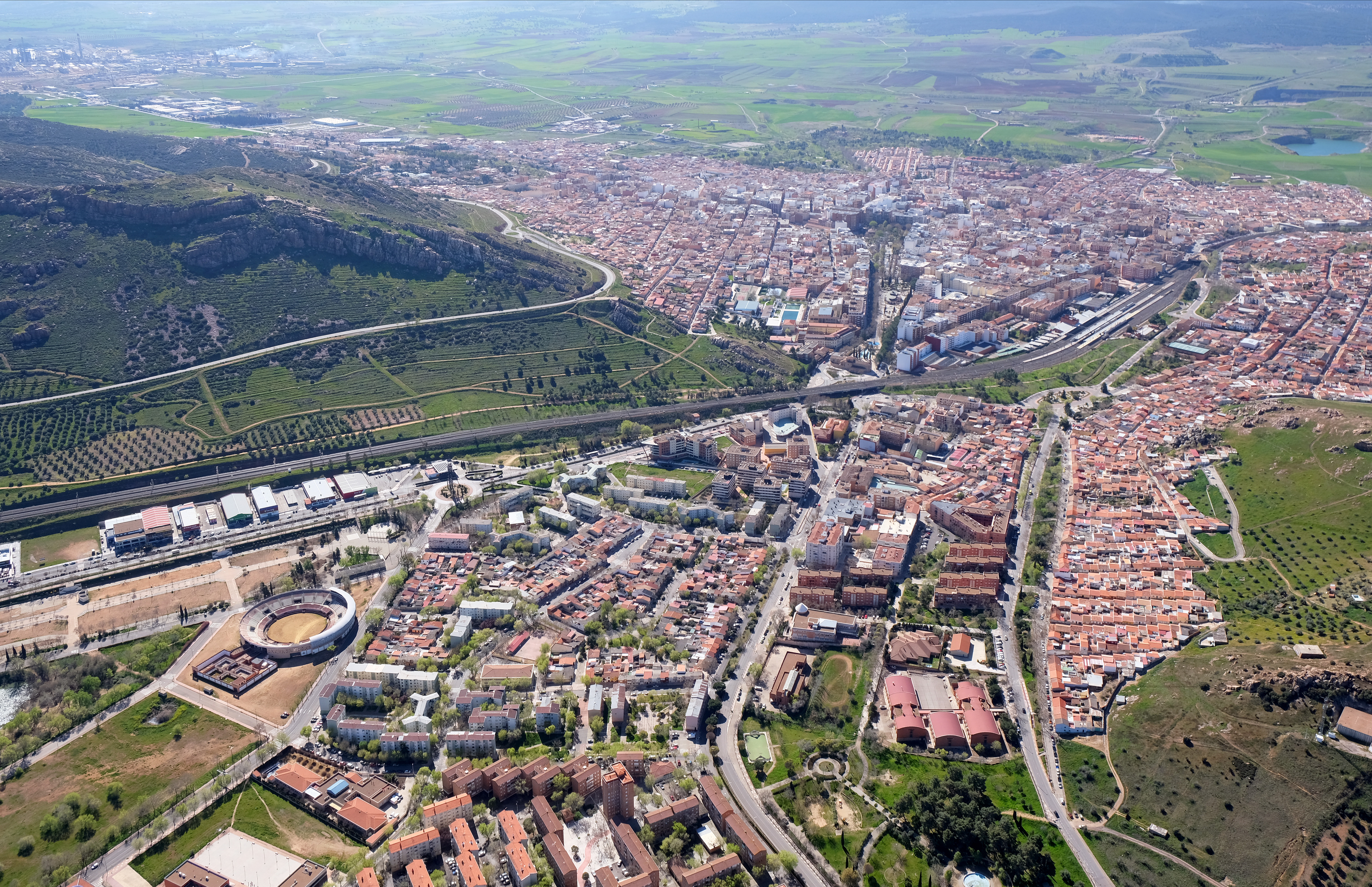
Puertollano sits 700 meters above sea level in Spain's continental Mediterranean climate zone, where summers bring extreme heat and winters turn genuinely cold. The town of 46 thousand people is compact, and the Centro neighborhood is where expats tend to concentrate, drawn by its central services and walkable streets. Life here moves at a slower, more grounded pace than the coastal hubs, with the surrounding landscape of olive groves and mining history shaping a distinctly inland character.
Living costs are strikingly low by American standards. A one-bedroom apartment in the city center rents for $520/mo, while the same unit outside the center costs $280/mo; a three-bedroom in the center runs $673/mo versus $336/mo outside. Utilities run $73/mo, internet $25/mo, and a mobile plan just $8/mo. A monthly public transport pass costs $13/mo, and a gym membership is $39/mo. An inexpensive restaurant meal sets you back $13, a three-course meal for two at a mid-range spot is $25, and a cappuccino costs $2. The overall cost of living index sits at 48/100 compared to New York City. The average local monthly net salary is $1,121/mo, which puts the single-person monthly cost excluding rent at $720/mo and a family of four at $2,400/mo. Budget-tier living for a single adult, rent included, totals $428/mo, mid-range comes to $708/mo, and comfortable living runs $1,072/mo.
Safety is a strong point here, with a safety index of 80/100 and a crime index of just 20/100, meaning the lower crime figure reflects a notably secure environment. Healthcare quality is rated good, and the air quality index of 42 is moderate, acceptable for most people. English proficiency is limited, so daily life rewards some Spanish, but the practical essentials like clinics and pharmacies are reliable and accessible.
For longer stays, Spain's Non-Lucrative Visa requires a minimum monthly income of $2,600/mo, while the Digital Nomad Visa sets the bar at $1,627/mo. The nearest airport is CQM, 18 km away, making regional connections straightforward. Puertollano suits budget-conscious retirees and remote workers who prioritize low costs and safety over a large expat community, which is essentially absent here. The FIRE score of 78/100 reflects strong savings potential, while the retiree score of 61/100 and digital nomad score of 65/100 indicate a solid but not exceptional fit for those groups.