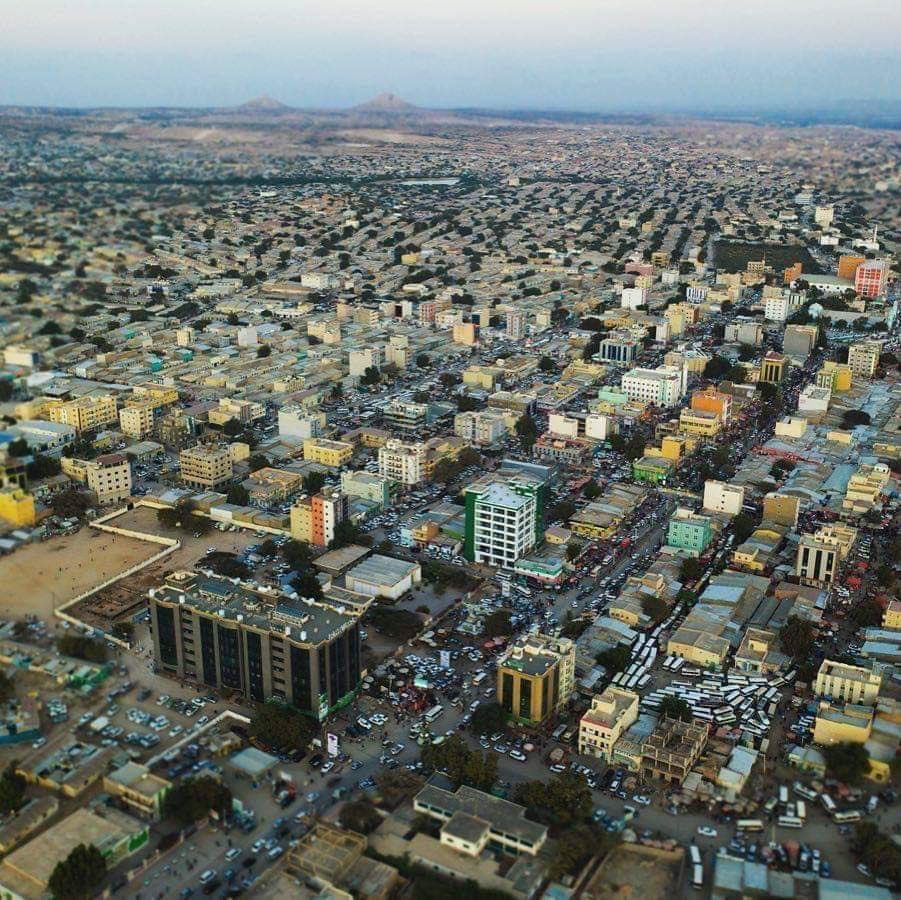
Hargeysa sits at 1334 m above sea level in an arid climate, a highland city of 1.2 million people that keeps its own clock on Africa/Mogadishu time. The dry air and elevation temper the heat, though rainfall is scarce and the landscape stays dusty for much of the year. Expats who settle here tend to cluster in Masala, the neighborhood most often named as a base for newcomers. The city spreads wide and low, with the main commercial streets and guesthouses concentrated near the center while quieter residential areas fan out beyond it. For those arriving from abroad, the small expat community means connections form slowly, often through work, language schools, or the handful of international organizations operating in the region.
Monthly costs in Hargeysa are low by almost any global standard. A one-bedroom apartment in the city center rents for $110/mo, while the same outside the center drops to $70/mo. Families or those needing more space find three-bedroom units at $297/mo centrally or $167/mo farther out. Utilities run about $45/mo, internet $20/mo, and a mobile phone plan just $7/mo. A monthly public transport pass costs $12/mo, a gym membership $38/mo, and an inexpensive restaurant meal about $5 per person. A mid-range dinner for two with three courses comes to $18, and a cappuccino is around $2. Excluding rent, a single person spends roughly $450/mo and a family of four about $1,400/mo. Budget tiers land at $255/mo, mid-range at $370/mo, and comfortable at $458/mo for a single adult with rent included. Against an average monthly net salary of $300/mo, the cost of living index reads 32/100 compared with New York City at 100, which explains why local wages and expat budgets rarely meet in the middle.
Safety requires real attention here. The safety index stands at 30/100 and the crime index at 70/100, where a lower number would be safer. Healthcare quality is rated poor, so anyone with ongoing medical needs should plan for treatment elsewhere or carry comprehensive evacuation coverage. Air quality is comparatively good at 40 on the index, where lower is better. Internet speeds average 5 Mbps, workable for email and messaging but limiting for heavy video calls or large file transfers. English proficiency is limited, so a few words of Somali go a long way in daily errands, and the small expat community means informal support networks are thin.
Visas are arranged through the relevant local authorities before or on arrival, and the process rewards patience and paperwork rather than speed. The nearest airport is HGA, just 6 km from the city, which keeps arrivals and departures simple once flights are confirmed. With an overall expat score of 45/100, a FIRE score of 70/100, a retiree score of 41/100, and a digital nomad score of 41/100, Hargeysa suits a specific profile: the frugal long-stayer, the remote worker chasing a very low burn rate, and the return visitor with family or professional ties. It is not a soft landing for everyone, but for the right person the numbers are hard to argue with.