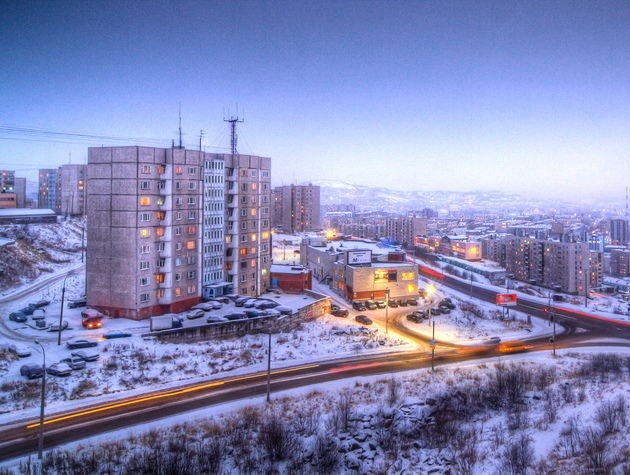
Resource extraction drives everything here — fishing fleets, oil and gas operations, and mineral processing from the Kola Peninsula form the economic backbone. Major employers include Norilsk Nickel, Gazprom subsidiaries, and Arctic shipping companies capitalizing on ice-free port access year-round. The job market heavily favors technical skills in mining, energy, and maritime industries, though tourism around Northern Lights viewing has created seasonal service work. Population has crashed from 468,000 to 264,000 since 1989 as military industries downsized and people fled south.
One-bedroom apartments in the center run $420/month, but heating costs will crush your budget — expect $200+ monthly in winter when temperatures hit -13°C. The trolleybus system works year-round despite Arctic conditions, though you'll need serious winter gear and vitamin D supplements during polar night (November-January darkness). Healthcare exists but specialized services often require trips to Moscow or St. Petersburg. Russian bureaucracy is notoriously complex, and English speakers are rare outside international resource companies.
Midnight sun from May-July creates surreal 24-hour daylight, while polar night plunges the city into months of darkness that genuinely affects mental health. The food scene centers on fresh Arctic seafood and hearty Russian staples, with limited international options. Weekend activities shift dramatically by season — Northern Lights viewing and ice fishing in winter, hiking and white nights photography in summer. The expat community is tiny, mostly resource industry workers on rotational contracts. This suits hardy professionals in extractive industries who can handle extreme isolation and seasonal depression.
Estimate the cost of moving to Murmansk, Russia
Get a free moving cost estimate for moving to Murmansk, Russia. Takes 10 seconds.
How much are you shipping?
When are you moving?
Powered by Sirelo. Free quotes from international movers.
🏚️ Cost of Living
💰 Budgets and Costs
A category breakdown is not available for Murmansk yet. We publish a breakdown only when every category can be priced from local data, rather than showing figures we cannot stand behind.
Rent, 1 bedroom in the centre
$408/mo
Living costs, excluding rent
$580/mo
Still needed for a full breakdown: restaurant prices.
Murmansk feels relatively safe for daily life compared to many Russian cities, with decent walkability during daylight hours. The city has a strong police presence and locals generally move about without excessive fear. However, winters are dark for extended periods, which naturally limits nighttime activity. The overall atmosphere is orderly rather than chaotic, though expats should maintain standard urban awareness.
Petty theft and pickpocketing occur, particularly in crowded markets and public transport during rush hours. Avoid displaying expensive electronics or jewelry. Violent crime against foreigners is uncommon but not unheard of; alcohol-fueled incidents can escalate unpredictably. Solo female travelers should exercise caution in bars late at night. The city center is generally safer than outlying industrial areas. Scams targeting foreigners are less prevalent here than in Moscow or St. Petersburg.
Murmansk's geopolitical position near the Arctic and NATO borders creates underlying tension, though daily life remains stable. Russia's current international isolation and domestic political climate mean police can be unpredictable with foreigners; corruption exists but is less overt than in some regions. For Americans, the current geopolitical environment makes Russia a complicated choice regardless of local safety metrics. Consider whether you're comfortable with restricted freedoms, limited consular support, and potential travel complications before relocating here.
Murmansk has a safety index of 55/100. Petty theft and lost belongings are the most common problems for newcomers. Compare travel insurance before you go.
Located in the city center, Business Center Meridian offers a professional environment with various office solutions, including coworking spaces. It provides essential amenities like high-speed internet, meeting rooms, and administrative support, making it suitable for remote workers seeking a structured workspace.
Regus offers a reliable coworking option in Murmansk, providing a professional and well-equipped workspace. Located centrally, it features amenities like high-speed internet, meeting rooms, and administrative support, ideal for digital nomads needing a consistent and globally recognized brand.
Office Center Arktika provides coworking spaces in a central location, offering a functional and affordable option for remote workers. Amenities include internet access, meeting rooms, and basic office facilities, making it a practical choice for those seeking a budget-friendly workspace.
See how Murmansk's digital nomad life compares with Kropotkin
🧳 Expat Life
English Proficiency
Limited
Expat Community
Very Few
Top Neighborhoods
Oktyabrsky District
Banks Nearby
59
ATMs Nearby
98
Expat Life Notes
The largest city north of the Arctic Circle, Murmansk is a specialized destination primarily for maritime and shipping professionals.
Pros
✓ Arctic scenery and Northern Lights
✓ Strong maritime economy
Cons
✗ Long polar nights
✗ Extremely cold climate
✗ Significant isolation
🏘️ Neighborhoods in Murmansk
Areas of Murmansk that expats often consider.
The US government advises against travel to this country. Check the current government travel advisory before you book.
Conditions can change from one block to the next, and these descriptions are general guides, not safety assessments. Before choosing where to stay or live, check current travel advisories, talk to people who live there, and visit in person if you can.
City Center (Leninsky District)
Bustling, central, convenient amenities
The heart of Murmansk, offering easy access to shops, restaurants, and cultural attractions. Many administrative buildings are located here. While convenient, it can be noisy and crowded, especially during peak hours. Public transport is readily available.
Pervomaysky District
Residential, family-friendly, affordable
A more residential area further from the city center. It's generally quieter and more affordable than Leninsky District. While less touristy, it offers a more authentic glimpse into local life. Russian language skills are essential here.
Oktyabrsky District
Mix of residential, industrial
A mixed district with residential areas and some industrial zones. It's less polished than the city center. While it offers affordable housing options, it may lack the amenities and charm that some expats seek. Public transport is available, but less frequent than in the center.
Severnoye Nagornoye
Quiet, elevated, panoramic views
Located on higher ground, this area offers potentially better views of the city and Kola Bay. It's generally quieter than the city center. However, access can be more challenging, especially during winter months due to snow and ice. Russian language skills are needed.
South District (Yuzhny)
Developing, modern, residential focus
A newer, developing area on the outskirts of Murmansk. It features more modern apartment buildings. While it may lack the historical charm of the city center, it offers potentially more comfortable and updated living spaces. Transportation links are still developing.
Page 1 of 2
Could living/working in Murmansk cut years off your work life?
With a 1-bedroom in the center at $408/mo, your FIRE number here might be much lower than you think.
Murmansk has a population of approximately 264,339 people.
A single person can expect to spend around $1,019 per month in Murmansk, including rent. A 1-bedroom apartment in the city center costs approximately $408/month.
The nearest airport to Murmansk is MMK, approximately 10km away.
Murmansk is considered moderate in terms of safety, with a safety index of 55.0. As with any city abroad, expats should research specific neighborhoods before committing to a location.
Murmansk has an average internet speed of 30 Mbps. It is not yet considered a well-established digital nomad destination.
Heating costs typically run $200-300+ per month during winter months when temperatures average -13°C. Many apartments have Soviet-era heating systems that are inefficient, and the polar night period from November-January means constant heating needs.
Foreign workers can find opportunities with international companies like Norilsk Nickel or Gazprom subsidiaries, but you'll need specialized technical skills and Russian work permits. Most positions are rotational contracts rather than permanent relocation, and Russian language skills are essential outside major international firms.
Polar night (November-January) requires vitamin D supplements, light therapy lamps, and strong mental health strategies as 24-hour darkness genuinely affects mood. Midnight sun (May-July) disrupts sleep patterns, so blackout curtains are essential. Many residents take southern vacations during the darkest months.
Expect to pay around $400-$700 USD per month for a one-bedroom apartment in a decent area like Leninsky District. Prices vary depending on size, location, and amenities, with newer buildings commanding higher rents.
For long-term stays, you'll likely need a work visa sponsored by a Russian employer, or a temporary residence permit based on investment or other qualifying factors. Tourist visas are only valid for short visits, and overstaying is heavily penalized.
Healthcare quality can be variable; while there are modern facilities, older hospitals may lack resources. Finding English-speaking doctors can be challenging, so it's advisable to have a translator or use a private clinic if language is a concern.
Internet speeds in Murmansk are generally good, with reliable connections available in most apartments and cafes. You can expect download speeds of 50-100 Mbps, sufficient for most remote work tasks. Mobile data is also readily available.
Coworking spaces are limited in Murmansk compared to larger cities, but some business centers offer shared office facilities. Check online resources and local business directories for the most up-to-date options.
Navigating Murmansk without Russian can be challenging, as English is not widely spoken. Learning basic Russian phrases is highly recommended. Consider using translation apps and relying on public transportation, which is affordable and relatively efficient.
The expat community in Murmansk is relatively small, primarily consisting of individuals working in the resource industries or with international organizations. Online forums and social media groups can help you connect with other expats.
Opening a bank account in Russia requires a residence permit and can be bureaucratic. International money transfers can be done through services like Wise or Remitly, but be aware of potential fees and exchange rates. ATMs are widely available.
For groceries, look for chains like Magnit and Pyaterochka. For dining, try local restaurants serving Russian and Arctic cuisine. Expect to pay around $15-$30 USD for a meal at a mid-range restaurant.
As a US citizen, you're still required to file US taxes even while living abroad. The Foreign Earned Income Exclusion (FEIE) can help you exclude a certain amount of your foreign income from US taxes. Also, be aware of FBAR reporting requirements for foreign bank accounts.
Murmansk could be viable for early retirement on $2000 USD per month, but it requires careful budgeting. You'd need to prioritize affordable housing and be mindful of expenses. It's crucial to factor in healthcare costs and potential currency fluctuations.
Murmansk has a slower, more relaxed pace of life compared to major metropolitan areas. While it's a city, it retains a small-town feel. This can be appealing for retirees seeking a quieter environment.
Cost-of-living and visa updates for Murmansk and the rest of Russia. Free with RA Postcards.
By submitting your email address, you will receive a free subscription to RA Postcards and special offers from Rewire Abroad and our affiliates. You can unsubscribe at any time, and we encourage you to read more about our Privacy Policy.