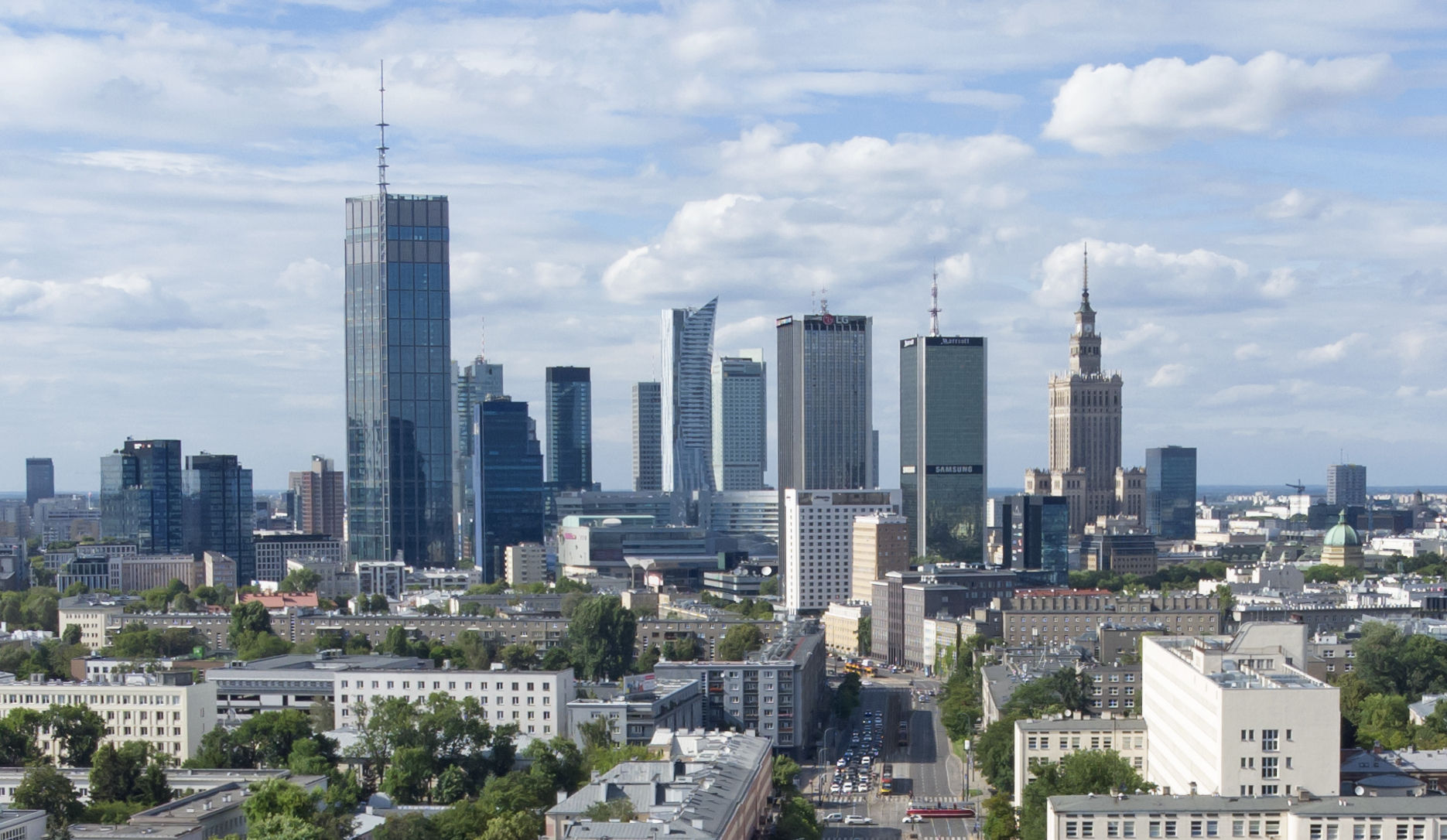
Finance, tech, and business process outsourcing drive Warsaw's economy, and the city has genuinely earned its reputation as Central Europe's commercial capital. The Warsaw Stock Exchange anchors a serious financial sector, while global firms like Google, Samsung, and Goldman Sachs have established significant regional operations here. The BPO and shared services sector employs tens of thousands, and a growing startup ecosystem adds tech jobs on top. Remote workers fit in easily — the infrastructure is there, and English proficiency among professionals under 40 is high.
A one-bedroom in the city center runs around $1,150/month, which is no longer cheap by regional standards — Kraków or Wrocław will save you 20–30%. Public transport is genuinely excellent: a monthly pass costs roughly $35 and covers metro, trams, and buses across the city. Healthcare is a real friction point — public care requires ZUS contributions and registration, so most expats pay out-of-pocket or use private clinics (a GP visit runs $30–50). Polish bureaucracy is slow and paper-heavy; expect residency registration to take patience and ideally a Polish-speaking helper.
Summers are genuinely pleasant at around 19°C, but winters are grey, cold, and long — February in Warsaw tests people who need sunlight. The food scene has improved dramatically, with a serious restaurant culture and strong coffee shop density in neighborhoods like Powiśle and Żoliborz. The expat community is sizeable but not overwhelming, concentrated around finance and tech. Weekends mean cycling along the Vistula, day trips to Łazienki Park, or catching live music — Warsaw punches above its weight culturally. This city suits ambitious professionals who want a European capital salary-to-cost ratio without the chaos of Berlin or London.
Estimate the cost of moving to Warsaw, Poland
Get a free moving cost estimate for moving to Warsaw, Poland. Takes 10 seconds.
How much are you shipping?
When are you moving?
Powered by Sirelo. Free quotes from international movers.
🏚️ Cost of Living
💰 Budgets and Costs
$1,544/mo, one person, rent included
Selected: budget lifestyle
Warsaw at the budget tier comes to about $1,544 a month for one adult, with $950 of that going to rent. Beyond rent the estimate covers $108 on groceries, $46.00 on dining out, $43.00 on entertainment and lifestyle, $369 on utilities and connectivity and $28.00 on transport.
Rent
$950/mo
1BR outside the centre
Groceries
$108/mo
75% of mid-range grocery spend
Dining out
$46.00/mo
4 inexpensive meals
Entertainment & lifestyle
$43.00/mo
1 cinema trip, 8 cappuccinos
Utilities & connectivity
$369/mo
utilities, mobile, internet
Transport
$28.00/mo
Monthly pass
Budgets (excl. rent)
Single person$594/mo
Excludes rent. The total above is all-in, rent included.
$1,722/mo, one person, rent included
Selected: mid-range lifestyle
Warsaw at the mid-range tier comes to about $1,722 a month for one adult, with $950 of that going to rent. Beyond rent the estimate covers $144 on groceries, $115 on dining out, $116 on entertainment and lifestyle, $369 on utilities and connectivity and $28.00 on transport.
Rent
$950/mo
1BR outside the centre
Groceries
$144/mo
Staples basket scaled to a full month
Dining out
$115/mo
10 inexpensive meals
Entertainment & lifestyle
$116/mo
gym, 2 cinema trips, 12 cappuccinos
Utilities & connectivity
$369/mo
utilities, mobile, internet
Transport
$28.00/mo
Monthly pass
Budgets (excl. rent)
Single person$772/mo
Excludes rent. The total above is all-in, rent included.
$2,199/mo, one person, rent included
Selected: comfortable lifestyle
Warsaw at the comfortable tier comes to about $2,199 a month for one adult, with $1,178 of that going to rent. Beyond rent the estimate covers $202 on groceries, $253 on dining out, $169 on entertainment and lifestyle, $369 on utilities and connectivity and $28.00 on transport.
Rent
$1,178/mo
1BR in the centre
Groceries
$202/mo
140% of mid-range grocery spend
Dining out
$253/mo
6 inexpensive meals + 6 mid-range meals
Entertainment & lifestyle
$169/mo
gym, 4 cinema trips, 20 cappuccinos
Utilities & connectivity
$369/mo
utilities, mobile, internet
Transport
$28.00/mo
Monthly pass
Budgets (excl. rent)
Single person$1,021/mo
Excludes rent. The total above is all-in, rent included.
Estimates for one adult, built from this city's average prices and the usage shown for each tier. Your spending will differ with how often you eat out and where you live.
A 1BR in the center runs about $1178.19/mo. If your income is in another currency, bank FX fees add up. A multi-currency account can cut that cost.
Warsaw is genuinely safe for expats and feels secure in daily life. The city center and most residential neighborhoods are walkable at night, with good street lighting and visible police presence. Violent crime against foreigners is rare. The overall atmosphere is orderly and professional—this is a major European capital with functioning institutions, not a lawless frontier. Most expats report feeling comfortable here.
Petty theft and pickpocketing occur in crowded areas (public transport, markets, tourist zones like Old Town), so standard urban precautions apply. Scams targeting foreigners are uncommon but do happen—avoid unlicensed taxis and overly friendly strangers offering deals. Solo female travelers report feeling safe, though normal city awareness applies. Drunk rowdiness in nightlife districts is the main concern, not organized crime.
Poland is politically stable with reliable police and functioning courts—corruption exists but doesn't affect daily expat life. Occasional protests occur but are peaceful and localized. The geopolitical context (NATO member, EU state, proximity to Ukraine) creates no direct safety risk for residents. Warsaw is a legitimate choice for long-term relocation; it offers European stability with lower costs than Western capitals.
See how Warsaw's digital nomad life compares with Berlin
🧳 Expat Life
English Proficiency
Common in Tourist Areas
Expat Community
Large & Active
Top Neighborhoods
Saska Kępa, Mokotów
Banks Nearby
273
ATMs Nearby
866
Expat Life Notes
A modern powerhouse in Central Europe. highly professional, safe, and efficient.
Pros
✓ Safe center
✓ Tech jobs
✓ English widely used
Cons
✗ Gloomy winters
🏘️ Neighborhoods in Warsaw
Notable areas of Warsaw, with descriptions adapted from public reference sources. Rent figures are Numbeo's city-wide averages, not prices for a specific area.
Conditions can change from one block to the next, and these descriptions are general guides, not safety assessments. Before choosing where to stay or live, check current travel advisories, talk to people who live there, and visit in person if you can.
Old and New Town
The Old Town and New Town are the two oldest parts of Warsaw, neighborhoods in the Śródmieście district. The Old Town is small compared with old towns of many other European cities. The New Town was the first part of Warsaw built outside the original city wall ring. Both were almost completely destroyed in World War II and reconstructed afterward. The Old Town contains historic buildings, mostly from the 17th and 18th centuries, including the Royal Castle, city walls, St.
Numbeo city average, center: $1,178 (updated Oct 8, 2026)
Śródmieście is the central district of Warsaw, Poland's capital, and is also known in English as Downtown. It contains the Old Town, the city's historic core, and serves as the center of cultural, commercial, and political life. The district holds many tourist attractions, cultural institutions, and restaurants, and is the hub of the city's nightlife. Its city center mixes new 21st-century development with remains and reconstructions of historic heritage.
Numbeo city average, center: $1,178 (updated Oct 8, 2026)
Western Centre lies west of Warsaw's Śródmieście and includes the districts of Wola, Ochota, and Żoliborz. It contains many parts of Warsaw's historic core and, while less dense with tourist sights than Śródmieście, still offers interesting places to visit. Wola sits directly west of Śródmieście, separated by Jana Pawła II Avenue, and is shifting from an industrial area to a business district with offices and upscale residential highrises.
Praga is the central and historic core of right bank Warsaw, Poland, located on the east bank of the river Vistula. It is composed of two districts, Praga Północ and Praga Południe, separated by railway tracks. First mentioned in 1432, it formed a separate town with its own city charter until 1791.
Numbeo city average, center: $1,178 (updated Oct 8, 2026)
Wola is a district in western Warsaw, Poland, located immediately west of Śródmieście and blending seamlessly with it, with Jana Pawła II Avenue as the border. Once an industrial area with traditions from the early 19th century, it has transformed into a major financial district with office buildings and modern upscale residential highrises.
Numbeo city average, center: $1,178 (updated Oct 8, 2026)
Warsaw has a population of approximately 1,862,402 people.
A single person can expect to spend around $2,945 per month in Warsaw, including rent. A 1-bedroom apartment in the city center costs approximately $1178/month.
The nearest airport to Warsaw is WAW, approximately 8km away.
Warsaw is considered relatively safe, with a safety index of 70.0. As with any city abroad, expats should research specific neighborhoods before committing to a location.
Warsaw has an average internet speed of 120 Mbps. It is considered a well-established digital nomad destination.
Yes, noticeably so. City-center rent averages $1,150/month for a one-bedroom, roughly 25–35% higher than Kraków or Wrocław. Groceries and dining are still cheaper than Western Europe, but Warsaw's cost gap with other Polish cities has widened significantly since 2015 due to foreign investment and rising demand from well-paid finance and tech workers.
For daily life and professional work, English gets you far — especially in the city center, tech offices, and among younger residents. But Polish bureaucracy is almost entirely in Polish, and dealing with landlords, banks, or government offices without the language is genuinely frustrating. Learning basic Polish or hiring a relocation assistant for admin tasks is strongly recommended.
EU citizens can use the public system with a European Health Insurance Card short-term, but long-term residents need to register and pay into ZUS (social insurance) to access public care. Most expats skip the queue and use private clinics, which are widely available and reasonably priced — a GP visit costs $30–50, and specialist appointments are usually available within days.
Expect to spend around $1,500-$2,500 USD per month, depending on your lifestyle. Rent for a modern one-bedroom apartment in a central neighborhood like Śródmieście or Mokotów can range from $800-$1200, while groceries and dining out are significantly cheaper than in the US.
Warsaw is generally very safe, with low rates of violent crime. Petty theft, like pickpocketing, can occur in crowded tourist areas or on public transport, so be mindful of your belongings. Overall, you can feel comfortable walking around most neighborhoods at night.
As a US citizen, you can stay in Poland visa-free for 90 days within a 180-day period. For longer stays, you'll need to apply for a temporary residence permit (Karta Pobytu), typically based on employment, study, or business activities. Consider consulting an immigration lawyer for the most up-to-date requirements.
Warsaw boasts excellent internet infrastructure, with widespread access to high-speed fiber optic connections. You can easily find apartments and coworking spaces with reliable internet speeds exceeding 100 Mbps, making it ideal for remote work.
Yes, Warsaw has a thriving coworking scene with numerous options catering to different budgets and needs. Popular choices include Business Link, HubHub, and WeWork, offering flexible memberships and networking opportunities.
Warsaw has a continental climate with distinct seasons. Summers are warm and pleasant (June-August), while winters are cold and snowy (December-February). Be prepared for temperatures ranging from -5°C to 25°C (23°F to 77°F) throughout the year.
Warsaw has an excellent public transportation system, including buses, trams, and a metro. You can easily get around the city using a combination of these options, and monthly passes are affordable. Ride-sharing services like Uber and Bolt are also readily available.
For more affordable living, consider neighborhoods like Praga-Północ, Wola, or Ursynów. These areas offer lower rent prices compared to central districts while still providing good access to amenities and public transportation.
Warsaw has a growing and active expat community, with many opportunities to connect with other foreigners. Online groups, social events, and language exchange programs are readily available, making it easy to build a social network.
Yes, Warsaw offers a significantly lower cost of living compared to many major US cities, allowing your retirement income to go further. You can enjoy a comfortable lifestyle on a moderate budget, especially if you're willing to live slightly outside the city center.
Yes, many doctors and medical professionals in Warsaw speak English, particularly in private clinics. You can find lists of English-speaking doctors through your embassy or online directories. Private healthcare is generally affordable and offers shorter wait times.
Several international and local banks operate in Warsaw, offering services for expats. Opening a bank account is relatively straightforward with the right documentation (passport, residence permit). Be aware of potential ATM fees and international transfer charges.
Early retirement in Warsaw on $3,000 USD per month is definitely feasible, allowing for a comfortable lifestyle with some discretionary spending. Careful budgeting and choosing a less central neighborhood will help you maximize your savings.
As a US citizen, you're still required to file US taxes even when living abroad. The Foreign Earned Income Exclusion (FEIE) can help you exclude a certain amount of your foreign-earned income from US taxes. Also, be aware of FBAR reporting requirements for foreign bank accounts.
While learning some Polish is beneficial, you can manage daily life in Warsaw with English, especially in tourist areas and among younger generations. Many restaurants, shops, and services have English-speaking staff, making it relatively easy to navigate everyday tasks.
Cost-of-living and visa updates for Warsaw and the rest of Poland. Free with RA Postcards.
By submitting your email address, you will receive a free subscription to RA Postcards and special offers from Rewire Abroad and our affiliates. You can unsubscribe at any time, and we encourage you to read more about our Privacy Policy.