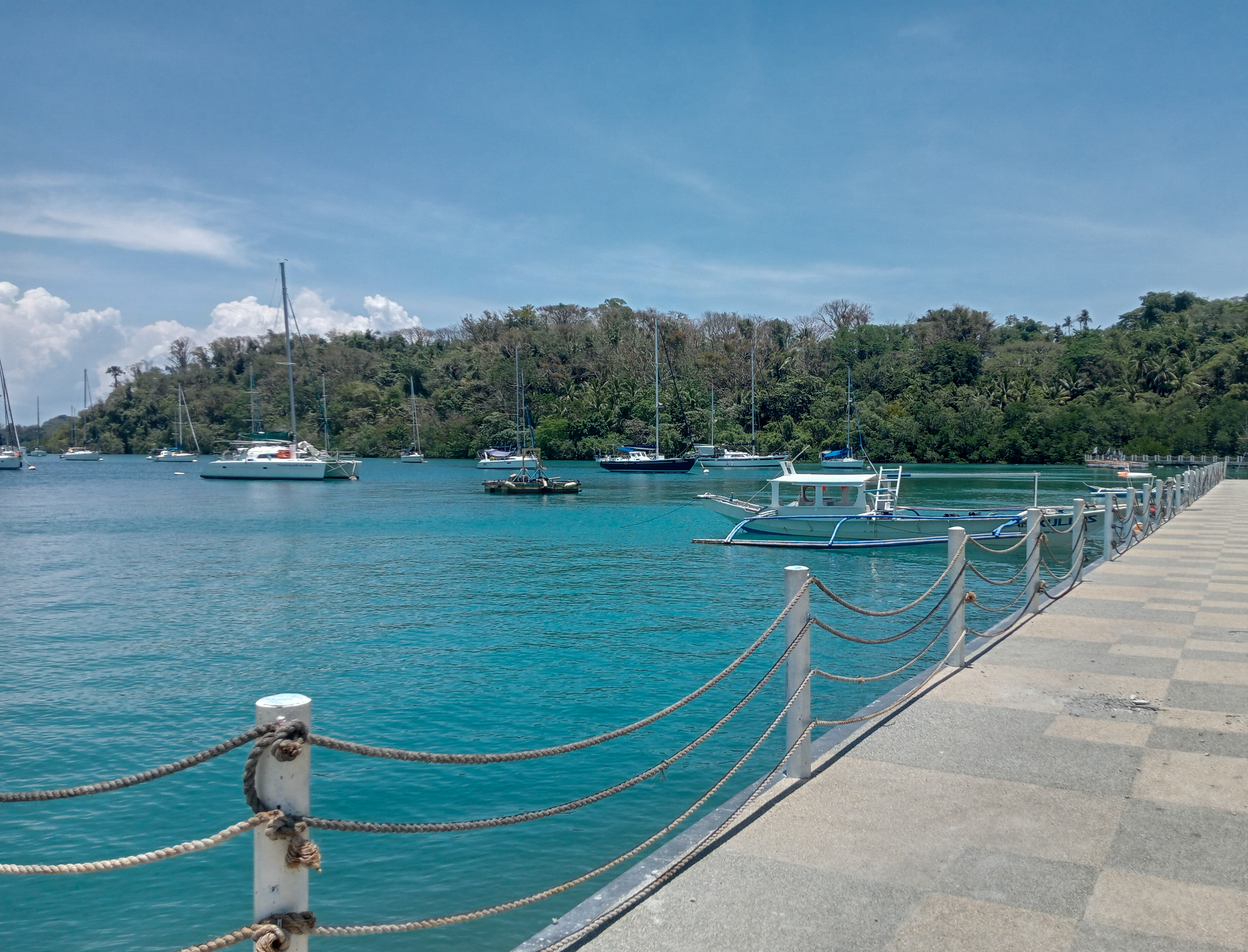
Puerto Galera sits on the northern tip of Mindoro Island, a short boat ride from the Philippine mainland and roughly 28 kilometers from Manila's international airport (MNL). The town has a tropical climate, with warm, humid conditions year-round; the dry season from November to May offers the most comfortable weather, while the wet monsoon season from June to October brings heavy rainfall and occasional typhoons. Expats tend to cluster in the neighborhoods of Sabang and Muelle, where the medium-sized expat community is most visible and English is common in tourist areas.
Living here is remarkably affordable, especially compared to Western standards. A single adult can get by on a budget tier total of $430/mo, which includes rent, while a mid-range tier total comes to $572/mo and a comfortable tier total runs $675/mo. Rent for a one-bedroom in the city center averages $238/mo, dropping to $191/mo outside the center; a three-bedroom in the center costs $477/mo, or $397/mo outside. Utilities run $165/mo, internet is $24/mo, a mobile phone plan is $14/mo, and a gym membership is $25/mo. An inexpensive restaurant meal costs $4, a three-course meal for two at a mid-range restaurant is $19, and a cappuccino is $3. The average local monthly net salary is $166/mo, which puts expat budgets in a different league entirely.
Safety in Puerto Galera is moderate, with a safety index of 65 out of 100 and a crime index of 35 out of 100, where lower is safer. The air quality index is 45, which is acceptable, though not pristine. Healthcare quality is rated as fair, so for serious medical needs, travelers and residents often plan for trips to larger cities. The overall expat score is 81 out of 100, with a FIRE score of 83, a retiree score of 59, and a digital nomad score of 65, reflecting a place that is particularly attractive to those seeking financial independence and early retirement.
For longer stays, the Philippines offers the SRRV Retirement Visa, which requires a minimum monthly income of $1,500/mo, and the SEZ Remote Work Visa for those working remotely from a PEZA zone. Getting to Puerto Galera means flying into MNL, then taking a land and sea transfer. This destination suits budget-conscious expats, early retirees, and remote workers who prioritize low living costs and a relaxed coastal lifestyle over urban amenities or top-tier healthcare.