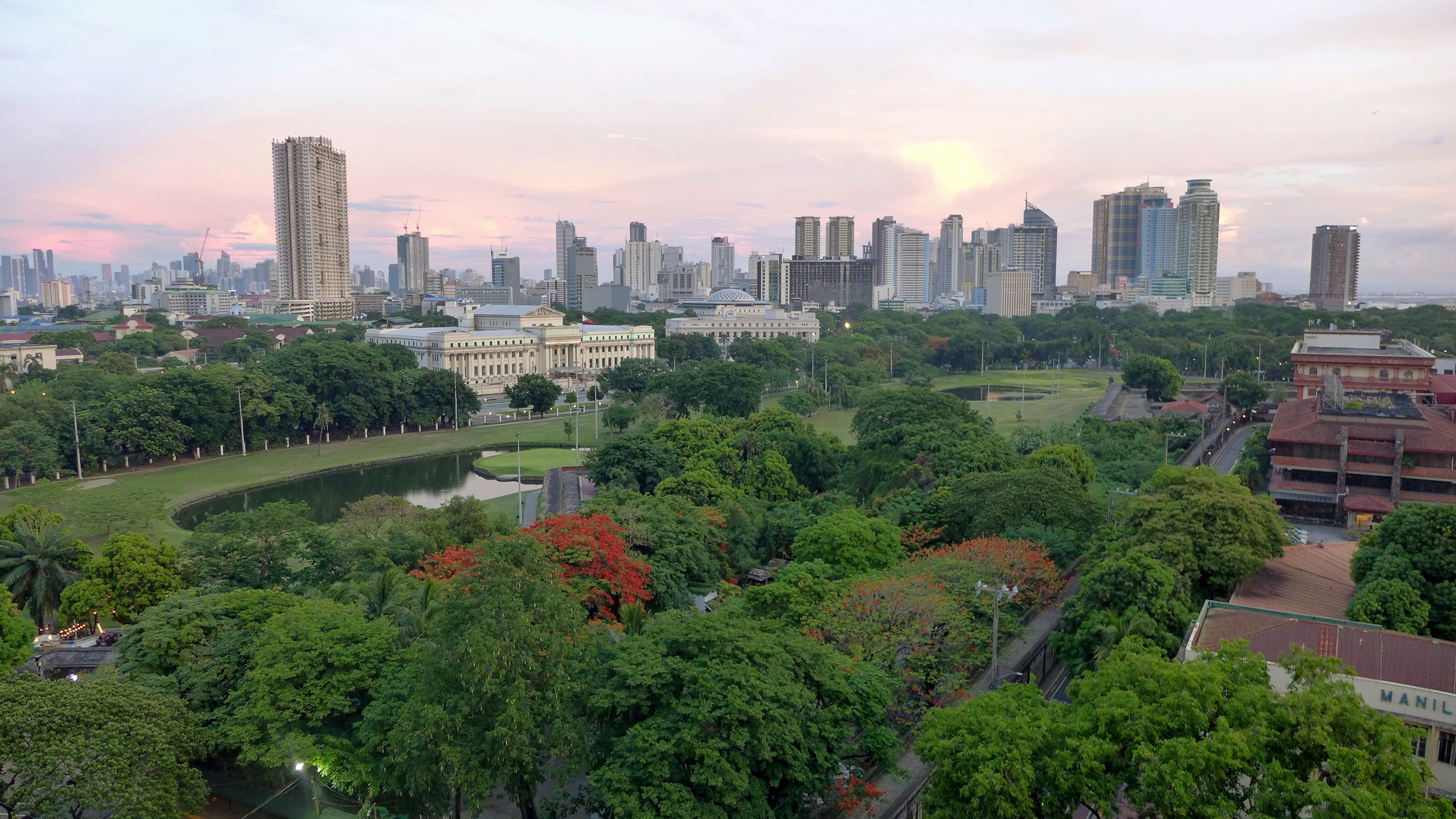
Manila sits on the eastern shore of Manila Bay at an elevation of 16 meters above sea level, operating in the Asia/Manila timezone. The city experiences a tropical monsoon climate that is hot, humid, and often prone to typhoons. Popular expat neighborhoods include Makati, Bonifacio Global City (BGC), and Alabang, each offering a different flavor of city living and a large, active expat community.
Living costs in Manila are modest compared to New York City, with a cost of living index of 34 out of 100. A one-bedroom apartment in the city center rents for $544 per month, while outside the center it drops to $282. For a three-bedroom, expect $1,907 in the center and $666 outside. Monthly utilities run $123, internet is $24, and a mobile phone plan costs $16. A monthly public transport pass is $13, and a gym membership is $43. A single person's monthly cost excluding rent is $587, while a family of four spends $2,087 excluding rent. Budget-tier total living costs for a single adult including rent come to $477 per month, mid-range to $690, and comfortable to $1,024. The average monthly net salary locally is $476, which aligns closely with the budget tier. An inexpensive restaurant meal costs $6 per person, a mid-range three-course meal for two is $27, and a cappuccino is $3.
Safety is a concern, with a safety index of 40 out of 100 and a crime index of 60 out of 100 (lower is safer). Healthcare quality is rated as fair. The air quality index stands at 110, indicating moderate pollution. English proficiency is common in tourist areas, which helps newcomers navigate daily life.
For those looking to stay long-term, the Philippines offers the SRRV Retirement Visa, which requires a minimum monthly income of $1,500. Digital nomads can apply for the Philippines SEZ Remote Work Visa (PEZA Zone). The nearest airport is Ninoy Aquino International Airport (MNL), located 23 kilometers from the city center. With an overall expat score of 72 out of 100, a FIRE score of 74, a digital nomad score of 73, and a retiree score of 51, Manila suits budget-conscious expats, early retirees, and remote workers who can handle the climate and safety trade-offs.
Estimate the cost of moving to Manila, Philippines
Get a free moving cost estimate for moving to Manila, Philippines. Takes 10 seconds.
How much are you shipping?
When are you moving?
Powered by Sirelo. Free quotes from international movers.
🏚️ Cost of Living
💰 Budgets and Costs
$590/mo, one person, rent included
Selected: budget lifestyle
Manila at the budget tier comes to about $590 a month for one adult, with $282 of that going to rent. Beyond rent the estimate covers $95.00 on groceries, $22.00 on dining out, $27.00 on entertainment and lifestyle, $151 on utilities and connectivity and $13.00 on transport.
Rent
$282/mo
1BR outside the centre
Groceries
$95.00/mo
75% of mid-range grocery spend
Dining out
$22.00/mo
4 inexpensive meals
Entertainment & lifestyle
$27.00/mo
1 cinema trip, 8 cappuccinos
Utilities & connectivity
$151/mo
utilities, mobile, internet
Transport
$13.00/mo
Monthly pass
Budgets (excl. rent)
Single person$308/mo
Excludes rent. The total above is all-in, rent included.
$709/mo, one person, rent included
Selected: mid-range lifestyle
Manila at the mid-range tier comes to about $709 a month for one adult, with $282 of that going to rent. Beyond rent the estimate covers $126 on groceries, $56.00 on dining out, $81.00 on entertainment and lifestyle, $151 on utilities and connectivity and $13.00 on transport.
Rent
$282/mo
1BR outside the centre
Groceries
$126/mo
Staples basket scaled to a full month
Dining out
$56.00/mo
10 inexpensive meals
Entertainment & lifestyle
$81.00/mo
gym, 2 cinema trips, 12 cappuccinos
Utilities & connectivity
$151/mo
utilities, mobile, internet
Transport
$13.00/mo
Monthly pass
Budgets (excl. rent)
Single person$427/mo
Excludes rent. The total above is all-in, rent included.
$1,114/mo, one person, rent included
Selected: comfortable lifestyle
Manila at the comfortable tier comes to about $1,114 a month for one adult, with $544 of that going to rent. Beyond rent the estimate covers $177 on groceries, $115 on dining out, $114 on entertainment and lifestyle, $151 on utilities and connectivity and $13.00 on transport.
Rent
$544/mo
1BR in the centre
Groceries
$177/mo
140% of mid-range grocery spend
Dining out
$115/mo
6 inexpensive meals + 6 mid-range meals
Entertainment & lifestyle
$114/mo
gym, 4 cinema trips, 20 cappuccinos
Utilities & connectivity
$151/mo
utilities, mobile, internet
Transport
$13.00/mo
Monthly pass
Budgets (excl. rent)
Single person$570/mo
Excludes rent. The total above is all-in, rent included.
Estimates for one adult, built from this city's average prices and the usage shown for each tier. Your spending will differ with how often you eat out and where you live.
A 1BR in the center runs about $543.82/mo. If your income is in another currency, bank FX fees add up. A multi-currency account can cut that cost.
Manila feels considerably less safe than major Western cities, though expats in established neighborhoods adapt quickly. Daytime walking is generally fine in commercial and residential areas like Makati, BGC, and Ermita, but nighttime solo travel isn't advisable. The city's reputation for danger is partly earned—petty crime is common—but many expats live comfortably by staying aware and avoiding certain zones after dark.
Pickpocketing, bag snatching, and phone theft are the primary concerns, especially in crowded areas, public transport, and tourist zones. Violent crime against foreigners is rare but does occur; armed robbery happens in isolated areas. Avoid Quiapo, Divisoria, and poorly-lit side streets at night. Solo female travelers should exercise extra caution with drinks at bars and use trusted transportation. Scams targeting expats (fake police, overpayment schemes) are documented but avoidable with basic street sense.
The Philippines has moderate political stability, though occasional protests occur near government buildings. Police corruption is a real issue—bribery happens, and response times can be slow. However, the government actively courts expat residents and generally protects foreign communities. For a 30-65 American considering relocation, Manila is manageable if you choose safe neighborhoods (Makati, BGC, Quezon City), use ride-sharing apps, and maintain situational awareness. It's not a retirement paradise for those seeking low-stress living, but it's viable for disciplined expats seeking affordability and community.
Manila has a safety index of 35.36/100. Petty theft and lost belongings are the most common problems for newcomers. Compare travel insurance before you go.
Clock In has multiple locations in Metro Manila, including Makati and Ortigas, making it a convenient option. They offer modern facilities, reliable internet, and a professional atmosphere suitable for focused work.
Located in Makati, WeWork RCBC Plaza provides a premium coworking experience with a strong community vibe. It's a good choice for those seeking networking opportunities and a well-established brand.
Acceler8 offers a sophisticated coworking environment in Makati, catering to startups and professionals. They provide various membership options and event spaces, fostering collaboration and innovation.
With locations in various parts of Metro Manila, including Mandaluyong, The Office Project offers affordable coworking solutions. It's a practical choice for budget-conscious digital nomads who need a functional workspace.
See how Manila's digital nomad life compares with Naga
🧳 Expat Life
English Proficiency
Common in Tourist Areas
Expat Community
Large & Active
Top Neighborhoods
Makati, Bonifacio Global City (BGC), Alabang
Banks Nearby
1261
ATMs Nearby
354
Expat Life Notes
A massive, high-energy metropolis where English is the lingua franca. BGC offers a Western-standard lifestyle amidst the chaos.
Pros
✓ High English proficiency
✓ Warm, hospitable culture
✓ Modern enclaves like BGC
Cons
✗ Severe traffic congestion
✗ High inequality
✗ Monsoon/Typhoon risks
🏘️ Neighborhoods in Manila
Areas of Manila that expats often consider.
Conditions can change from one block to the next, and these descriptions are general guides, not safety assessments. Before choosing where to stay or live, check current travel advisories, talk to people who live there, and visit in person if you can.
Makati
Modern, upscale business district
Makati is the financial heart of Manila, offering modern condos, international restaurants, and shopping malls. It's very expat-friendly with English widely spoken, but can be expensive and congested. Public transport is decent, but traffic is a major issue.
Bonifacio Global City (BGC)
Ultra-modern, planned urban center
BGC is a newer, meticulously planned city with high-rise condos, parks, and a vibrant nightlife. It's popular with young professionals and expats seeking a Western-style environment. While walkable, it's somewhat isolated from the rest of Manila and can feel sterile to some.
Poblacion
Bohemian, nightlife, historical district
Located within Makati, Poblacion is the old downtown area that has transformed into a hip nightlife and dining hub. It's more affordable than other parts of Makati, but can be noisy at night. It's walkable and has a unique, gritty charm, attracting a younger, more adventurous crowd.
San Juan
Residential, family-friendly, accessible
San Juan is a more laid-back residential area with a mix of houses and condos. It's known for its good schools and family-friendly atmosphere. While not as glamorous as Makati or BGC, it offers a more authentic Filipino experience and is relatively accessible to other parts of the city.
Malate
Historic, touristy, vibrant nightlife
Malate is a historic district with a bohemian vibe, known for its nightlife, restaurants, and proximity to Manila Bay. It's popular with tourists and has a slightly grittier feel. While convenient and relatively affordable, it can be crowded and noisy, and petty crime is a concern.
Intramuros
Historic walled city, cultural
Intramuros, the old walled city, offers a unique historical experience. While not a typical residential area, some apartments are available. It's a great place for history buffs, but lacks modern amenities and can be very touristy during the day. Transportation can be challenging.
Quezon City
Sprawling, residential, budget-friendly
Quezon City is the largest city in Metro Manila, offering a wide range of housing options at more affordable prices. It's less expat-centric than Makati or BGC, but provides a more authentic Filipino experience. Transportation can be difficult due to its size and traffic congestion.
Page 1 of 2
Could living/working in Manila cut years off your work life?
With a 1-bedroom in the center at $544/mo, your FIRE number here might be much lower than you think.
At the mid-range tier, one adult needs about $709 a month in Manila, rent included, with $282 of that going to rent. That leaves roughly $427 for everything except housing.
In Manila, a one-bedroom runs $544 in the center and $282 outside it and three bedrooms come to $1,907 in the center and $781 outside it, per month.
Average monthly net salary in Manila is $476. That is 67% of the $709 mid-range monthly budget.
Manila scores 35.36 on the safety index (higher is safer) and a crime index of 64.64 (lower is safer).
Average internet speed in Manila is 50 Mbps. A home connection costs about $24/mo.
In Manila, summer averages 33°C, winter averages 23°C and annual rainfall is 1946 mm.
Manila's safety index sits at 40, which is below average. Petty crime and opportunistic theft are real concerns, especially in crowded areas. Most expats mitigate risk by living in gated enclaves like BGC or Makati, using ride-hailing apps instead of walking at night, and avoiding certain districts. Violent crime against foreigners is relatively rare but not unheard of. It's manageable with awareness, but don't expect the low-stress safety of, say, Lisbon or Chiang Mai.
The SRRV (Special Resident Retiree's Visa) is the main long-term option for retirees, requiring a deposit of $10,000–$50,000 in a Philippine bank depending on age and pension status. For remote workers, most people cycle through tourist visa extensions, which allow stays up to 36 months total with regular renewals. The Philippines does not yet have a dedicated digital nomad visa as of 2024. The 13A visa is available for those married to Filipino citizens.
Traffic in Manila is among the worst in Southeast Asia — TOMTOM consistently ranks Metro Manila in the global top 10 for congestion. A 10km trip during rush hour can realistically take 60–90 minutes by car. The LRT-1, LRT-2, and MRT-3 lines exist and are cheap (fares under $0.50), but they're overcrowded, aging, and don't cover the whole metro. Grab (ride-hailing) is the practical daily solution for most expats. The Metro Manila Subway is under construction but not yet operational.
You can live comfortably in Manila on $1,500-$2,500 USD per month, depending on your lifestyle. Rent for a decent apartment in a good area like Makati or Bonifacio Global City (BGC) ranges from $700-$1200, while groceries and dining out are significantly cheaper than in the US.
Yes, Manila has excellent healthcare with many highly trained, English-speaking doctors. Hospitals like St. Luke's Medical Center and Makati Medical Center are internationally accredited and offer a wide range of services at a fraction of the cost compared to the US.
For budget-conscious expats, consider areas like Mandaluyong or Quezon City. You'll find more affordable apartments and a lower cost of living compared to upscale areas like Makati or BGC, while still having access to amenities and transportation.
Internet speeds in Manila can be variable, but generally, you can find reliable connections, especially in business districts like Makati and BGC. Expect to pay around $50-$100 USD per month for a decent fiber optic connection, and consider a backup mobile data plan for emergencies.
Manila has a sizable and active expat community, making it relatively easy to connect with other foreigners. There are numerous social groups and events catering to expats, often organized through online platforms like Facebook groups and InterNations.
Manila has a tropical climate with distinct wet and dry seasons. Expect hot and humid weather year-round, with the rainy season lasting from June to November. Be prepared for typhoons during this period.
Opening a bank account in Manila as a foreigner can be a bit bureaucratic, but it's generally manageable. You'll typically need your passport, visa, and proof of address. Banks like BDO and Metrobank are popular choices for expats.
Several options exist for international money transfers, including online services like Wise (formerly TransferWise) and Remitly, which often offer better exchange rates and lower fees than traditional bank transfers. Check the fees and exchange rates carefully before choosing a method.
As a US citizen, you're still required to file US taxes even when living abroad. You may be able to exclude a significant portion of your foreign earned income using the Foreign Earned Income Exclusion (FEIE). Also, be aware of FBAR reporting requirements if you have foreign bank accounts exceeding $10,000.
Manila can be a viable option for early retirement, especially if you have a steady passive income stream. With a monthly budget of $2,000-$3,000 USD, you can enjoy a comfortable lifestyle, but be mindful of potential healthcare costs and the need for private health insurance.
Like any major city, Manila has its share of scams. Be wary of overly friendly strangers offering unsolicited help, especially near tourist areas. Always use reputable taxi services or ride-hailing apps, and avoid flashing expensive jewelry or electronics.
Manila is not particularly walkable, especially during the hottest parts of the day. The best ways to get around are using ride-hailing apps like Grab, taking taxis (ensure the meter is running), or utilizing the MRT/LRT train systems, though these can be crowded during peak hours.
Manila boasts a diverse and vibrant food scene, from traditional Filipino cuisine to international flavors. You'll find plenty of Western food options, especially in expat-heavy areas like Makati and BGC, but be sure to explore local dishes like adobo, sinigang, and lechon.
While Manila is generally safe, it's best to exercise caution in certain areas, particularly at night. Avoid poorly lit or isolated areas, and be aware of your surroundings in crowded markets or public transportation hubs. Research areas beforehand and ask locals for advice.
Cost-of-living and visa updates for Manila and the rest of Philippines. Free with RA Postcards.
By submitting your email address, you will receive a free subscription to RA Postcards and special offers from Rewire Abroad and our affiliates. You can unsubscribe at any time, and we encourage you to read more about our Privacy Policy.