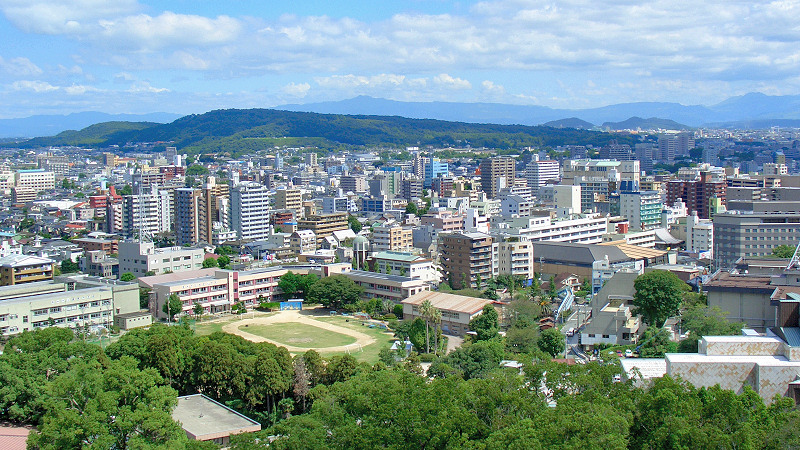
Kumamoto, Japan
Data updated Sep 3, 2026
📊 Scores
Manufacturing anchors Kumamoto's economy, with semiconductor production increasingly central — TSMC opened a major chip fabrication plant in nearby Kikuyo in 2024, injecting billions into the regional economy and creating thousands of jobs. Traditional industries like agriculture (Kumamoto produces roughly 40% of Japan's tomatoes) and food processing remain significant employers. The service sector supports the metro area's 1.46 million residents, and Kumamoto functions as Kyushu's administrative hub. Remote workers exist here but are rare; most expats who stay long-term are English teachers, researchers, or spouses of Japanese nationals.
A one-bedroom in the city center runs around $700/month — reasonable for Japan, though noticeably higher than smaller Kyushu cities like Kagoshima. Public transit is functional but limited compared to Tokyo; the tram network covers central areas, but a bicycle or car helps significantly. Healthcare is high-quality and affordable with national insurance, which you're legally required to join. The language barrier is real and largely unforgiving — English proficiency outside universities and tourist sites is low. Registering at the municipal office, opening a bank account, and signing a lease all require Japanese or a patient bilingual helper.
Summers are genuinely brutal — 28°C average in August with oppressive humidity, and the June-July rainy season dumps over 400mm in two months. Winters are mild but damp. The food scene is legitimately strong: Kumamoto ramen, karashi renkon, and local wagyu are worth the move alone. The expat community is small and loosely organized, so social life requires effort and some Japanese ability. Weekends mean hiking Aso volcano, exploring the castle reconstruction, or day-tripping to Nagasaki or Fukuoka. This city suits someone who wants authentic Japanese daily life, doesn't need an expat bubble, and can handle bureaucracy in a second language.
🏚️ Cost of Living
💰 Budgets and Costs
Grocery Basket
Eating Out
Utilities & Lifestyle
Housing
A 1BR in the center runs about $245.87/mo. If your income is in another currency, bank FX fees add up. A multi-currency account can cut that cost.
See low-fee transfersWe may earn a commission at no cost to you.
💰 Real Spend Reports
🛡️ Safety & Crime
(Higher is safer)
(Lower is safer)
Kumamoto is exceptionally safe for expats, with very low violent crime and petty theft rates typical of Japan's regional cities. The main concerns are minor: occasional package theft, bicycle theft, and rare scams targeting foreigners unfamiliar with local banking. Avoid isolated areas late at night as a general precaution, though serious crime is uncommon. The city's compact size and strong community policing make it ideal for remote workers and retirees seeking a secure, peaceful environment with minimal safety concerns.
🏥 Healthcare
🌤️ Climate
Best Months
Climate Notes
Humid subtropical climate with hot, humid summers and cool winters.
💻 Digital Nomad
Community Notes
| Name | Price/mo | Notes |
|---|---|---|
| Coworking Space 24 | $150 | A 24-hour access coworking space located near Kumamoto Station, offering a flexible and convenient workspace for digital nomads. It's a good option for those needing to work odd hours or wanting easy access to transportation. |
| Tsukimi-so | $120 | Located in a renovated traditional building, Tsukimi-so offers a unique coworking experience in a relaxed atmosphere. It's a great option for those looking for a more local and community-focused workspace. |
| Basis Point Kumamoto | $200 | Basis Point offers a modern and professional coworking environment in Kumamoto City. It's well-suited for those needing a more formal workspace with meeting rooms and business support services. |
Planning to live in Kumamoto long-term? Japan Digital Nomad Visa lets remote workers live legally with a minimum income of $6,667/month.
View full requirements →Working remotely from Kumamoto? Nomad health insurance covers you across borders, month to month.
See nomad insuranceWe may earn a commission at no cost to you.
🧳 Expat Life
Expat Life Notes
Kumamoto offers a high quality of life with beautiful nature and a friendly, local feel for its few expats.
Pros
- ✓ Stunning castle and nature
- ✓ Affordable lifestyle
- ✓ Safe for families
Cons
- ✗ Limited English services
- ✗ Smaller international circle
- ✗ Recovery from seismic activity
🛂 Visa Options for Japan
Many long-stay visas require proof of health insurance. Compare international health plans before you apply.
Compare health insuranceWe may earn a commission at no cost to you.
Earning over $6,667/mo? You may qualify for a Japan visa.
Answer 10 questions and get a personalized match in under 2 minutes.
Could living/working in Kumamoto cut years off your work life?
With a 1-bedroom in the center at $246/mo, your FIRE number here might be much lower than you think.
Moving to Kumamoto? Estimate what an international move would cost and compare mover quotes.
Estimate my move costShare This Guide
Kumamoto won't stay this cheap forever.
Cost-of-living and visa updates for Kumamoto and the rest of Japan. Free with RA Postcards.
By submitting your email address, you will receive a free subscription to RA Postcards and special offers from Rewire Abroad and our affiliates. You can unsubscribe at any time, and we encourage you to read more about our Privacy Policy.