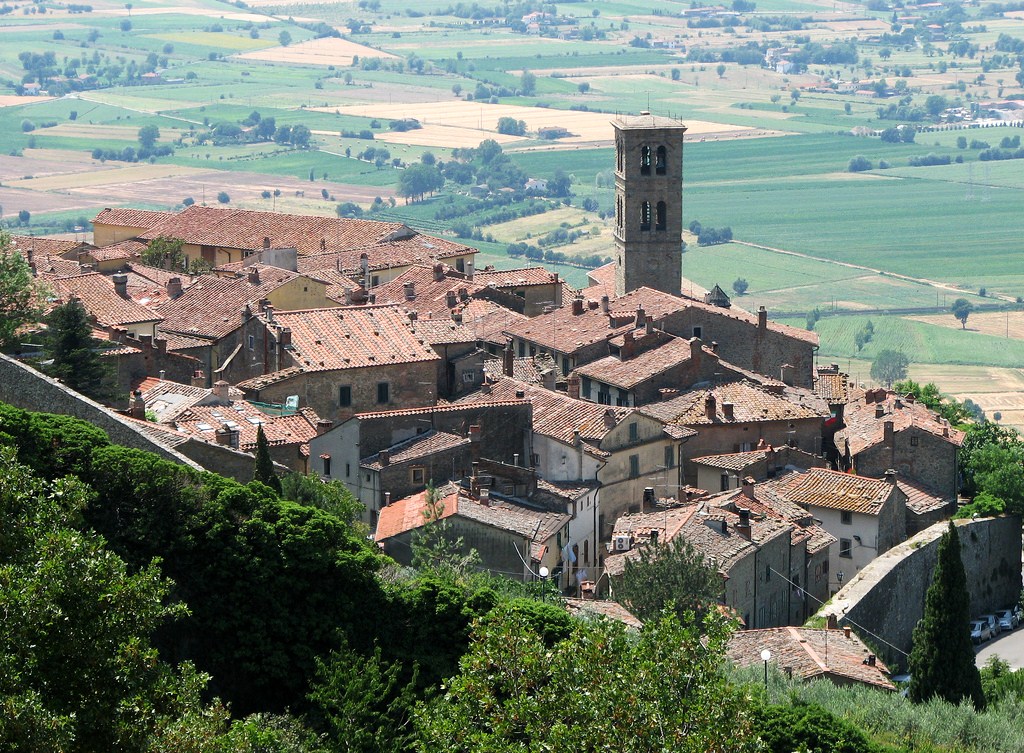
Cortona, Italy
Data updated Sep 3, 2026
📊 Scores
Best fit: FIRE / Geoarbitrage (score: 68)
Tourism and agritourism dominate Cortona's economy—the medieval hilltop town pulls visitors year-round to its Renaissance art museums and wine estates. Wine production and farm stays generate steady income for locals, though most employment is seasonal and service-oriented. Remote work is realistic here; many expats and digital nomads base themselves in Cortona precisely because it's quiet enough to focus while offering enough infrastructure to actually work.
A one-bedroom in the center runs $780/month; outside the walls, you'll find cheaper options. The nearest train station (Camucia-Cortona) connects to Florence and Rome, though you'll want a car for daily life—buses are infrequent. Healthcare is solid through Italy's public system, but English-speaking doctors are sparse. Italian bureaucracy applies fully; residency permits and tax registration require patience and often a commercialista (tax advisor). Language barrier is real; English proficiency drops sharply outside tourist zones.
Summers are warm and dry (2,000 annual sunshine hours), winters mild but occasionally wet. Food is excellent—local Pecorino, wild boar, and Vino Nobile di Montepulciano—though restaurants cater heavily to tourists. The expat community exists but isn't large; weekends mean hiking Val di Chiana, visiting nearby Arezzo, or wine tasting. Cortona suits remote workers and retirees seeking authentic Tuscany without Florence's crowds, not people needing a vibrant job market or nightlife.
🏚️ Cost of Living
💰 Budgets and Costs
Grocery Basket
Eating Out
Utilities & Lifestyle
Housing
A 1BR in the center runs about $879.45/mo. If your income is in another currency, bank FX fees add up. A multi-currency account can cut that cost.
See low-fee transfersWe may earn a commission at no cost to you.
💰 Real Spend Reports
🛡️ Safety & Crime
(Higher is safer)
(Lower is safer)
Cortona is genuinely safe for expats, with low violent crime and a tight-knit community where locals know residents. Petty theft from cars and homes occurs occasionally, particularly targeting tourists in summer; use standard precautions like locking valuables away. The historic center is well-lit and walkable at night. Scams are minimal compared to larger Italian cities. Main risks are typical small-town Italy: occasional pickpocketing in crowded areas, minor property crime, and the usual travel cons. For a 30-65 American seeking a quiet, secure retirement or remote work base, Cortona delivers genuine peace of mind without the crime concerns of Rome or Florence.
🏥 Healthcare
🌤️ Climate
Best Months
Climate Notes
Cortona enjoys a typical Tuscan climate with warm, dry summers (June-August) and cool, wet winters (December-February), offering pleasant spring and autumn seasons ideal for outdoor exploration.
💻 Digital Nomad
Community Notes
| Name | Price/mo | Notes |
|---|---|---|
| Regus Arezzo | $220 | While technically in Arezzo, it's the closest established coworking option to Cortona (approx. 30 min drive). Regus offers reliable infrastructure, meeting rooms, and a professional environment suitable for focused work. Located near the Arezzo train station, making it accessible for those traveling from Cortona. |
| Impact Hub Firenze | $250 | While in Florence, it's a viable option for digital nomads willing to commute (approx. 1.5-hour train ride). Impact Hub offers a collaborative environment, workshops, and a strong community focus, ideal for those seeking networking opportunities and a change of scenery from Cortona. |
Planning to live in Cortona long-term? Italy Digital Nomad Visa lets remote workers live legally with a minimum income of $2,368/month.
View full requirements →Working remotely from Cortona? Nomad health insurance covers you across borders, month to month.
See nomad insuranceWe may earn a commission at no cost to you.
🧳 Expat Life
Expat Life Notes
Cortona is a stunning Etruscan hilltop town in Tuscany immortalized in the memoir 'Under the Tuscan Sun'. It draws a small but consistent community of English-speaking retirees and lifestyle migrants, particularly from the US and UK.
Pros
- ✓ Iconic Tuscan beauty
- ✓ Small English-speaking expat community
- ✓ Rich history and art
- ✓ Peaceful lifestyle
Cons
- ✗ Limited job market
- ✗ Car essential for daily life
- ✗ Higher property prices due to popularity
🛂 Visa Options for Italy
Many long-stay visas require proof of health insurance. Compare international health plans before you apply.
Compare health insuranceWe may earn a commission at no cost to you.
Living on investment or passive income? Italy Flat Tax Residency may be the right fit — minimum $28,547/month required.
View full requirements →Living on investment or passive income? Italy 7% Flat Tax for Retirees (Southern Italy) may be the right fit.
View full requirements →Earning over $2,368/mo? You may qualify for a Italy visa.
Answer 10 questions and get a personalized match in under 2 minutes.
Could living/working in Cortona cut years off your work life?
With a 1-bedroom in the center at $352/mo, your FIRE number here might be much lower than you think.
Moving to Cortona? Estimate what an international move would cost and compare mover quotes.
Estimate my move costShare This Guide
Cortona won't stay this cheap forever.
Cost-of-living and visa updates for Cortona and the rest of Italy. Free with RA Postcards.
By submitting your email address, you will receive a free subscription to RA Postcards and special offers from Rewire Abroad and our affiliates. You can unsubscribe at any time, and we encourage you to read more about our Privacy Policy.