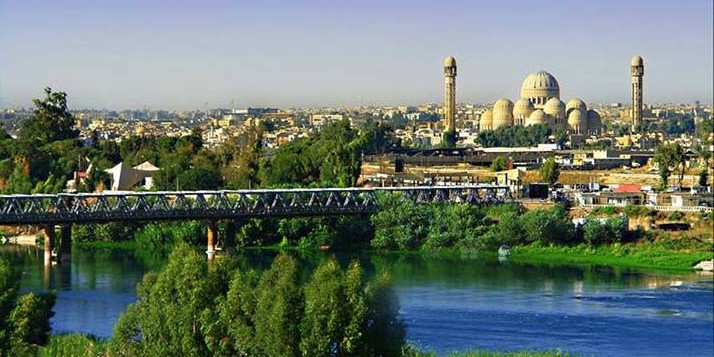
Mosul rises along the banks of the Tigris River in northern Iraq, a city of 1.8 million people sitting at an elevation of 223 meters above sea level. Its Mediterranean climate brings hot, dry summers and cool, wet winters, with a rhythm that shapes daily life in the old quarters and newer districts alike. The city center holds most of the commercial activity, while residential areas spread outward toward the outskirts. There are no established expat neighborhoods, and the expat community is essentially nonexistent, so newcomers typically find housing wherever the local market allows, often negotiating directly with landlords in Arabic.
Living in Mosul is remarkably inexpensive by global standards, with a cost of living index of just 23 out of 100 compared to New York City. A one-bedroom apartment in the city center rents for $160/mo, while the same outside the center costs $115/mo. For families, a three-bedroom in the center runs $279/mo, and outside the center it is $283/mo. A single adult can get by on a budget tier total of $373/mo, while a mid-range tier total comes to $480/mo, and a comfortable tier total reaches $580/mo. Excluding rent, a single person spends about $502/mo, and a family of four spends $1,788/mo. Utilities add $88/mo, internet costs $28/mo, and a mobile plan is $14/mo. A monthly public transport pass is $86/mo, a gym membership is $24/mo, an inexpensive restaurant meal is $3, a mid-range three-course meal for two is $19, and a cappuccino is $2. The average monthly net salary is $481/mo, which means local wages align closely with the mid-range tier, leaving little room for significant savings unless housing is shared or found on the outskirts.
Safety remains a serious concern for anyone considering Mosul. The safety index sits at 30/100, and the crime index is 70/100, where lower is safer, indicating a high level of risk. Healthcare quality is rated as poor, and the air quality index is 95, which is elevated and can affect those with respiratory conditions. The city is still recovering from years of conflict, and infrastructure, including medical facilities, is limited. Expats and visitors should plan for medical emergencies by arranging evacuation options in advance, as local hospitals are not equipped for complex care. English proficiency is limited, so basic Arabic phrases and a translation app are essential for everyday interactions.
Getting to Mosul is straightforward via the nearest airport, OSM, located just 4 km from the city center, with domestic and regional connections. Visa arrangements require sponsorship and approval through Iraqi authorities, and the process is not streamlined for remote workers or retirees. The overall expat score is 54/100, with a FIRE score of 79/100, making it attractive for those focused on extreme savings, but the retiree score is 45/100 and the digital nomad score is 41/100, reflecting the lack of community, slow internet at 5 Mbps, and limited services. Mosul suits a narrow profile: a budget-conscious traveler or worker with high risk tolerance, local language skills, and a clear purpose, not someone seeking comfort, connectivity, or a ready-made foreign community.