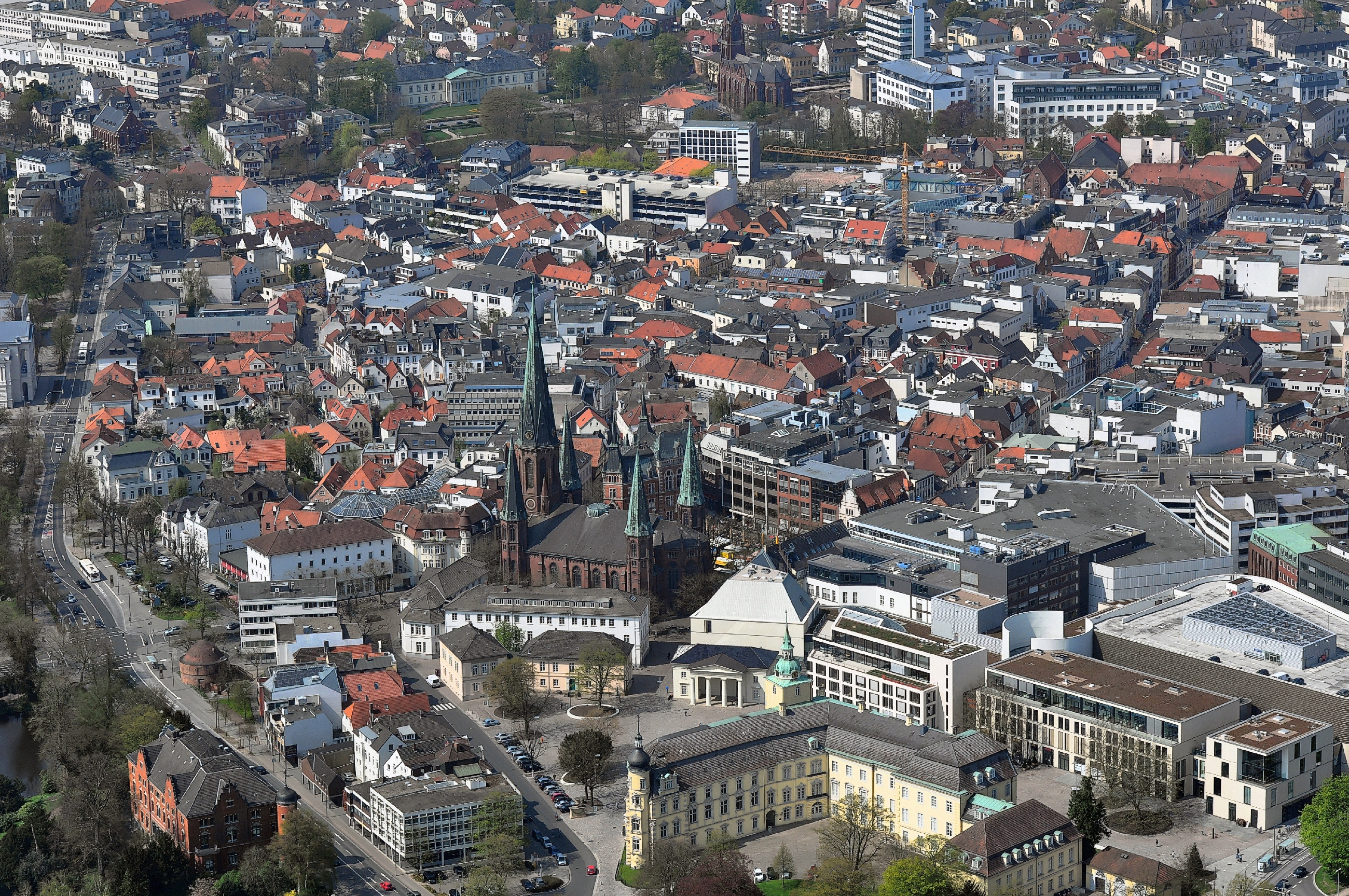
Oldenburg sits in northwestern Germany at just 5 m above sea level, within the Europe/Berlin timezone, and carries a temperate oceanic climate with high rainfall from the North Sea. The city holds a population of 175 thousand, small enough that daily life stays manageable yet large enough to support a full range of urban amenities. Expats who settle here tend to choose the City Center, where the compact layout puts shops, services, and social life within easy reach. English proficiency is common in tourist areas, and the expat community size is small, so newcomers often find that learning some German pays off quickly in everyday interactions.
Housing costs vary sharply by location and household size. A 1-bedroom apartment in the city center runs $1,125/mo, while the same unit outside the center drops to $650/mo. For larger households, a 3-bedroom in the city center costs $1,550/mo, and outside the center it falls to $1,150/mo. Beyond rent, a single person spends about $980/mo, and a family of four spends about $3,250/mo. Utilities and connectivity add internet at $39/mo and a mobile phone plan at $11/mo, with a monthly public transport pass at $65/mo. Everyday food and drink stay modest: an inexpensive restaurant meal is $31 per person, a mid-range restaurant meal for two with three courses is $62, and a cappuccino is $3. Against these figures, the average monthly net salary is $2,391/mo, and the cost of living index of 65/100 against NYC = 100 reflects a city that is affordable by Western European standards. Budget, mid-range, and comfortable tiers for a single adult, rent included, come to $1,830/mo, $2,480/mo, and $3,280/mo respectively.
Safety is a strong point. The safety index is 88/100 and the crime index is 12/100, numbers that place Oldenburg among the safer German cities of its size. Air quality is good as well, with an air quality index of 35, where lower is better. Healthcare quality is rated excellent, giving residents confidence in the medical system for routine care and emergencies alike. Average internet speed reaches 135 Mbps, fast enough for remote work, streaming, and video calls without strain.
For longer stays, the retirement visa program is §7 Abs. 1 S. 3 AufenthG, with a minimum monthly income of $1,200/mo, and the digital nomad visa program is the Freelancer Residence Permit under Section 21 of the German Residence Act. Reaching the city is straightforward by rail and road from across Germany and neighboring countries. Oldenburg suits remote workers, freelancers, and retirees who want a calm, affordable base with solid infrastructure. The overall expat score is 72/100, the FIRE score is 74/100, the retiree score is 70/100, and the digital nomad score is 71/100, pointing to a city that rewards those who value stability, low costs, and a quieter pace over big-city intensity.