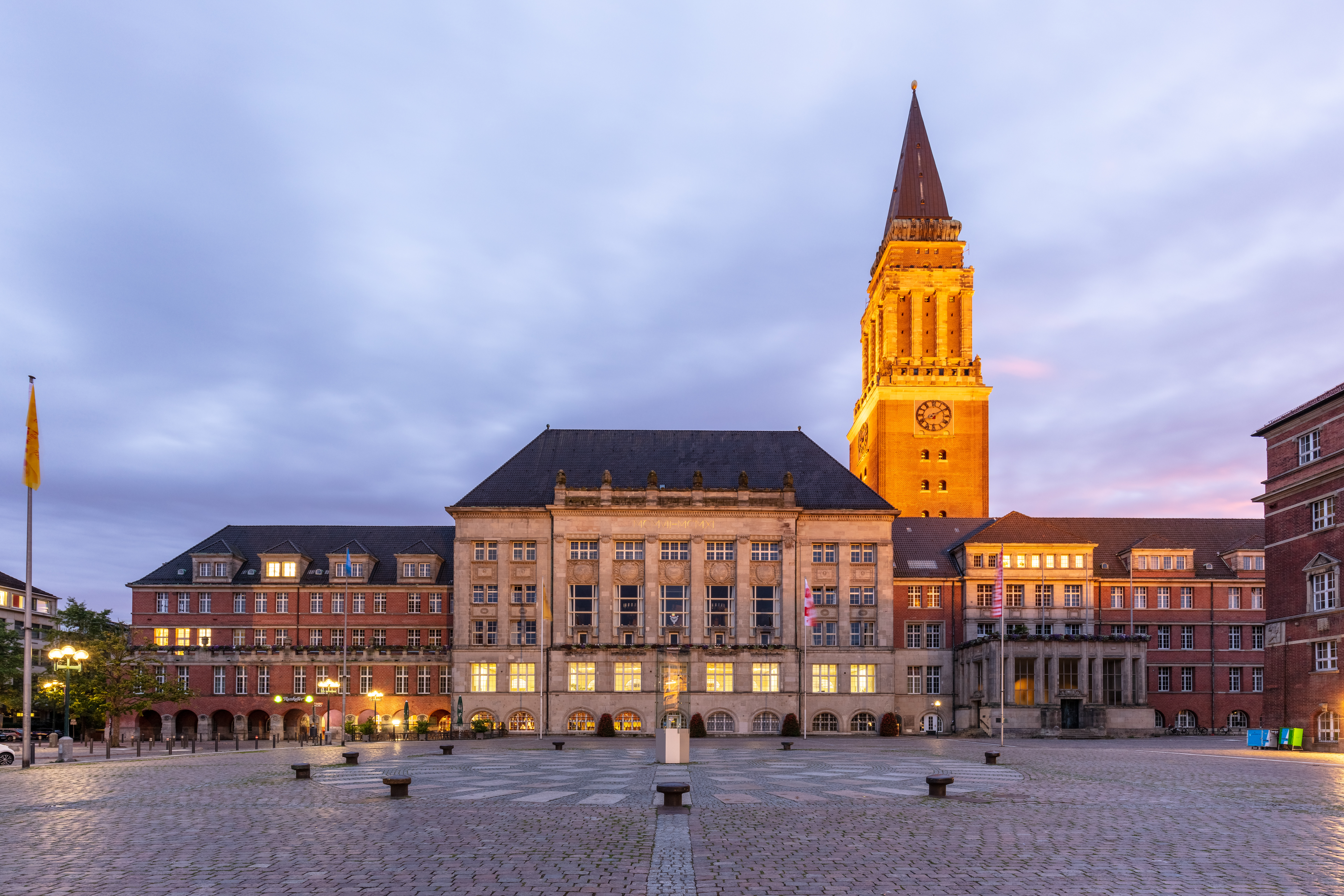
Kiel sits at the eastern edge of the Baltic Sea, the capital of Schleswig-Holstein and a harbor city whose character has been shaped by water, shipyards, and a steady maritime breeze. The climate is temperate, with mild summers and cool, gray winters that rarely turn severe. At just 5 m above sea level, the city spreads along the fjord in a way that keeps the water in view from many parts of town. Expats tend to settle in Schilksee, a northern district known for its sailing harbor and calmer residential streets, and Düsternbrook, an elegant neighborhood of villas and tree-lined avenues close to the center. The timezone is Europe/Berlin, and the population is around 249 thousand, small enough that daily life feels manageable but large enough to support a university, a working port, and a steady cultural calendar.
Living costs in Kiel land well below what you would pay in Munich, Hamburg, or Frankfurt. A one-bedroom apartment in the city center runs about $713/mo, while the same outside the center drops to $636/mo. Three-bedroom units go for $1,482/mo centrally and $1,027/mo farther out. Utilities add roughly $300/mo, internet about $49/mo, and a mobile phone plan around $23/mo. A monthly public transport pass costs $71/mo and a gym membership $40/mo. Everyday spending is modest: an inexpensive restaurant meal is about $17 per person, a mid-range three-course dinner for two is $84, and a cappuccino is $4. For a single adult, monthly costs excluding rent come to about $980/mo, while a family of four should budget around $3,250/mo before housing. The average local net salary is $3,285/mo, and the overall cost of living index sits at 63/100 against New York City as 100. Budget, mid-range, and comfortable tiers for a single adult, rent included, come to $1,048/mo, $1,519/mo, and $1,799/mo respectively.
Safety is one of Kiel's strongest selling points. The safety index is 85/100 and the crime index is just 15/100, which means violent crime is rare and everyday concerns are mostly limited to bicycle theft and the usual urban nuisances. Air quality is good, with an index of 35, helped by the coastal position and the lack of heavy industry in the immediate city core. Healthcare quality is rated excellent, and the German public insurance system gives residents broad access to general practitioners, specialists, and hospitals without the paperwork headaches common elsewhere. Internet speeds average 90 Mbps, which is more than enough for remote work, streaming, and video calls.
For longer stays, Germany offers the §7 Abs. 1 S. 3 AufenthG retirement visa, which requires a minimum monthly income of $1,200/mo, and the Freelancer Residence Permit under Section 21 of the German Residence Act for self-employed digital nomads. The nearest airport is KEL, only 6 km from the city, which keeps arrivals and departures refreshingly quick. English is common in tourist areas, and the expat community is medium in size, with the strongest presence in Schilksee and Düsternbrook. Kiel scores 75/100 overall for expats, 76/100 on the FIRE measure, 74/100 for retirees, and 77/100 for digital nomads. It suits remote workers, early retirees, and anyone who wants Baltic air, low rent, and a compact northern German city that never feels crowded.