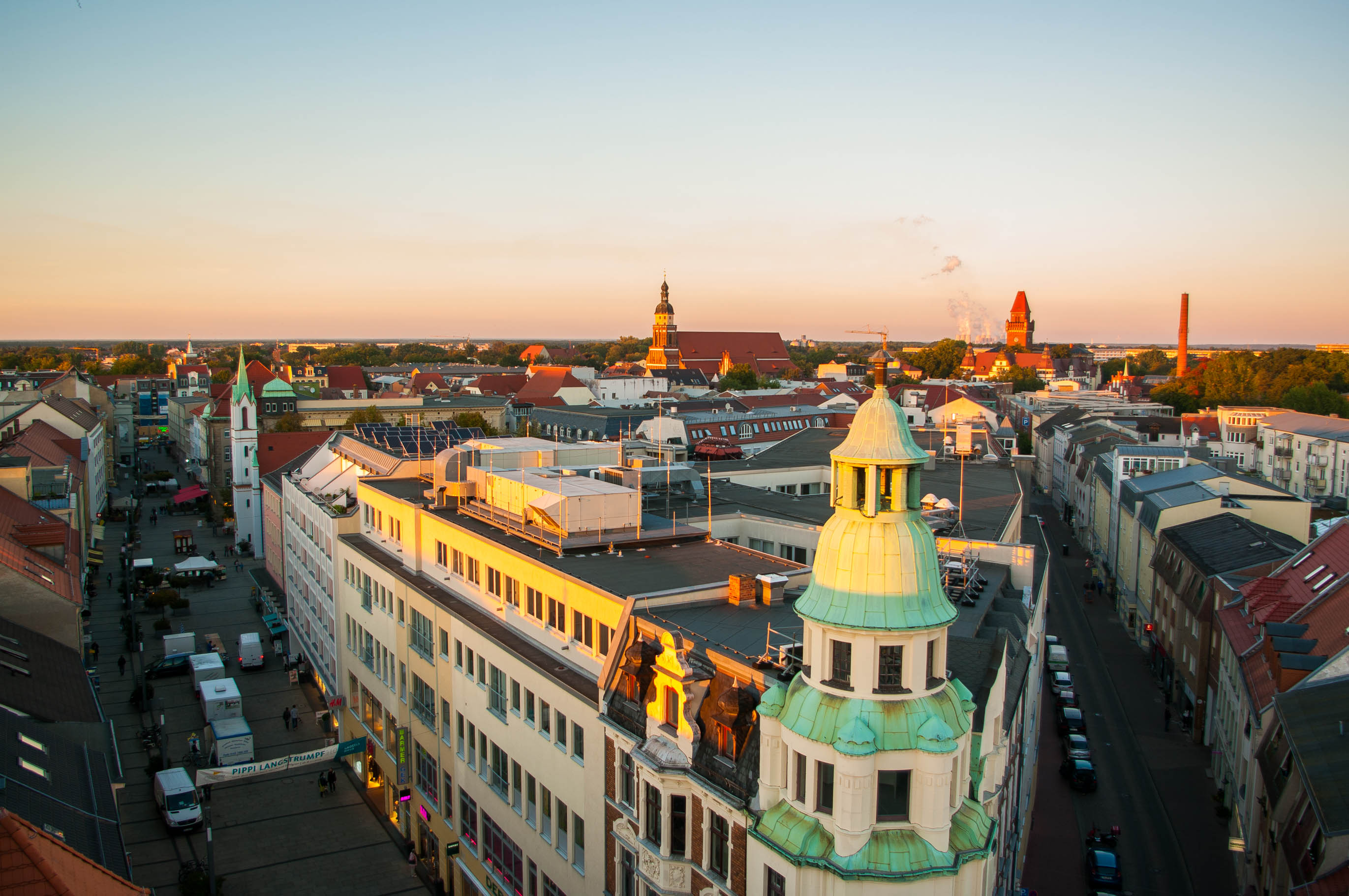
Cottbus sits in the eastern German state of Brandenburg, roughly 100 kilometers southeast of Berlin, at an elevation of 70 meters above sea level. Its climate is temperate, with warm summers and cold winters, and the city of about 100,000 people feels compact and walkable. Most expats who settle here gravitate toward Sandow, a neighborhood on the eastern side of the Spree River known for its quiet streets, green spaces, and easy access to the city center. While the expat community is very few in number, the city's low-key pace and affordable housing make it an appealing base for those who prefer authenticity over crowds.
Living costs in Cottbus are strikingly low compared to most of Western Europe. A one-bedroom apartment in the city center rents for $598/mo, while the same unit outside the center costs $486/mo; a three-bedroom in the center runs $1,159/mo, dropping to $841/mo outside. Utilities run $174/mo, internet $44/mo, and a mobile plan just $15/mo. A monthly public transport pass is $50/mo, and a gym membership costs $39/mo. Eating out is inexpensive too: a meal at an inexpensive restaurant is $17, a three-course dinner for two at a mid-range spot is $79, and a cappuccino is $3. The overall cost of living index sits at 61/100 relative to New York City, and a single adult can live on a budget tier of $768/mo, a mid-range tier of $1,176/mo, or a comfortable tier of $1,489/mo. The average monthly net salary locally is $1,645/mo, which means most residents find their wages stretch comfortably.
Safety and healthcare are two of Cottbus's strongest assets. The safety index is 80/100, with a crime index of just 20/100, making it one of the safer mid-sized cities in Germany. Violent crime is rare, and the city feels secure even at night, particularly in residential areas like Sandow. Healthcare quality is rated excellent, with a well-regarded network of clinics and hospitals, and the air quality index of 38 is clean by European standards. For retirees or anyone with health concerns, the combination of low stress, clean air, and top-tier medical care is a major draw.
For those looking to stay long-term, Germany offers clear visa pathways. Retirees can apply under §7 Abs. 1 S. 3 AufenthG, which requires a minimum monthly income of $1,200/mo, a threshold easily met by the city's low living costs. Digital nomads and freelancers can pursue the Freelancer Residence Permit under Section 21 of the German Residence Act, which allows self-employed work with proof of income and a viable business plan. Getting to Cottbus is straightforward via Germany's extensive rail network, with direct connections from Berlin and other major hubs, though no airport is located within the city itself. This city suits travelers who value affordability, safety, and a slower rhythm, whether they are remote workers, early retirees, or anyone seeking a calm European base without the premium price tag.