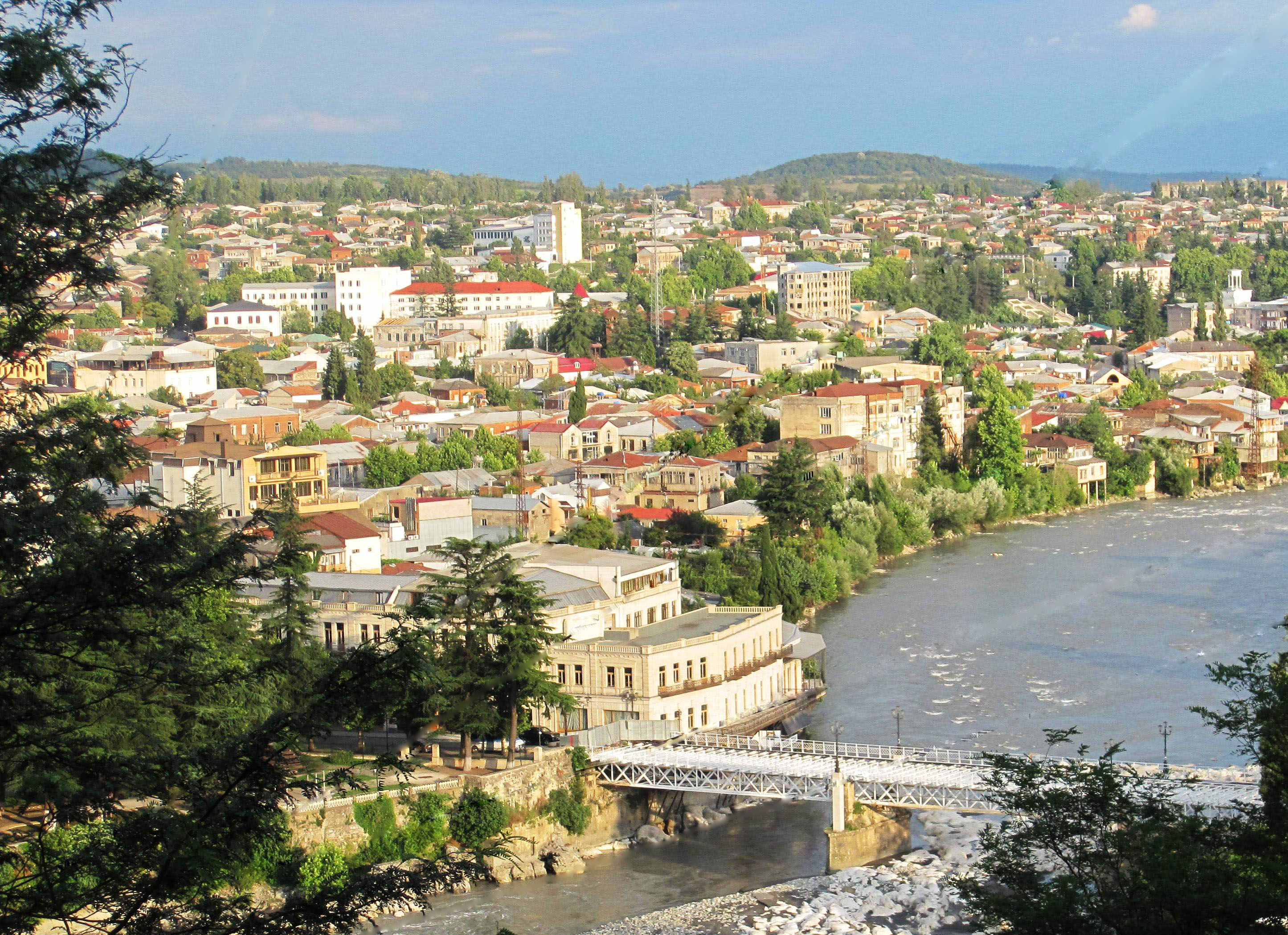
Kutaisi, Georgia
Data updated Sep 3, 2026
📊 Scores
Remote work keeps the lights on here. Unless you're teaching English for peanuts or somehow landed a gig with the few international NGOs that drifted in from Tbilisi, there is no local job market that'll pay your rent, let alone sponsor a visa. You live on outside income. A decent month, counting $380 for a city-center one-bedroom and all other costs, runs about $820 total. That's the real number. The internet clocks 60 Mbps on a good day, which is enough for most remote gigs unless you're pushing massive files or need video calls at odd hours when the network sometimes wobbles. The city's economic pulse is mostly markets, small trade, and the kind of Soviet-era industry that hasn't fully died but will never boom again.
You'll learn to navigate marshrutka routes because that's your transit system: aging minivans that wheeze through potholed streets for 30 tetri a ride. The housing stock is a lottery. You might score a renovated flat with decent heating, or you might freeze in a concrete block where the gas stove doubles as your radiator. Don't expect English to get you far. Georgian script looks like spaghetti and even basic shopping requires you to memorize a few dozen words or rely on pointing. Healthcare is there, sure, but if anything serious happens you're on a bus or train to Tbilisi, because the local clinics often lack equipment and English-speaking staff. Bureaucracy is analog, slow, and runs on personal connections. Residency paperwork will frustrate you. It's not malicious, it's just how things move when no one's optimized them for foreigners. Safety is fine, a 70 index with a low crime rate, meaning you're more likely to get gouged on rent as a foreigner than pickpocketed.
If you're a self-sufficient remote worker with a real tolerance for friction and zero need for expat hand-holding, Kutaisi delivers. You'll get an unvarnished Georgian life at half the cost of Tbilisi, with a few decent cafes, access via the nearby airport when you need to escape, and neighbors who'll invite you to their supra once they decide you're not just passing through. Retirees on a fixed income who want a walkable city with cheap markets and no pretension do well here. But if you crave a social scene, reliable infrastructure, fast internet, or any kind of professional community, you'll lose your mind. Digital nomads who need co-working spaces and seamless everything should stay away. This isn't a soft landing. It's a place that doesn't care if you stay or leave, and for a certain kind of person, that's exactly the point.
🏚️ Cost of Living
💰 Budgets and Costs
Grocery Basket
Eating Out
Utilities & Lifestyle
Housing
A 1BR in the center runs about $347.99/mo. If your income is in another currency, bank FX fees add up. A multi-currency account can cut that cost.
See low-fee transfersWe may earn a commission at no cost to you.
💰 Real Spend Reports
🛡️ Safety & Crime
(Higher is safer)
(Lower is safer)
Kutaisi is a genuinely safe city for expats, with low violent crime and a relaxed atmosphere typical of Georgia's secondary cities. Petty theft and pickpocketing occur occasionally in crowded markets and public transport, but are not widespread concerns. The main risks are standard travel precautions: avoid displaying valuables, use registered taxis, and stay aware in dimly lit areas at night. Georgia's political tensions with Russia are distant from daily life here, though expats should monitor regional news. Overall, Kutaisi offers a secure, affordable base for remote workers and retirees seeking authentic Georgian culture without Tbilisi's crowds.
🏥 Healthcare
🌤️ Climate
Best Months
Climate Notes
Kutaisi has a humid subtropical climate with warm summers (June-August) and mild winters, featuring significant rainfall year-round, particularly in autumn and spring.
💻 Digital Nomad
Community Notes
| Name | Price/mo | Notes |
|---|---|---|
| Fabrika Kutaisi | $80 | Part of the larger Fabrika network, this location offers a creative and social atmosphere popular with travelers and locals alike. Located in the heart of Kutaisi, it provides a vibrant environment for digital nomads. |
| Coworking Kutaisi | $60 | A smaller, locally-run coworking space offering a more intimate and community-focused environment. It's centrally located and provides a quiet workspace for focused work. |
| Terminus Kutaisi | $70 | Terminus offers a modern coworking environment with good facilities. It's a good option for those seeking a professional and productive workspace in Kutaisi. |
Planning to live in Kutaisi long-term? Georgia Remotely From Georgia Program lets remote workers live legally.
View full requirements →Working remotely from Kutaisi? Nomad health insurance covers you across borders, month to month.
See nomad insuranceWe may earn a commission at no cost to you.
🧳 Expat Life
Expat Life Notes
Kutaisi is Georgia's third city and ancient capital, known for UNESCO-listed Bagrati Cathedral and Gelati monastery. Georgia's liberal residency policies and growing digital nomad scene make Kutaisi increasingly attractive, with low costs and an improving expat community.
Pros
- ✓ Very affordable
- ✓ UNESCO heritage
- ✓ Liberal visa-free residency for many nationalities
Cons
- ✗ Limited English outside tourism
- ✗ Basic infrastructure
- ✗ Cold winters
🛂 Visa Options for Georgia
Many long-stay visas require proof of health insurance. Compare international health plans before you apply.
Compare health insuranceWe may earn a commission at no cost to you.
Not sure which Georgia visa you qualify for?
Answer 10 questions and get a personalized match in under 2 minutes.
Could living/working in Kutaisi cut years off your work life?
With a 1-bedroom in the center at $209/mo, your FIRE number here might be much lower than you think.
Moving to Kutaisi? Estimate what an international move would cost and compare mover quotes.
Estimate my move costShare This Guide
Kutaisi won't stay this cheap forever.
Cost-of-living and visa updates for Kutaisi and the rest of Georgia. Free with RA Postcards.
By submitting your email address, you will receive a free subscription to RA Postcards and special offers from Rewire Abroad and our affiliates. You can unsubscribe at any time, and we encourage you to read more about our Privacy Policy.