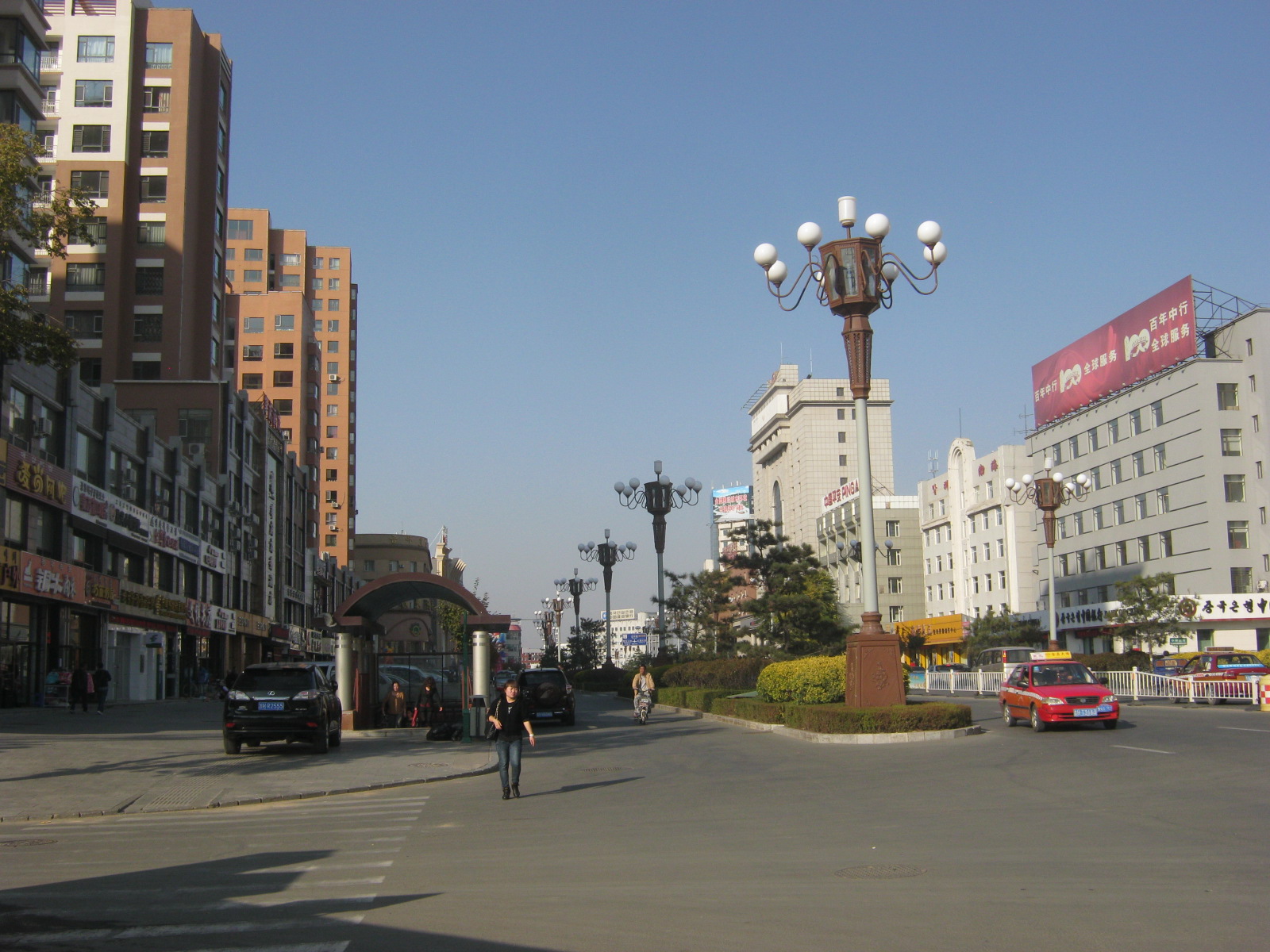
Huangnihe sits at 150 m above sea level in a subtropical climate, keeping winters milder than most of northern China and summers warm and humid. The city holds 675 thousand residents and runs on Asia/Shanghai time, so clocks never shift with the seasons. Internet averages 80 Mbps, enough for remote work, streaming, and video calls without much friction. The overall expat score of 80/100 reflects a place that treats newcomers reasonably well, though English proficiency is limited, so daily errands reward a few phrases of Mandarin.
Housing is the clearest argument for Huangnihe. A one-bedroom in the city center rents for $300/mo, while the same unit outside the center drops to $200/mo. Three-bedroom apartments run $600/mo in the center and $400/mo farther out, which makes family-sized space unusually affordable. Excluding rent, a single person spends about $450/mo on everything else. That combination produces budget-tier living at $700/mo, a mid-range life at $1,200/mo, and a comfortable standard at $2,000/mo, all with rent included. Few cities at this population size let a single adult live centrally on such modest sums.
Safety is middling rather than alarming. The safety index reads 55/100 and the crime index 45/100, where lower is safer, so ordinary precautions apply after dark and in unfamiliar districts. Air quality is a real trade-off: the air quality index of 78, where lower is better, means pollution is present often enough to matter for sensitive lungs. Healthcare quality is rated poor, so residents with ongoing conditions should plan for travel to larger cities for serious care and carry robust insurance. These factors pull the retiree score down to 51/100 even as other scores stay high.
Visas follow standard Chinese immigration channels, and the nearest airport is CGQ, which handles the bulk of arrivals before the overland leg into town. The digital nomad score of 65/100 and FIRE score of 82/100 tell the story: remote workers will find the cost base generous and the connectivity workable, while early retirees chasing low overhead will find the numbers compelling. It suits budget-conscious remote professionals, long-stay savers, and anyone who values cheap rent over polished infrastructure. Retirees needing top-tier medical access should look elsewhere, but for the cost-driven and the self-sufficient, Huangnihe delivers.