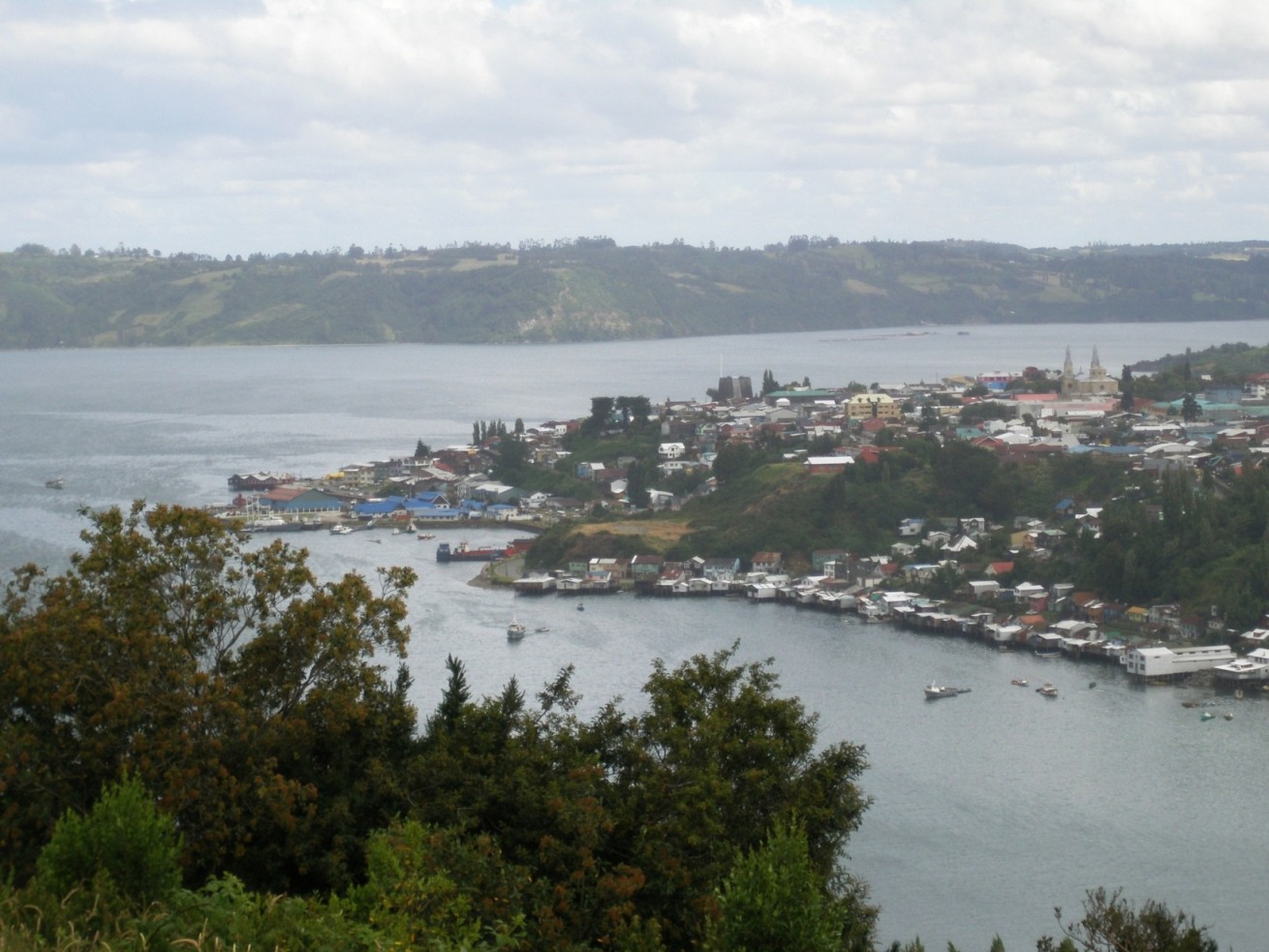
Castro sits on the eastern shore of Chiloé Island, 25 meters above sea level, in a temperate climate zone. The city's compact center, known as the Centro area, is where most expats choose to live, drawn by its palafitos and proximity to amenities. With a population of 33 thousand, Castro offers a small-town atmosphere while serving as the archipelago's main urban hub.
Living costs here are notably low. A single adult's monthly expenses excluding rent total $640, while a family of four spends $1,800 excluding rent. Renting a one-bedroom in the city centre costs $358 per month, dropping to $286 outside the centre. A three-bedroom in the centre runs $1,022, or $588 outside. Utilities add $133 monthly, internet $31. An inexpensive restaurant meal is $8, a three-course meal for two at a mid-range restaurant is $46, and a cappuccino costs $2. The average local monthly net salary is $613, and the cost of living index stands at 43 out of 100 (New York City = 100).
Safety is solid: the safety index is 70 out of 100, and the crime index is 30 out of 100 (lower is safer). Healthcare quality is rated as fair. English proficiency is limited, and the expat community is small, but those who settle in Castro find a secure environment.
For long-term stays, the Residencia Temporal - Jubilados y Rentistas visa requires a minimum monthly income of $1,000, and the Chile Digital Nomad Visa also requires $1,000 per month. The nearest airport is WCA, just 3 km away. Castro suits retirees seeking a low-cost, temperate retreat, digital nomads with modest income requirements, and anyone drawn to Chiloé's unique culture without expecting a large expat scene.