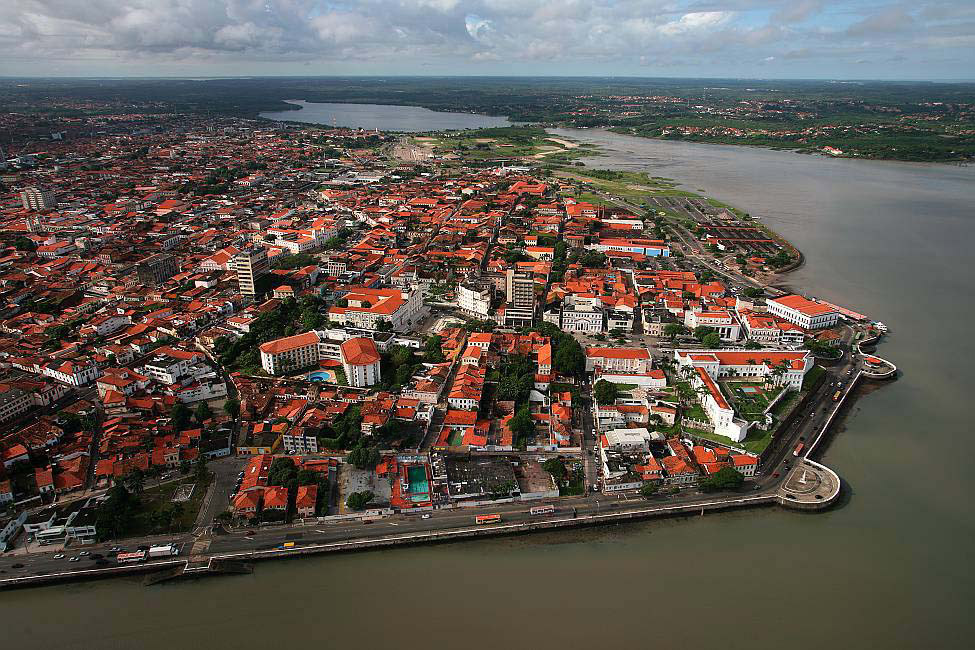
São Luís sits on an island in northeastern Brazil, just 4 m above sea level and within the America/Fortaleza timezone. The climate is tropical, and the city of 868 thousand people draws a small but steady stream of newcomers to neighborhoods like Ponta do Farol, Calhau, and Renascença. These areas offer a mix of coastal living and urban convenience, though the expat community size is very few, meaning you will likely be charting your own path rather than joining an established crowd.
Living costs here are modest, especially outside the city centre. A one-bedroom apartment in the centre rents for $358/mo, while the same outside the centre drops to $186/mo. Three-bedroom units run $571/mo in the centre and $329/mo outside. For a single adult, budget tier total including rent is $397/mo, mid-range is $563/mo, and comfortable is $822/mo. Monthly costs excluding rent average $480/mo for one person and $1,450/mo for a family of four. Utilities add $95/mo, internet $21/mo, and a mobile plan $18/mo. A public transport pass costs $39/mo, a gym membership $20/mo, an inexpensive restaurant meal $6, a mid-range three-course meal for two $40, and a cappuccino $2. The average monthly net salary is $389/mo, so local wages are low relative to these expenses, and the cost of living index is 36/100 against NYC = 100.
Safety is a mixed picture. The safety index is 59/100 and the crime index is 41/100, with lower crime numbers indicating a safer environment. Air quality is good, with an index of 25 where lower is better. Healthcare quality is rated fair, and English proficiency is limited, so basic Portuguese will serve you well in daily interactions and medical settings.
For longer stays, Brazil offers the VITEM XIV retirement visa with a minimum monthly income of $2,000/mo, and the Brazil Digital Nomad Visa with a minimum monthly income of $1,500/mo. The nearest airport is SLZ, 10 km away. With an overall expat score of 79/100, a FIRE score of 81/100, a retiree score of 58/100, and a digital nomad score of 59/100, São Luís suits budget-conscious retirees and early retirees who value low costs and a quiet pace, while digital nomads may find the limited English and very few expats a challenge. Average internet speed is 45 Mbps, enough for most remote work.