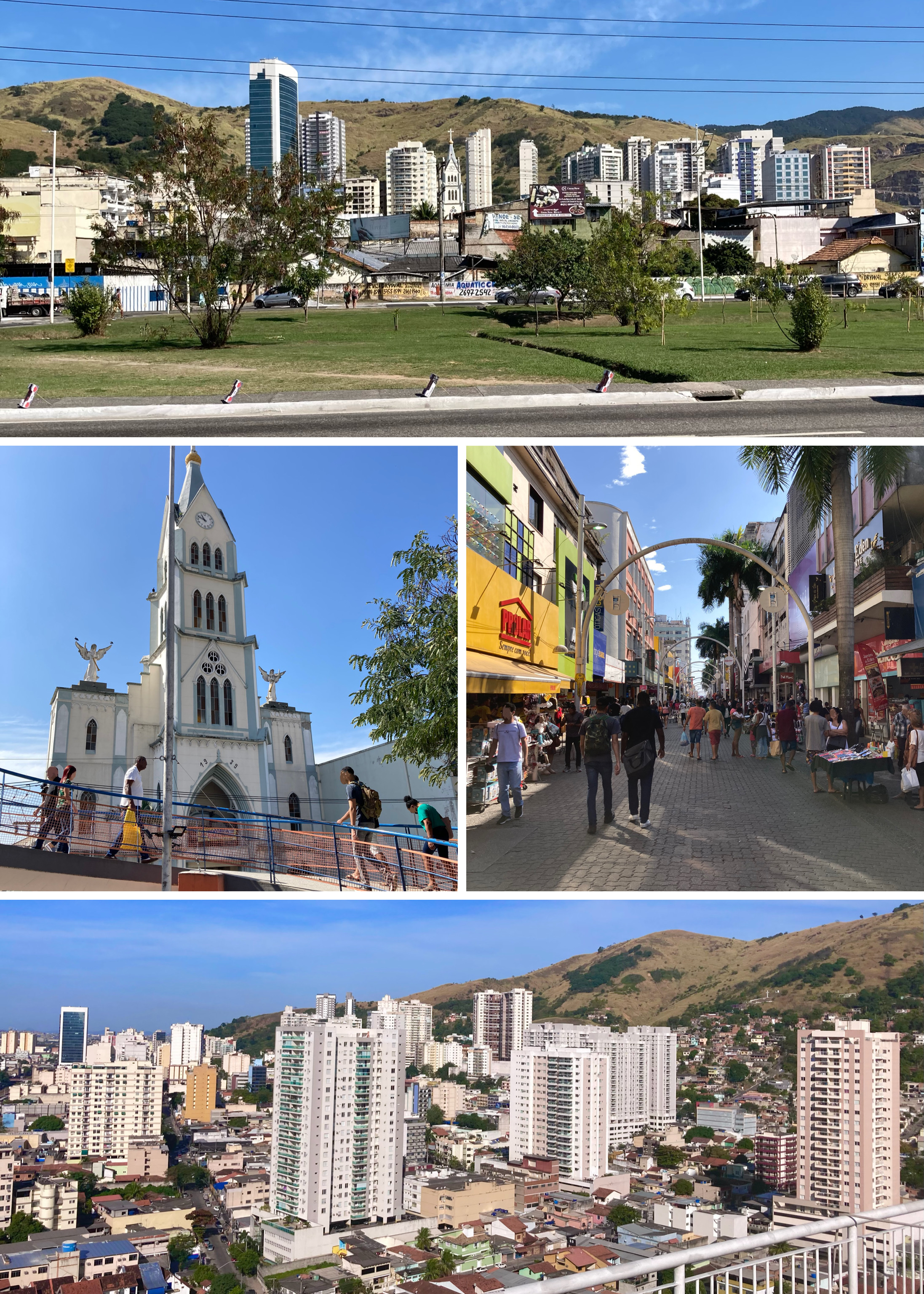
Nova Iguaçu sits in the state of Rio de Janeiro at just 27 m above sea level, where the climate stays tropical year round and the timezone is America/Sao_Paulo. Home to 1.3 million people, this is a city of scale rather than postcard polish. Expats who settle here tend to choose Bairro da Luz, the one neighborhood named as a popular choice, though the expat community size is none, so newcomers should expect to build their own networks from scratch. The overall expat score of 75/100 suggests that daily life can work well for those who arrive with realistic expectations.
Living costs are the main draw. A 1-bedroom apartment in the city centre rents for $329/mo, while outside the centre it drops to $219/mo. For more space, a 3-bedroom in the centre runs $647/mo, or $448/mo outside the centre. Utilities come to $43/mo, internet $18/mo, and a mobile phone plan $12/mo. A monthly public transport pass costs $50/mo and a gym membership $24/mo. Eating out is cheap: an inexpensive restaurant meal is $4 per person, a mid-range three-course meal for two is $30, and a cappuccino is $2. Numbeo puts monthly costs excluding rent at $480/mo for a single person and $1,400/mo for a family of four. Budget, mid-range, and comfortable tiers for a single adult, rent included, are $352/mo, $507/mo, and $672/mo. Against that, the average monthly net salary is just $241/mo, and the cost of living index is 37/100 with New York City at 100. The gap between local wages and expat budgets is the single most important number to understand before committing.
Safety requires attention. The safety index is 40/100 and the crime index is 60/100, where lower is safer. Air quality sits at 55, where lower is better. Healthcare quality is rated fair, and English proficiency is limited, so basic Portuguese helps enormously in clinics, pharmacies, and everyday errands. Average internet speed is 30 Mbps, workable for most remote tasks but not for heavy data work. The retiree score of 52/100 and digital nomad score of 51/100 reflect these tradeoffs: affordability is strong, but infrastructure and safety are middling.
For retirees, the VITEM XIV retirement visa requires a minimum monthly income of $2,000/mo. For remote workers, the Brazil Digital Nomad Visa requires a minimum monthly income of $1,500/mo. Getting there is straightforward by road or rail from the wider Rio de Janeiro metropolitan area, and the city sits within the America/Sao_Paulo timezone. Nova Iguaçu suits budget-focused expats, long-stay retirees who meet the VITEM XIV threshold, and remote workers who earn in stronger currencies and can tolerate a limited English-speaking environment. The FIRE score of 77/100 is the standout figure, pointing to a place where saving aggressively is genuinely possible, provided you accept the safety and healthcare realities.