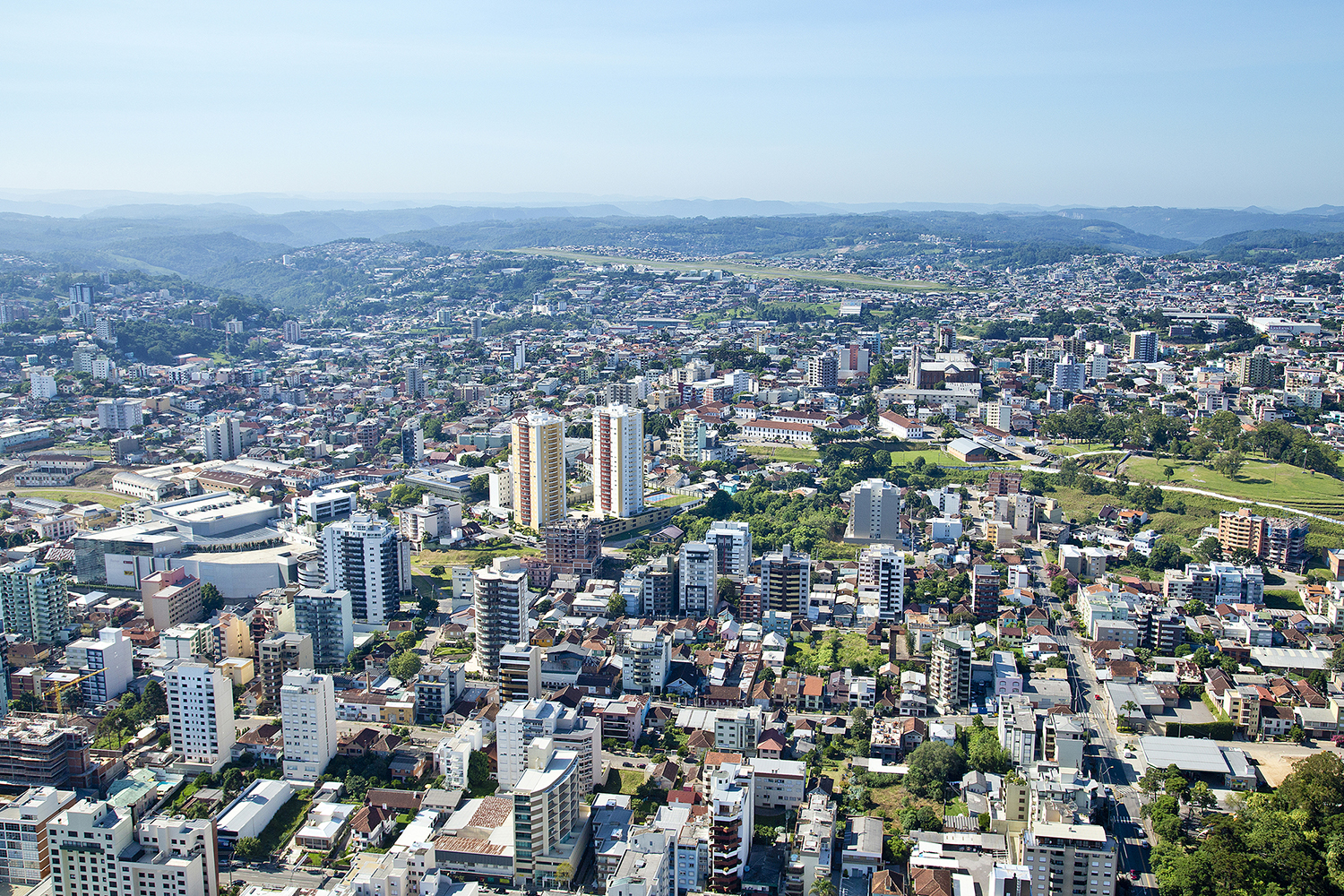
Caxias do Sul sits in the highlands of southern Brazil at 760 m above sea level, where the climate is temperate and the timezone is America/Sao_Paulo. This city of 291 thousand people draws a small expat community, and newcomers often settle in Exposição and Lourdes. The nearest airport is CXJ, just 14 km away, which keeps arrivals and departures straightforward for a city of its size.
Rents are modest by global standards. A 1-bedroom apartment in the city centre costs $272/mo, while outside the centre it drops to $182/mo. For larger households, a 3-bedroom in the centre runs $697/mo, and outside the centre it is $431/mo. Utilities average $72/mo, internet $22/mo, and a mobile phone plan $12/mo. A monthly public transport pass is $44/mo and a gym membership $26/mo. Everyday food is affordable: an inexpensive restaurant meal is $7 per person, a mid-range three-course meal for two is $39, and a cappuccino is $2. Excluding rent, a single person spends about $640/mo, and a family of four about $2,250/mo. Budget, mid-range, and comfortable tiers for a single adult, rent included, come to $368/mo, $542/mo, and $722/mo respectively. The average monthly net salary is $551/mo, and the cost of living index is 49/100 against NYC = 100.
Safety is a relative strength, with a safety index of 70/100 and a crime index of 30/100, where lower is safer. Air quality sits at 45 on an index where lower is better. Healthcare quality is rated Good, which matters for residents who plan to stay long term or retire. The overall expat score is 77/100, with a FIRE score of 79/100, a retiree score of 65/100, and a digital nomad score of 65/100. English proficiency is limited and the expat community is small, so some Portuguese goes a long way in daily life.
For longer stays, the retirement visa program is VITEM XIV, which requires a minimum monthly income of $2,000/mo. The Brazil Digital Nomad Visa requires a minimum monthly income of $1,500/mo. Flights arrive at CXJ, 14 km from the city. Caxias do Sul suits budget-conscious singles, remote workers who want a calm highland base, and retirees drawn by good healthcare and a low cost of living. Average internet speed is 50 Mbps, enough for most remote work. Those who need a large expat network or English-first services may find the small community and limited English proficiency a challenge, but for many the numbers make a compelling case.